A mistake isn’t proof your child can’t do something. It’s a chance to work out what to try next. A growth mindset means believing abilities can develop through effort, learning and useful strategies. For families looking for growth mindset activities for kids in Chermside, this idea can turn everyday challenges into opportunities to practise persistence and problem-solving.
It’s natural to want to step in when a task feels hard for your child. Instead, you can help them pause, learn from a setback and have another go. This guide shares four practical activities, with ways to model learning from mistakes, encourage a growth mindset in daily conversations and explain how taking on a challenge helps the brain build new connections. You’ll find simple ideas to try at home, plus ways to help children notice their progress without expecting every attempt to go perfectly.
Key Takeaways
- Help children see abilities as things they can develop through effort, learning and useful strategies.
- Use everyday moments to model learning from mistakes and praise persistence and problem-solving.
- Explain that taking on a manageable challenge helps the brain form connections as children learn.
- Try simple home activities that help children name a challenge, break it into steps and notice their progress.
2. WHAT IS A GROWTH MINDSET?
A growth mindset means believing intelligence and abilities can develop through effort and appropriate strategies. A child struggling with a spelling word can practise it differently, ask for help and try again. The focus is on the learning process, not instant success. Perseverance means taking another useful step when something is difficult, not simply working harder without a plan.
Make the idea visible with a simple poster: “I can’t do this yet.” Add a drawing of a seed growing into a plant, then connect each stage to practice and learning. Stories offer another clear example. Read The Most Magnificent Thing by Ashley Spires, recommended for children aged three to seven, and discuss how its character responds when her attempts go wrong. Ask, “What did she change?” and “What could you try?”
Try growth mindset charades as a quick group activity. One child silently acts out a challenge, such as rebuilding a fallen block tower or practising a dance step. The others guess the challenge, then suggest a positive strategy for overcoming it. This turns abstract ideas like “perseverance” into actions children can recognise and practise.
For growth mindset classes or workshops in Chermside, fees depend on the format, duration and what the session includes; providers give a tailored cost after a quote request. There’s no single standard price that applies to every workshop.
To judge whether a children’s program has a clear learning approach, look for its teaching methods and goals. Activities should practise specific behaviours, such as trying a new strategy, reflecting on a mistake or asking for feedback. Be cautious of claims that a short activity guarantees success. A useful program explains what children will practise and how adults will support their learning.
Growth mindset ideas can be introduced from age four, while ages seven to ten suit more structured learning. For younger children, use pictures and story characters. For older children, ask them to explain which strategy helped them overcome a challenge. In both cases, praise the action, such as changing an approach, rather than labelling the child “smart.”
3. Everyday ways to encourage growth mindset
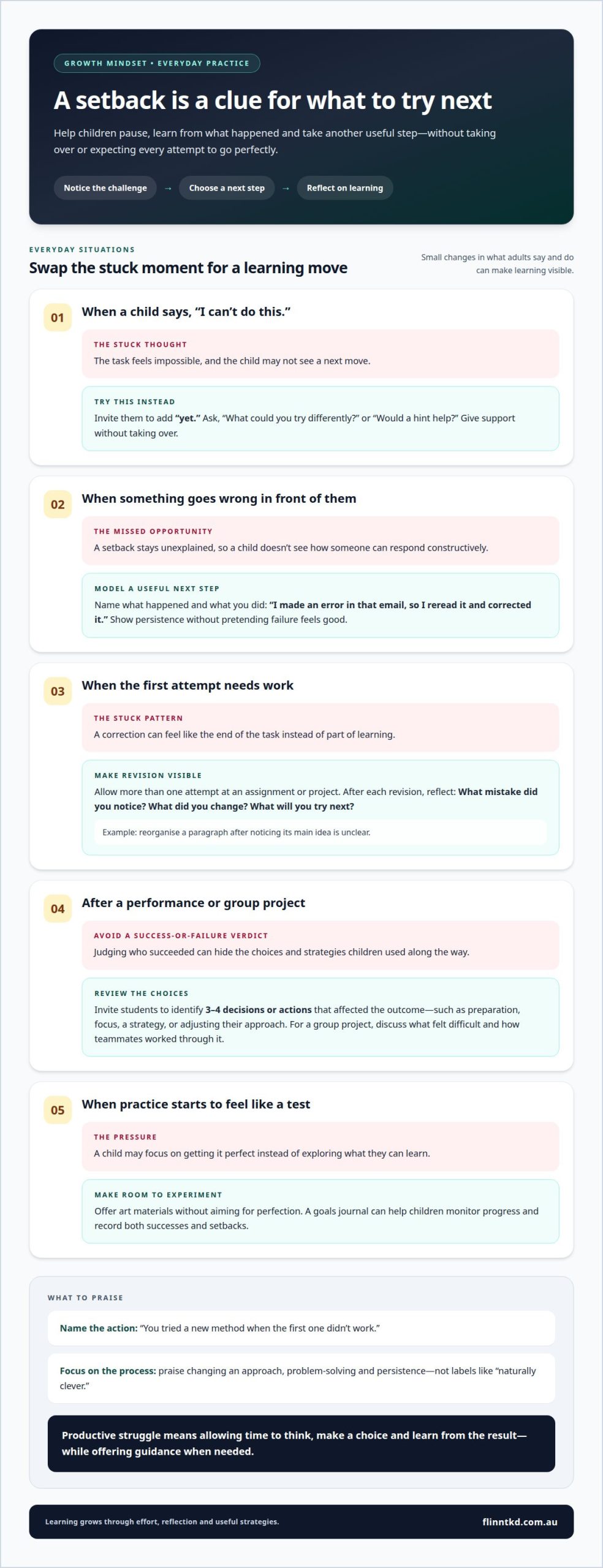
Children notice how adults respond to setbacks. At home or school, name a challenge you faced and what you did: “I made an error in that email, so I reread it and corrected it.” This models persistence without pretending failure feels good. Praise a child’s effort and problem-solving specifically, such as, “You tried a new method when the first one didn’t work.” Focus on what the child did, rather than labels like “naturally clever.”
When a child says, “I can’t do this,” invite them to add “yet.” That small change keeps the possibility of learning open and points towards a next step. Ask, “What could you try differently?” or “Would a hint help?” Give support without taking over. Productive struggle means allowing time to think, make a choice and learn from the result, while offering guidance when needed.
Revising work makes learning visible. Give students more than one attempt at an assignment or project. After each revision, ask them to write a short reflection: What mistake did you notice? What did you change? What will you try next? For example, a child could reorganise a paragraph after noticing that its main idea is unclear. Reflection turns revision into deliberate learning, not just correction.
After a performance, invite students to identify 3-4 decisions or actions that affected the outcome. They might consider preparation, focus, a strategy they used or a moment they adjusted their approach. For a group project, ask what felt difficult and how teammates worked through it. Keep the discussion centred on choices and learning, rather than judging who succeeded or failed.
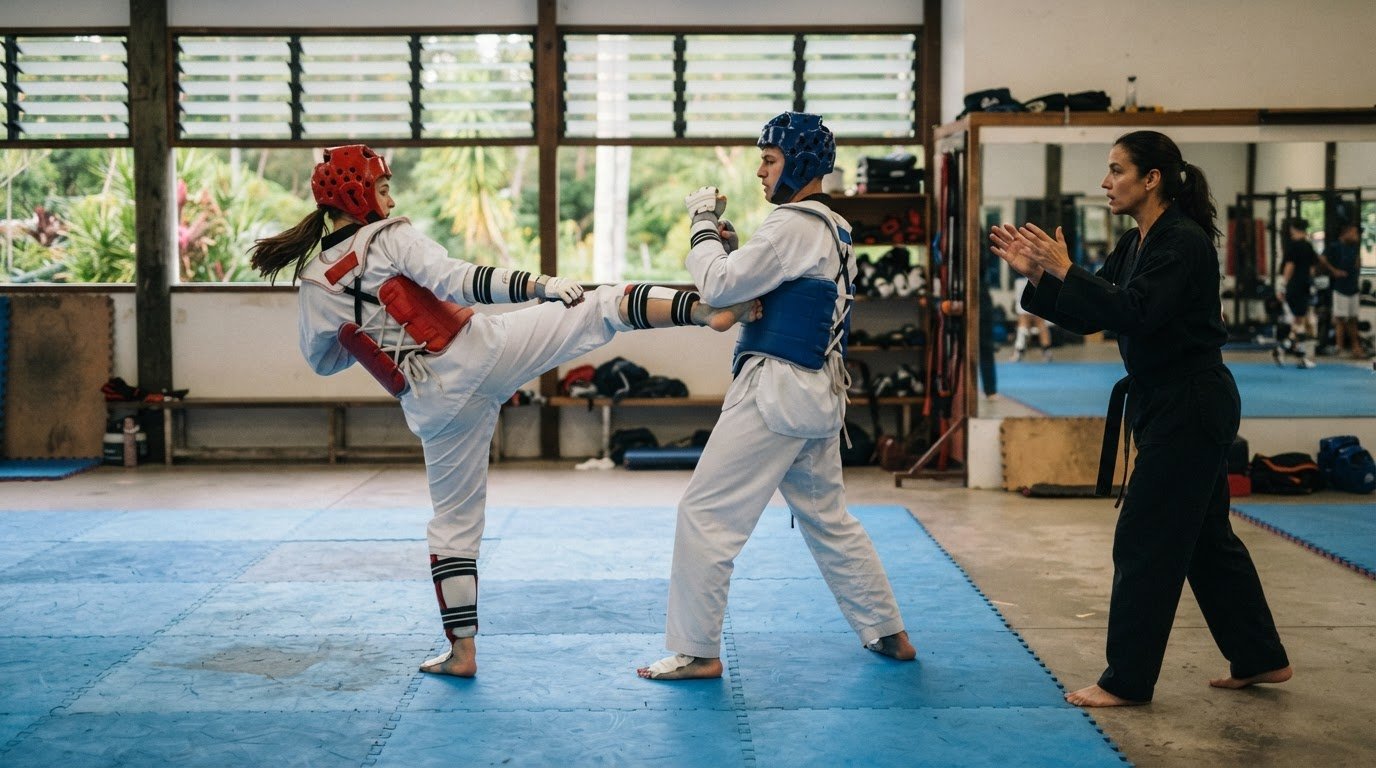
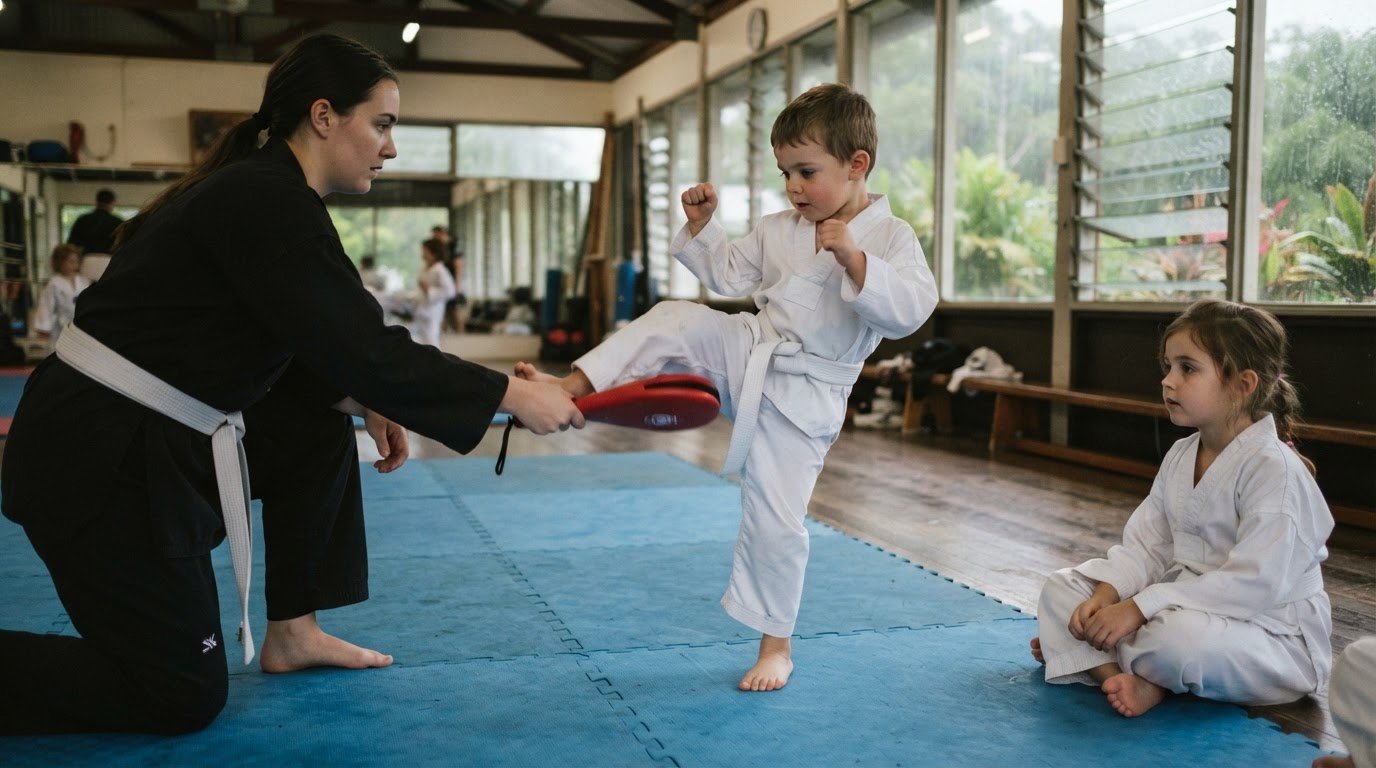
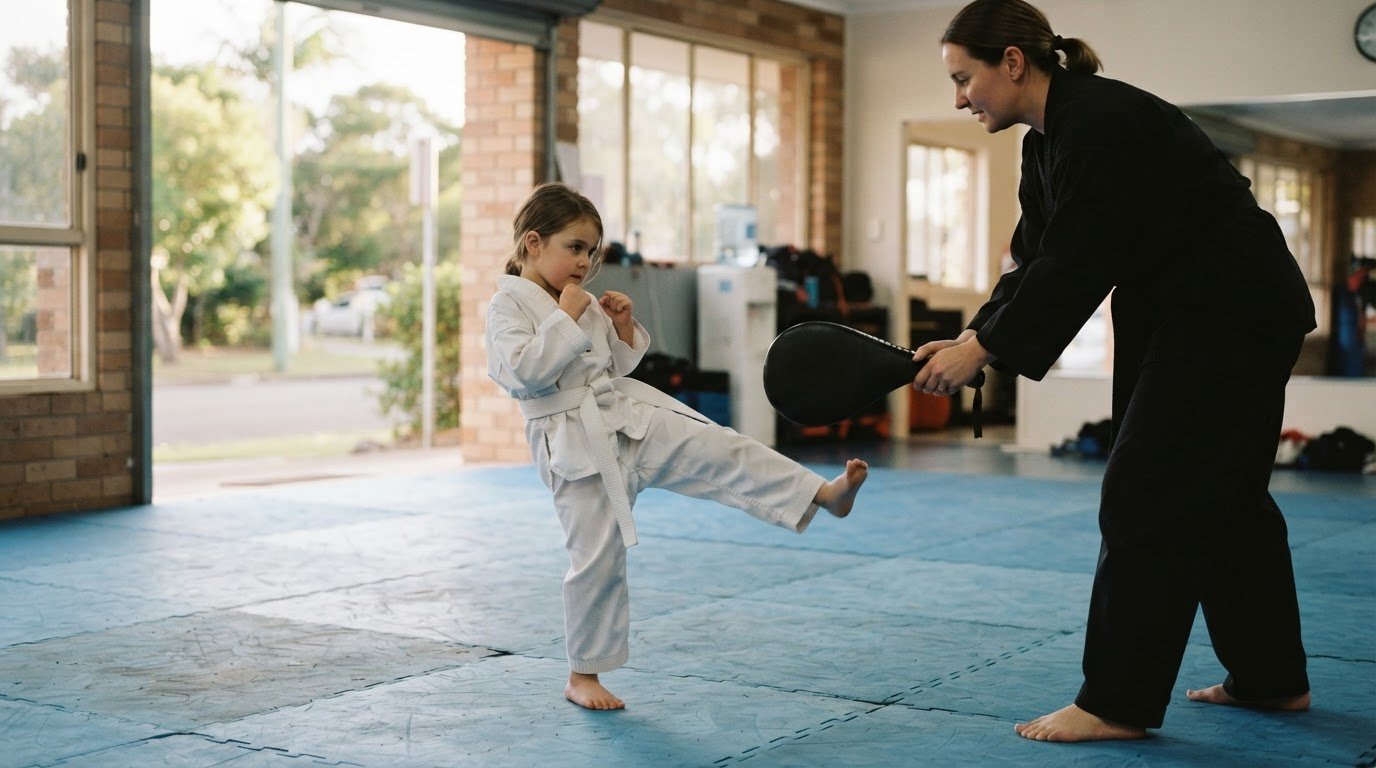
For a physical way to practise persistence, explore guided martial arts training as an opportunity to work through challenges with focus and effort.
Children can experiment with art materials without aiming for perfection. A goals journal can help them monitor progress and record successes and setbacks.
4. Explaining how the brain grows through challenge
Explain learning with a simple brain diagram. As children practise a new skill, neurons form connections that help the brain process and use what they’re learning. Compare those connections to paths through a garden: each practice session helps make a route easier to follow. The brain doesn’t change because a child gets every answer right. It learns through trying, noticing what happens and adjusting.
Choose challenges that stretch a child’s current skills without making the task feel impossible. A beginner might try a puzzle with a few unfamiliar pieces; an experienced puzzler could take on a logic game with a different rule. Notice how the child responds. If they can try a strategy, pause to think and ask for a clue, the challenge offers a useful learning opportunity.
A weekly choice board can help students select an age-appropriate challenge. Include options such as solving a puzzle, learning a short sequence of movements or drawing an object from a new angle. Let children choose, then ask what they expect to find difficult. Afterwards, discuss what they learned and which strategy they’d use again. Choice gives children a sense of control, while reflection helps them recognise progress.
Challenge cards make persistence visible. Write one manageable task on each card, such as “build a bridge from paper” or “solve a new riddle.” Invite a child to choose a card, try an approach and explain what they changed if it didn’t work. Celebrate effort and thoughtful attempts, not just speed or success. Ask calmly, “What could you try next?” If frustration rises, offer a smaller step or a helpful clue, then let the child take the next action. This balance makes a difficult moment a chance to practise persistence.
4. Which growth mindset activities can families do at home?
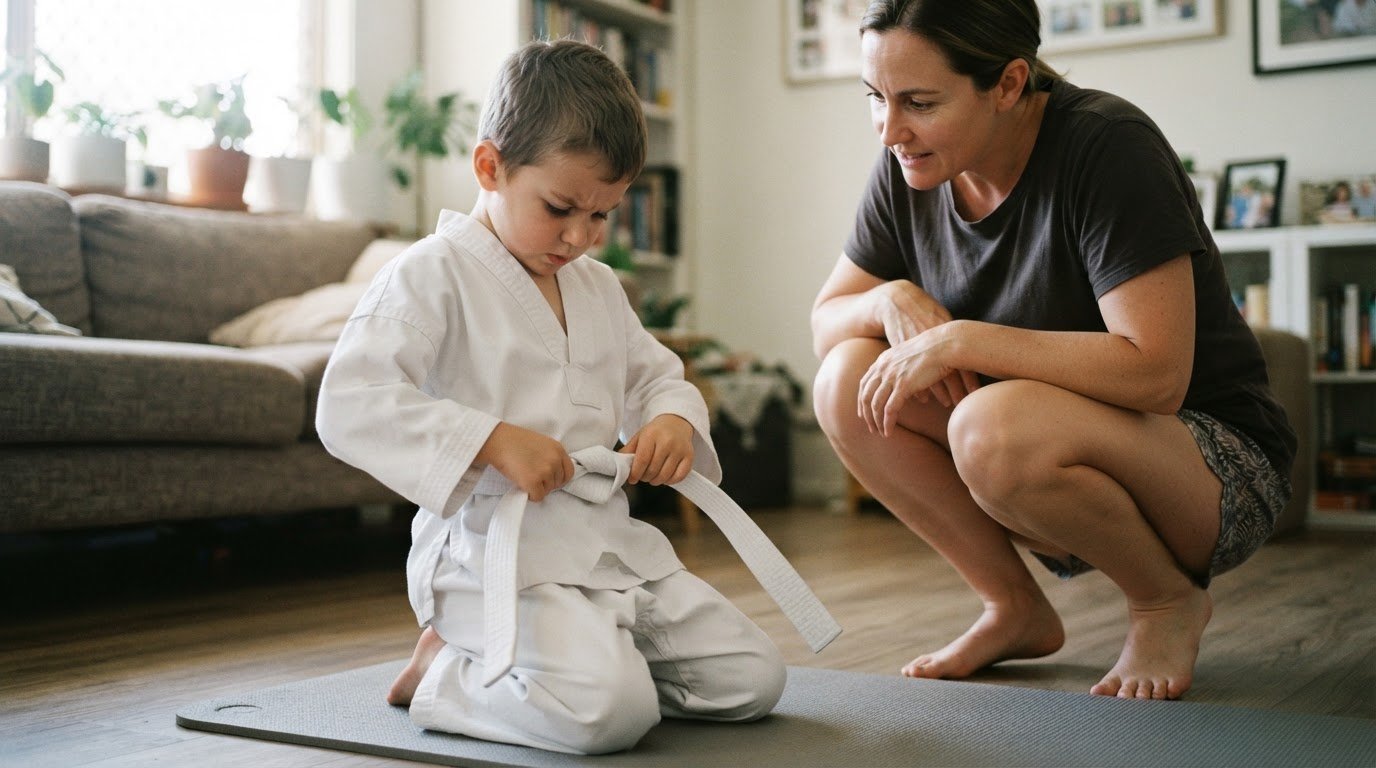
Make a “Yet Board” with sticky notes on the fridge. Write a current challenge on each note, such as “I can’t tie my laces yet.” When your child makes progress, add the step they managed, like forming the first loop. Keep the board focused on practice, not deadlines or perfect results. Affirmation cards can reinforce the same approach. Try statements such as “I can improve with practice” and “Mistakes help me learn.” Invite your child to choose a card before starting a tricky task.
Turn a big goal into manageable actions. Set a SMART goal together for a skill your child wants to develop, then use a checklist to mark each small step. For example, a child writing a story could plan a character, choose a setting, draft a beginning and revise one sentence. A sticky note for each step makes progress easy to see. For a hands-on challenge, build a tower using 10 blocks. If it falls, ask what could make the next design steadier.
At the end of the day, invite your child to share a mistake and what they learned from it. Keep the conversation calm and specific: “What happened, and what might you try next time?” A mistake jar offers another option. Children write a mistake on a slip and revisit the notes each week, discussing what each experience taught them. A weekly growth recap can also record a success, a challenge and a strategy worth trying again.
For a role-model activity, choose someone your child admires and ask them to describe how that person showed perseverance. They can share their example with the family, then connect it to a challenge they’re working through themselves. Try one activity at a time and let your child help choose the next step. Explore ways to practise persistence through guided training as another opportunity to take on challenges.
Flinn Taekwondo Academy
Flinn Taekwondo Academy offers a practical next step when your child is ready to practise persistence through a structured physical activity. Taekwondo gives children opportunities to work on skills, respond to coaching and keep learning as they progress. The Little Tigers Program is for children aged 4-6, while the Junior Taekwondo Program is for ages 7-12.
These programs may suit families looking for more than activities at home, especially when a child benefits from regular practice and clear goals. Each class gives children a chance to focus on learning and build confidence through practice. Growth mindset activities can start a helpful conversation; Taekwondo classes at Flinn Taekwondo Academy in North Brisbane give children another place to put those ideas into action.
For details about training options for your child, contact Flinn Taekwondo Academy.
Keep Their Next Challenge Within Reach
Growth takes shape through small choices repeated over time. Let your child pick one skill they want to practise, then agree on a simple way to notice progress. A few encouraging words after a difficult attempt can help them approach the next challenge with purpose. The best growth mindset activities for kids in Chermside connect practice with everyday goals and give children room to keep learning.
For families who want to extend that practice through martial arts, Flinn Taekwondo Academy offers age-based training, from the Little Tigers Program for children aged 4-6, to the Junior Taekwondo Program for ages 7-12 and the Senior & Adult Taekwondo Program for ages 13+. Choose a next step that suits your family and your child’s interests.
Contact Flinn Taekwondo Academy to discuss training options. Every new skill begins with a willingness to try, and your child can build from there.
Frequently Asked Questions
WHAT IS A GROWTH MINDSET?
A growth mindset is the view that skills can improve, rather than being fixed traits a child either has or lacks. After receiving feedback on a drawing, for example, a child might add more detail instead of deciding they’re “bad at art”. The useful question is, “What could I learn from this?” That keeps attention on choices and progress, not labels.
What are age-appropriate growth mindset activities for kids?
Choose activities that match a child’s attention, interests and current skills. A younger child can describe how they solved a familiar task, while a primary school student can compare two approaches and explain which worked better. Growth mindset activities for kids in Chermside can be as simple as reflecting on a new experience at home or school, then choosing one small skill to practise next.
What are simple growth mindset games for preschoolers and primary school children?
For preschoolers, play “What else could it be?” with a household object, such as imagining new uses for a cardboard tube. Praise original ideas and attempts to explain them. Primary school children can play a pattern-building game: one person makes a sequence with coloured pencils, and the next extends or changes it. Ask players to explain their choices, keeping the focus on trying ideas rather than winning.