What if a child’s big feelings are a chance to practise, not a problem to shut down? Emotions respond to what children experience. Regulation means noticing those feelings and learning how to respond, rather than suppressing them. For families building emotional regulation skills in children in Brisbane, a practical starting point is helping children notice and name feelings, find ways to settle, and approach problems with support.
It’s natural to want your child to calm down quickly, especially when frustration leads to a tantrum or a difficult transition. But these skills develop over time, and children typically can’t consistently regulate their emotions until about four years old. With patient guidance, everyday moments become opportunities to learn. This article explains what emotional regulation can look like in young children, when extra support may help, and practical ways to build awareness, calming strategies and problem-solving skills at home and beyond.
Key Takeaways
- Look for recurring patterns such as difficulty calming down or coping with changes, rather than judging a child by one emotional moment.
- Set age-appropriate expectations and model calm responses; children build regulation skills over time with supportive guidance.
- Name feelings with your child to help them recognise what they’re experiencing and communicate it more clearly.
- Practise calming and problem-solving strategies during everyday moments so your child has tools to draw on when emotions run high.
1. Signs a child may need emotional regulation support
Look for repeated patterns, not one difficult afternoon. A child may benefit from extra support if they often have intense outbursts, struggle to calm down after frustration, or become distressed by everyday changes. At school or daycare, difficulty moving between activities, grabbing items impulsively, or withdrawing when overwhelmed can also be clues. These behaviours may affect learning and relationships, but they don’t identify a cause by themselves.
Start at home with a predictable routine: give a clear warning before transitions, offer two manageable choices, and praise a specific effort, such as taking a breath before responding. A calm corner with books or drawing materials can provide space to reset. Stay nearby and connect with a steady voice, then gradually encourage your child to try a familiar calming strategy independently.
There isn’t one automatic answer about coverage. Whether Medicare, the NDIS or private health insurance contributes depends on the child’s circumstances, the support sought, and relevant eligibility or policy terms. Consider the type of service and its purpose when exploring possible funding.
In Brisbane, start with your child’s school or early learning centre and ask about wellbeing support and community referral pathways. A GP can also discuss suitable local options. If cost is a concern, ask about services designed to provide low-cost support for families.
Schools and early learning centres can support regulation with predictable routines, advance notice of changes, and a trusted adult who helps a child settle. For example, educators might use a visual activity sequence or agree on a quiet space. Share what helps at home so your child hears consistent cues across settings.
Sensory overload may show up as covering ears, avoiding busy rooms, or becoming unsettled by certain textures. An occupational therapist may use play-based activities or sensory strategies suited to a child’s needs. At home, try a quieter space or a movement break, such as stretching, and notice whether it helps your child re-engage.
Keep support respectful and practical. Offer a strategy, then allow time for your child to try it; step in again if distress rises or safety is at risk. If someone is in immediate danger in Australia, call 000, according to the Australian Government.
2. What does emotion regulation look like in young children?
Emotional regulation means recognising feelings and finding ways to manage them. A child developing this skill might say they feel frustrated, pause before grabbing a toy, or accept help after losing a game. These moments won’t happen consistently straight away. Children build skills over time through relationships, their environment and caregiver guidance.
Parents can show what regulation looks like in everyday situations. Name your own feeling and action: “I’m frustrated, so I’ll take a breath before I answer.” Then help your child connect a feeling with a next step. Warm, responsive care supports emotional development, while clear routines and specific praise reinforce effort. For example, say, “You waited for your turn even though you felt excited.”
When comparing emotional regulation programs in Brisbane, consider your child’s age, communication style, sensory needs and everyday challenges. Look for practical strategies that fit family routines and help children practise identifying feelings, managing behaviour and solving problems.
Age-appropriate skills depend on a child’s development and abilities. Children typically can’t regulate emotions consistently until about four years old; by school age, they should manage basic frustration or disappointment with minimal guidance. Adjust expectations as language and mental skills develop, and offer support before expecting independent problem-solving.
At an assessment or therapy session, expect to discuss your child’s daily routines, relationships and specific challenges. The therapist can explore what helps, then work with you on strategies to practise at home.
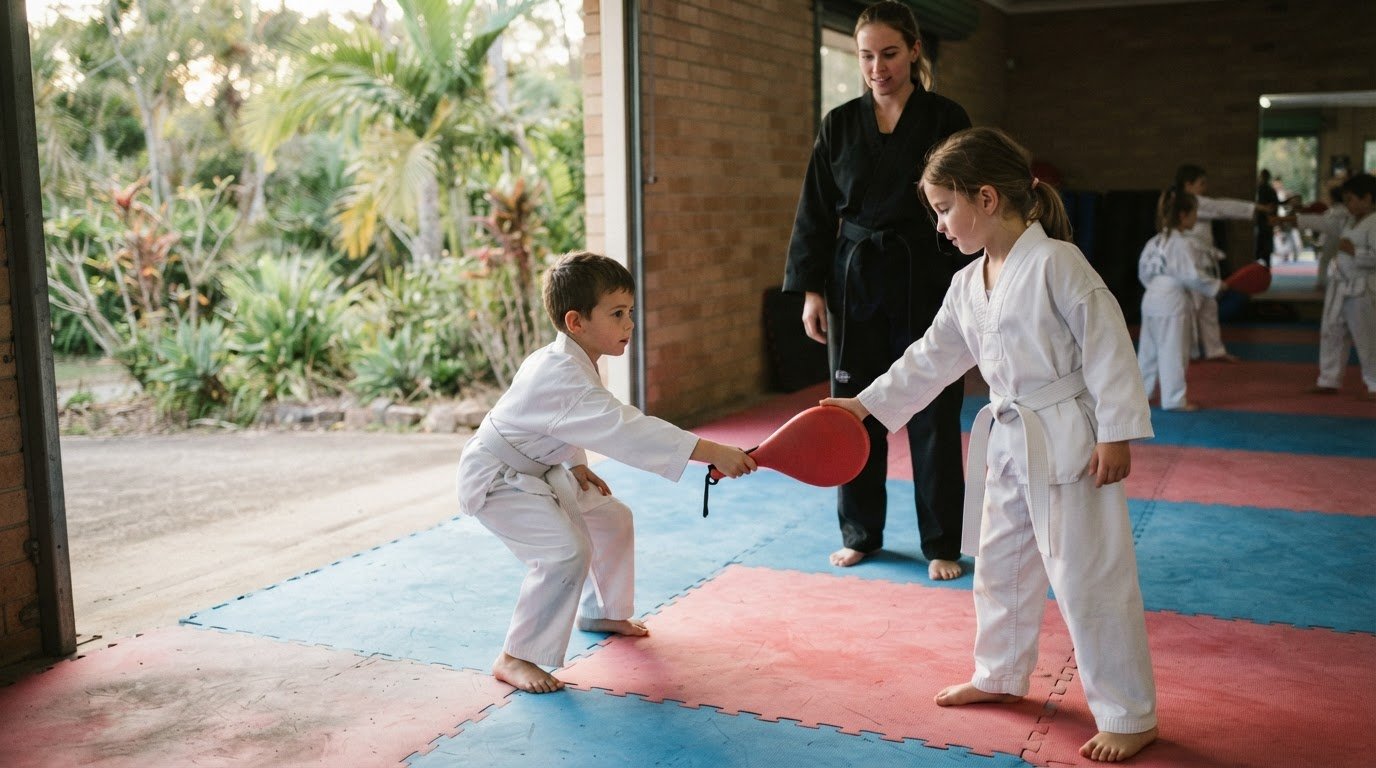
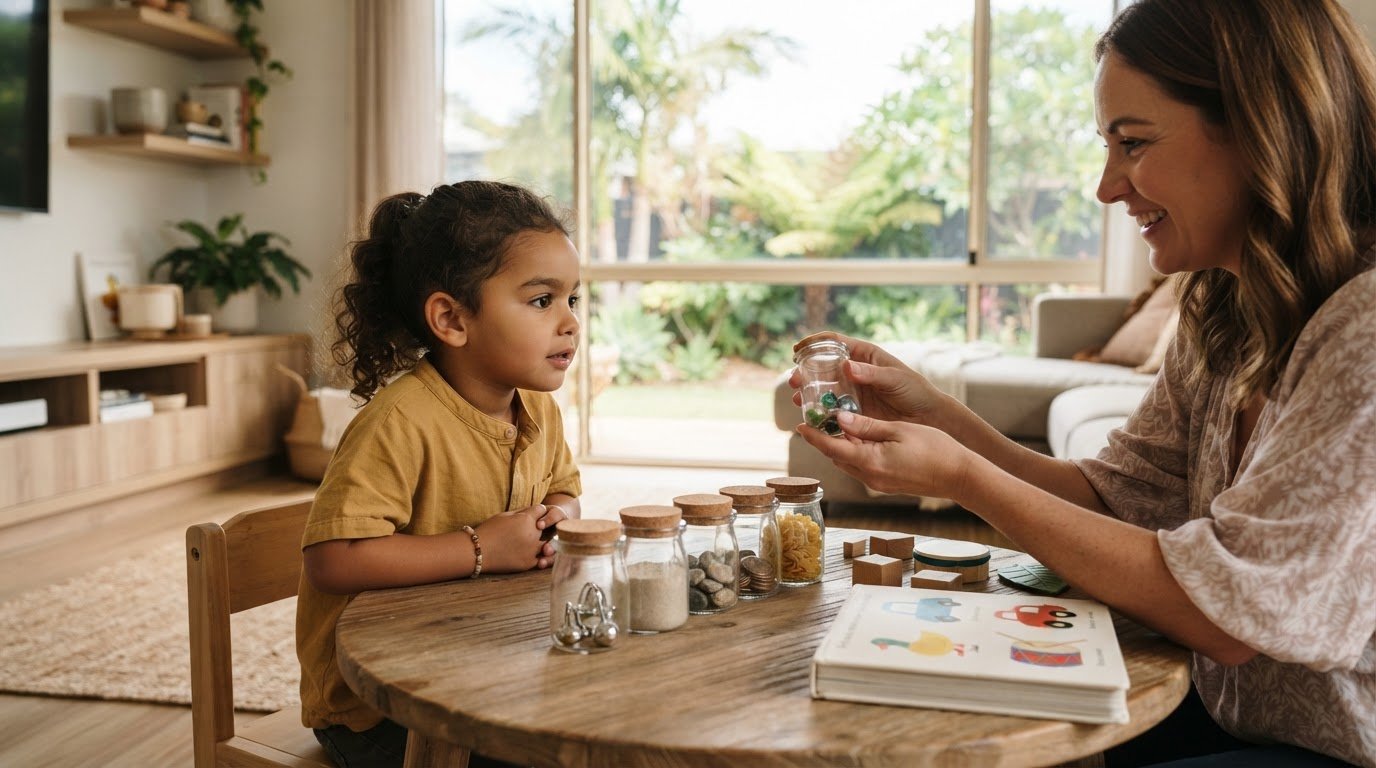
Sensory play can give children hands-on ways to explore textures and describe what feels comfortable, such as handling playdough or water. Notice their cues and let them choose whether to continue. For structured practice through movement, a children’s martial arts program can give children opportunities to follow instructions and practise discipline in a group setting.
3. Emotional awareness and naming feelings
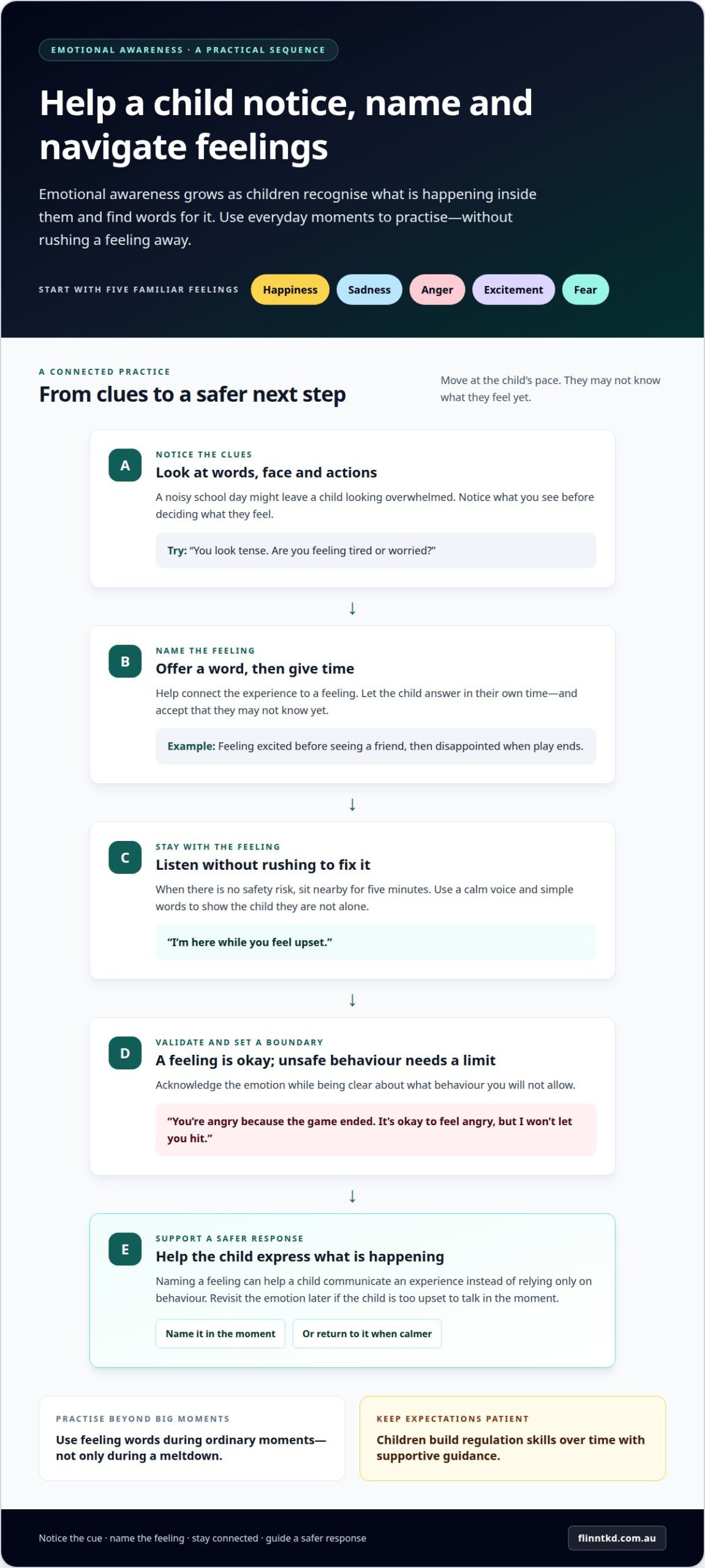
Emotional awareness grows as children notice and name what’s happening inside them. Start with five familiar feelings: happiness, sadness, anger, excitement and fear. A child might feel excited before seeing a friend, then disappointed when play ends. Naming each feeling helps children express an experience instead of relying only on behaviour to communicate it.
Watch your child’s words, face and actions for clues. If they seem overwhelmed after a noisy school day, try, “You look tense. Are you feeling tired or worried?” Give them time to answer, and accept that they may not know yet. You can name the emotion in the moment or revisit it later, once they’re calmer.
Stay with your child’s feelings without rushing to fix them. If there’s no safety risk, sit nearby for five minutes and listen. Use a calm voice and simple words: “I’m here while you feel upset.” This gives your child space to experience stress with support, rather than hearing that the feeling must disappear.
Acknowledge the feeling while setting a clear boundary around behaviour. For example, say, “You’re angry because the game ended. It’s okay to feel angry, but I won’t let you hit.” Recognising an emotion doesn’t mean agreeing with every action. It shows your child you understand, then helps them choose a safer response.
Practise this language during ordinary moments, not only during a meltdown. After a sibling argument, ask each child what they felt and what they wanted the other person to understand. Offer words if they’re stuck: “Were you left out?” Then pause for their answer. This steady emotional learning helps children connect feelings with needs and communicate them more clearly over time.
4. Emotional regulation and problem-solving
Children think more clearly when intense feelings have settled enough for them to consider what happens next. Regulation doesn’t mean avoiding frustration or anxiety. It means noticing the feeling, choosing a safe response and returning to the situation when ready. Practise calming strategies during peaceful moments so they’re familiar when a challenge arises. For families building emotional regulation skills in children in Brisbane, steady practice can turn everyday problems into chances to learn.
Try a simple sequence after a disagreement over a toy: pause, take a few slow breaths, then describe the problem. Invite your child to suggest possible solutions, consider the pros and cons, and choose one to try. For example, siblings could take turns or select another game. Afterwards, ask what worked without treating one solution as the only right answer.
Movement and play make practice feel natural. Sing and dance for a movement break, or play Jenga to practise patience, turn-taking and adjusting a plan when a block shifts. Hide and Seek can help children practise waiting, planning and managing the urge to reveal a hiding place. Keep the focus on trying again, not winning.
If anger escalates, give your child space to process it while keeping everyone safe. Model an acceptable outlet, such as stomping, jumping on a trampoline, scrunching paper or yelling into a pillow. Once your child is calmer, return to the problem together. Avoid demanding a decision during the most intense part of the emotion.
Offer tools, not shame or punishment. A child can count to 10, practise deep breathing or try progressive muscle relaxation when calm. In a stressful situation, prompt one familiar strategy, then let them attempt the next step. These small repetitions can help children develop a personal toolkit as they build emotional regulation skills in children in Brisbane.
For structured practice with instructions, movement and turn-taking, explore children’s martial arts as one activity option.
Flinn Taekwondo Academy: Little Tigers Program (4-6 years)
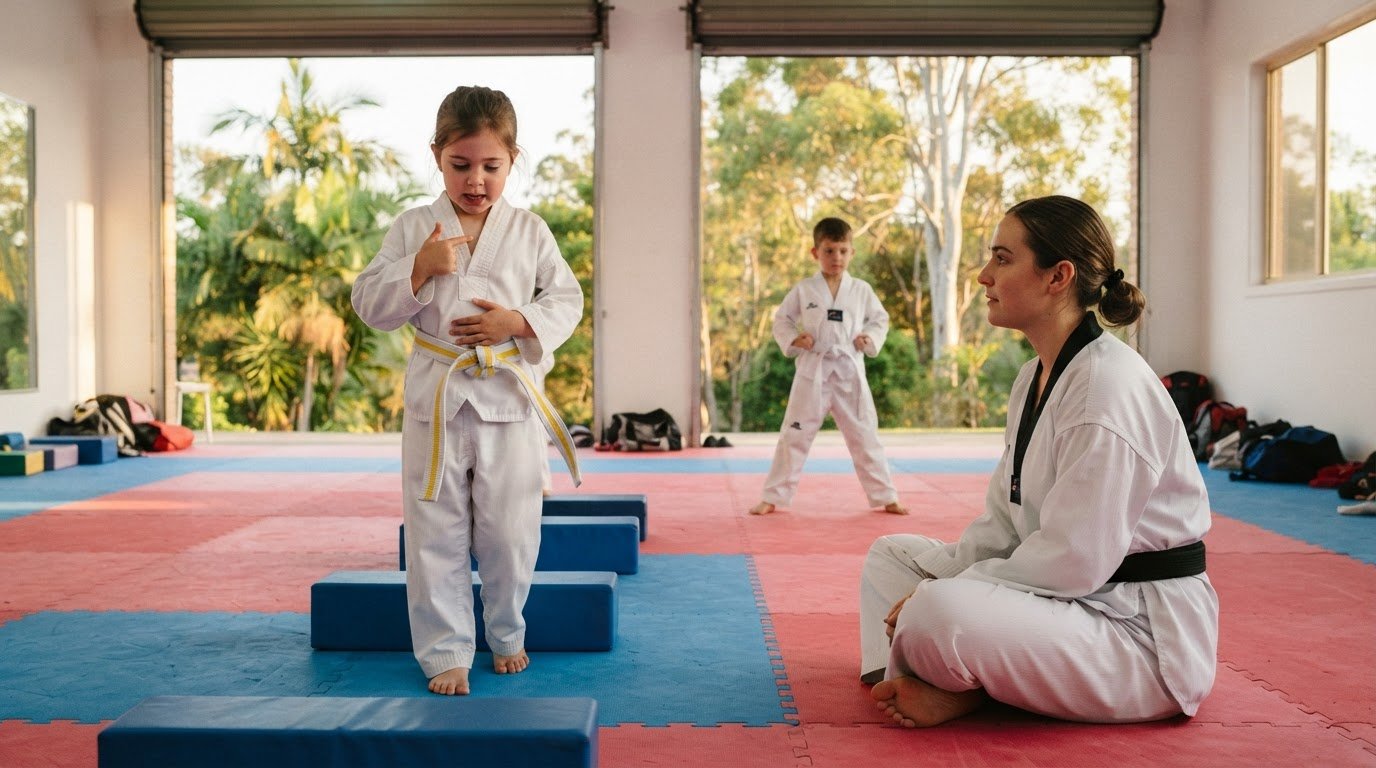
Flinn Taekwondo Academy’s Little Tigers Program is for children aged 4-6 years. It offers a structured setting where young children can practise listening, following instructions and taking turns, skills that support self-control in everyday situations. Taekwondo training can complement the emotional strategies you use at home, while giving children opportunities to build confidence and discipline through learning movement skills.
Consider this program if your child is ready to join a group activity and practise responding to a coach’s directions. It isn’t a replacement for individual therapy or other support when a child needs it, but it can be one part of a broader routine that encourages learning and personal growth.
To explore whether the Little Tigers Program suits your family, visit Flinn Taekwondo Academy.
Keep building skills through everyday practice
Progress often comes through small chances to pause, try a strategy and reconnect after a hard moment. Notice what helps your child feel ready to participate, whether that’s a predictable routine, movement or encouragement from a trusted adult. As your child grows, their needs and interests will change too.
For Brisbane families building emotional regulation skills in children, a structured activity can complement practice at home. Flinn Taekwondo Academy offers the Little Tigers Program for children aged 4-6 years, the Junior Taekwondo Program for ages 7-12, and the Senior & Adult Taekwondo Program for ages 13 and over. Taekwondo can give participants opportunities to practise focus, follow instructions and develop confidence, alongside the emotional support they receive from family and other trusted adults.
If you’re considering a class as part of your child’s routine, contact Flinn Taekwondo Academy to explore the programs. Every steady effort counts, and your encouragement can help your child keep moving forward.
Frequently Asked Questions
What are emotions?
Emotions respond to experiences, thoughts and events, shaping how a child feels and acts. A sudden loud noise might bring fear, while a favourite activity can spark excitement. Emotions aren’t automatically good or bad, and having a difficult feeling doesn’t make a child naughty. Understanding this helps you respond to what your child may be experiencing, rather than focusing only on their behaviour.
What is regulation?
Regulation is the ability to influence how emotions are experienced, expressed and acted on. It doesn’t require a child to hide frustration or pretend everything is fine. A regulated response might mean asking for help after a disappointing result instead of throwing a game piece. Children build this capacity gradually, practising how to choose a response that fits the situation and respects other people.
What does emotion regulation look like in young children?
Regulation can look like a child accepting comfort, asking for a pause, or returning to play after feeling upset. A young child might still need an adult nearby to manage a tricky moment. Progress isn’t always smooth: a child may cope well at home but find a noisy birthday party harder. Notice whether they can reconnect and continue after receiving support.
What does this mean for parents?
Your response can help your child feel understood while learning what to do next. After a tough morning, briefly note what happened before the upset, what your child did, and what helped them recover. Share useful observations with another caregiver or educator so adults can respond consistently. Look for patterns over time rather than drawing conclusions from one challenging day.
What practical strategies help children build emotional regulation at home?
Make a simple feelings chart together, using colours or faces your child recognises. At a calm time, practise pointing to a feeling and choosing a helpful next step, such as asking for space or getting a drink of water. Keep the chart somewhere your child can reach. Later, invite them to decide whether the strategy helped, so they can take part in adjusting it.
What programs or workshops teach emotional regulation to children in Brisbane?
Brisbane families can consider structured activities that practise focus, discipline and confidence alongside support at home. Flinn Taekwondo Academy offers its Little Tigers Program for ages 4-6 and Junior Taekwondo Program for ages 7-12. Taekwondo classes can offer children guided practice in movement and instruction-following, but they aren’t therapy or a dedicated emotional regulation workshop. Choose support that fits your child’s needs.