

Excessive screen use can disrupt a child’s daily routines, but lasting harm isn’t inevitable. Activities for kids who struggle with screen addiction work best alongside clear screen limits and screen-free family habits. A walk, board game, sport or creative project gives children something enjoyable to do offline.
It can be hard to watch a child reach for a screen whenever they’re bored or frustrated. A steady routine helps, especially when the whole family joins in: keep devices away from the dinner table, set aside screen-free time together and make room for activities your child looks forward to.
This article explores how balanced routines, family role-modelling and engaging offline alternatives can help children spend less time scrolling. You’ll learn how to make screen limits clear, choose activities that build confidence and connection, and notice when screen use may be interfering with everyday life.
Key Takeaways
- Make screen boundaries easier to follow by building them into everyday family routines.
- Show children what balanced device use looks like through your own habits and shared screen-free time.
- Offer enjoyable offline choices that match your child’s interests, from creative projects to active play.
- Notice when screen use is crowding out daily life, and consider what may be driving the behaviour.
Balanced routines and screen-free activities
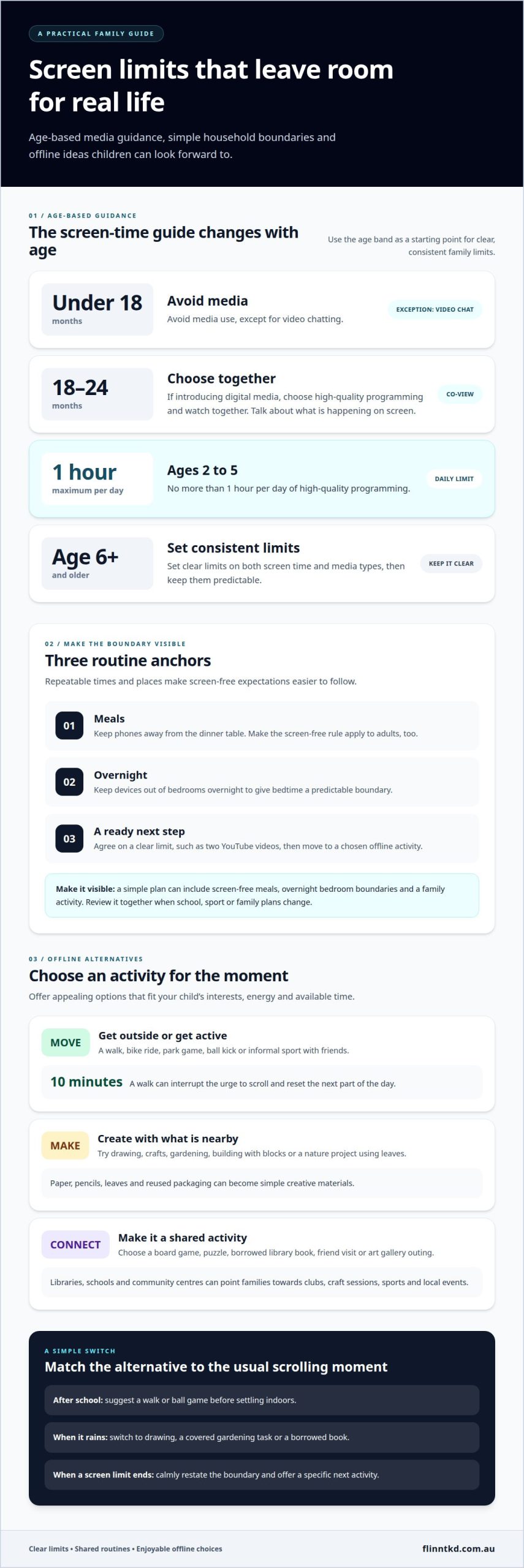
Screen-free routines work best when children have appealing alternatives, such as drawing, building or outdoor play. For children under 18 months, avoid media except video chatting; ages 2 to 5: no more than 1 hour per day of high-quality programming. From age 6, set consistent limits on screen time and media types.
Family Screen-Free Activities
Family screen-free activities are shared pastimes that keep everyone engaged without devices. Toddlers might enjoy blocks, simple puzzles or pretend play; older children may prefer board games, crafts or kicking a ball at the park. Choosing together helps match the activity to your child’s interests and offers a positive alternative to scrolling.
Make the plan specific: set out a puzzle after dinner or choose a Saturday craft. For a clear daily boundary, agree on a limit, such as two YouTube videos, then move to a chosen offline activity. Keep the alternative ready so the next step is easy to follow.
Media-Free Times and Places
Media-free times and places are regular parts of the day, or areas at home, where screens stay out of reach. Keep phones away from the dinner table and devices out of bedrooms overnight. These boundaries reduce screen prompts during meals and bedtime, while giving family routines a predictable shape.
Choose a screen-free zone, such as the dining table, and make the rule apply to adults as well as children. Pair the boundary with an activity: talk about the day over dinner, or keep books and drawing materials in a shared area. A visible routine is easier to follow than a rule that changes each day.
For activities for kids who struggle with screen addiction, consistency matters more than a complicated schedule. Post a simple plan with screen-free meals, overnight bedroom boundaries and a family activity, such as a board game. Review it together when school, sport or family plans change, so the routine stays practical and clear.
Family environment and parental screen habits
Children notice how adults use devices, so parental habits shape what feels normal at home. Put your phone aside during a conversation, playtime or shared meal, and give your child your attention. For children aged 6 and older, set consistent limits on screen time and media types. Make the limits predictable, then follow them yourself.
For children aged 18 to 24 months, if you introduce digital media, choose high-quality programming and watch together. Talk about what’s happening on screen, rather than leaving the program on in the background. Turn off non-essential notifications on family devices, too. Fewer alerts mean fewer interruptions during a story, conversation or shared task.
Model screen-free family time by choosing one shared activity and joining in. Make a puzzle together, draw at the kitchen table or play a simple game. Let your child help choose, then put your own phone away. This shows that connection and enjoyment don’t depend on a screen.
- When you feel the urge to check: silence non-essential alerts and stay with the activity.
- When your child asks for a device: calmly restate the limit and offer a specific alternative, such as drawing.
- When plans change: explain the new screen boundary clearly and apply it consistently.
Boredom, stress, sadness and frustration can prompt children to use screens to manage their feelings. If your child becomes upset when screen use ends, acknowledge the feeling, keep the boundary calm and offer a manageable next step, such as helping prepare a snack. Avoid turning the moment into a long negotiation. Your steady response gives your child a chance to sit with the feeling without immediately returning to a device.
A regular, coached activity can give children another purposeful commitment beyond screens. Explore a structured, screen-free activity as one option for building routine and focus.
Offline alternatives to scrolling
A 10-minute walk can interrupt the urge to scroll and reset the next part of the day. In Brisbane, outdoor alternatives include cycling, gardening, kicking a ball, meeting a friend or visiting an art gallery. Choose an activity that fits your child’s energy and the time available.
Turn a short outing into a clear plan: walk to a nearby park, spot local birds, then head home together. A child who enjoys making things could help water garden beds or collect fallen leaves for a nature project. For active play, take a ball or ride bikes along a suitable local path.
Schools, libraries and community centres can help families discover offline options. Look for school club notices, library event calendars and community centre activity listings. These places can point you towards reading groups, craft sessions, sports and local events, giving children options beyond entertainment at home.
Free or low-cost ideas include walking, playing in a local park, gardening with household tools and making crafts from reused materials. A family board game or borrowed library book can also provide an indoor option. Costs for organised activities vary, so everyday choices help keep the routine flexible.
- For movement: try a walk, bike ride, park game or informal sport with friends.
- For creativity: use paper, pencils, leaves or recycled packaging for a simple project.
- For connection: invite a friend over, visit an art gallery or share a family activity.
Match the alternative to the moment that usually triggers scrolling. If your child reaches for a device after school, suggest a walk or ball game before settling indoors. If rain changes the plan, switch to drawing, a gardening task under cover or a borrowed book. Having an indoor and outdoor option makes the change easier to maintain.
For activities for kids who struggle with screen addiction, the best offline choice is one they can return to. Let your child choose between two realistic options, such as cycling or gardening. That small decision gives them ownership while keeping the next step clear.
Screen dependency and excessive screen use
Screen use deserves attention when it repeatedly pushes aside sleep, schoolwork, movement or time with family. Macquarie University research estimated around 100,000 Australian children have gaming disorder, with a further 350,000 at risk of smartphone addiction. These estimates highlight why it helps to notice patterns, not simply count minutes.
Look for changes in daily life. A child may reach for a device whenever boredom, stress, sadness or frustration comes up. Ask what they were feeling before they started scrolling or gaming. This can show whether screens are serving as a distraction or helping them manage feelings, and where another coping activity could fit.
One difficult moment doesn’t define a child’s relationship with screens. Look for repeated patterns, such as arguments whenever gaming stops, less interest in offline hobbies, or screens taking over planned family time. Note the situation and what followed. That record can help you discuss the pattern calmly and choose a realistic change.
If your child struggles when device use ends, keep the boundary steady and offer a clear next step. After gaming, for example, they might help prepare dinner or choose a book. If screen use is disrupting daily life, cognitive behavioural therapy can help identify triggers, examine thoughts and behaviours, and build healthier habits.
Small changes to a device can also reduce its pull. Grayscale display settings make a phone less stimulating and scrolling less enjoyable. Turn off non-essential notifications so alerts don’t keep drawing attention back to the screen. Combine these adjustments with offline interests rather than relying on device settings alone.
Discuss recurring concerns with your child using specific examples, such as missed homework or repeated late-night scrolling. Focus on what happened and what support could help, rather than labelling your child as addicted. A shared plan can identify triggers, set a clear boundary and make room for activities that offer connection, challenge and purpose.
Help your child build confidence and focus through structured martial arts training as one purposeful activity beyond screens.
Flinn Taekwondo Academy: Little Tigers Program (4-6 years)
Flinn Taekwondo Academy offers the Little Tigers Program for children aged 4-6 years, giving young children a structured activity beyond screens. Taekwondo training can help children develop discipline, confidence and physical fitness through active participation and focused practice. It’s one option for families seeking a regular, screen-free commitment that builds skills over time.
Older children can explore the Junior Taekwondo Program (7-12 years), while the Senior & Adult Taekwondo Program is for participants aged 13 years and older. The right fit depends on your child’s age and interest in learning Taekwondo. Training complements family routines and other offline activities; it isn’t a standalone solution for excessive screen use.
If you’re considering a structured activity for your child, contact Flinn Taekwondo Academy to learn more about its programs.
Build a routine your child can own
Make offline time feel like part of your child’s life, not a punishment for using screens. Invite them to choose an activity and help prepare what they need. That small role can turn “put the device away” into a positive plan they help shape.
Notice what keeps your child engaged: learning a skill, moving with others or working towards a personal goal. Use that interest to guide your family’s choices, and recognise progress through effort and focus. If an activity doesn’t suit, adjust the plan together rather than treating the change as a failure.
For families seeking a regular, structured activity, Taekwondo can offer a practical way to practise focus and build confidence beyond the screen. Explore whether it fits your child’s interests and your family’s routine. Contact Flinn Taekwondo Academy to discuss a suitable next step. With steady support and a child’s own sense of purpose, new habits can grow one practice at a time.
Frequently Asked Questions
Can excessive screen time cause lasting effects in children?
Excessive screen use can affect a child’s wellbeing when it regularly displaces sleep, learning, relationships or physical activity. That doesn’t mean lasting harm is inevitable. Consider how screen use fits into your child’s life, including what they watch or play and whether they can enjoy other activities. Focus on restoring balance and watch how your child responds as routines change.
How can I tell if my child’s screen use is unhealthy?
Consider how screen use affects your child’s responsibilities, relationships and ability to shift attention. Compare their behaviour with their usual pattern: do they often abandon plans for a device or seem unable to settle into other interests? Keep brief notes about when this happens and what helps them re-engage, rather than relying on screen minutes alone.
What strategies can families do together to reduce screen time?
Make a family plan together so children understand the reasons for it and can help shape realistic boundaries. At a weekly check-in, each person can name one device habit they’ll change and one shared activity to try, such as preparing a meal together. Adults should follow the same expectations. A plan feels fairer when it applies to the whole household.
What low-cost indoor activities help children reduce screen time?
Try a living-room scavenger hunt, a paper-aeroplane distance challenge, sock basketball into a laundry basket or a story-building game where each person adds a sentence. These activities use familiar household items and suit different ages. Give your child a small role, such as designing clues or keeping score, to make taking part more engaging than simply offering an alternative.
What are signs that a child’s screen use may be harmful or addictive?
Pay attention to repeated difficulty stopping, intense distress around device access, or screens crowding out activities your child previously valued. Look for changes in different settings, such as at home and during family outings, rather than judging one disagreement in isolation. The key concern is whether screen use persistently interferes with your child’s everyday functioning and relationships.
How can parents gradually reduce screen time without conflict?
Start with a conversation at a calm time, not during an argument over a device. Agree on one change your child can understand, such as ending a particular session before a favourite routine begins. Explain the transition in advance, listen to what feels difficult and keep the expectation consistent. A child who helps choose the replacement activity may be more willing to try it.