What if the most effective way to build your child’s resilience isn’t just about mastering ground grappling, but about choosing the specific discipline that matches their personality? You want the best for your family, and you’ve likely noticed the rise of bjj across Brisbane as a popular path for self-defense. It’s normal to feel a bit hesitant about close-contact rolling or to wonder if the technical learning curve is too steep for a young beginner.
We believe every student deserves a training environment that feels like home. This guide breaks down what Brazilian Jiu-Jitsu offers and compares it to striking-based arts like Taekwondo to help you make an informed choice. You’ll discover the core differences between ground fighting and standing defense, along with how each style builds character. We also explore why over 315,000 Australians now choose martial arts to foster focus and empowerment according to recent national sports data. You’re about to find the perfect fit for your family’s journey toward Black Belt excellence.
Key Takeaways
- Learn the core principles of Brazilian Jiu-Jitsu and how its unique philosophy of leverage over strength empowers practitioners of all sizes.
- Understand the strategic mechanics of bjj, from mastering ground control positions to the technical precision required for safe submissions.
- Compare the benefits of ground-based grappling versus the disciplined, high-energy striking of Taekwondo to find the best fit for your family’s goals.
- Evaluate the right environment for your child by weighing the physical intimacy of grappling against the structured, confidence-building focus of traditional martial arts.
- Discover the “Flinn Way” and see how North Brisbane families use disciplined training to cultivate life skills and a standard of Black Belt excellence.
What is BJJ? Understanding Brazilian Jiu-Jitsu in Brisbane
If you’re looking to challenge yourself physically while building mental resilience, you’ve likely heard of Brazilian Jiu-Jitsu. It’s a martial art that focuses on grappling and ground fighting, teaching you how to control an opponent through technique rather than raw power. To understand the basics, you can explore What is Brazilian Jiu-Jitsu and how it evolved from traditional Japanese Judo into the global sport it is today. The Gracie family famously pioneered this system, proving that a smaller person can successfully defend themselves against a larger attacker by using leverage and proper mechanics.
In a typical Brisbane bjj class, you’ll start with a dynamic warm-up to prepare your joints and muscles. This is followed by technique drills where you’ll practice specific movements and transitions with a partner. The session usually concludes with “rolling,” which is live sparring that allows you to apply what you’ve learned in a controlled, safe environment. This structure ensures you build a solid foundation of skill before testing your abilities against a resisting partner.
The Core Philosophy: Why BJJ is Unique
BJJ stands out because it prioritizes taking a fight to the ground. By removing the opponent’s ability to use their reach or striking power, you neutralize many physical advantages. Many Brisbane locals call it “human chess” because it requires intense problem-solving and focus under pressure. Unlike many other martial arts, there’s no striking involved. You won’t find punches or kicks here. Instead, you’ll learn to use your body as a tool for control and submission, making it a highly technical discipline that appeals to analytical minds.
The Rise of BJJ in the Australian Martial Arts Scene
The growth of the UFC and Mixed Martial Arts (MMA) since the early 1990s has significantly fueled the popularity of bjj across Queensland. You’ll find academies popping up in almost every suburb, creating a vibrant competitive and recreational scene. While traditional schools like ours might use the term “dojang,” BJJ practitioners typically train in academies that foster a strong sense of community and team spirit.
As you begin your journey, you’ll encounter specific terms that define the culture. You’ll need to know the difference between:
- Gi vs No-Gi: Training in the traditional heavy cotton uniform versus training in shorts and a rash guard.
- The Guard: A fundamental position where you use your legs to control an opponent while you’re on your back.
- Tapping Out: The physical signal of submission that ensures everyone stays safe during training.
Learning to “tap” is a lesson in humility and safety. It allows you to push your limits and learn from mistakes without the risk of injury. This focus on mutual respect and personal growth is why so many Australians are drawn to the mats every day.
How BJJ Works: Positions, Submissions, and Strategy
Brazilian Jiu-Jitsu is often called human chess. It’s a martial art that prioritises technique and leverage over raw power. You’ll learn to take a fight to the ground, where you can neutralise a larger opponent’s reach and strength. This discipline builds incredible core strength and cardiovascular endurance. It’s a full-body workout that challenges your mind just as much as your muscles. You’ll develop the focus needed to solve physical puzzles while under pressure.
Primary Ground Positions Explained
Success in bjj depends on your ability to control space. You’ll master a hierarchy of positions designed to keep you safe while you work toward a finish. The Guard is the most unique aspect of this style. While being on your back usually signals defeat in other sports, the Guard allows you to use your legs as shields and weapons. You can sweep an opponent to the floor or set up a submission from underneath.
Once you move past the Guard, you’ll work toward Mount and Side Control. These are dominant pins. You use your body weight and hip pressure to immobilise your partner. Transitioning between these spots requires fluid movement and constant awareness. You must learn to anticipate your opponent’s escape attempts to maintain your advantage. This constant flow keeps you engaged and improves your overall coordination.
The Role of the Uniform: Gi vs No-Gi
Brisbane academies typically offer two distinct styles of training. Traditional Gi training involves a heavy cotton uniform. You’ll use the fabric of the collar, sleeves, and trousers to establish strong grips. This style is often slower and more technical. It’s an excellent way for beginners to learn the fundamental mechanics of control. In contrast, No-Gi training uses rash guards and shorts. Without the handles provided by the Gi, the pace quickens. You’ll rely more on underhooks and overhooks to control your partner.
- Gi Training: Teaches patience, grip strength, and complex defensive systems.
- No-Gi Training: Focuses on speed, wrestling-based takedowns, and explosive movement.
- The Beginner’s Choice: Many Brisbane students start with the Gi to build a solid foundation before adding No-Gi classes to their weekly schedule.
You’ll begin “live” training, or rolling, very early in your journey. Most schools introduce sparring within the first 10 days of classes. This isn’t about aggression. It’s about applying what you’ve learned against a resisting partner in a safe environment. This practical application is one of the key benefits of martial arts for kids and adults, as it builds real-world confidence. The goal is always the submission. By using joint locks or chokeholds, you force a “tap.” Tapping out is a vital safety mechanism that ensures everyone can train hard and return to the mats the next day.
If you’re ready to build resilience and join a supportive community, see how Team Flinn helps you reach your goals through disciplined training and expert coaching.

BJJ vs Taekwondo: Striking vs Grappling for Brisbane Locals
Deciding between striking and grappling is a pivotal step for any Brisbane local starting their martial arts journey. BJJ offers a deep dive into the world of ground fighting and submissions. Taekwondo provides a high-energy focus on standing techniques and precision kicking. Both disciplines foster resilience, but the experience on the mats varies significantly based on your personal goals.
Vertical vs Horizontal: Choosing Your Fighting Plane
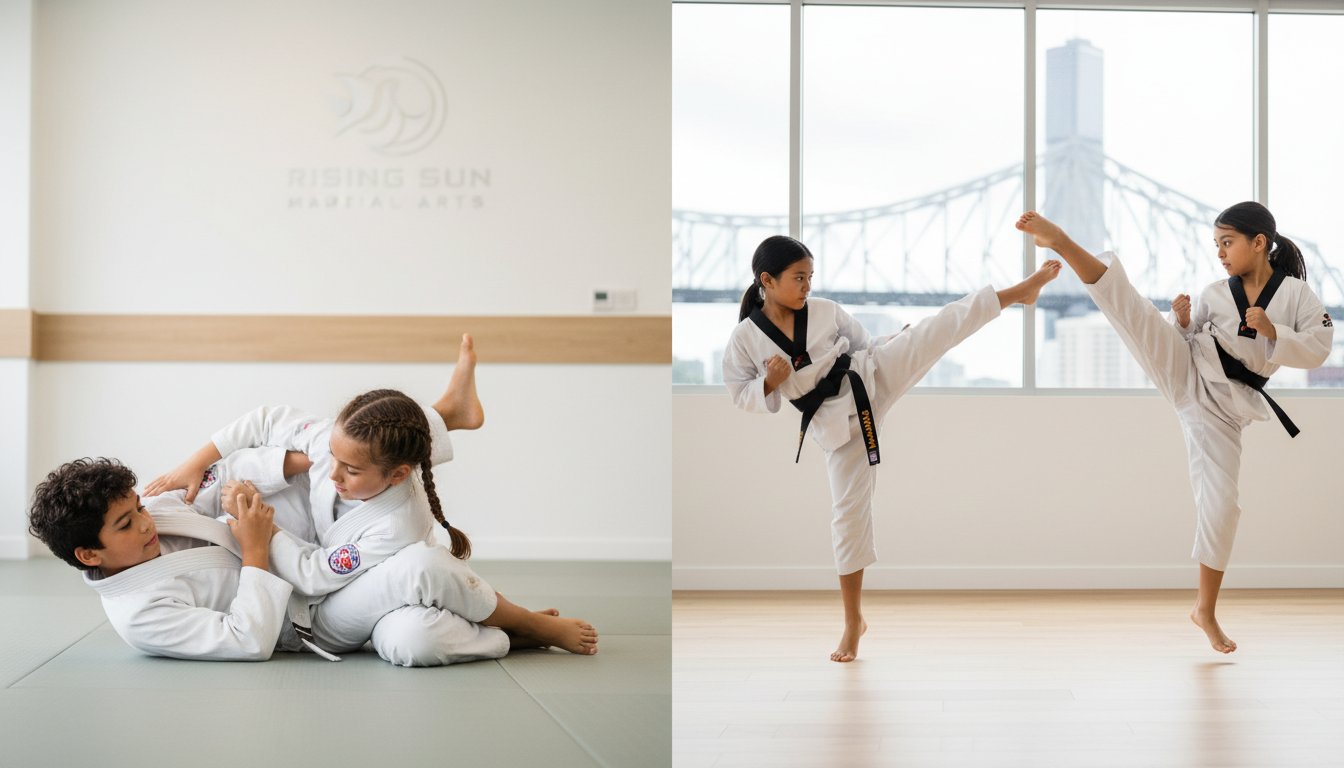
Taekwondo is built on the principle of keeping distance. You’ll master explosive kicks and rapid footwork to control the space around you. In contrast, bjj teaches you to close that gap and secure a clinch. The goal in grappling is to neutralize an opponent’s reach by taking them to the floor. Many Brisbane practitioners eventually find that these styles complement each other. Learning to stay upright is vital, but knowing what to do if you’re taken down completes your skill set.
Class Environment and Discipline
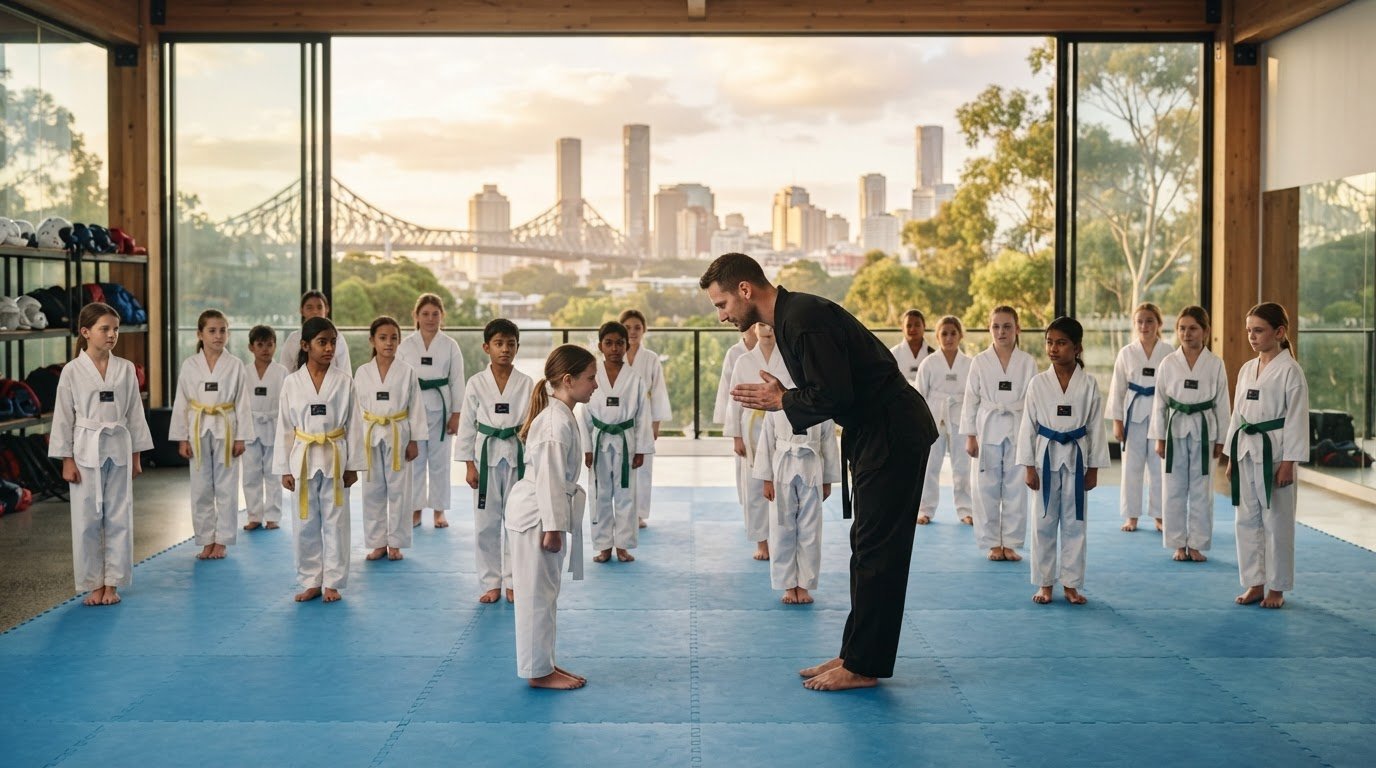
The atmosphere in your training space determines how consistently you’ll show up. Taekwondo dojangs emphasize traditional etiquette and a clear hierarchy. You’ll practice bowing and follow a structured curriculum that includes Poomsae. These patterns improve your focus and memory. Many grappling gyms operate with a more informal, ‘club’ atmosphere where the focus is almost entirely on live rolling.
Which environment suits your child’s personality? If they need a sense of order and clear milestones, the ‘Flinn way’ helps them build confidence through a proven system. You can explore how this structure benefits young learners in Taekwondo classes in North Brisbane. This disciplined approach ensures every student understands the value of hard work and Black Belt excellence from day one.
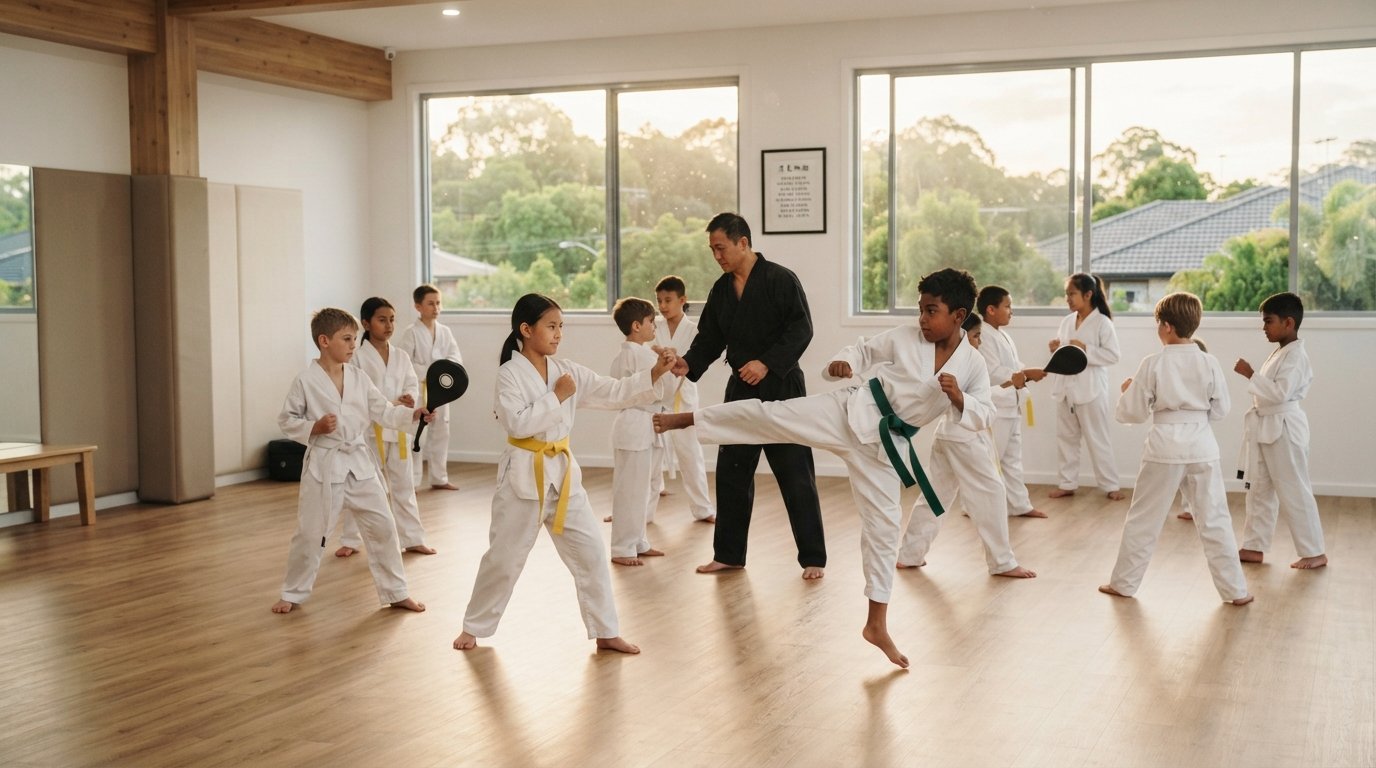
For a beginner, the thought of grappling with a stranger can be daunting. The close-range physical contact required in bjj can feel intense during your first few sessions. Taekwondo offers a more accessible entry point for those who value their personal space. You start by learning to strike air or pads, gradually building up to partner work as your confidence grows.
From a self-defence perspective, the two arts solve different problems:
- Taekwondo: Teaches you to identify threats early, use your voice, and strike to create an opening so you can escape a grab.
- Grappling: Focuses on survival and control once a fight has already reached the ground.
A 2022 report on Australian community sports showed that 72% of parents choose striking-based arts for their children to improve their standing coordination. This foundation of balance and distance control is essential for ‘bully-proofing’ before a child ever needs to worry about floor-based techniques. Whether you prefer the vertical precision of the dojang or the horizontal strategy of the mat, Brisbane offers world-class facilities to help you start your journey.
Is BJJ the Right Fit for Your Family in North Brisbane?
Choosing a martial art in the Albany Creek area requires a balance between physical challenge and emotional comfort. While bjj offers incredible ground-fighting skills, it isn’t always the first choice for every family member. Safety is a primary concern for parents. You want to know your child is protected while they learn to protect themselves. The close-quarters nature of grappling can be a hurdle for some. This physical intimacy often feels overwhelming for younger children who value their personal space.
The structured progress of a student is another factor to consider. BJJ often follows a less frequent, more subjective promotion path where belts can take years to earn. This can be frustrating for students who thrive on clear, measurable milestones. In contrast, Taekwondo provides a highly structured belt system. It rewards hard work at consistent intervals, which helps children stay motivated and focused on their goals. For families in North Brisbane, finding a club that balances this discipline with a welcoming atmosphere is essential for long-term success.
Martial Arts for Young Children (4-6 Years)
Toddlers in the 4 to 6 age bracket are still mastering basic motor skills and spatial awareness. Striking arts like Taekwondo provide a superior foundation for coordination and focus. Our “Little Tigers” approach prioritizes balance and discipline before introducing full-contact grappling. This builds a foundation of confidence that carries over into school and home life. It’s about teaching them to stand tall before they learn to roll. Learn more about how we support your journey in our guide to Self Defence Classes Brisbane: Empowering Families.
Adult Fitness and Stress Relief
Adults in North Brisbane often seek a workout that relieves stress without causing burnout. While bjj is an intense, high-energy sport, the injury risk can be higher for older beginners due to the unpredictable nature of live rolling and joint manipulation. Taekwondo offers a controlled environment where you can improve your cardiovascular health and flexibility with less impact on your joints. It’s a holistic mind-body practice that fosters a strong social bond within the local community. You get the benefits of an intense workout while maintaining the longevity of your physical health.
Joining “Team Flinn” means choosing a path of Black Belt excellence in a safe, supportive environment. We invite you to experience our welcoming atmosphere firsthand and see why so many Albany Creek families choose us. Book your trial session at Flinn Taekwondo today and start your martial arts journey with confidence.
Discover the Flinn Way: Why Many Choose Taekwondo Over BJJ
Flinn Taekwondo Academy stands as the North Brisbane leader in disciplined striking and personal development. While bjj offers a specific set of skills focused on ground grappling, many local residents find that the upright, dynamic nature of Taekwondo better aligns with their fitness and self-defence goals. We teach more than just physical techniques. Our “Black Belt Excellence” philosophy serves as a blueprint for success that transcends the training mats. This mindset encourages you to apply discipline, integrity, and perseverance to every aspect of your life, from the classroom to the boardroom.
Our structured programs cater to every age group. We’ve designed specific curriculums for kids, juniors, and adults to ensure the training is always age-appropriate and challenging. You’ll notice the difference the moment you walk through our doors. The atmosphere is professional yet welcoming. We focus on building your confidence through incremental wins. Every stripe earned on a belt represents a hurdle overcome and a new level of self-belief achieved. It’s about personal growth as much as it’s about physical mastery.
Our High-Performance and Family Programs
If you want the thrill of competition without the heavy ground-fighting associated with bjj, our Olympic-style sparring is the perfect fit. This high-performance stream focuses on speed, strategy, and explosive power. It’s a fantastic way to improve cardiovascular health while learning a world-class sport. For students who prefer a different kind of challenge, we offer Technical Poomsae training. These traditional patterns require intense focus and memory, helping you develop a sharp mind and perfect body control.
- Olympic Sparring: Develop elite reflexes and agility in a safe, controlled environment.
- Technical Poomsae: Master the art of precision and mental clarity through traditional forms.
- Team Flinn Culture: Join a community built on mutual respect and shared goals.
We take pride in “Team Flinn.” This isn’t just a martial arts school; it’s a community where families train together and friendships flourish. We foster an environment where senior students mentor beginners, ensuring everyone feels supported on their journey to black belt and beyond. You aren’t just another student here; you’re part of a legacy of excellence.
Start Your Journey in North Brisbane Today
Your path to transformation begins at our Albany Creek location. When you visit, you’ll meet Master Jeff Flinn and our dedicated coaching team. We make starting easy. Our trial membership allows you to experience our classes and meet our community without a long-term commitment. You can see for yourself how our disciplined approach and supportive culture can help you or your child reach new heights. Don’t wait to start building a stronger, more confident version of yourself.
Take the first step toward excellence today. Experience the “Flinn Way” and discover why we are the preferred choice for martial arts in North Brisbane. We look forward to welcoming you to the dojang and helping you achieve your goals.
Start Your Journey Toward Black Belt Excellence Today
Choosing the right martial arts path depends on your personal goals and what you want for your family. While bjj offers a deep dive into ground-based grappling and strategy, Taekwondo provides a dynamic alternative focused on discipline, striking, and upright confidence. Both paths build resilience, but the Flinn Way emphasizes a holistic approach to character building that stays with you long after you leave the mats.
As a family-owned North Brisbane institution since 2013, Flinn Taekwondo Academy is dedicated to your growth. Master Jeff Flinn, a 7th Dan Black Belt, leads our sessions with a focus on precision and safety. Whether you’re an adult looking for a new challenge or have a child ready for our specialised Little Tigers program for ages 4 to 6, we’ve created a space where everyone belongs. You’ll find a supportive community that values hard work and celebrates every milestone on the road to success.
Don’t wait to discover your potential and build lasting life skills. Book a Trial Class at Flinn Taekwondo Academy Today! We can’t wait to welcome you to the team and help you start your own martial arts story in a fun, professional environment.
Frequently Asked Questions
Is BJJ better than Taekwondo for self-defence?
Both martial arts offer distinct advantages depending on the distance of the encounter. BJJ excels in ground grappling and submissions, while Taekwondo provides superior distance management and powerful striking capabilities. A 2023 analysis of defensive tactics shows that 85 percent of physical altercations involve some form of grappling, but Taekwondo gives you the tools to end a confrontation before it reaches the ground. At Flinn Taekwondo, we focus on “Black Belt excellence” to ensure you’re prepared for any situation.
Can my 4-year-old start BJJ in Brisbane?
Yes, most academies in Brisbane offer specialized programs for children as young as 4 years old. These introductory classes focus on fundamental motor skills, balance, and following instructions rather than complex submissions. Early childhood experts state that 90 percent of brain development occurs before age 5, making this an ideal time to start. Your child will build resilience and confidence through structured play. Team Flinn provides a welcoming environment where your child can begin their journey toward personal growth.
What is the risk of injury in BJJ compared to other martial arts?
BJJ carries a higher risk of minor orthopedic injuries to the joints but a lower risk of head trauma compared to striking-based arts. Data from the Journal of Sports Science and Medicine suggests that BJJ practitioners experience approximately 9.2 injuries per 1,000 athlete exposures. Most incidents are skin abrasions or finger strains that don’t require medical intervention. We prioritize safety by teaching you controlled movements and proper falling techniques from your very first lesson to keep you on the mats.
Do I need to be fit to start BJJ or Taekwondo?
You don’t need to be in peak physical condition to start your martial arts training. Most beginners find that the classes themselves provide the necessary conditioning to improve their health. A standard 60 minute session can burn between 500 and 800 calories depending on the intensity of the drills. You’ll naturally build cardiovascular endurance and functional strength as you progress through the ranks. Our instructors at Flinn Taekwondo adapt the pace to suit your current fitness level while encouraging you to improve.
How long does it take to get a Black Belt in BJJ?
Earning a black belt in bjj typically requires between 8 and 12 years of consistent, dedicated training. This timeline is longer than many other disciplines because the grading system relies heavily on live sparring and technical mastery. The International Brazilian Jiu-Jitsu Federation sets specific minimum time requirements for each belt rank, totaling several hundred weeks of active practice. It’s a journey that demands discipline, but the sense of achievement when you reach that milestone is life-changing.
Is BJJ suitable for women and girls?
Martial arts like bjj are excellent for women and girls because they emphasize leverage and technique to overcome larger opponents. Female participation in Australian martial arts clubs has increased by 15 percent since 2021, reflecting a growing demand for practical empowerment. These classes provide a supportive community where you can build physical strength and mental toughness. We foster an inclusive atmosphere at Flinn Taekwondo, ensuring every girl and woman feels respected and capable as they learn vital life skills.
What should I wear to my first martial arts class in Brisbane?
Wear breathable, athletic clothing such as a t-shirt and shorts without zippers or pockets for your first trial session. It’s important to avoid jewelry or sharp hair accessories to ensure the safety of yourself and your training partners. Most Brisbane schools will provide a traditional uniform, or Gi, once you decide to join the club permanently. Bring a water bottle and arrive 10 minutes early to meet the team. We make it easy to start your journey with a low-pressure introduction to our community.