What if better seated posture starts with movement, not sitting still? A child’s core includes the abdominal and back muscles, diaphragm and pelvic floor. Together, these muscles help stabilise the body during everyday movement. For families exploring core strength exercises for kids in Brisbane, playful practice can support posture and help children sit comfortably for longer.
Core strength is useful beyond sport. It also supports everyday activities such as sitting, balancing and moving with control. The aim isn’t to make exercise feel like a chore. Short, enjoyable games let children build strength and endurance at their own pace.
This guide explains how the core works, how it can support posture and seated attention, and how to try simple activities at home. You’ll find playful ideas using everyday movement and basic equipment, along with steps for the dead bug exercise. Start with an activity your child enjoys, keep the movements controlled, and build from there.
Key Takeaways
- Understand how the diaphragm, pelvic floor, abdominal muscles and back muscles work together to stabilise a child’s body.
- Notice how building core strength can support posture, balance and comfortable sitting during everyday activities.
- Turn movement into practice with playful options such as inchworms, Twister and simple equipment.
- Learn the dead bug setup and how to adjust the movement so your child can practise with control.
How core strength supports posture and seated attention
A child’s core includes the diaphragm, pelvic floor, abdominal muscles and back muscles. Together, these muscles stabilise the trunk as children reach, turn, balance and sit. When the body feels steady, a child can focus less on holding themselves upright and more on a classroom task, such as writing or listening during a lesson.
Core strength can support posture and help children sit comfortably for longer. A helpful seated setup starts with both feet on the floor, giving the body a stable base. At a desk, notice whether your child can keep their feet supported while working. Fidgeting, low endurance or slumping may be associated with poor core strength, but one sign alone doesn’t establish the cause.
Fees for children’s fitness, gymnastics or movement classes in Brisbane depend on the program, session frequency and what it includes. The price depends on the case and is given after a quote request.
How often should children practise? Include core-focused movement in regular play throughout the week, adjusting it to your child’s energy, recovery and other activities. Climbing at a playground, for example, challenges the trunk as children move and balance.
How long should a children’s core workout last? Keep each bout short enough for your child to maintain controlled movement and good form. Increase the duration gradually as endurance improves, rather than pushing through tired, untidy movements.
Children can start strength exercises through age-appropriate movement and play. For weighted resistance training, Sydney Children’s Hospitals Network recommends six as the youngest age, with supervision from a parent, carer or trained exercise professional.
Try a simple posture reset after a school activity: place both feet flat, sit tall, then reach forward and return to centre with control. This connects core engagement to a familiar seated task without turning movement into a test. Core strength supports stability, but it doesn’t guarantee injury prevention or explain every posture difficulty.
Benefits of core strength
Core strength helps children control their bodies during functional movements, from getting up off the floor to reaching for a ball. These actions combine several skills: stabilising the trunk, moving the arms or legs, and adjusting balance. During a standing catch, for example, a child needs to stay steady while tracking and reaching for the ball. Practising varied movements can build control for play and daily tasks.
Coordination develops as children learn to move different body parts together. Try a simple sequence: stand tall, step sideways, then reach across the body to touch the opposite knee. The trunk must stay steady while the arms and legs move. Turn it into a game by repeating the sequence to a clap or changing direction when an adult calls “switch”. Keep the pace comfortable so control matters more than speed.
Core practice can also support confidence with physical challenges. A child who holds a stable position during a balance game may feel more prepared to try a new movement. That doesn’t mean strength alone prevents injuries. Instead, controlled practice gives children a chance to build body awareness and respond to changing positions during play, sport or everyday tasks.
Older children with joint hypermobility may experience joint weakness or instability during active play or sport, according to Sydney Children’s Hospitals Network. In these situations, focus on controlled movements within a comfortable range, such as standing on one leg beside a stable support. Stop the activity if it causes pain, and avoid turning flexibility into a competition.
For a practical game, set out a few soft objects and invite your child to pick them up from different positions, then place them in a container. They’ll practise bending, reaching and returning to standing with control. If your child enjoys structured movement, children’s martial arts training can connect physical skills with coached practice and discipline.
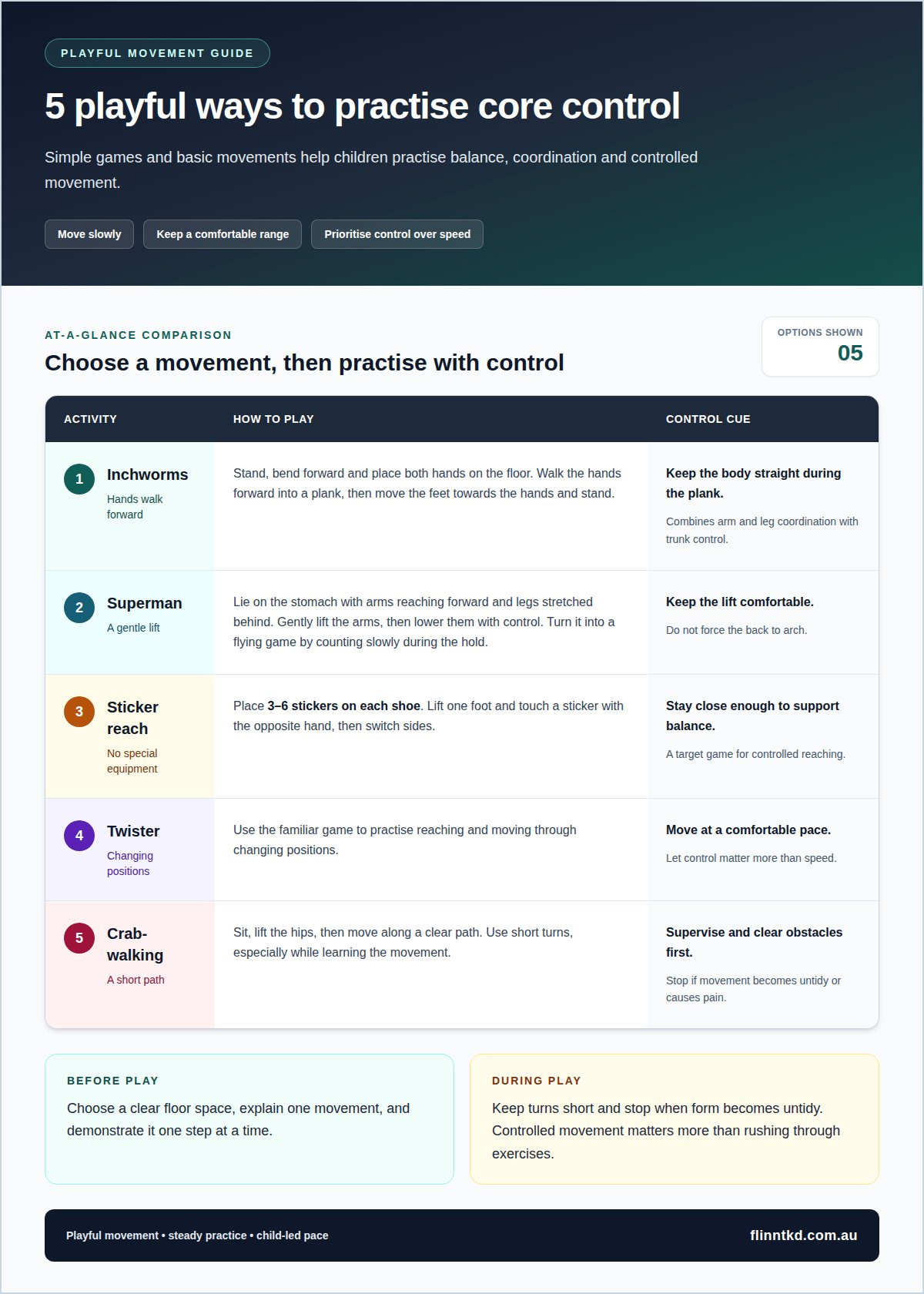
Core exercises using games and simple equipment
Games help children practise core control while developing balance and motor skills. Choose a clear floor space, explain one movement, then let your child try it slowly. Stop when their form becomes untidy. A short, focused game is more useful than rushing through several exercises. Families can make core strength exercises for kids in Brisbane part of playful movement at home.
For inchworms, ask your child to stand, bend forward and place both hands on the floor. They walk their hands forward into a plank, then move their feet towards their hands and stand. Keep the body straight during the plank. This combines arm and leg coordination with trunk control.
Try a Superman next. Your child lies on their stomach with arms reaching forward and legs stretched behind. They gently lift their arms, then lower them with control. Make it a flying game by asking them to hold the pose while you count slowly. Keep the lift comfortable without forcing the back to arch.
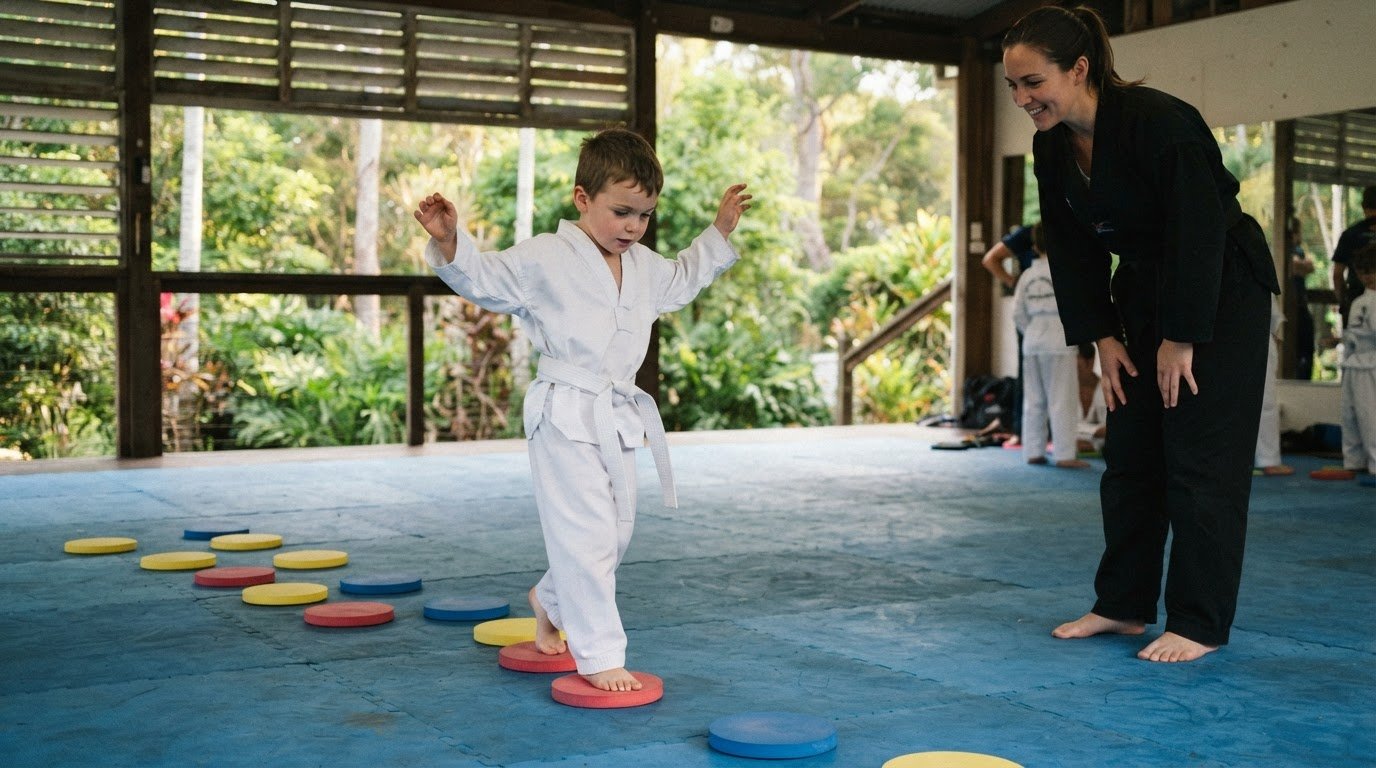
For a standing challenge, place 3-6 stickers on each shoe. Ask your child to lift one foot and touch a sticker with the opposite hand, then switch sides. Stay close enough to support balance. This simple target game encourages controlled reaching without needing special equipment.
Twister adds changing positions and reaches to a familiar game. Crab-walking is another option: sit, lift the hips, then move along a clear path. Supervise crab-walking and clear obstacles first. Use short turns, especially while children are learning the movement.
How can children do beginner exercises with correct form? Demonstrate one step at a time, use a comfortable range, and ask your child to move slowly. For a plank, keep the body straight from shoulders to heels. Keep core strength exercises for kids in Brisbane simple, prioritising controlled movement over speed.
Core activities can cause strains or falls if children rush, lose control or use an unsuitable space. Clear the floor, supervise movement, and stop if a child feels pain or becomes unwell. Avoid heavy resistance for beginners.
Brisbane parks and community facilities can provide space for outdoor movement. Choose a level, clear area, supervise climbing on playground equipment, and keep games such as crab-walking away from obstacles.
Dead bugs
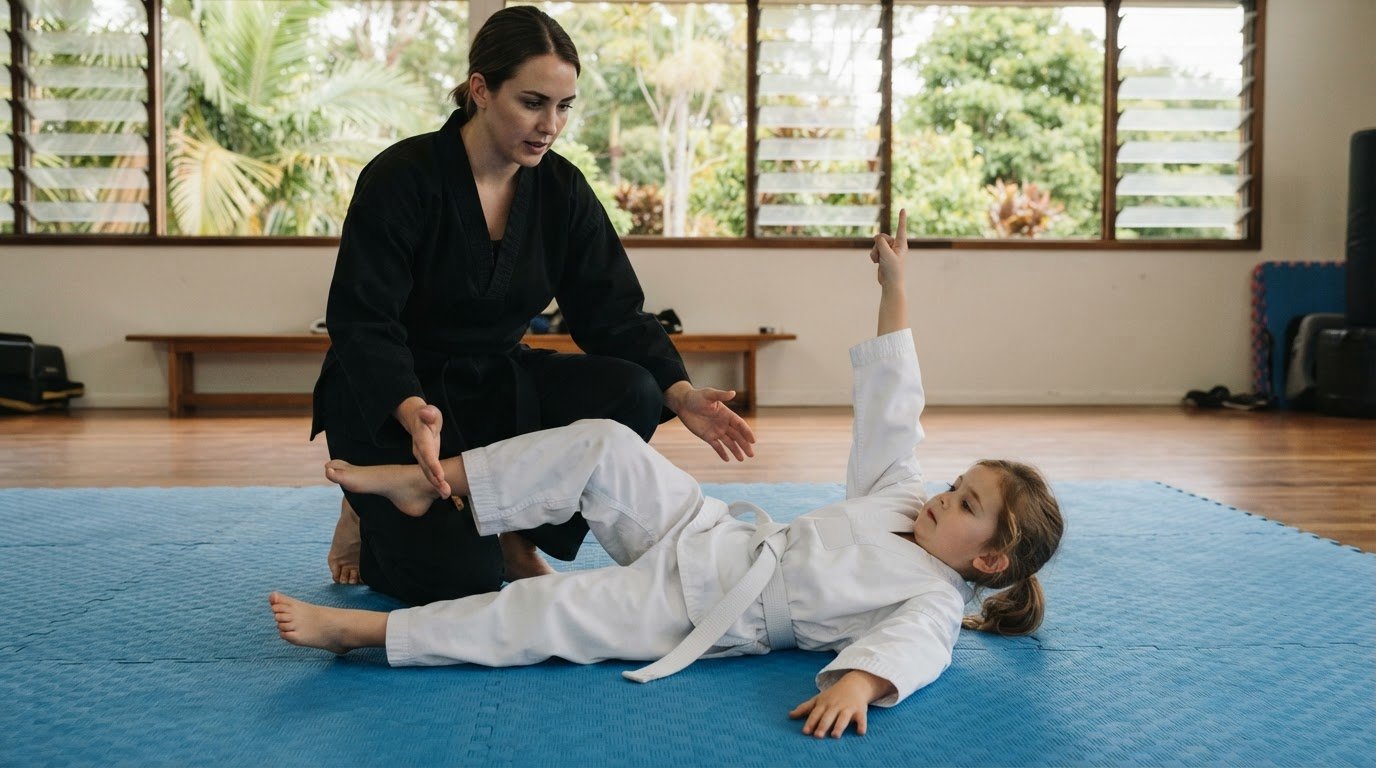
The dead bug is a floor-based exercise that asks children to move opposite limbs while keeping the trunk steady. It needs no equipment, and parents can demonstrate each step before their child begins. Moving at a controlled pace makes it easier to notice whether the lower back stays settled as the arms and legs move.
Start with these steps:
- Lie on your back with knees bent at 90 degrees above the hips.
- Reach both arms towards the ceiling and keep your head relaxed.
- Slowly lower one arm overhead while extending the opposite leg.
- Return to the starting position, then switch sides.
Move only as far as your child can control. If their back arches or their limbs drop quickly, shorten the reach or practise moving one limb at a time. This easier version still lets children learn the pattern before adding more movement. Avoid turning each repetition into a race.
The recommended duration is 10-60 seconds, alternating arms and legs. Begin at the lower end, then stop when technique changes. The recommended dosage is 1-3 sets, with 30-90 seconds of rest between sets. These ranges allow the activity to be adjusted to a child’s control and endurance.
Dead bugs can help children practise coordination for physical activities such as running, where arms and legs move in an alternating pattern. They don’t directly teach running technique, but they offer a simple way to practise opposite-side movement while lying safely on the floor. A child with poor core control may find the movement difficult at first; make it smaller rather than forcing the range.
Parents can support confidence by praising steady, controlled effort instead of counting only repetitions. Try saying “reach slowly” or “come back to the middle” as your child moves. Stop if the exercise causes pain or discomfort, and keep the floor space clear. For coached movement practice, explore training options that help children develop physical skills with guidance.
Flinn Taekwondo Academy
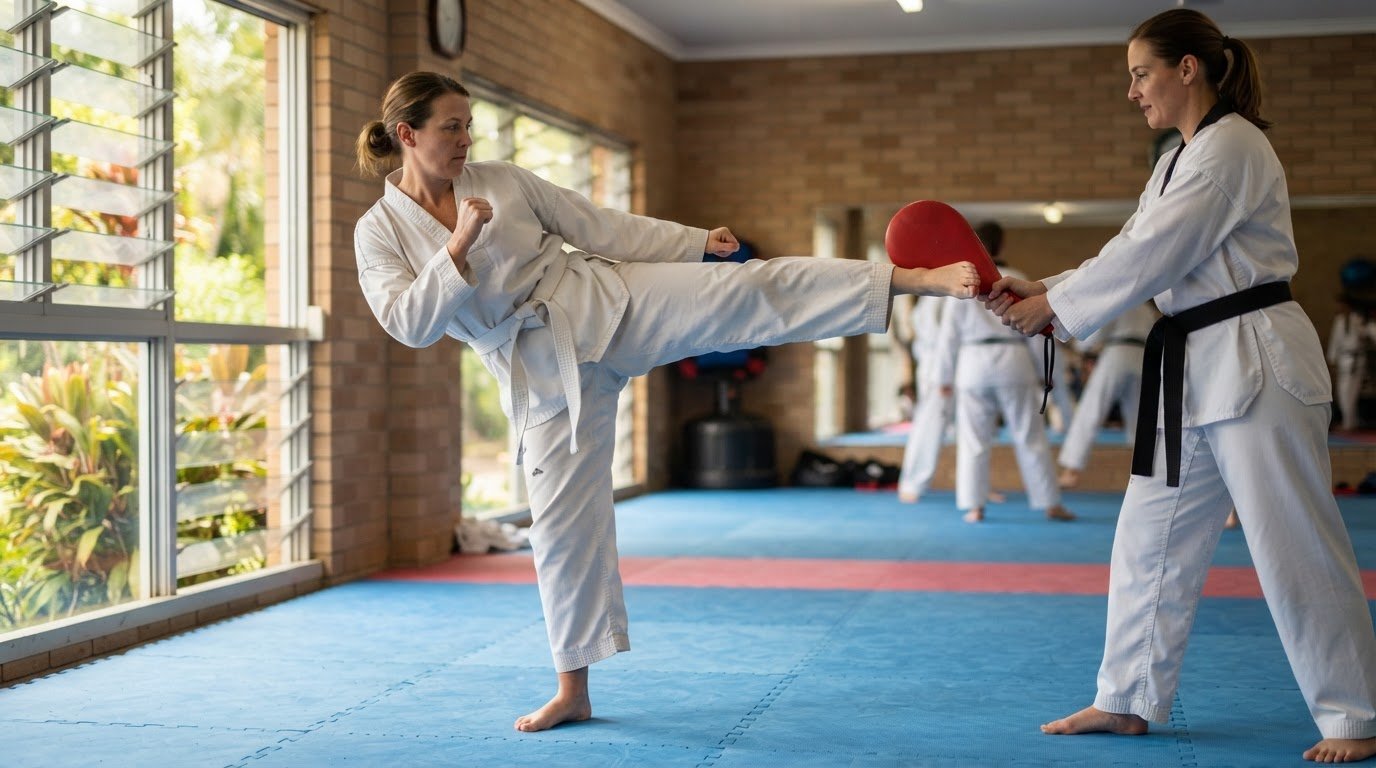
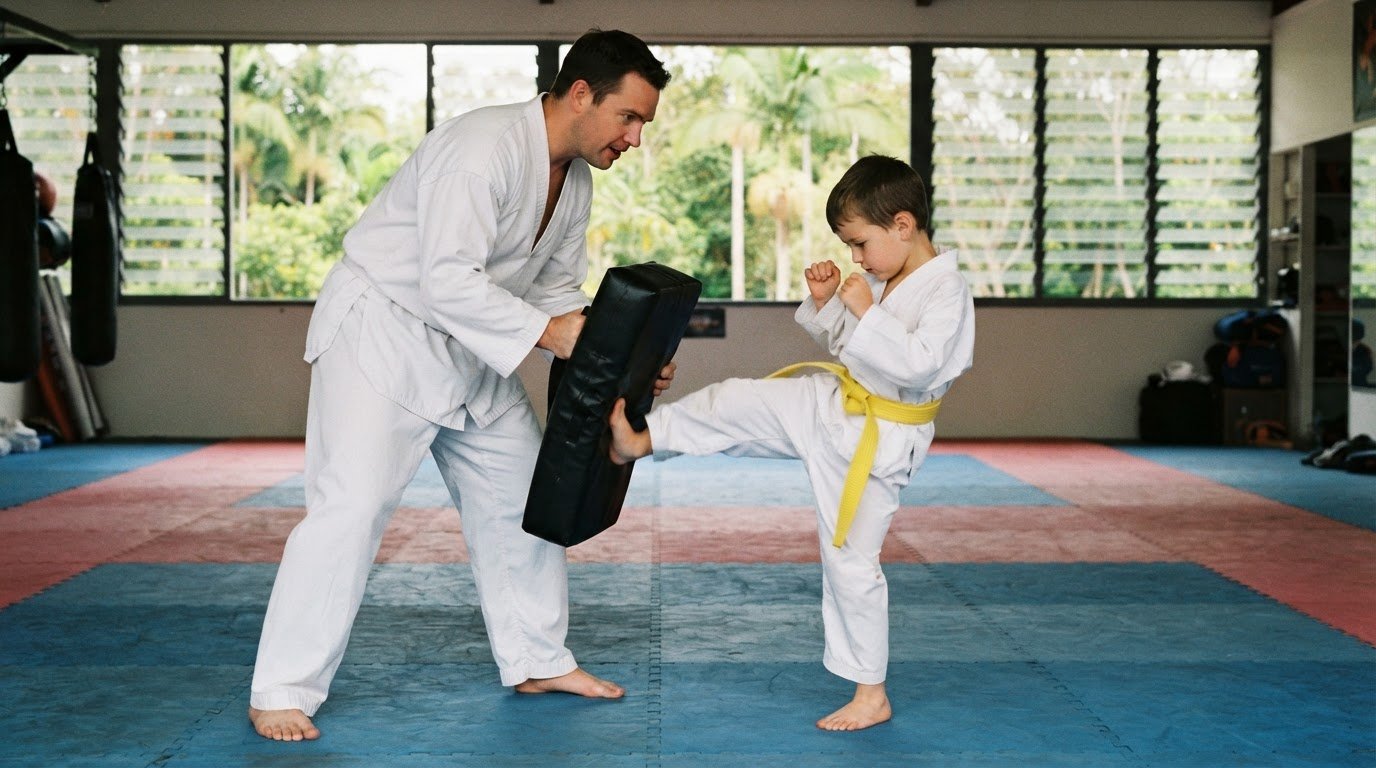
Flinn Taekwondo Academy gives children in Brisbane a structured setting to practise controlled movement, coordination and physical skills through Taekwondo. If your child enjoys active games and is ready to build confidence through coached movement, martial arts can be a natural next step alongside play-based exercises at home.
Age-based options include the Little Tigers Program for children aged 4-6 and the Junior Taekwondo Program for ages 7-12. Older students can explore the Senior & Adult Taekwondo Program for ages 13+, while High Performance Competition Training supports students focused on competition. Choose the stage that fits your child’s age and interest in training.
Training complements simple core activities; it doesn’t replace individual health advice or exercises prescribed for a specific concern. To explore Taekwondo for your child, book a free trial with Flinn Taekwondo Academy.
Make movement part of the next step
Choose one playful movement your child enjoys, then give them room to practise it with care. A small, consistent routine can make physical activity feel like a natural part of the week rather than another task to complete. Notice what keeps your child engaged, and let their interest guide what comes next.
If your child is ready for coached movement and the discipline of Taekwondo, Flinn Taekwondo Academy offers age-based training pathways in Brisbane. The right next step is one that suits your child’s interests and helps them feel comfortable taking part. For families exploring core strength exercises for kids in Brisbane, playful practice can continue alongside structured martial arts training.
Keep the goal simple: help your child enjoy moving, build confidence through practice and develop skills at a comfortable pace. Contact Flinn Taekwondo Academy to discuss a suitable next step for your family. Encourage their effort, celebrate each attempt and let progress grow through practice.
Frequently Asked Questions
What is the Core?
The core is the muscular support system around the trunk, not just the abdominal muscles people see. It includes deeper muscles that help control the torso as the arms and legs move. Reaching across a table to pick up a lunchbox, for example, asks the trunk to resist twisting. This coordinated support links the upper and lower body during everyday tasks.
Why do Kids Need Core Strength and Core Stability?
Core stability helps children manage changes in body position during daily activities. Think of standing up from the floor while holding a school bag: the body must coordinate several movements and stay controlled. Practising varied movement gives children chances to develop body awareness for everyday play and tasks. It’s a foundation for movement, not a measure of athletic ability.
What are safe, age-appropriate core strength exercises for kids?
Choose playful activities that suit your child’s coordination and experience, rather than demanding adult-style workouts. Playground climbing lets children practise changing positions, while a pool noodle race involves sitting astride a noodle and using the legs to move through the water. Preschool and school-aged children can try core-strengthening activities, with the challenge adjusted to their abilities.
What equipment is needed for kids’ core exercises at home?
Many beginner activities need no specialist equipment. Clear a comfortable space on the floor, then use a soft toy as a target for your child to reach towards while moving with control. A pool noodle can add a playful option if you have access to a pool. Focus on moving smoothly, not collecting equipment or completing a set number of repetitions.
Are there Brisbane programs or classes that teach strength and fitness for children?
Yes. Flinn Taekwondo Academy offers children’s Taekwondo training in Brisbane, with opportunities to develop physical fitness while learning self-defence, poomsae and sparring. These coached activities give children structured movement practice beyond home games. Families can consider this option when their child is interested in martial arts and would enjoy learning skills in an organised class.