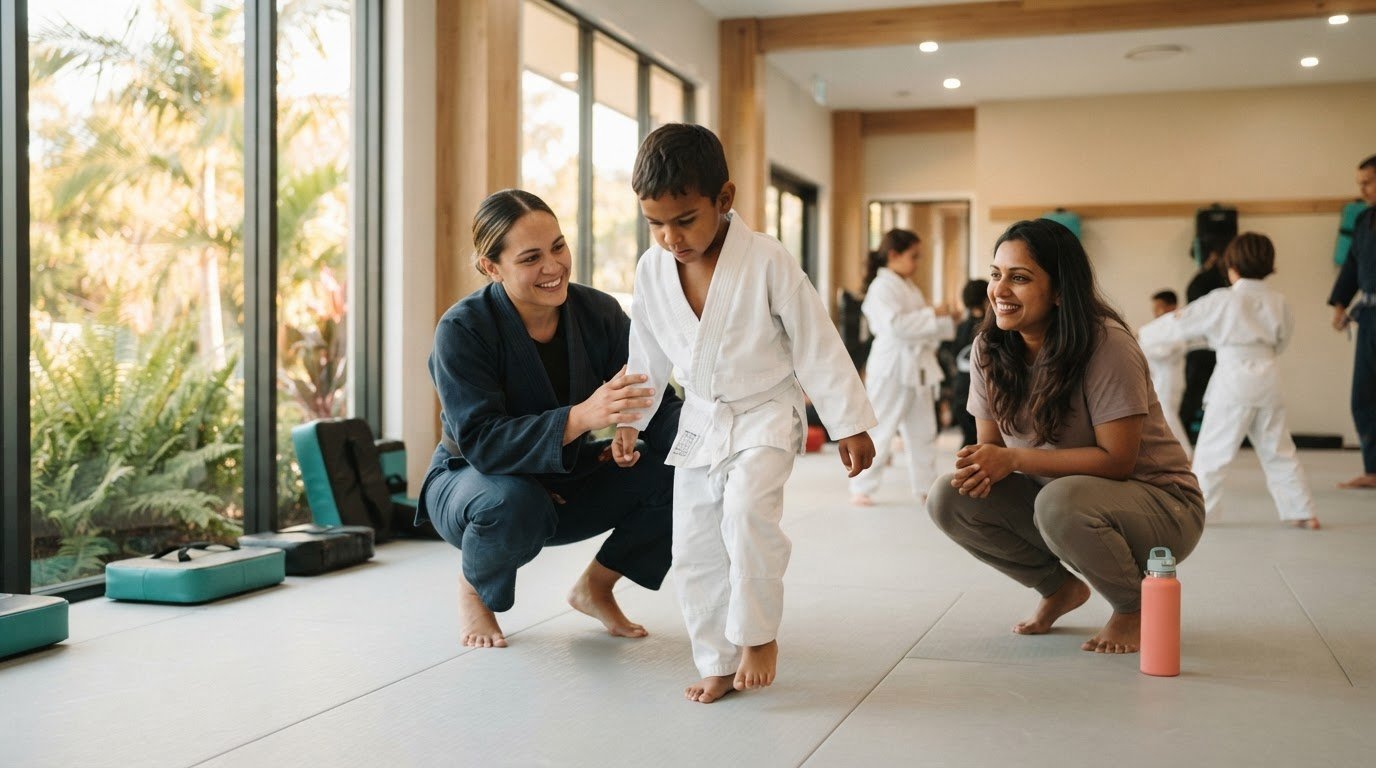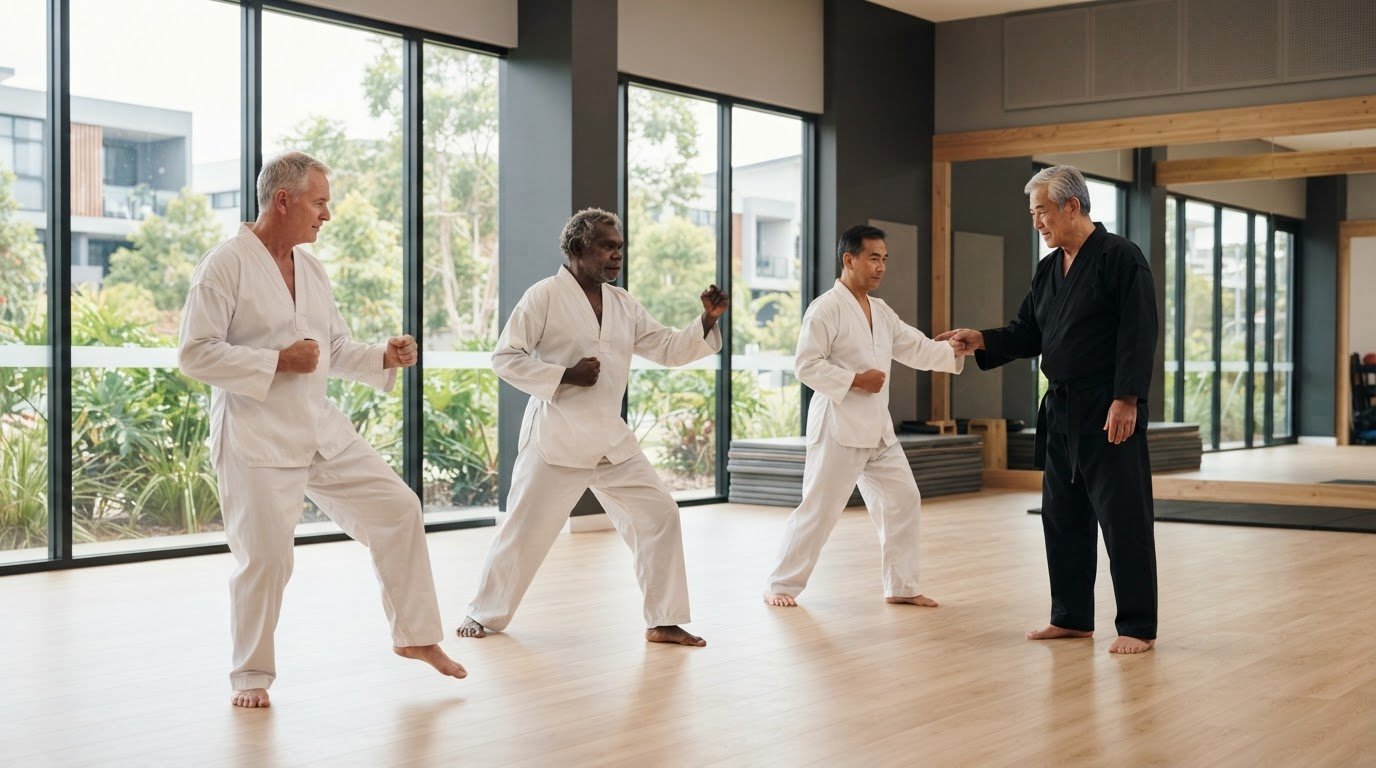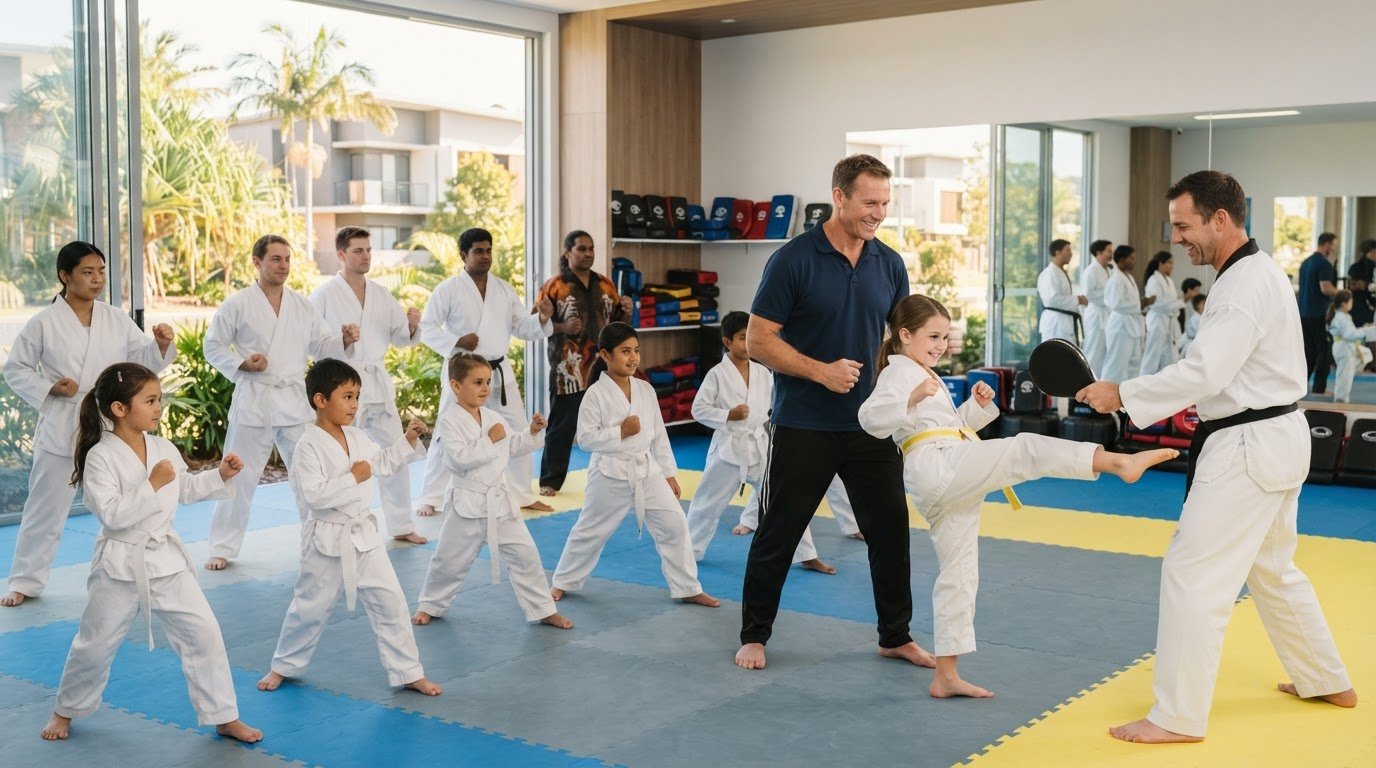
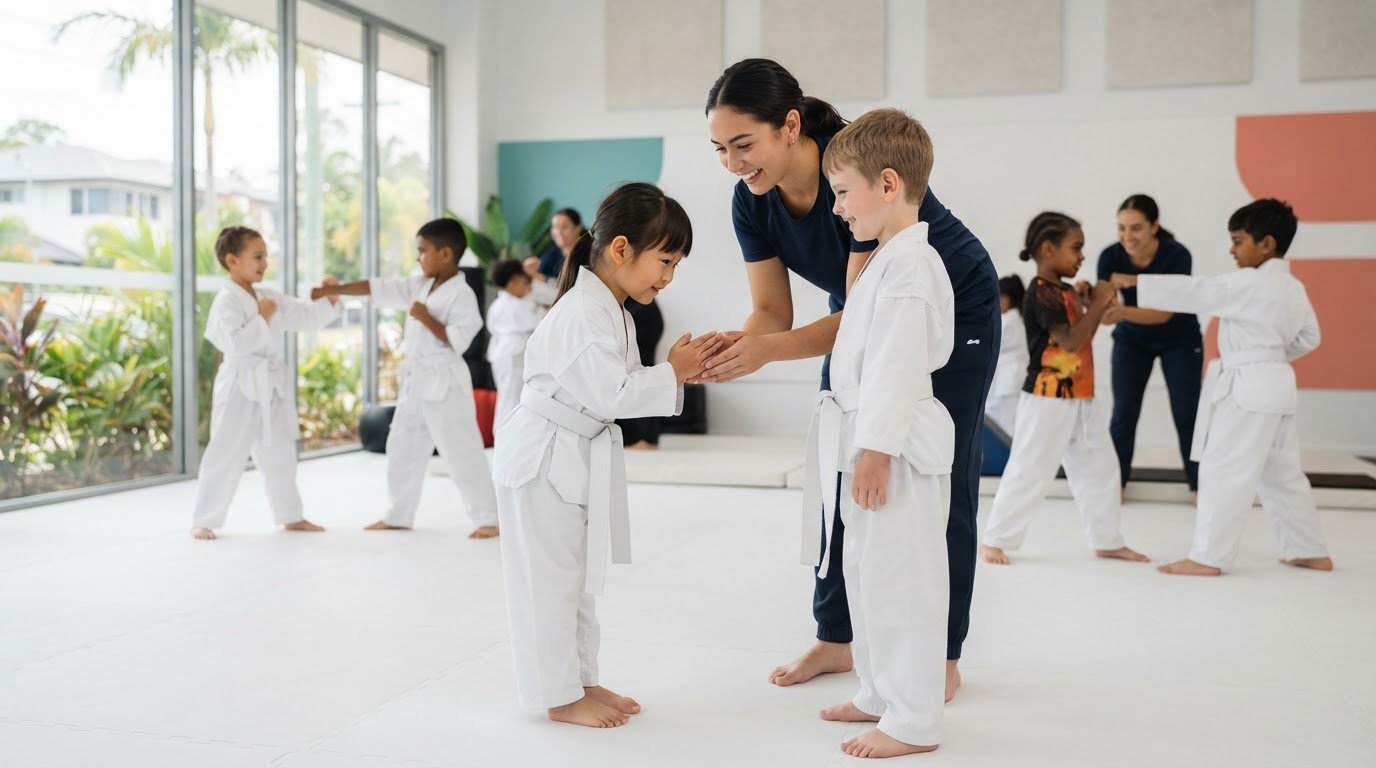
What if a shy child could practise speaking up, taking turns and working with others one small step at a time? Taekwondo for improving a child’s social skills isn’t about changing a child’s personality overnight. It gives children regular, coached opportunities to practise positive behaviours in a structured group, with encouragement as they grow more comfortable.
It’s understandable to wonder how a martial arts class works socially, or whether a quieter child might feel overwhelmed. A supportive class helps children feel included while setting clear expectations for respect, listening and cooperation. For younger children, age-focused instruction, such as Flinn Taekwondo Academy’s Little Tigers Program for ages 4-6, can make practice more suitable for their stage of development.
This guide covers the social behaviours children can practise in Taekwondo, what to look for in a welcoming class, and how to reinforce those lessons at home. It also explains what progress might look like beyond training, from greeting a classmate to waiting patiently during a shared activity. The goal is steady growth, one respectful interaction at a time.
Key Takeaways
- Everyday social skills include listening, taking turns, communicating clearly and cooperating with others.
- Taekwondo gives children coached opportunities to practise communication through greetings, instructions and partner drills.
- Compare activities by the interactions they involve: Taekwondo often uses guided partner practice, while team sports call for group coordination.
- Use a simple “notice, name and discuss” approach after class to help your child recognise and build on specific social behaviours.
- When considering taekwondo for improving a child’s social skills, look for age-appropriate instruction, clear routines, respectful conduct and supportive coaching.
How Taekwondo Can Help Children Practise Social Skills
Social skills are the everyday behaviours children use to connect and participate with others. They include listening while someone else speaks, taking turns, communicating respectfully and cooperating on a shared task. A Taekwondo class offers a structured group setting where children can practise these behaviours with an instructor’s guidance.
Taekwondo gives children coached opportunities to practise social behaviours through shared routines, partner activities and respectful communication. These opportunities matter, but they don’t guarantee a child will become more outgoing or change personality. Progress depends on the child, their readiness and the support around them. Confidence and social skills are related but distinct: feeling more capable may help a child join in, while listening, waiting and responding are specific behaviours they can practise.
Courtesy and self-control are among the foundations of Taekwondo. In class, instructors can make these principles practical by connecting them to small, observable actions.
Which social skills can children practise in class?
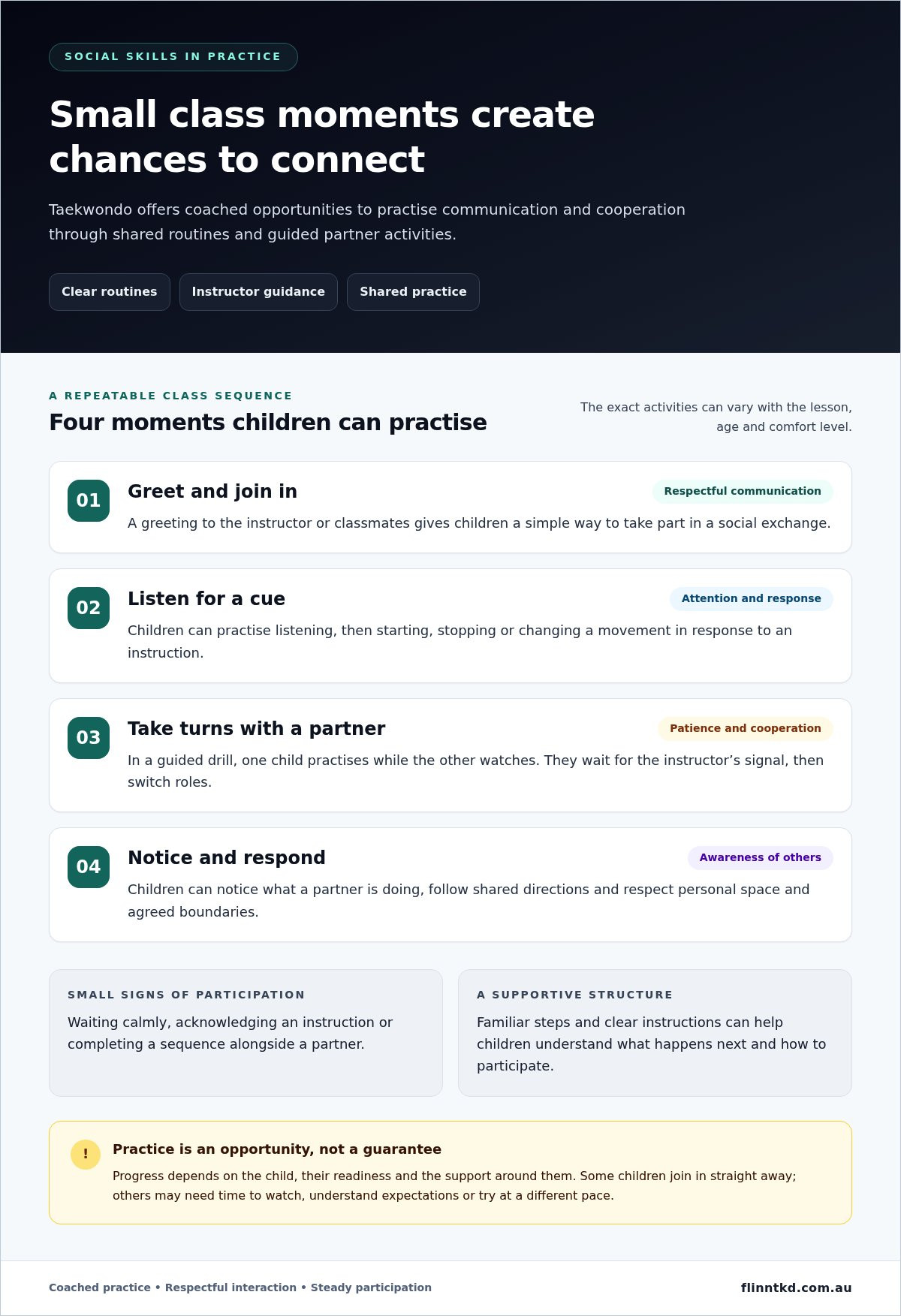
Children can practise turn-taking when they share training space, equipment or a drill sequence. For example, one child can wait until a partner finishes a movement, then take their turn. Greetings and attentive listening offer simple ways to communicate respectfully. During partner practice, children can respond to each other and follow the instructor’s guidance while respecting personal space and agreed boundaries.
These moments are specific and repeatable. A child doesn’t need to lead the group or speak often to participate. Waiting calmly, acknowledging an instruction or completing a sequence alongside a partner are all meaningful signs of social participation.
Why structure can make group participation easier
Predictable routines help children understand what happens next. Familiar steps, clear instructions and achievable tasks give them a practical way to join in without having to work out every expectation on their own. The instructor can guide transitions, explain activities and show what respectful participation looks like.
That structure may feel reassuring for children who are cautious in new groups. Others may need time to observe, encouragement to try or a different pace. Temperament and readiness vary, so notice small signs of participation rather than expecting every child to respond in the same way.
How Taekwondo Classes Create Opportunities for Communication and Cooperation
Social practice happens through small exchanges as well as formal partner activities. Children may greet the instructor and classmates, listen for a cue, then start, stop or change a movement. These moments give them a clear reason to pay attention and communicate as part of a shared activity.
Greetings, listening for instructions, taking turns and noticing a partner’s actions are opportunities to practise communication and cooperation, not proof of guaranteed social improvement. The type and amount of interaction can vary with the lesson, the child’s age and their comfort level. Some children join in straight away; others need time to watch and understand what’s expected.
How partner drills can teach turn-taking and cooperation
A guided partner drill can give each child a defined role. One child might practise a movement while the other watches, then they switch when the instructor signals. Each child needs to notice what their partner is doing, wait for their turn and follow shared directions. The instructor guides the activity, reinforces respectful conduct and helps children maintain appropriate personal space.
This structure gives children a practical way to interact without having to invent a conversation or decide what to do next. They can focus on one shared task, such as completing a sequence together, and practise responding calmly if they need to pause or try again. Understood.org also describes martial arts as a setting that can support a focus on individual growth, which may help children engage with practice at their own pace.
How group routines support communication
Class routines create repeated chances to listen, wait and respond. Children may follow a group instruction, pause while someone else has a turn or use a respectful greeting at the start of training. Encouraging words between classmates can help make participation more welcoming. These interactions are simple, but they let children practise being attentive members of a group.
For a broader introduction to the discipline and its training, read the complete guide to Taekwondo for Brisbane families. If you’re considering how coached interactions might suit your child, explore North Brisbane Taekwondo classes.
Taekwondo Compared With Team Sports and Other Group Activities
Different activities create different ways for children to connect. Taekwondo often combines instructor-led routines with partner practice, while many team sports involve shared play, quick communication and working toward a common result. Neither format is automatically better for social development. The right fit depends on what your child enjoys and the kind of interaction they’re ready to practise.
Taekwondo and team sports: different ways to participate
In Taekwondo, children train as part of a class, following shared instructions and taking part in activities that may include a partner. The instructor guides the interaction, including turns and tasks. In team sports, children often coordinate with several teammates during play and adapt to changing situations together. Some children prefer clear turns and routines; others thrive on team play. A mix of activities can suit a child, too.
Use this comparison to consider the social opportunities each format may offer, rather than to rank activities:
| Activity format | Possible practice opportunity | What parents can observe |
|---|---|---|
| Taekwondo class | Responding to instructor cues and taking turns in guided partner activities | Does your child follow the routine, engage with a partner or become more comfortable participating? |
| Team sport | Communicating with teammates and coordinating during shared play | Does your child enjoy working toward a group goal or exchanging ideas during play? |
| Other group activity | Sharing materials, space or roles in a common task | Does your child show interest in joining, contributing or taking a turn? |
Group size, coaching style and activity format can shape a child’s experience as much as the activity itself. If you’re considering taekwondo for improving a child’s social skills, look for a setting where your child can participate at a manageable pace and receive clear, respectful guidance.
Is a martial arts class suitable for a shy child?
Shyness alone doesn’t determine whether a child will enjoy a class. Notice how they respond to the group routine, instructor direction and opportunities to join gradually. They might watch first, take part in one activity, then become more involved over time. Progress doesn’t have to mean becoming the most talkative child in the room. For guidance on older children, read the Junior Taekwondo Brisbane parent guide.
How Parents Can Help Social Skills Carry Over Beyond Taekwondo
Children may show a social behaviour differently at home, in class and at school. A child who waits patiently for a partner during training might still need reminders to take turns with a sibling. That doesn’t erase the effort they made in class. Social skills develop through practice, and using a behaviour in one setting doesn’t mean it will appear in every situation.
Try a simple routine after class: notice, name and discuss. Choose one specific moment, describe what you saw, then invite your child to share how it felt. Keep the conversation brief and curious, rather than turning it into a test.
What progress might parents notice?
Look for small, observable actions over time: waiting for a turn, greeting someone, following a shared instruction or offering help. Avoid expecting an immediate change in personality. Your child’s perspective matters, too. Ask which activity felt comfortable, which felt challenging or what they’d like to try again. Their answers can help you understand their experience beyond what you see from the sidelines.
Simple ways to reinforce social behaviours at home
Use open questions to help your child reflect: “How did you and your partner take turns?” or “What helped you listen for the next instruction?” If they describe a moment of cooperation, connect it gently to an everyday opportunity, such as sharing a game or helping with a family task. Let your child make the connection without pressure.
Notice a specific effort, name the behaviour and praise the choice, without expecting it to happen in every setting. For example: “I saw you wait while your partner finished. That was patient.” Specific praise recognises what your child did, rather than labelling them as “naturally social” or making them feel they must always behave a certain way.
If you’re exploring taekwondo for improving a child’s social skills, the North Brisbane Taekwondo classes guide offers more context on local training. To learn about a structured class environment for your child, explore North Brisbane Taekwondo classes.
Choosing a Supportive Taekwondo Class for Your Child in North Brisbane
A class can offer chances to practise social behaviours, but the environment matters. If you’re considering taekwondo for improving a child’s social skills, look beyond the techniques and notice how the instructor helps children take part. Clear routines, respectful conduct and age-appropriate guidance help children understand what’s expected and participate at their own pace.
What makes a class supportive for social learning?
Use this checklist to consider whether a class may suit your child:
- Age-appropriate instruction: Activities and explanations should fit the children in the group. A child aged 4-6 may need shorter, simpler guidance and a different pace from an older junior.
- Clear routines: Children should receive understandable cues and know how activities begin, change and finish.
- Respectful conduct: Instructors should model calm, respectful interaction and guide children in treating partners and classmates well.
- Supportive coaching: Children should be encouraged to participate without being pressured to speak, perform or make friends before they feel ready.
As you observe, notice how the instructor responds when a child hesitates or needs help. A welcoming atmosphere gives children room to watch, try a task and build comfort gradually. Social growth isn’t measured by how outgoing a child appears; small steps in participation matter, too.
How Flinn Taekwondo Academy supports young beginners
In North Brisbane, Flinn Taekwondo Academy’s Little Tigers Program is for children aged 4-6 and provides a supportive training environment for younger beginners. Children aged 7-12 can take part in the Junior Taekwondo Program. These age-focused programs recognise that young children may need different pacing and guidance from school-aged juniors.
The academy is led by Master Jeff Flinn, a 7th Dan Black Belt with international accreditation. In this structured Taekwondo setting, children can practise following instructions, participating in group routines and engaging with others under coaching. These are opportunities to rehearse social behaviours, not a promise that every child will respond in the same way.
Choose a class with your child’s comfort and readiness in mind. Explore Taekwondo classes at Flinn Taekwondo Academy and consider whether the environment feels like a good fit for your family.
Support Your Child’s Next Step in Social Growth
Taekwondo gives children coached chances to practise listening, taking turns, communicating respectfully and cooperating with a partner. These interactions can support participation and confidence, but social growth takes practice and may look different at home, school and training. Notice specific efforts, such as patient waiting or following a shared instruction, and encourage them without expecting an instant change in personality.
If you’re exploring taekwondo for improving a child’s social skills, choose a welcoming class with clear routines and guidance suited to your child’s age and readiness. Flinn Taekwondo Academy is a family-owned North Brisbane academy established in 2013, led by Master Jeff Flinn, a 7th Dan Black Belt with international accreditation. Its Little Tigers Program gives children aged 4-6 an age-focused introduction to training.
Explore Taekwondo classes at Flinn Taekwondo Academy to learn about its programs for children in North Brisbane. Every small step counts. With steady encouragement, your child can keep building skills and confidence in their own time.
Frequently Asked Questions
Can Taekwondo help a child develop social skills?
Yes, Taekwondo gives children coached opportunities to practise social behaviours in a group. During class, they may listen to instructions, take turns, greet others and cooperate with a partner. These repeated experiences can support social learning, but they don’t guarantee a change in personality or behaviour. If you’re considering taekwondo for improving a child’s social skills, look for a respectful, age-appropriate environment where your child can participate at their own pace.
What social skills can children practise in Taekwondo?
Children can practise listening, turn-taking, respectful communication and cooperation. For example, they may wait while a partner completes a movement, follow a shared instruction or respond to a greeting. Partner activities also give children a chance to notice someone else’s actions and work within clear directions. These are specific behaviours to watch for, rather than expecting a child to become more outgoing.
Is Taekwondo a good activity for a shy child?
It can suit a shy child, but temperament alone can’t predict whether they’ll enjoy a class. Notice how your child responds to the group routine, the instructor’s guidance and opportunities to join in gradually. They might prefer to observe before taking part. A welcoming class should encourage participation without pressuring a child to speak up or perform socially before they feel ready.
How is Taekwondo different from team sports for social development?
Taekwondo often combines instructor-led routines with guided partner activities, giving children structured turns and coached interaction. Many team sports involve shared play, communication with several teammates and coordination toward a group goal. Neither format is automatically better for social development. Consider whether your child enjoys clear routines, active team play or a mix, and remember that coaching style and group environment also shape the experience.
At what age can a child start Taekwondo?
Children can start at different ages depending on the class structure and their readiness. In Brisbane, Flinn Taekwondo Academy’s Little Tigers Program is for children aged 4-6, while its Junior Taekwondo Program is for children aged 7-12. Age-focused instruction can help match guidance and pacing to a child’s stage. Readiness matters, too: consider whether your child can engage with basic group instructions and routines.
How can I tell if Taekwondo is helping my child socially?
Look for small, observable actions over time, such as waiting for a turn, greeting classmates, following shared instructions or cooperating with a partner. Ask your child which activities felt comfortable or challenging, too. You can notice and name one specific effort after class, then see whether similar behaviours appear in other settings. Social skills may show up differently at home, school and training, so avoid expecting immediate or identical changes.
Does Taekwondo guarantee that a child will become more confident or outgoing?
No. Taekwondo offers opportunities to practise participation, communication and self-control, but it can’t guarantee that a child will become more confident or outgoing. Confidence is also distinct from social skill: feeling capable may support participation, while listening or taking turns are behaviours a child can practise. Children respond differently according to their temperament, readiness and experience. Focus on steady effort and a supportive class, not a promised personality change.