You don’t need to be sporty or coordinated to start Taekwondo. Beginners learn movements step by step, building confidence through practice rather than needing to arrive with skills already in place. Taekwondo for teenage girls can support self-esteem through achievable goals and visible progress.
It’s understandable to feel unsure about joining a sport if you’re worried about falling behind or making mistakes. In training, mistakes are part of learning: each one can show you what to practise next. With consistent effort, small improvements can add up to a stronger sense of what you’re capable of.
This article explores four ways Taekwondo can help teenage girls develop confidence, coordination and fitness, connect with peers, and practise respect and other personal values. These benefits can grow through training, even for someone who is completely new to sport.
Key Takeaways
- Build confidence through steady practice, achievable goals and progress you can recognise.
- Develop coordination and fitness by learning Taekwondo movements step by step.
- Find opportunities to connect with teammates through activities that encourage cooperation and trust.
- Explore how courtesy and respect in class can support positive choices beyond training.
1. Confidence and self-esteem through skill mastery and belt progression
Taekwondo can support teenage girls’ self-esteem by making progress visible. A student learns a stance, practises a block, then combines movements into a pattern. Belt progression can mark the skills she has developed, giving her evidence of her effort and learning. The value of Taekwondo for teenage girls’ self-esteem lies in those achievable steps, not in starting out confident or already skilled.
Confidence develops gradually. A beginner might struggle to balance during a kick, then improve through practice and instructor feedback. Each attempt shows her what to adjust next. That process can carry over to school: preparing for a presentation, for example, also involves practice, feedback and trying again after a difficult first attempt.
Taekwondo can help a teenager feel more capable under pressure, but it can’t prevent bullying. Self-defence skills are for personal safety, not retaliation. If bullying occurs at school, she can tell a trusted adult and use the school’s support process. Parents considering Taekwondo for teenage girls’ self-esteem can view it as one part of building confidence, not a substitute for help with bullying.
Compared with karate, judo or team sports, Taekwondo offers a different mix of movement, practice and progress. No activity builds self-esteem in exactly the same way for every teenager. Enjoyment, supportive coaching and opportunities to recognise personal effort can all shape how useful a sport feels.
In Australia, parents can look for instructors who explain techniques clearly, correct mistakes respectfully and set age-appropriate expectations. A welcoming class makes it easier for a beginner to ask questions and learn at her own pace. Notice whether students are treated patiently as they practise unfamiliar movements.
Training frequency depends on a teenager’s schedule, energy and goals. Consistent attendance creates regular opportunities to practise and notice improvement. A manageable routine can help her keep learning alongside school and other commitments, rather than making training another source of pressure.
Taekwondo includes kicks, punches, blocks and stances, so physical activity carries some risk of injury. There isn’t one injury rate that applies to every teenage class. Contact, intensity, technique and supervision all affect the risks involved.
2. Physical fitness, coordination and physical literacy
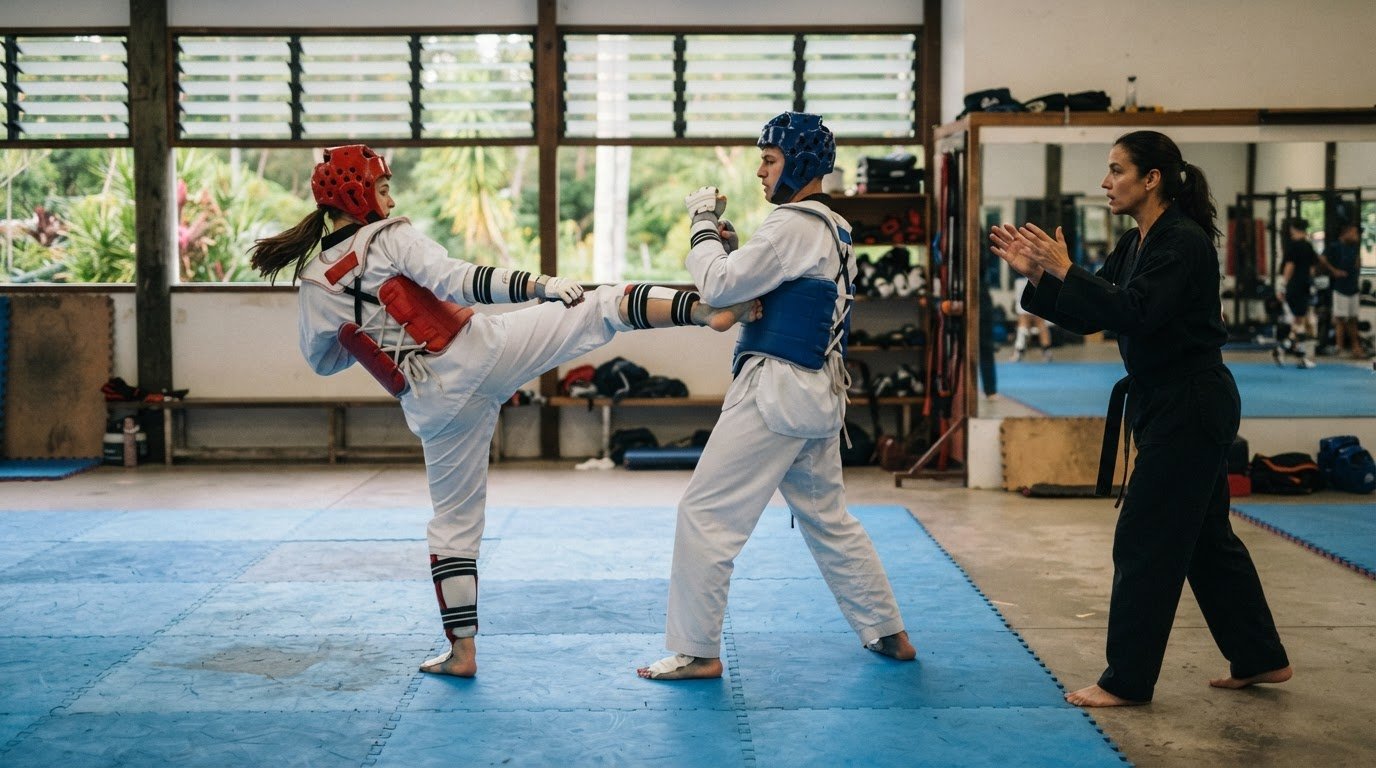
A Taekwondo class combines kicks, punches, blocks and stances, asking the body to move with control. A front kick, for example, involves balancing on one leg, aiming the other and returning to a stable stance. Repeating the sequence helps a beginner develop coordination and body awareness, even without previous sports experience.
The movement makes training a full-body workout. Taekwondo practice promotes cardiovascular health, strength, flexibility and endurance, while varied techniques keep a session challenging. A student might move from a stance into a block, then practise a controlled kick. Each transition calls for focus on posture and timing, not just power.
That attention builds discipline in a practical way. Listening to an instruction, remembering a sequence and adjusting a movement all require focus. A teenager who rushes a kick, for instance, can slow down, reset her stance and try again with better control. These repeatable steps build physical literacy: knowing how to move, balance and respond to a new task.
What are the physical and social benefits? Regular practice supports fitness and coordination, and classes can help teenagers form friendships with peers from diverse backgrounds. Partner activities can also build trust and teamwork. In Australia, teen-focused training includes the Senior & Adult Taekwondo Program for students aged 13 and over.
Taekwondo also teaches practical self-defence techniques alongside physical training. A teenager can practise controlled movements and learn to respond to instructions, while recognising that self-defence is about personal safety, not seeking conflict. Regular practice can support healthy growth and help establish lasting physical wellness habits.
For a teenager ready to build movement skills in a structured class, teen Taekwondo training offers a way to practise fitness, coordination and technique together.
3. Finding community through sport
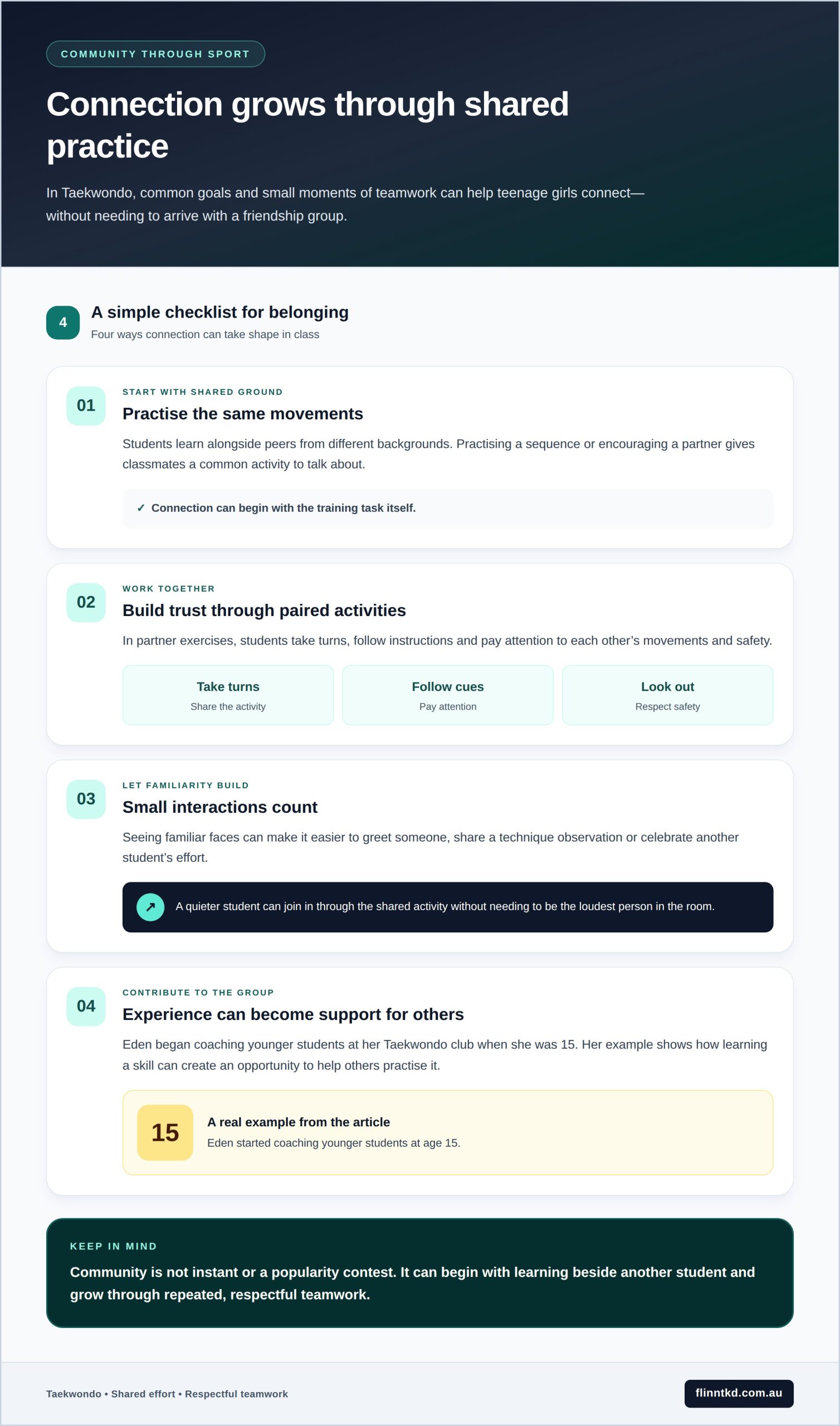
A shared training goal can give teenagers a natural way to connect. In a Taekwondo class, students practise alongside peers from different backgrounds, learning the same movements while working towards their own progress. A newcomer doesn’t need to arrive with a ready-made friendship group. The activity itself gives classmates common ground, from practising a sequence to encouraging a training partner’s effort.
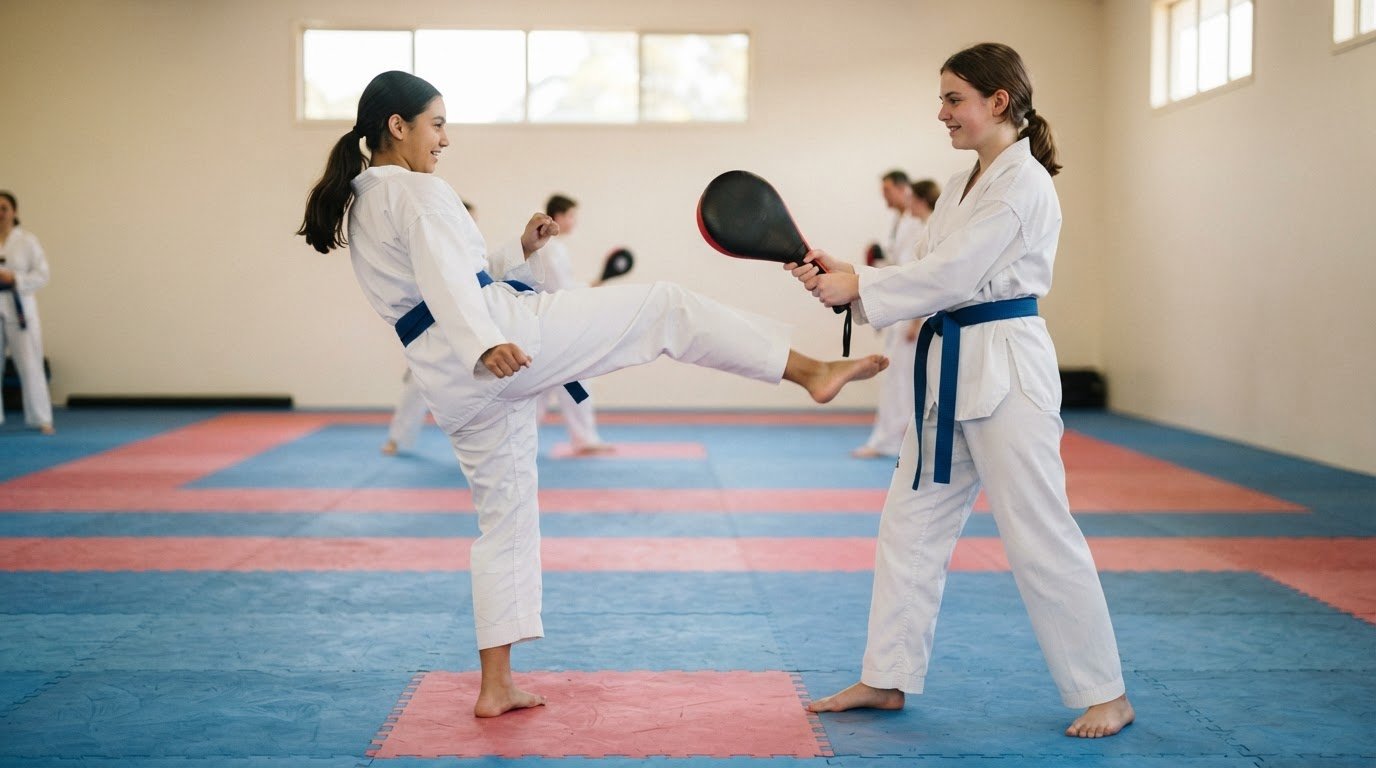
Cooperation matters, too. Some Taekwondo activities require students to work together, trust one another and pay attention to a partner’s movements. In a paired exercise, for example, each student takes turns, follows instructions and keeps the other person’s safety in mind. These small exchanges can help a teenager practise communication and teamwork in a structured setting.
Belonging often grows through repeated contact. Seeing familiar faces in class can make it easier to greet someone, share an observation about a technique or celebrate a classmate’s effort. A teenager doesn’t have to be the loudest person in the room. These simple moments give quieter students opportunities to join in through a shared activity.
Taekwondo can also create chances to contribute, not only participate. Eden began coaching younger students at her Taekwondo club when she was 15. Her example shows one way experience can lead to a supportive role: a teenager who has learned a skill can help younger students practise it. That kind of contribution can build connection and a sense of responsibility.
For a new student, community isn’t an instant result or a popularity contest. It can begin with a shared task, such as learning a movement beside another student, and develop through respectful teamwork. Over time, practising together gives teenage girls a place to connect through effort, cooperation and the progress they see in one another.
Taekwondo classes can foster community and friendships among teenagers from diverse backgrounds. For a teenager considering a class, this can make sport feel like more than an individual pursuit. Shared participation offers common ground, while friendships can develop at a comfortable pace. A young person doesn’t have to arrive already knowing others; joining in can be a first step towards feeling part of a group.
4. Respect, courtesy and personal values
Taekwondo makes respect part of class through a simple, repeated action: students bow to instructors and peers. The bow signals attention and courtesy before training begins. For a teenage beginner, this shared routine offers a clear way to acknowledge others, even if she hasn’t met her classmates before.
Respect also shows in how students practise together. A partner exercise calls for listening, taking turns and controlling movements around another person. If a classmate needs more time to understand a sequence, patience and clear communication help the pair continue safely. These small choices let teenagers practise consideration, not just hear about it.
Taekwondo teaches practical self-defence while emphasising non-violence and peaceful conflict resolution. That distinction matters: learning a defensive technique doesn’t mean using it to intimidate or retaliate. During a disagreement at school, a student can practise stepping back, speaking calmly and seeking help from a trusted adult rather than escalating the conflict.
Courtesy can also support self-control when training feels challenging. A student who feels frustrated after missing a movement can pause, listen to the instructor’s feedback and try again without blaming a partner. The same approach can help during a group assignment or a tense conversation: acknowledge the other person, consider the guidance and choose a measured response.
These practices give values a concrete shape. Bowing demonstrates courtesy; taking turns shows fairness; controlled technique reflects responsibility; and choosing peaceful responses shows restraint. A teenager doesn’t need to be confident before beginning. Each class provides another opportunity to practise respectful behaviour with instructors and peers.
For families seeking a structured way to practise courtesy alongside self-defence, explore Taekwondo training as a next step.
Flinn Taekwondo Academy: Children Self Defence
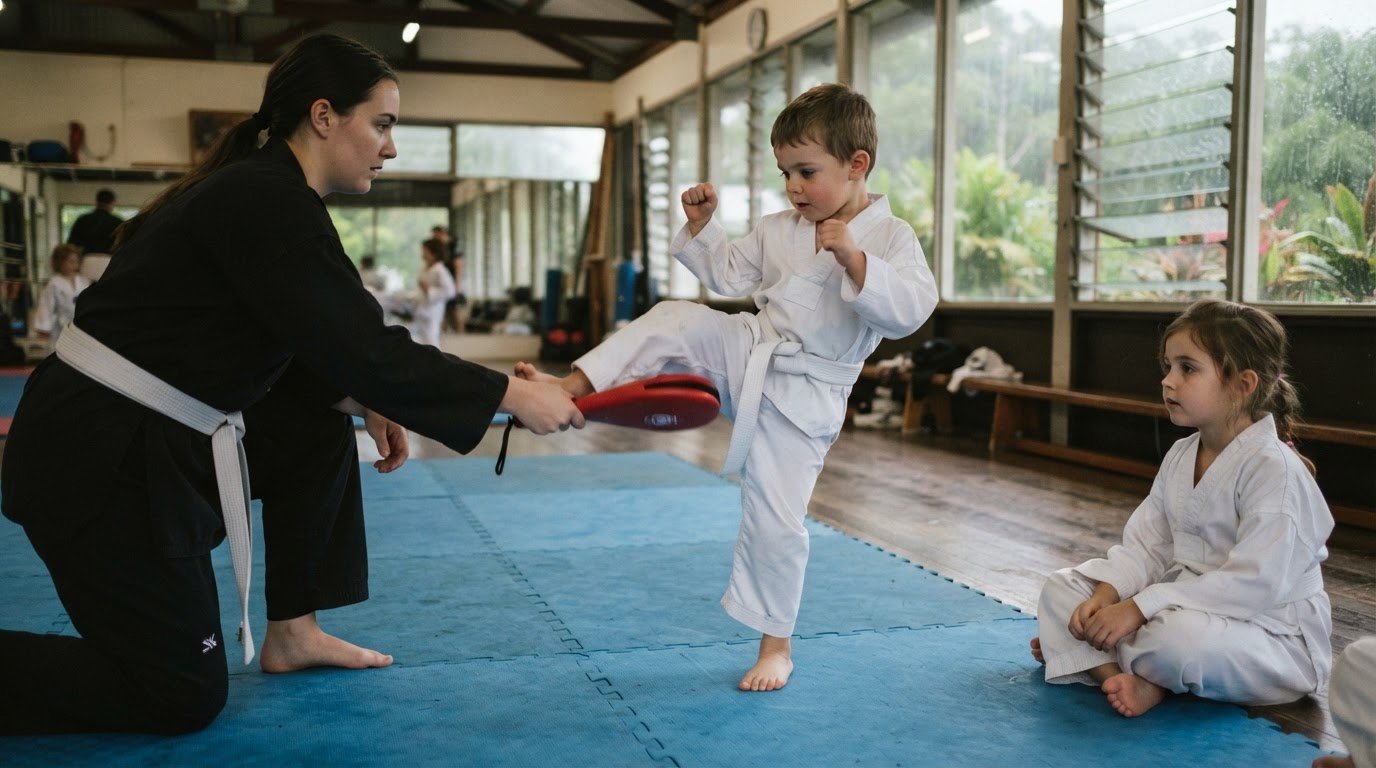
Flinn Taekwondo Academy offers Children Self Defence to help young students learn practical skills alongside Taekwondo training. For a teenage girl ready to develop confidence, coordination and self-discipline through structured practice, the Senior & Adult Taekwondo Program is for students aged 13 and over. Younger family members can take part in the Junior Taekwondo Program for ages 7 to 12, or the Little Tigers Program for ages 4 to 6.
These options connect training with the learner’s age and stage. Families can consider Taekwondo when a teen wants to build skills, practise self-defence and work towards personal growth in class. Contact Flinn Taekwondo Academy to discuss the right next step for your family.
Take the First Step Towards New Goals
Confidence doesn’t need to come before training begins. Taekwondo can give teenage girls a practical way to build self-esteem by choosing a personal goal and working towards it through regular practice. That goal might be learning a new movement or feeling more comfortable speaking up in a group.
Families can support the first step by focusing on curiosity and effort, not instant performance. After class, ask what felt interesting, what she’d like to practise or what she learned about herself. These conversations help her describe progress in her own words and decide what she wants to aim for next.
If your daughter is ready to explore training, contact Flinn Taekwondo Academy to discuss a suitable next step. Starting with a clear personal goal can make the experience feel purposeful, while leaving room for her interests to develop. Each new skill is an opportunity to keep learning and build confidence at her own pace.
Frequently Asked Questions
I’m Not Very Sporty or Coordinated, Will That Be A Problem?
No. You can begin without being sporty or coordinated and learn the movements as you go. Focus on one instruction at a time, such as where to place your feet before practising a kick. There’s no need to master a full sequence straight away. Starting with a manageable personal goal can make the first classes feel more approachable.
What does research say about martial arts and adolescent girls’ confidence and mental health?
Research on martial arts and adolescent girls’ confidence and mental health needs to be read in context. Confidence, mood and general wellbeing are different outcomes, and findings from one group or training setting don’t automatically apply to everyone. Martial arts can offer structured activity and opportunities to practise skills, but they shouldn’t replace professional mental health support.
What age can teenage girls start taekwondo, and do beginners need prior fitness or experience?
Teenagers aged 13 and over can join the Senior & Adult Taekwondo Program. Prior fitness or Taekwondo experience isn’t needed to begin: the academy’s training welcomes people at different levels. Younger students have age-based options, including the Junior Taekwondo Program for ages 7 to 12 and Little Tigers for ages 4 to 6.