What if the key to your child finally listening the first time isn’t a louder voice, but a deeper sense of internal discipline? It’s exhausting when you’re constantly dealing with talking back at home or hearing about difficulties following instructions at school. You want your child to have social boundaries and emotional control, yet you might worry that combat sports could make them more aggressive. This is a common concern for parents looking into martial arts for building respect in children as a way to shape their character.
We understand that you’re looking for more than just a physical activity; you want a partner in raising a respectful, focused individual. A 2025 report indicated that students involved in structured martial arts showed a 25% improvement in task completion and classroom focus. This guide will show you how the structured discipline of Taekwondo transforms your child’s attitude, fostering genuine respect for themselves and others. We will explore the specific rituals that bridge the gap between training and daily life, ensuring your child develops the self-regulation needed to succeed at home, in the classroom, and beyond.
Key Takeaways
- Learn why respect in Taekwondo is an active choice rather than passive obedience, helping your child develop genuine self-regulation.
- Discover how simple class rituals like bowing and verbal discipline serve as a mental “reset” to improve listening skills at home and school.
- Understand why the individual accountability found in martial arts for building respect in children often leads to faster character growth than traditional team sports.
- Explore practical ways to bring the “Black Belt Attitude” into your daily morning and evening routines by linking household chores to belt progression.
- Find out how specialized programs like Little Tigers at Flinn Taekwondo Academy build a foundation of respect and discipline for children as young as four.
Beyond the Bow: Defining Respect in a Martial Arts Context
Respect isn’t just about bowing or staying quiet when an adult speaks. In our classes, we define it as an active choice to value yourself and others. Many parents look into martial arts for building respect in children because they want to move past simple compliance. Passive obedience often disappears the moment an authority figure leaves the room. Genuine respect, however, is a character trait that stays with a child at school, at home, and in the community. It becomes a part of who they are, not just something they do to stay out of trouble.
The dojang provides a clear, structured hierarchy that feels different from many modern environments. This isn’t about power; it’s about mentorship. Children see older students and higher belts as role models to emulate. This structure mirrors the traditional spiritual cultivation found in many martial arts, where the primary goal is the perfection of character. By understanding their place in this community, children learn that every person they encounter deserves their full attention and courtesy. This approach differs from fear-based discipline because it empowers the child to lead through their own positive behavior.
The Three Pillars of Respect in Taekwondo
We break down character development into three distinct areas to help children understand how respect functions in the real world:
- Respect for Self: It starts with the individual. We teach children to stand tall, keep their eyes forward, and speak with confidence. When a child respects themselves, they don’t feel the need to bully others or seek negative attention to feel important.
- Respect for Instructors: This teaches the value of expertise. Students learn to listen to those with more experience, a skill that translates directly to their relationship with teachers and parents at home.
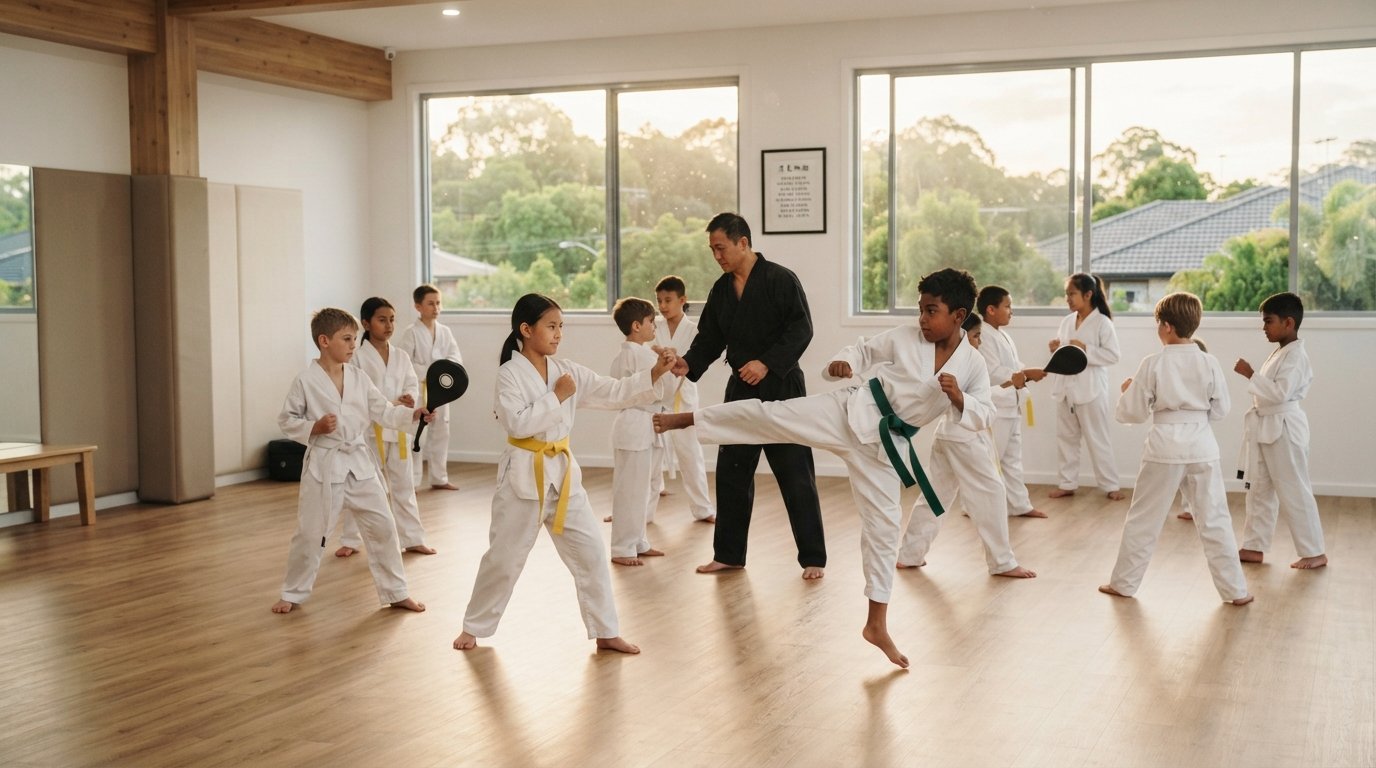
- Respect for Peers: Through sparring and partner work, children learn empathy. They realize that their partner is essential for their own growth, fostering a sense of teamwork and mutual care even during competition.
Why Modern Children Crave Structure
Clear boundaries provide a sense of security. In an unpredictable world, the dojang is a neutral ground where the rules never change. Using martial arts for building respect in children works because it provides a predictable environment where kids know exactly what is expected of them. When children understand the boundaries, they feel safe enough to take risks and grow. The belt ranking system eventually shifts their motivation from “I have to” to “I want to.” They aren’t following rules just to avoid punishment; they’re following them to achieve their next rank. This internal drive is the hallmark of true character development.
The Mechanics of Manners: How Taekwondo Classes Build Character
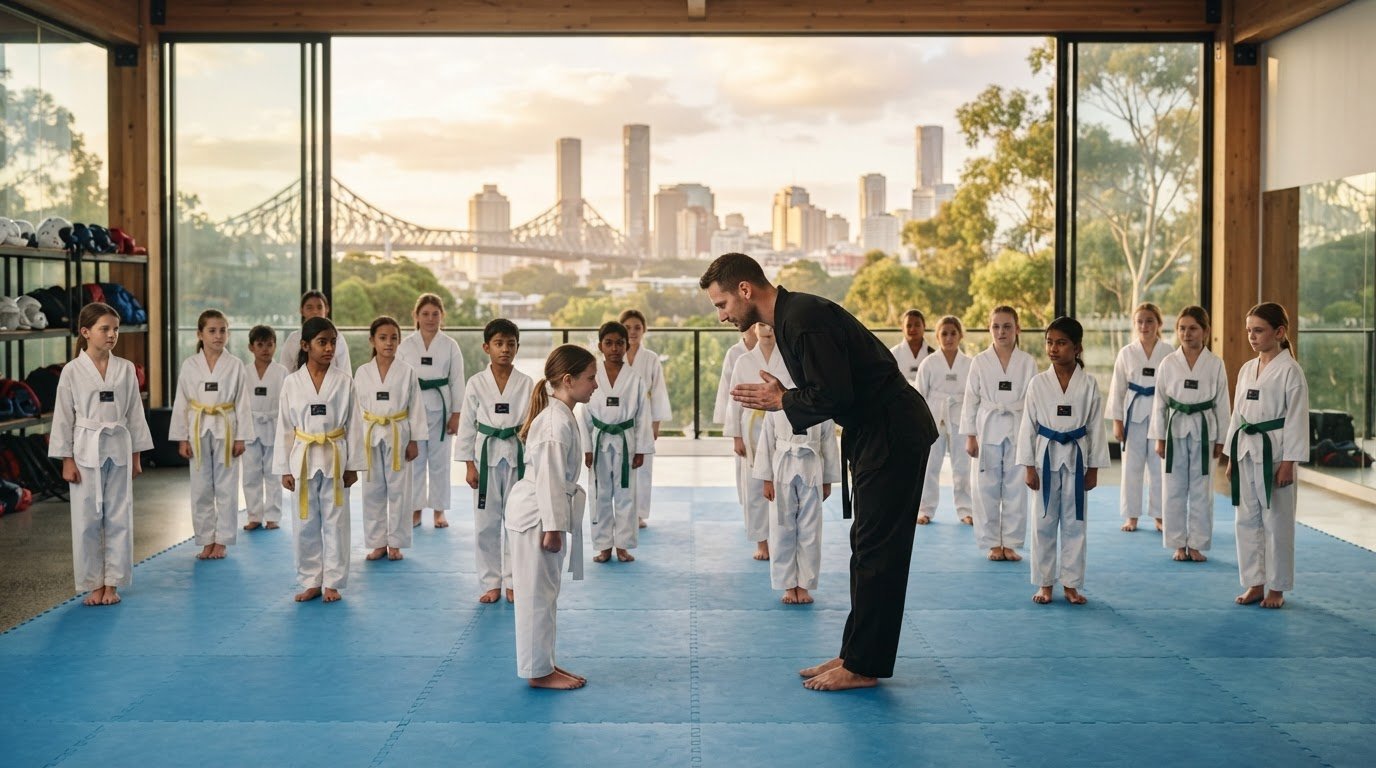
Respect isn’t a vague concept at Flinn Taekwondo Academy; it’s a physical practice. While we previously defined the philosophy of respect, we now look at the specific tools used in martial arts for building respect in children. Every class begins with a series of rituals designed to shift a child’s focus from the outside world to the disciplined environment of the mats. This starts with the “Kyung-rae” or the bow. It’s not a sign of subservience. Instead, it serves as a mental reset. By bowing to the flags and the dojang upon entry, your child acknowledges that they’re entering a space dedicated to growth and self-improvement.
Verbal discipline is another cornerstone of our training. You’ll hear students responding with a crisp “Yes, Sir” or “Yes, Ma’am” to every instruction. This practice does more than just sound polite; it forces an immediate mental engagement with the teacher’s words. Scientific research supports this approach. Academic reviews highlight how martial arts significantly influence the formation of personal character in young participants. This verbal confirmation bridges the gap between hearing and doing. It’s a skill that parents often notice transferring to the dinner table or the classroom.
The ritual extends to the uniform, or Dobok. We teach children to take pride in their appearance. A clean, well-maintained uniform represents a commitment to the discipline. Even the act of waiting for their turn on the mats builds essential patience and impulse control. Children learn to sit quietly and observe their peers, understanding that their time to shine is coming. Before and after every drill, students bow to their partners. This protocol ensures that even during high-energy sparring, the foundation of mutual respect remains unbroken.
The Power of the Bow
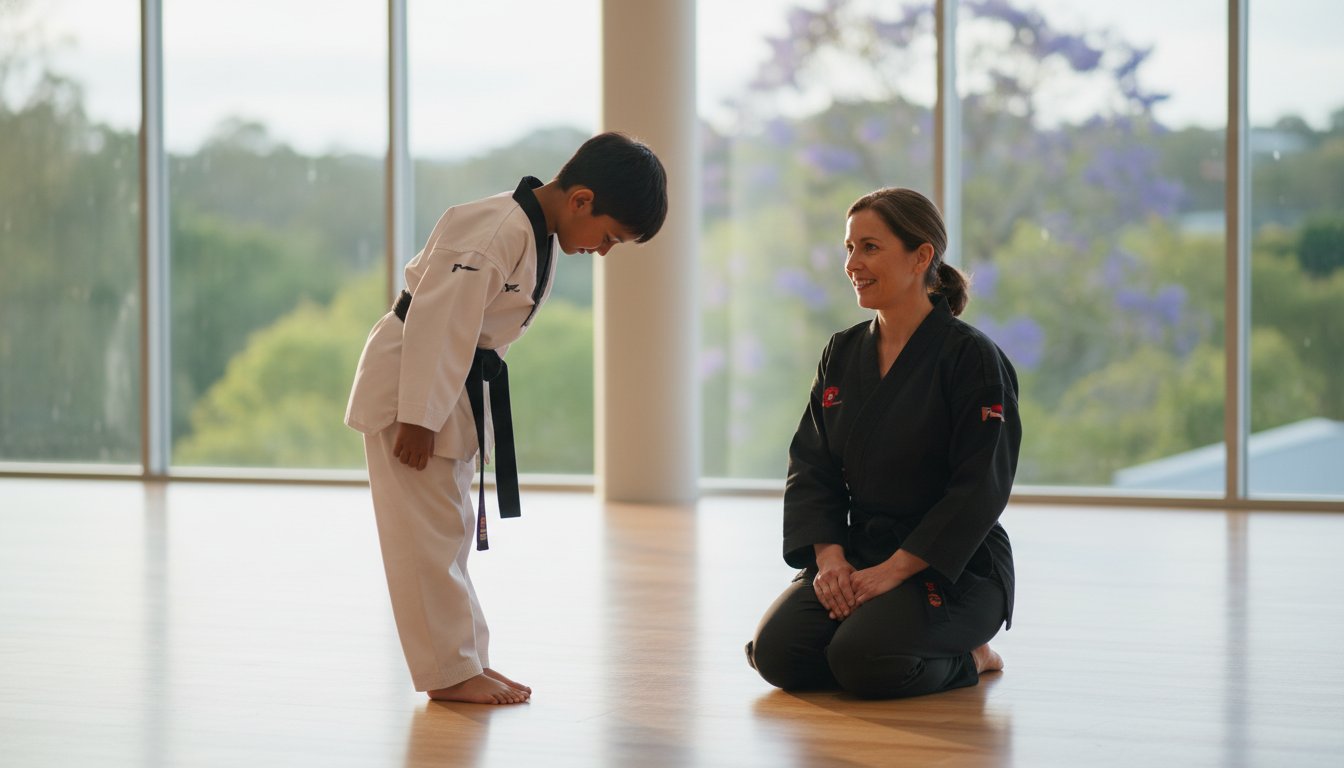
The physical act of bowing is a sign of mutual recognition. When your child bows to an instructor or a peer, they’re saying, “I see you, and I value your contribution to my journey.” This physical habit translates beautifully into the real world. It teaches them to acknowledge others with eye contact and a respectful nod, whether they’re meeting a new teacher or greeting a family member. It’s about recognizing the humanity in everyone they meet.
Listening Skills and the “First Time” Rule
We emphasize the “First Time” rule in every session. In our drills, students must respond immediately to verbal cues. This builds a focus muscle through repetitive, high-engagement activities. By maintaining constant eye contact with the Master, your child learns to block out distractions and absorb information quickly. If you’re ready to see these habits in action, exploring a Junior Taekwondo Program is an excellent way to start their character-building journey.

Martial Arts vs. Team Sports: The Character Building Difference
Traditional team sports offer fantastic benefits, but they often allow a child to blend into the background. In a group setting, it’s easy for a student to rely on a teammate’s effort or hide when they’re feeling unmotivated. Taekwondo is different. Every time your child steps onto the mats, they’re met with individual accountability. This personal responsibility is a primary reason why martial arts for building respect in children works so effectively. There are no bench-warmers here. Every success belongs to the student, and every mistake is an opportunity for them to show resilience and self-correction.
Many parents in our community worry that learning to kick and punch might lead to aggressive behavior or bullying. We’ve found the exact opposite to be true. When a child learns the mechanics of physical power within a disciplined environment, they develop a profound respect for that power. They understand the weight of their own strength. This realization, combined with the “First Time” rule we discussed earlier, creates a child who is more likely to use their words to de-escalate a situation rather than their hands. The belt system further supports this by providing a tangible roadmap for personal achievement, teaching kids that respect and rank are earned through hard work, not through intimidation.
Managing Power and Aggression
It sounds like a paradox, but the most capable children in the dojang are often the most peaceful. We teach children that true self-defence means having the skill to protect yourself while having the wisdom to know when *not* to use force. Sparring sessions aren’t about winning or losing; they’re about emotional regulation under pressure. Your child learns to stay calm and respectful even when they’re physically tired or challenged. This ability to maintain composure is a high standard of living that serves them well in stressful school environments or social conflicts.
Individual Growth in a Supportive Community
While the training is individual, the atmosphere is deeply communal. Every child progresses at their own pace, supported by a unique bond with their Taekwondo Master. This mentorship ensures that no student is left behind or feels overlooked. As children move up the ranks, they’re encouraged to help lower belts, which naturally fosters leadership skills. If you’re looking for a structured way to build these traits, our guide to Junior Taekwondo Brisbane explains how we help local children transition from followers to confident leaders.
Bringing the Dojang Home: Tips for Brisbane Parents
Training doesn’t end when your child steps off the mats. To truly harness the power of martial arts for building respect in children, the lessons learned in class must travel home in the car with you. We encourage families to adopt the “Black Belt Attitude” as a household standard. This means excellence isn’t reserved for high kicks; it’s applied to making the bed, completing homework, and speaking kindly to siblings. When you integrate these expectations into your daily morning and evening routines, you reinforce the idea that respect is a lifestyle, not a 45-minute class.
One of the most effective ways to bridge this gap is through the “Home Grade” concept. Many parents find success by linking household chores and behavior directly to belt progression. If a child isn’t showing the required level of respect at home, they may not be ready for their next stripe or grading. This creates a tangible connection between their effort in the dojang and their responsibilities as a family member. It’s also vital to praise the effort and the respect shown rather than just the physical skill. Acknowledge when they stay calm during a disagreement or when they start a task without being reminded. These are the real victories of character development.
The “Yes, Mum” Challenge
In our sessions, you’ll hear a chorus of “Yes, Sir” because it signals immediate focus and acknowledgment. You can bring this same level of verbal discipline into your home by encouraging your child to respond with “Yes, Mum” or “Yes, Dad” whenever they’re given a direction. Using consistent verbal responses immediately reduces household friction by confirming the child has heard and understood the instruction. For schoolwork, try setting a “Taekwondo Focus” timer. Challenge your child to work with the same intensity and lack of distraction they show during a complex Poomsae drill for twenty minutes at a time.
Respecting Boundaries Outside the Mats
We teach children that a martial artist is always aware of their surroundings. This situational awareness leads to better social choices. On the playground, this means teaching your child to ask for permission before engaging in physical play or “wrestling” with friends. They learn that respect for others’ physical space is a sign of strength, not weakness. By encouraging your child to lead by example, they become a positive influence on younger siblings and peers. If you want to see how these habits are formed from day one, join our community at Flinn Taekwondo Academy and start your child’s journey toward a Black Belt standard of living.
Starting the Journey at Flinn Taekwondo Academy
Choosing a school is a big decision for your family. Flinn Taekwondo Academy stands apart as a family-owned institution deeply rooted in the North Brisbane community. Led by Master Jeff Flinn, a 7th Dan Black Belt with decades of experience, we provide a level of international accreditation you won’t find at generic fitness centers. We believe that martial arts for building respect in children requires a mentor who understands the balance between firm discipline and a warm, welcoming environment. When your child joins us, they aren’t just another student on a roster; they become part of a legacy of excellence.
Your child’s first class at our North Brisbane academy is designed to be inspiring rather than intimidating. We prioritize safety and professional standards, ensuring every new student feels capable from the moment they step onto the mats. You’ll see the “Respect Protocol” we’ve discussed throughout this guide in action immediately. From the initial bow to the focused listening drills, our instructors guide your child with a blend of authority and encouragement. This structured approach helps children understand that they’re entering a special place where they can grow into their best selves.
A Program for Every Age
We recognize that a four year old has different developmental needs than a twelve year old. Our Little Tigers Program (4-6 years) is specifically designed for preschoolers to introduce the fundamentals of listening and self-control. As they grow, they transition into Junior Taekwondo, where the focus shifts toward high-performance leadership and complex technical skill. Families from Brendale and across North Brisbane stay with us for years because they see the long-term transformation in their children’s character. We tailor every lesson to ensure the challenge matches the child’s age and stage of development.
Join the Flinn Academy Family
Starting this journey is easy. We invite you to book a trial session to experience our community firsthand. You’ll meet other Brisbane North parents who value the same standards of character development and mutual respect that you do. Our dojang is more than a training facility; it’s a place where lifelong friendships and strong values are forged. Don’t wait for behavioral issues to become permanent habits. Start your child’s journey toward respect today and give them the tools they need for a high standard of living. We look forward to welcoming your family to the mats.
Empower Your Child with a Lifetime of Respect
You’ve seen how Taekwondo shifts the focus from mere obedience to a deep, internal choice to value oneself and others. By bringing the discipline of the dojang into your home routines, you create a consistent environment where your child can thrive. Using martial arts for building respect in children isn’t just about learning to kick or punch. It’s about developing the emotional control and focus needed to navigate school, friendships, and family life with confidence.
At Flinn Taekwondo Academy, we’re dedicated to this transformation. Our family-owned academy has served the North Brisbane community since 2013 under the expert guidance of Master Jeff Flinn, a 7th Dan Black Belt. Whether your child is starting in our specialized Little Tigers Program for ages 4-6 or joining our junior ranks, they’ll find a supportive team ready to cheer on their success. Take the first step toward a Black Belt standard of living today. Book a Trial Class at Flinn Taekwondo Academy Today!
We look forward to helping your child stand tall and lead with heart on our mats.
Frequently Asked Questions
Will martial arts make my child more aggressive or likely to fight at school?
No, training actually decreases the likelihood of schoolyard fights. We teach children that physical force is a last resort. By learning the weight of their own power, students gain the confidence to de-escalate conflicts using their words rather than their hands. This self-assurance means they don’t feel the need to prove themselves through aggression or bullying.
How long does it take to see an improvement in my child’s respect and behavior?
You will likely notice small improvements in eye contact and listening within the first month of training. Lasting behavioral changes usually take three to six months of consistent practice. This time allows the rituals of the dojang to become natural habits that your child carries into their daily life at home and school.
My child is very shy; will the discipline of Taekwondo be too much for them?
Taekwondo is a fantastic tool for shy children because it provides a safe, predictable space. Your child can find their voice without the pressure of a team environment or the fear of being “benched.” By practicing “Respect for Self,” they learn to stand tall and speak with a confidence that eventually transfers to the classroom.
What is the difference between Taekwondo and Karate for building respect?
Both disciplines prioritize character, but Taekwondo often focuses on the mental “reset” through high-energy movement and specific verbal protocols. The most important factor for martial arts for building respect in children is finding an academy that prioritizes the “Black Belt Attitude” over just physical mechanics. Our community culture ensures these values are at the heart of every kick.
Can Taekwondo help children with ADHD or focus issues?
Yes, the structured discipline of our classes is ideal for improving focus and self-regulation. A 2025 report indicated that students in structured martial arts showed a 25% improvement in task completion. The repetitive nature of the drills helps children with ADHD build their “focus muscle” in a high-engagement environment that rewards their effort.
What age is best to start martial arts for character development?
Starting at age four is ideal for building a strong foundation of discipline and manners. Our Little Tigers Program (4-6 years) introduces martial arts for building respect in children during their most formative years. This early start ensures that respectful behavior becomes a core part of their identity before they face the social challenges of primary school.
How do instructors at Flinn Taekwondo Academy handle disrespectful behavior in class?
We use immediate, calm redirection to maintain the high standards of our training environment. If a student is disrespectful, they may be asked to sit and observe the class for a few minutes. This helps them understand that training with the team is a privilege that requires a respectful attitude toward their Master and their peers.
Do I need to be a “strict” parent at home for these lessons to work?
You don’t need to change your parenting style; you just need to be consistent with the academy’s standards. By using the “Home Grade” concept to link household chores to belt progression, you create a partnership with our instructors. This consistency helps your child understand that respect is a universal expectation, not just a rule for the mats.