
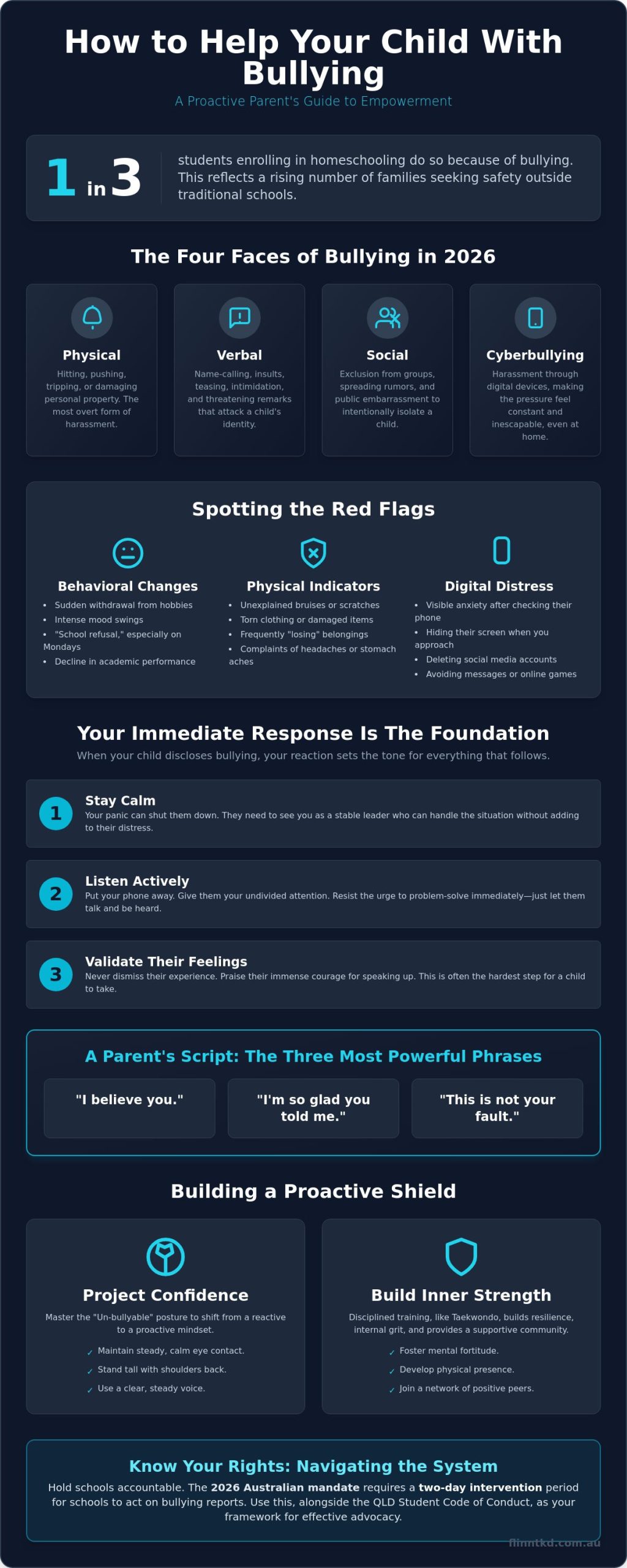
Did you know that one in three students now enrolling in homeschooling programs do so because of bullying? This represents a significant rise in families feeling forced to retreat from traditional environments just to keep their children safe. It’s a staggering reality that reflects the deep frustration you feel when the school gate no longer feels like a secure boundary for your family.
You’re likely feeling a mix of fierce protection and total helplessness as you watch your child’s confidence fade. It’s heartbreaking to see them carry a burden they aren’t equipped to handle, especially when school responses feel sluggish or dismissive. You want more than just a temporary fix; you want your happy, resilient child back.
This comprehensive guide provides a disciplined, step-by-step roadmap on how to help my child with bullying. We’ll move past reactive fear and focus on proactive empowerment, giving you the tools to advocate for your child effectively and immediately.
We will explore practical scripts for emotional validation, explain how to hold schools accountable under the 2026 Australian mandate for two-day intervention, and show you how building physical presence and mental fortitude can transform your child’s experience. You’ll learn how to foster the inner strength and community support they need to stand tall in any environment.
Key Takeaways
- Learn why staying calm and using active listening is the essential first step when your child opens up about their experiences.
- Master the “Un-bullyable” posture to help your child project confidence through eye contact and steady body language.
- Discover a clear plan for how to help my child with bullying by navigating the Queensland Department of Education’s Student Code of Conduct.
- Understand how the Flinn Taekwondo philosophy builds internal grit and a supportive community through the Junior Taekwondo Program.
- Identify the four main types of bullying in 2026 and how to transition your family from a reactive mindset to proactive empowerment.
Understanding the Bullying Landscape: Signs, Types, and Impacts in 2026
In 2026, bullying is defined as a repeated, intentional misuse of power through behavior that aims to cause physical or emotional harm. It isn’t a simple one-off conflict or a playground disagreement; it’s a sustained pattern that leaves your child feeling trapped and powerless. Recognizing this distinction is your first critical step in learning how to help my child with bullying effectively.
There are four primary Types of school bullying you need to recognize. Physical bullying involves hitting, pushing, or damaging property. Verbal bullying includes insults, name-calling, and hurtful teasing. Social bullying, which is often the most difficult to detect, uses exclusion, rumors, and public embarrassment to isolate a child from their peers. Finally, cyberbullying brings the harassment into your home through digital devices, making the pressure feel inescapable for a young person.
Spotting the Red Flags: Is Your Child Being Bullied?
Your child might not always feel comfortable opening up immediately. They might feel ashamed or worry that telling an adult will make the situation worse. As a parent, you must be the detective. Watch for these subtle signals in their daily routine:
- Behavioral changes: Sudden withdrawal from favorite hobbies, mood swings, or an intense “school refusal” on Monday mornings.
- Physical indicators: Unexplained bruises, scratches, torn clothing, or frequently “losing” expensive belongings like lunchboxes or hats.
- Digital distress: Visible anxiety after checking their phone, hiding their screen when you walk by, or suddenly deleting social media accounts without explanation.
The Long-Term Impact on Brisbane Students
At Flinn Taekwondo Academy, we see how these experiences ripple through a child’s life in North Brisbane. Bullying doesn’t just stay in the playground; it follows them into the classroom. It often leads to a sharp decline in academic performance because the child’s brain remains in a “survival mode” of hyper-vigilance rather than a “learning mode” of curiosity.
The psychological toll is heavy. Research continues to show a direct link between early, sustained bullying and chronic anxiety in adolescence. The old advice to “just ignore it” is a failed strategy. Ignoring a power imbalance doesn’t make it disappear; it often signals to the bully that their tactics are working. To truly understand how to help my child with bullying, you must recognize that your child needs an active ally and a clear strategy for reclaiming their personal agency and self-esteem.
Immediate Steps: How to Respond When Your Child Discloses Bullying
When your child finally tells you they are being bullied, your heart likely hammers against your ribs. It’s a moment of extreme vulnerability for them. Your immediate reaction is the foundation for everything that follows. This is why the “Golden Rule” of bullying disclosure is to stay completely calm. If you react with visible anger or panic, your child may stop sharing to protect you from your own distress. They need to see that you are a stable, capable leader who can handle the weight of their secret. This calm presence is the first lesson in how to help my child with bullying.
Practice active listening by giving them your undivided attention. Put your phone away and maintain soft eye contact. Resist the urge to jump straight into problem-solving mode or “fix” the situation while they are still talking. Experts at how to respond to bullying emphasize that simply being heard is a powerful form of relief for a victimized child. Validate their feelings without reservation. Never tell them it’s “not a big deal” or to “just be tougher.” Instead, praise their immense courage for speaking up, as this is often the most difficult step for a child to take.
A Parent’s Script: What to Say in the Moment
Having a plan helps you stay focused when emotions run high. Start with these grounding phrases: “I believe you,” “I’m so glad you told me,” and “It is not your fault.” These words dismantle the shame that bullies rely on to keep their victims silent. Use open-ended questions to understand the situation better, such as “How did that make you feel?” or “What happened next?” rather than asking “Why didn’t you hit back?” which can imply they failed. By speaking these words, you are reassuring your child that they are no longer alone and that you are now a unified team working toward a solution.
What NOT to Do: Common Parental Pitfalls
Your protective instincts are strong, but some reactions can backfire. Avoid the urge to call the other child’s parents immediately. In most 2026 school environments, this leads to further escalation and “retaliation bullying” rather than a resolution. Similarly, don’t promise to keep the situation a secret if your child is in physical danger; their safety must remain the priority. Finally, avoid telling your child to “just fight back” if they haven’t been trained to do so. Without the physical and mental discipline found in our Junior Taekwondo Program, an untrained physical response often results in the victim getting into trouble while the bully plays the victim. True empowerment comes from confidence, not just aggression.
The Proactive Shield: Building Resilience Through Body Language and Voice
Many parents focus exclusively on what to say after an incident happens. However, true resilience begins with how a child carries themselves before a word is even spoken. Physical presence acts as a silent deterrent. Bullies often look for specific non-verbal cues of uncertainty or fear. When you teach your child to project “presence,” you are providing them with a proactive shield that can stop an interaction before it starts. This shift in body language is a core part of how to help my child with bullying by changing the victim narrative into one of self-assurance.
The “Un-bullyable” posture is a physical expression of internal grit. It involves keeping the shoulders back, maintaining steady eye contact, and walking with a purposeful gait. This isn’t about looking for a fight; it’s about demonstrating that you are aware of your surroundings and confident in your right to be there. Self-assurance is a skill that can be practiced and perfected, just like a Taekwondo kick or a technical pattern.
Non-Verbal Communication Drills
You can help your child build this physical shield through simple drills at home. Start by practicing “The Shield” posture together. Have your child stand tall and imagine a protective barrier around them that words cannot penetrate. Focus specifically on eye contact. Teach them the difference between staring aggressively and “looking through” a bully. Looking through someone means maintaining a steady gaze that acknowledges their presence without being intimidated by their posturing. Finally, encourage them to walk with purpose through school hallways. A child who walks like they have a clear destination is far less likely to be targeted than one who is wandering aimlessly or looking at the ground.
Verbal Self-Defence: The Power of the ‘Stop’ Statement
When words are necessary, they must be firm, clear, and non-aggressive. We teach children to use neutral “Stop” statements that set immediate boundaries. Phrases like “Stop, I don’t like that” or “That’s enough” are highly effective because they don’t provide the emotional reaction bullies crave. Practice the tone of voice with your child. Aim for a “Strong Voice” that is deep and steady, avoiding the whining or aggressive tones that often escalate conflict. For parents looking for structured environments to build these skills, exploring Self Defence Brisbane resources can provide the additional training your child needs to feel truly secure.
Navigating the System: Partnering with Brisbane Schools and Support Networks
Advocating for your child within the school system requires the same discipline and focus we teach on the mats. While building your child’s internal grit is vital, you must also understand the administrative frameworks designed to protect them. Under the Australian Government’s 2026 Anti-Bullying Rapid Review Implementation Plan, schools are now mandated to begin addressing reported bullying incidents within two days. This recent policy change is a powerful tool in your strategy for how to help my child with bullying, as it ensures your concerns are prioritized and handled with urgency.
Start by creating a precise, factual record of events. Document every incident with dates, times, specific locations, and any witnesses. Describe the immediate impact on your child’s wellbeing, such as school refusal or unexplained physical symptoms. This detailed log transforms a personal grievance into a professional report that the school must address under the Queensland Department of Education’s Student Code of Conduct and the Brisbane Public School Bullying Prevention Plan dated September 2026.
Preparing for the School Meeting
Approach your formal meeting with the classroom teacher and school counsellor as a strategic partnership. Bring your documentation and remain focused on concrete solutions rather than just the emotional distress. Ask specifically for the school’s current ‘Bullying Prevention Policy’ to ensure their actions align with 2026 standards. Always conclude the meeting by setting a firm follow-up date to review the progress of the school’s intervention. An essential part of how to help my child with bullying is knowing when to escalate; if the principal’s response is insufficient, your next step is to contact the regional office or the Queensland Parent Navigator service.
Local Brisbane Support Resources
Recovery often requires professional guidance outside the school gates. Kids Helpline (1800 55 1800) offers immediate, confidential support for your child, while Parentline provides free advice for you. If the impact on your child’s mental health is severe, seek a child psychologist in North Brisbane who specializes in adolescent resilience, or discover Thrive Teen Therapy Alberta for specialized mental health services for young people. Community groups also play a massive role in rebuilding a child’s social circle and self-esteem.
Similarly, for younger children, a licensed environment that prioritizes early social development and safety can build a foundation of confidence; you may want to visit Trinity Early Learning & OSC to explore their quality childcare options.
Joining a dedicated team like our Children Martial Arts program provides a safe, supportive environment where your child can build a new community. It offers a space to practice the physical presence and mental fortitude needed to navigate school life with confidence.
Beyond the Basics: How Taekwondo Empowers Children Against Bullying
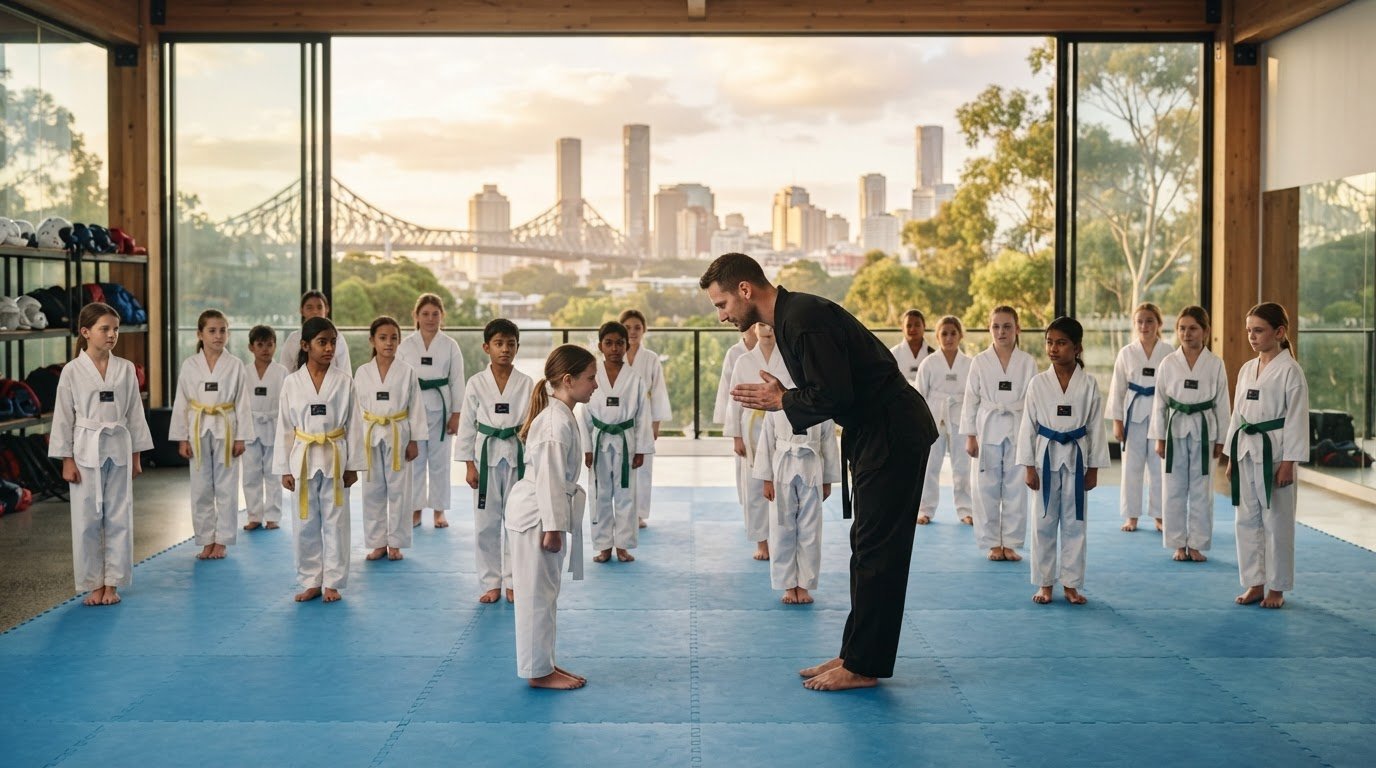
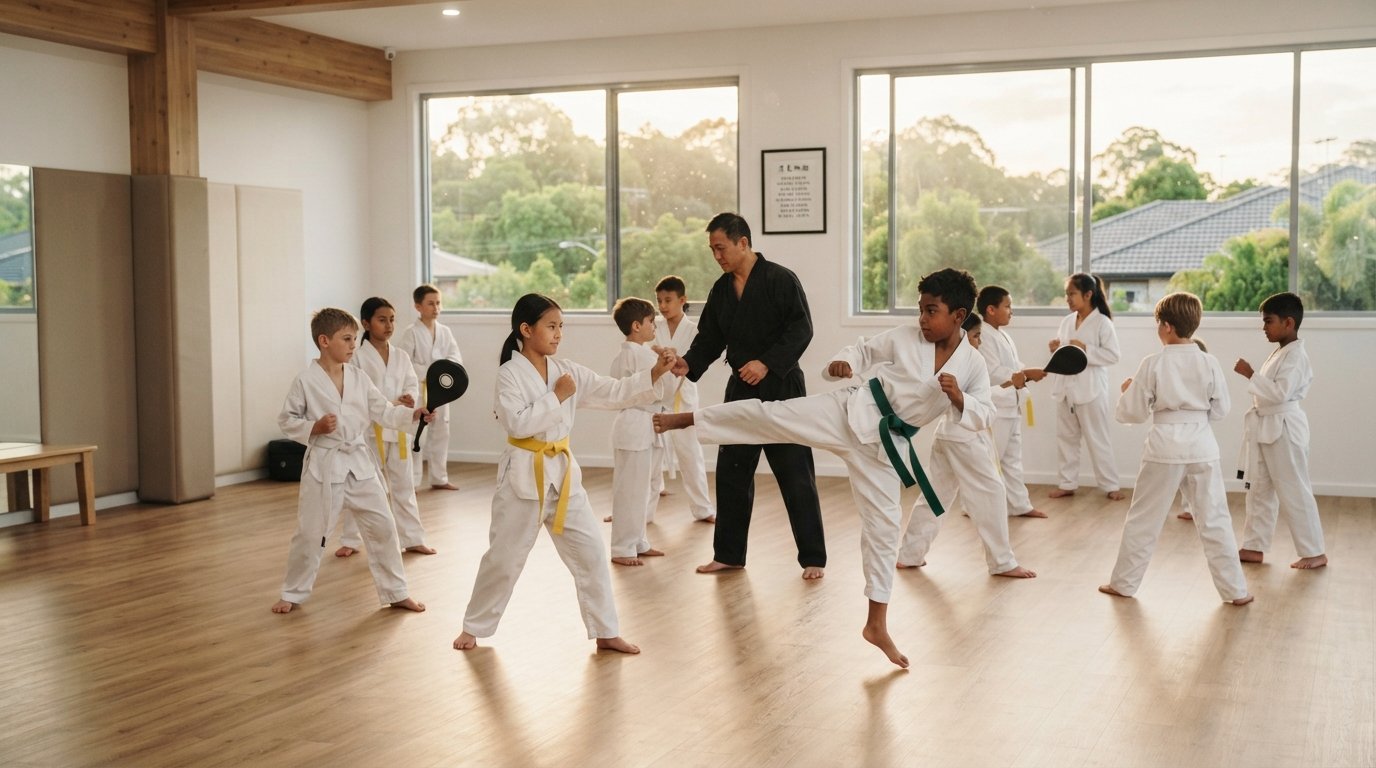
While documenting incidents and meeting with teachers are vital steps, true long-term safety comes from within. At Flinn Taekwondo Academy, we believe that confidence is the ultimate form of self-defence. When a child develops a deep sense of self-worth, they project a different energy to the world. Our Junior Taekwondo Brisbane program is specifically designed to build this “internal grit.” It gives children a psychological edge that makes them less likely to be viewed as a target. This internal transformation is a cornerstone of how to help my child with bullying because it addresses the root cause of vulnerability.
We provide your child with a safe “third space” outside of the high-pressure school environment. In our dojang, students are judged solely on their personal effort and discipline, not on their social status or digital presence. This supportive community allows them to reset and recharge. Taekwondo also emphasizes respect for oneself and others. By teaching children to value discipline, we ensure they have the emotional intelligence to never become bullies themselves. They learn that true strength is used to protect and lead, not to diminish others.
Confidence Through Competence
Confidence isn’t something you can simply tell a child to have; they must earn it through action. Every time your child masters a complex new kick or earns a higher belt, they are proving to themselves that they can handle hard things. This creates a powerful psychological shift. They stop identifying as a “victim” and start seeing themselves as an “athlete.” Master Jeff Flinn’s 7th Dan Black Belt expertise ensures your child learns a disciplined, non-violent approach to self-defence that prioritizes de-escalation over conflict. This professional guidance helps them understand that physical skills are a tool for peace of mind, not a reason for aggression.
The Little Tigers Advantage for Younger Children
Early intervention is often the most effective way to prevent future social challenges. Our specialized Little Tigers Program for children aged 4 to 6 focuses on building focus and clear boundaries from a young age. We teach these early learners how to socialize in a structured environment that rewards kindness and personal growth. By establishing these habits early, you are giving your child the social foundations they need to thrive as they enter primary school. If you are looking for a practical, life-changing strategy for how to help my child with bullying, the journey starts here.
Book a trial for your child at Flinn Taekwondo Academy today and join a community dedicated to building resilient, confident leaders.
Building a Future of Confidence and Strength
Protecting your child from the pain of bullying requires a blend of immediate emotional support and long-term skill building. You now have a clear roadmap for how to help my child with bullying, from staying calm during a disclosure to navigating the 2026 school reporting mandates. By documenting incidents and partnering with local Brisbane educators, you can ensure your child’s environment is safe and supportive. However, the most lasting transformation occurs when your child discovers their own inner strength and physical presence.
At Flinn Taekwondo Academy, we specialize in turning vulnerability into resilience. Our family-owned Brisbane North facility is led by Master Jeff Flinn, a 7th Dan Black Belt with international accreditation. We offer specialized programs for everyone from our 4-year-old Little Tigers to adults, focusing on the discipline and self-assurance that naturally deter harassment. We invite you to move beyond reactive fear and toward proactive empowerment.
Empower your child today with a trial at Flinn Taekwondo Academy. Let’s work together to build a future where your child walks with purpose, speaks with a strong voice, and belongs to a community that celebrates their growth. You don’t have to face this challenge alone; our team is ready to help your family stand tall.
Frequently Asked Questions
Should I tell my child to hit back if they are being bullied?
Telling an untrained child to hit back often leads to them being the one penalized while the bully plays the victim. Instead, focus on building their “strong voice” and physical presence. We teach students that physical skills are for protection, not aggression. This disciplined approach ensures they stay safe without escalating the conflict into a school suspension.
How do I know if it’s just ‘kids being kids’ or actual bullying?
Bullying is defined by a repeated pattern and a clear power imbalance, whereas “kids being kids” usually refers to equal, one-off conflicts. If the behavior is intentional, targeted, and persistent, it requires an intervention. Understanding this distinction is the core of how to help my child with bullying effectively, as it allows you to advocate for the right level of school response.
What should I do if the school isn’t taking the bullying seriously?
You should invoke the Australian Government’s 2026 mandate, which requires schools to begin addressing reported incidents within two days. If the classroom teacher doesn’t act, escalate the matter in writing to the principal or the regional Queensland Department of Education office. Use your documented log of dates and witnesses to prove the school’s Bullying Prevention Policy isn’t being followed.
Can Taekwondo really help my child if they are shy or not athletic?
Taekwondo is an individual journey that is perfect for shy children because it removes the pressure of team sports. We focus on personal milestones rather than comparing students to their peers. As they master basic technical patterns, their confidence grows naturally. This newfound self-assurance translates directly into better posture and a more resilient presence in the school yard.
Is cyberbullying handled differently than school-yard bullying in Brisbane?
Cyberbullying is often more invasive because it follows a child home, yet Brisbane schools still have a duty of care if it impacts the student’s education. Document social media interactions by taking screenshots of hurtful comments or group chat exclusions. While the medium is digital, the psychological impact is the same, and it should be reported as part of the school’s Student Code of Conduct.
How long does it take for a child to rebuild their confidence after bullying?
Rebuilding confidence is a gradual process that depends on the duration of the bullying and the support systems in place. Most children start showing signs of recovery within a few months of joining a positive, goal-oriented community. Consistent training in our Junior Taekwondo Program helps replace a “victim” identity with an “athlete” identity, providing them with tangible proof of their own strength.
What are the signs that my child might be the one doing the bullying?
Look for signs of increased aggression, a sudden obsession with social hierarchy, or possessing new belongings they can’t account for. Sometimes children bully to gain a sense of control they feel they lack elsewhere. If you notice these patterns, it’s important to address the behavior with firm boundaries while exploring the underlying cause of their need for power over others.
Does my child need to be a certain age to start self-defence classes at Flinn Academy?
Children can begin their journey at Flinn Taekwondo Academy as early as four years old. Our Little Tigers Program is specifically designed for 4 to 6 year olds to build focus and early social boundaries. We also offer the Junior Taekwondo Program for ages 7 to 12, ensuring that every child has an age-appropriate environment to learn how to help my child with bullying through physical and mental empowerment.