A workout doesn’t have to mean repeating the same circuit week after week. Fitness classes in North Brisbane for adults who get bored easily can include varied group sessions, outdoor gym workouts and aqua classes, giving you different ways to keep moving. Brisbane has more than 170 local parks with outdoor gyms, and 22 local pools offer aqua classes.
If repetitive routines make it hard to stay motivated, you’re not alone. The right activity can challenge your body while fitting your experience, fitness level and abilities.
This guide explores how to find fitness classes for adults who get bored easily in North Brisbane, keep sessions fresh and choose a class that suits you. It also looks at how structured Taekwondo training can add variety, skill-building and community to your routine.
Key Takeaways
- Explore Northside options beyond indoor gyms, including outdoor spaces and pool-based classes, to find a setting that keeps you engaged.
- Rotate exercises, class formats and activity locations to bring fresh challenges to your routine.
- Compare class times with your workday and travel needs; early group workouts can be one option for fitting exercise in.
- Build intensity at a pace that suits your current fitness and ability, and adapt movements to your needs.
- Consider skill-based training such as Taekwondo if you want exercise that also develops technique and discipline.
Class locations around Brisbane Northside
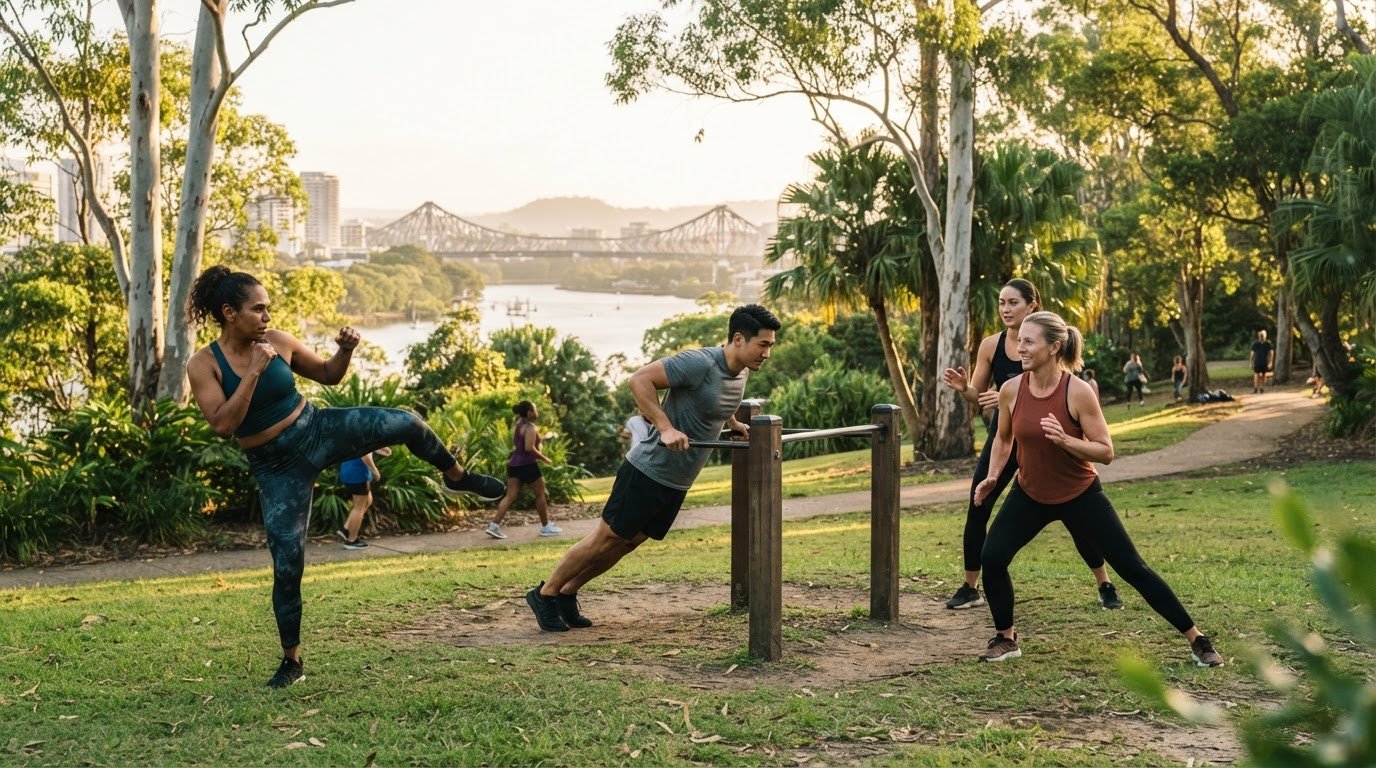
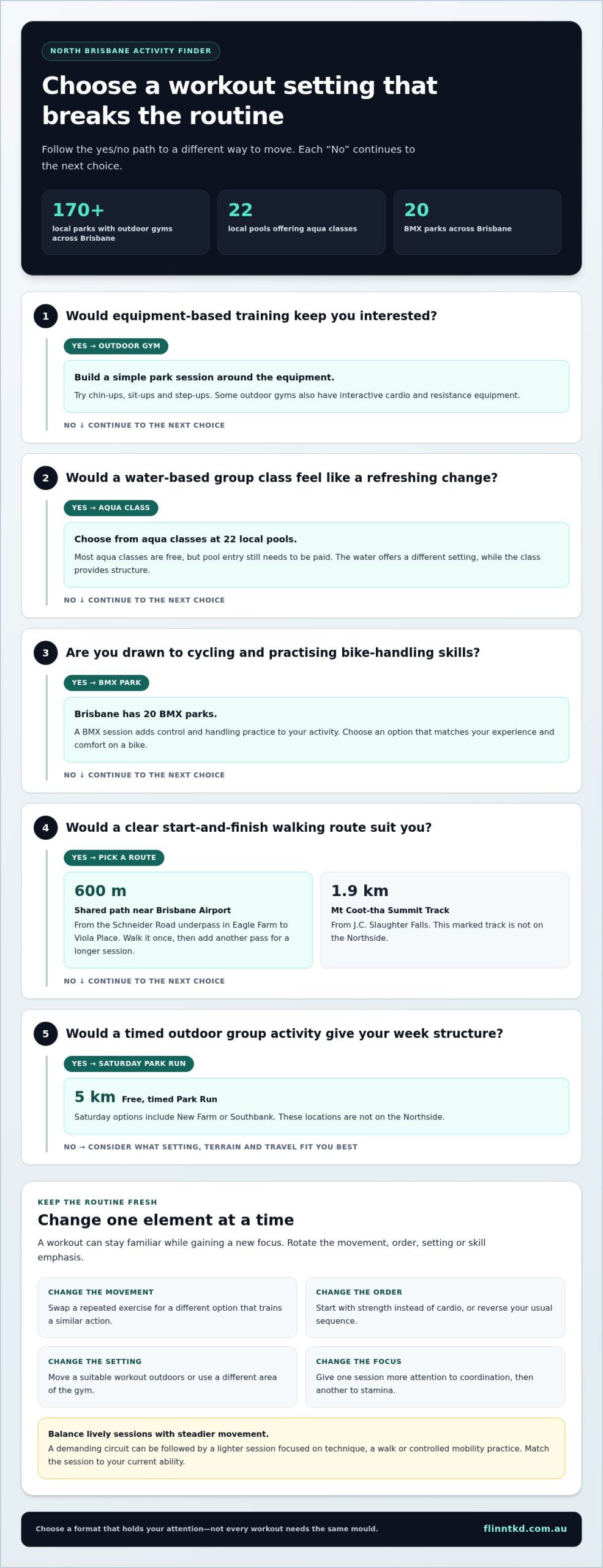
A change of setting can make a workout feel different before the first exercise begins. Across Brisbane, outdoor gyms in more than 170 local parks offer an alternative to an indoor class. Try a park-based session when you want fresh air, space to move, and equipment for chin-ups, sit-ups and step-ups. Some locations also have interactive cardio and resistance equipment.
Make location part of your plan. Choose an outdoor gym near your usual route and build a short circuit around its equipment, such as alternating step-ups with a walk between stations. If you prefer guided ideas, Brisbane City Council’s free fitness guide offers a seven-day programme of activities to help you plan variety across the week.
Water-based sessions offer another change of pace. Brisbane City Council has 22 local pools offering aqua classes. Most aqua classes are free, but you still need to pay pool entry. The water adds a different environment from a studio or park, while the class format gives your session structure. Check out an aqua class if you want a group workout that feels distinct from your usual routine.
For a short outdoor option, the shared path from the Schneider Road underpass in Eagle Farm to Viola Place at Brisbane Airport is 600 metres long. That distance can suit a quick walk or a repeatable route before or after work. Set a simple goal: walk the path once, then add another pass when you want a longer session. The route gives you a clear start and finish without requiring gym equipment.
Brisbane also has 20 BMX parks, offering a more skill-focused way to move. A BMX session differs from a standard class because you’re practising control and handling as well as building activity into your day. Choose an option that matches your experience and comfort on a bike. The aim is to find a format that holds your attention, not to force every workout into the same mould.
Walking routes can also make fitness less repetitive. The Mt Coot-tha Summit Track from J.C. Slaughter Falls is 1.9 kilometres long, giving you a defined route and destination. It’s not on the Northside, but it shows how a marked track can turn a walk into a purposeful outing. For a daily walking target, the Brisbane guide recommends 10,000 steps. Treat it as a guidepost, then use your own route and pace to build consistency.
To choose a Northside location, start with the kind of session you’ll look forward to: equipment-based training, water exercise, cycling or walking. Then consider travel, terrain, and whether you want a planned group class or independent movement. A Saturday option is the free, timed 5 km Park Run at New Farm or Southbank. These locations aren’t on the Northside, but they offer another example of a structured outdoor activity within Brisbane. A different venue can help refresh your routine without changing your whole approach to exercise.
Changing class routines to help prevent boredom
Repeating the same sequence can make exercise feel predictable, but refreshing a workout doesn’t mean replacing it entirely. Keep the activity familiar and change one element, such as the exercise order, movement or pace. For instance, swap a treadmill warm-up for a brisk walk, then finish with strength exercises. A small adjustment gives your session a fresh focus while keeping its overall structure familiar.
Mixing up exercises during gym workouts can help keep boredom at bay. Choose movements that challenge different skills instead of relying on the same cardio machines every visit. One session might include body-weight exercises and step-ups; another could focus on resistance movements and balance. Keep a simple note of what you’ve done so you can spot repeated patterns and choose a different emphasis next time.
Use this simple rotation to add variety without making every session unfamiliar:
- Change the movement: replace a repeated exercise with a different option that trains a similar action.
- Change the order: begin with strength work instead of cardio, or reverse your usual sequence.
- Change the setting: move a suitable workout outdoors, or use a different area of the gym.
- Change the focus: give one session more attention to coordination, then another to stamina.
Keep your goal clear. If you want cardio, vary how you move rather than abandoning the goal. A brisk walk, cycling and a low-impact circuit can each make the workout feel different. For strength, change the movement pattern or equipment. You don’t need to make every exercise harder; aim for an engaging session that matches your current ability.
Variety can still become tiring if every class feels like maximum effort. Balance lively sessions with steadier movement, such as a walk or controlled mobility practice. For example, follow a demanding circuit with a lighter session focused on technique. This contrast can make a routine easier to sustain without relying on novelty alone. Notice which formats leave you keen to return, then use that to guide your next choice.
Review each workout briefly. Note the activity, what you enjoyed and what you’d change. If a class felt repetitive, choose one specific adjustment for next time, such as a different warm-up or exercise variation. If it felt confusing, keep familiar movements and change only their order. These observations turn “I’m bored” into a practical plan.
Structured skill practice can also bring progression beyond changing exercises. Learning a movement sequence gives each session a focus, while repeated practice lets you notice technique improving. If that approach appeals, explore a structured training approach as another way to bring purpose and variety to exercise.
What class schedules are available outside work hours in North Brisbane?
Outside-work exercise can mean an early session, an evening class or a weekend activity. A 6:00 AM group workout in Paddington is one Brisbane example of an early start, though Paddington is not on the Northside. For North Brisbane, use that example as a scheduling model rather than assuming every local venue runs the same timetable. Look for a session that fits your commute, work finish and preferred training style.
Early sessions suit people who want training done before work begins. To make a morning class workable, plan the night before: set out clothes, prepare what you need for the day, and choose a route that gets you to the venue on time. If a 6:00 AM start would leave you rushed or short on rest, an after-work class may fit better. The best time is the one you can follow consistently.
Evening sessions can suit people whose mornings are filled with work, study or caring responsibilities. Plan a clear transition: finish work, allow time to travel, then head to class rather than going home first. If you work near a North Brisbane shopping precinct, for example, a class close to work or a familiar transport route could reduce extra travel and make training easier to fit into your day.
Weekend activity can provide a different rhythm from weekday classes. Brisbane’s New Farm and Southbank Park Runs are free, timed 5 km runs held on Saturdays. They’re examples of a scheduled outdoor activity, not Northside locations. If you want to keep your weekend closer to home, use the same planning approach: identify a suitable local class or activity, then protect that time in your calendar.
Before choosing a timetable, consider the whole journey, not just the class start time. Factor in when work ends, travel, changing and the trip home. A class soon after your shift may suit you if it’s near work; a later start may work better with a longer commute. If your roster changes, look for a weekly pattern that leaves you more than one possible training window.
Use these steps to test whether a schedule fits:
- Write down your fixed commitments: include work, study, family responsibilities and travel.
- Choose a realistic window: compare early morning, after work and weekend options.
- Plan the route: account for the trip to the venue and the journey home.
- Review after a few sessions: note whether the time supports your energy and attendance.
Variety can come from your schedule as well as your workout. For example, alternate a weekday class with a weekend outdoor activity instead of repeating one format at the same time each week. Add each session to your calendar and label it, such as “evening class” or “Saturday walk.” Seeing the routine laid out can help you spot when your schedule needs adjusting.
For fitness classes for adults who get bored easily in North Brisbane, choose a timetable that leaves room for variety. Start with one regular session, then add another time or activity when it fits your commitments. A clear schedule provides structure without requiring every week to look the same.
Are there health or injury risks to consider when starting high-intensity or varied fitness classes?
A class can feel harder to manage if the effort rises suddenly, the movements are unfamiliar or the pace leaves little time to learn. A fast circuit might combine jumping, squats and floor exercises, while a lower-impact session may use controlled versions of similar movements. Start with movements you can perform with control, then build the challenge as your confidence and fitness develop.
Before your first class, consider your current activity level, movement experience and any health concerns that affect exercise. If you’re returning after a long break, a demanding session may feel very different from your usual daily activity. Choose a class where you can adjust the pace and movements, and tell the instructor about relevant limitations so they can guide suitable options.
Technique matters more than matching the pace of the most experienced participant. In a strength circuit, use a manageable range of motion and controlled repetitions rather than rushing to keep up. During a cardio interval, reduce your speed or choose a lower-impact option if your form starts to slip. A suitable adjustment lets you keep participating while respecting your current ability.
Different activities bring different demands. A dance-based class may involve quick direction changes, while a circuit may switch between strength and cardio. Give yourself time to learn unfamiliar movements before adding speed or resistance. If a sequence feels confusing, focus on one movement at a time and ask the instructor to demonstrate a modification instead of copying a movement you can’t yet control.
Use these practical steps to manage your first sessions:
- Arrive ready to explain: tell the instructor about relevant limitations or movements you need to adapt.
- Begin at a controlled pace: choose a version that lets you maintain steady technique.
- Take recovery pauses: use a rest interval to regain control rather than rushing into the next exercise.
- Notice your response: stop if you feel pain or become unwell, and seek appropriate support.
Recovery between classes is part of a sustainable routine. If one session includes vigorous intervals, choose gentler movement next time rather than immediately stacking another demanding workout. A relaxed walk or mobility-focused session can provide contrast. Notice how your body responds during and after exercise, then adjust the next session’s pace or movements accordingly.
New challenges should feel purposeful, not like a test of endurance. For example, learning a technique-based sequence gives you a clear skill to practise without requiring every class to be high intensity. Progress can mean smoother control or better coordination, not simply moving faster. If structured movement appeals, explore guided Taekwondo training as a skill-focused way to stay active.
Flinn Taekwondo Academy: Little Tigers Program (4-6 years)
Flinn Taekwondo Academy offers Taekwondo pathways for children and adults, with the Little Tigers Program designed for ages 4-6. If you’re seeking a structured activity for yourself, the Senior & Adult Taekwondo Program is for participants aged 13 and over. Training combines physical activity with learning Taekwondo skills, while supporting discipline, confidence and fitness.
For adults who lose interest in repetitive workouts, skill-based practice offers techniques and movement patterns to work on over time. Families can also find age-specific options, including the Junior Taekwondo Program for ages 7-12. Choose the pathway that matches who will be training and what kind of activity you’re looking for.
To learn more, visit Flinn Taekwondo Academy online.
Choose a Routine You’re Ready to Grow With
Choose an activity that gives you something to practise, not just another workout to finish. If you’re looking for fitness classes for adults who get bored easily in North Brisbane, consider what keeps you engaged: learning technique, building confidence or sharing a goal with a supportive group. That can point you towards a routine you’ll want to return to.
Taekwondo offers a skill-based path for adults who want movement with purpose. Flinn Taekwondo Academy also has age-specific programs for families considering training together, while each person follows an appropriate pathway. Choose a starting point that feels manageable, then give yourself room to develop discipline and progress at your own pace.
Take the next step when you’re ready. Contact Flinn Taekwondo Academy to explore whether its training suits your goals. A fresh challenge can be the start of a stronger, more engaging routine.
Frequently Asked Questions
What fitness classes in North Brisbane offer varied or constantly changing workouts for adults?
For structured variety, consider adult Taekwondo training, which develops practical movement skills rather than relying only on repeated gym exercises. Flinn Taekwondo Academy offers Senior & Adult Taekwondo Program for ages 13+, alongside Poomsae Technical Training and Sparring Training. These distinct training formats provide different areas of focus. If you’re comparing options, decide whether learning forms, practising sparring skills, or building general fitness best matches what keeps you engaged.