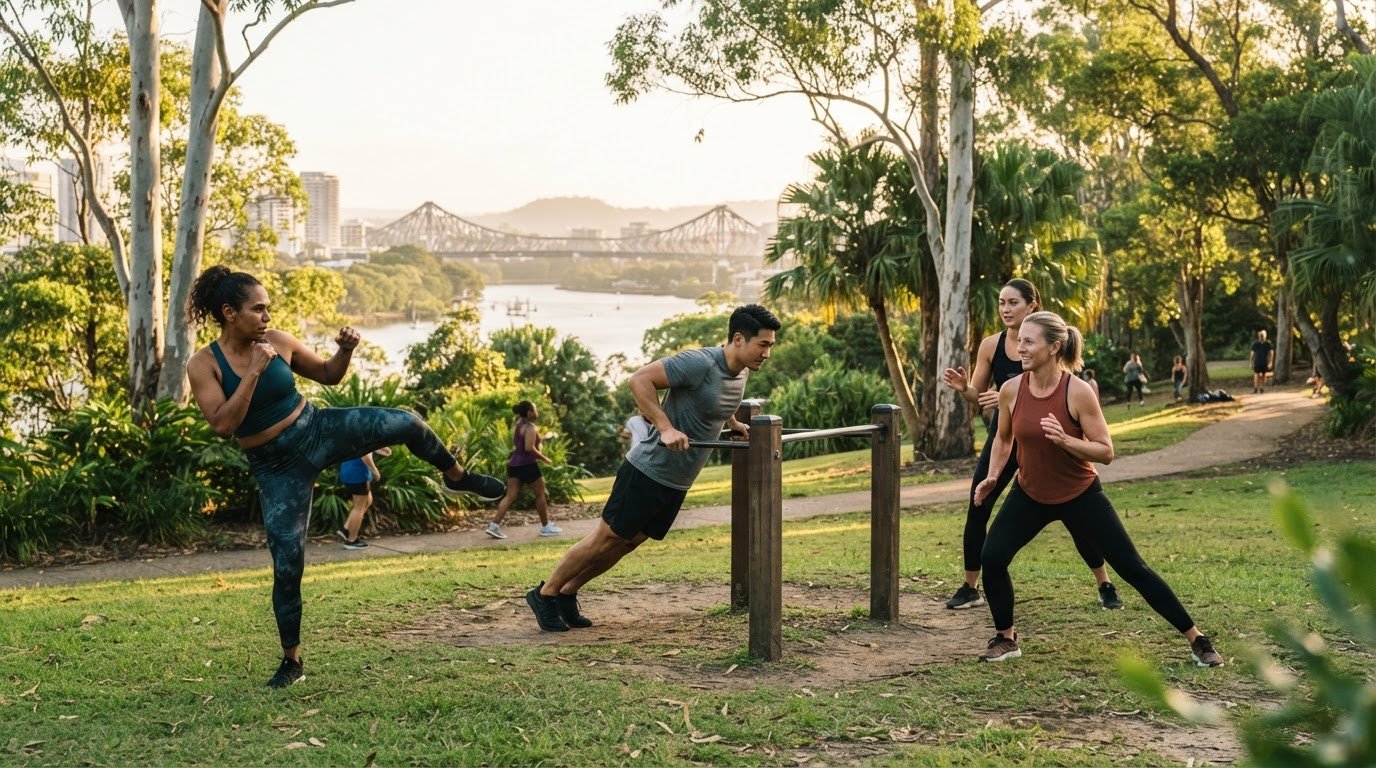
Being new to martial arts isn’t a barrier to starting. If you want to learn martial arts as an adult in Brisbane, you can begin with the fundamentals and build technique, fitness and confidence step by step. You don’t need perfect coordination or an athletic background; regular practice helps you become more comfortable with the movements.
It’s natural to wonder what your first classes will involve, whether training can help you feel more capable of protecting yourself, and what to wear or bring. This guide explains what beginner classes are like, how instructors introduce skills and fitness work, and what to expect as you progress. You’ll also learn how coordination develops through practice and how to choose a welcoming, structured training environment that suits your goals.
Key Takeaways
- Beginner classes build skills progressively, so you can start at a level that suits your experience and fitness.
- Self-defence training develops practical awareness alongside movement and technique.
- Simple clothing and equipment preparation can help you feel ready to train; learn what to consider before your first class.
- Coordination and sporting experience aren’t prerequisites. Regular practice helps you develop confidence in the movements.
Classes for different ages and fitness levels
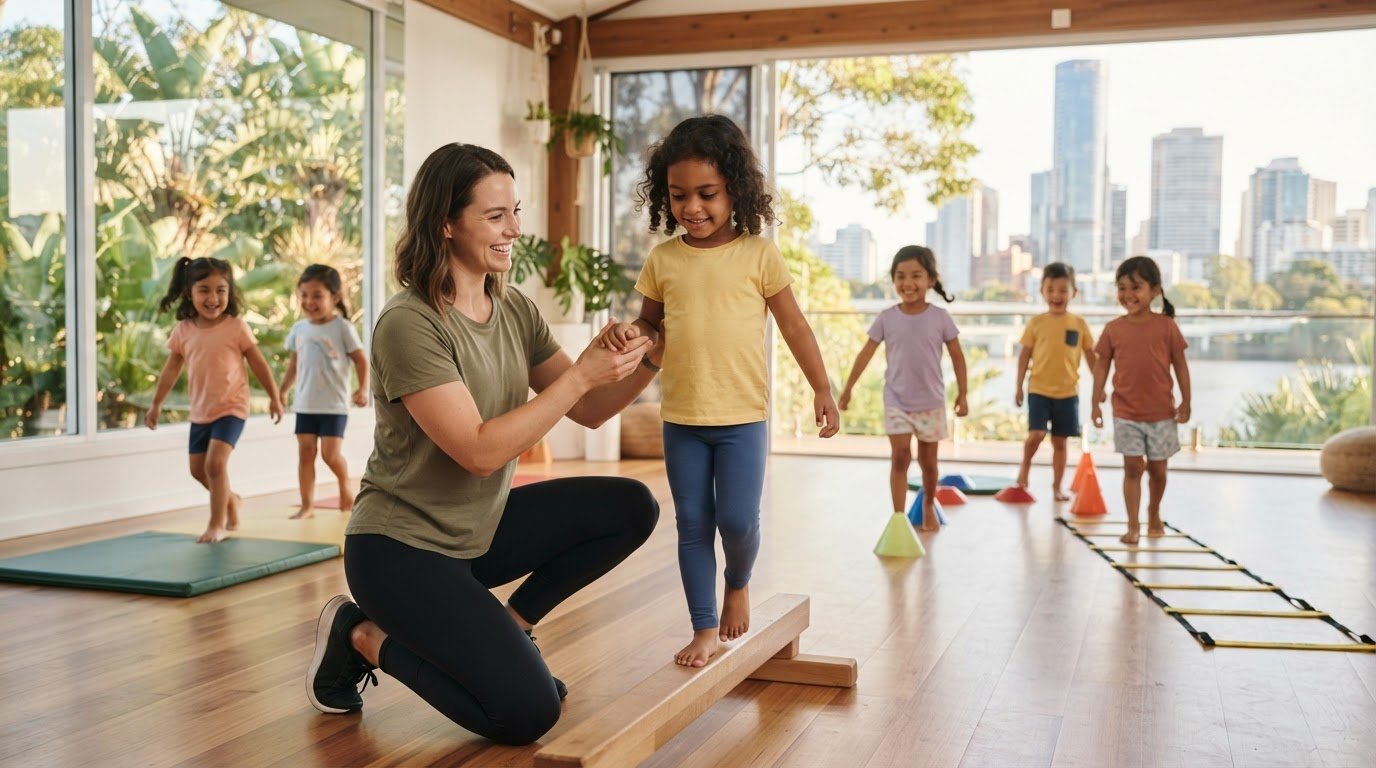
Adult and children’s martial arts classes often use different teaching approaches. Adults may focus on fundamentals, movement and controlled partner drills, while children practise listening, balance and age-appropriate skills. Taekwondo, for example, teaches structured techniques that students practise progressively. Choose a class suited to your age and experience; a sporting background isn’t a prerequisite.
Krav Maga is a separate martial art with a practical self-defence focus. A beginner-friendly class explains movements step by step, introduces drills at a manageable pace and builds complexity as skills develop. A martial art’s name doesn’t tell you everything about a session: instruction style, partner exercises and physical demands also shape the experience. Consider whether you’re looking for traditional forms, practical scenarios or a fitness-focused workout.
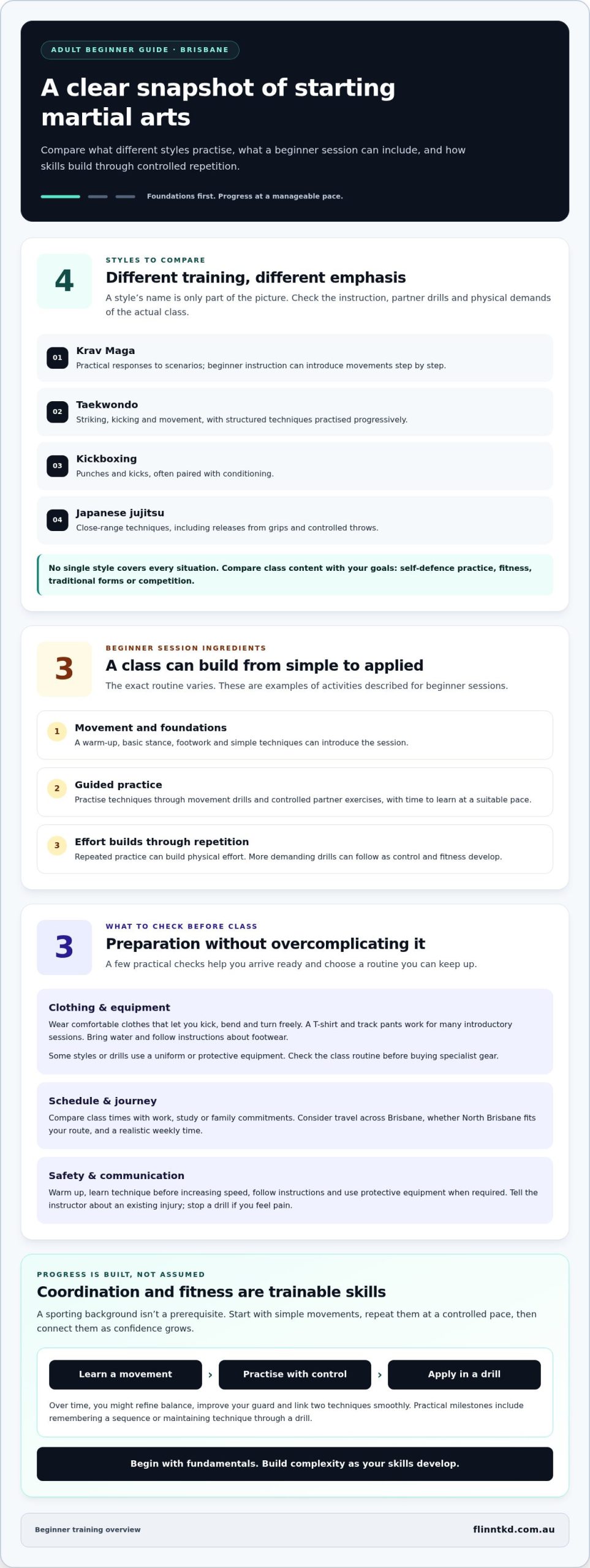
For a first class, wear comfortable clothing that lets you move freely, such as a T-shirt and track pants. Bring water and be ready to follow the instructor’s directions. Some training uses a uniform or protective equipment, while introductory sessions may focus on basic movement without specialist gear. Find out the class routine beforehand so you bring what the session requires.
Schedule and location matter because regular attendance depends on fitting training into your week. Compare class times with work, study or family commitments, then consider travel across Brisbane and whether North Brisbane works with your route. Identify a realistic weekly time and map the journey before choosing a class. Consistency is easier when the timetable and commute suit you.
Martial arts can involve injury risks, including strains, bruises or impacts during physical drills. Reduce risk by warming up, learning technique before increasing speed, following the instructor’s directions and using protective equipment when required. Tell the instructor about an existing injury before training, and stop a drill if you feel pain. Controlled practice helps you focus on skills while building fitness at a manageable pace.
Self-defence training
Brisbane schools offer beginner classes in styles such as taekwondo, kickboxing, Krav Maga and Japanese jujitsu. Before choosing, compare how each session teaches defence, partner drills and physical conditioning.
Adult Self-Defence Programs
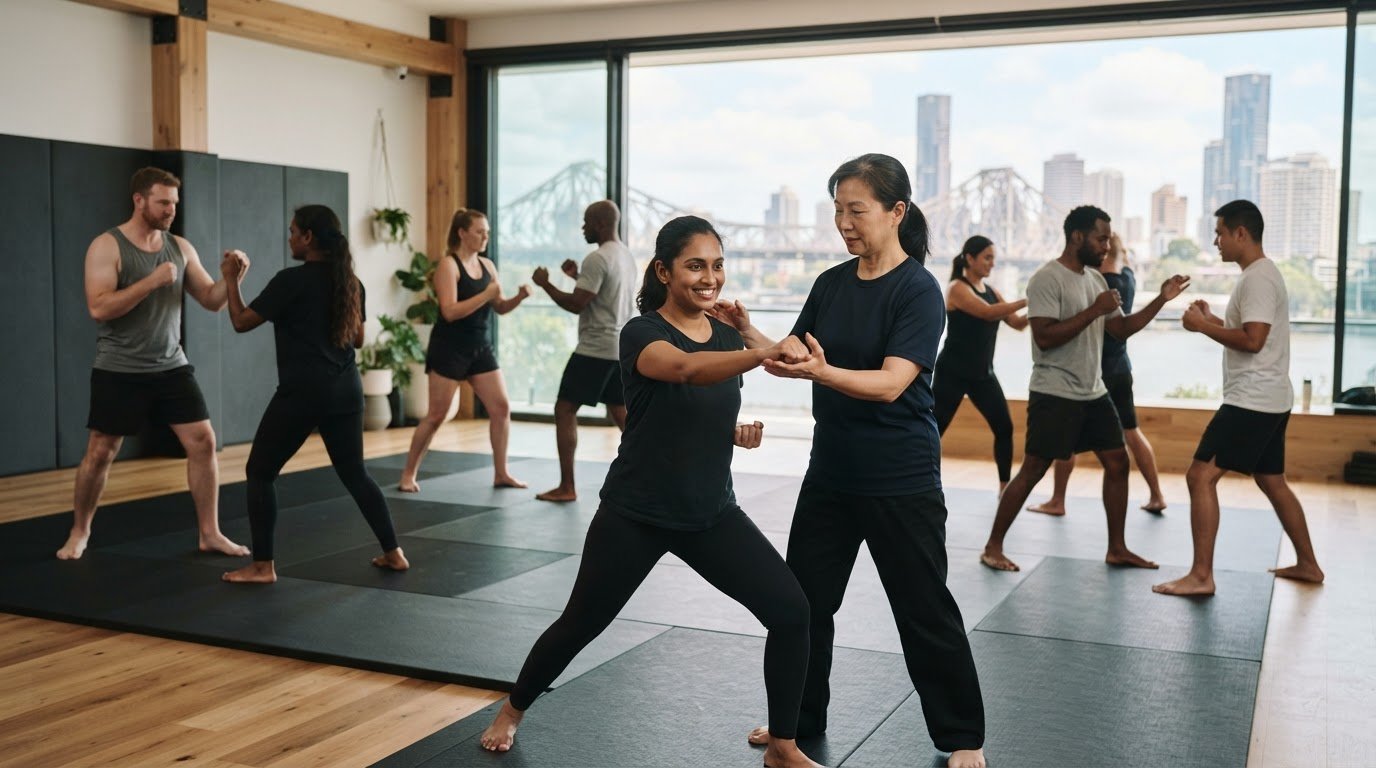
Adult martial arts programs can combine self-defence practice with a physical workout. A session might include movement drills, basic techniques and guided partner practice. Some classes also build fitness through repeated combinations. Look at how the instructor introduces each skill, adapts drills for beginners and sets expectations for contact. A welcoming environment helps students focus, ask questions and practise with members at a suitable pace.
Styles for Practical Self-Defence
Each style emphasises different skills. Krav Maga focuses on practical responses to scenarios, while taekwondo develops striking, kicking and movement. Kickboxing centres on punches and kicks, often paired with conditioning. Japanese jujitsu commonly explores close-range techniques, including releases from grips and controlled throws. Compare class content with your goals, whether self-defence practice, fitness, traditional forms or competition. No single style covers every situation.
Beginner Classes for Adults
Beginner classes should teach foundations before asking students to perform faster combinations or complex partner drills. In your first session, notice whether the instructor explains the purpose of each movement, demonstrates it clearly and allows time to practise. Ask yourself whether the pace suits your current fitness and whether the training keeps self-defence skills connected to controlled practice. For a structured local option, explore adult martial arts training in Brisbane.
Fitness, clothing and equipment requirements
You don’t need peak fitness before starting martial arts. A beginner session can start with a warm-up, basic stance, footwork and simple techniques, then build physical effort through repeated practice. If you’re returning to exercise, focus first on controlled movement and recovering between drills. This gives your instructor a clearer picture of your starting point and helps you develop fitness steadily.
Wear comfortable exercise clothes that let you kick, bend and turn freely. A T-shirt and track pants work for many introductory sessions; bring water and follow the class instructions about footwear. Some styles use a uniform or protective equipment for particular drills. Avoid buying specialist gear before you know what training involves, as requirements can differ between a taekwondo class and Muay Thai kickboxing.
Strength and conditioning develop through the movements themselves. A Muay Thai session, for example, may practise punches, kicks and footwork, challenging coordination and stamina. Martial arts can also support confidence through repeated skill development: learn a technique, practise it, then apply it in a controlled drill. Focusing on each movement gives the session structure and purpose.
Progress comes from repeating fundamentals, not rushing towards advanced combinations. In upcoming classes, you might refine your balance, improve your guard and link two techniques smoothly. More demanding drills can follow as control and fitness develop. In styles with belt rankings, a black belt represents a longer training journey, not a first-session target. Set practical goals, such as remembering a sequence or maintaining technique through a drill, and use those milestones to guide your development.
I’m Not Very Sporty or Coordinated, Will That Be A Problem?
No. Coordination is a skill you can practise, not an entry requirement. Start with simple movements, repeat them at a controlled pace, then connect them as your confidence grows.
Training Without Sports Experience
In a beginner class, instructors can break a movement into smaller steps. Practise foot placement before adding a hand technique, for example, then combine both in a straightforward drill. Repetition builds discipline and strength, even if you haven’t played sport. Notice whether the coaching gives you time to learn and clear corrections to apply on your next attempt.
Kickboxing, judo and Brazilian jiu-jitsu involve different movements and training formats. They aren’t interchangeable, and a school may focus on one discipline rather than combining them. Compare the techniques with your interests, such as striking, throws or grappling. For veterans and first responders, practical goals might include fitness, movement confidence or learning controlled techniques, without assuming every class is designed specifically for those groups.
Beginner Coaching and Training Culture
A supportive training culture shows in everyday details: instructors demonstrate drills, explain partner roles and give corrections respectfully. Notice how students practise when someone loses balance or forgets a sequence. A disciplined class keeps exercises controlled and focused on learning, not proving strength. Choose coaching that helps you understand what to improve next, whether balance, timing or remembering a combination.
Uniform expectations depend on the martial art and class. Some sessions use a uniform; others allow comfortable training clothes, particularly for introductory practice. Ask about clothing before attending, and bring water so you’re ready to participate. If you want a structured martial arts path that develops coordination through technique practice, explore Taekwondo training as an option.
Flinn Taekwondo Academy: Little Tigers Program (4-6 years)
Flinn Taekwondo Academy offers age-specific Taekwondo programs for children and adults. The Little Tigers Program is for children aged 4-6 years, while the Junior Taekwondo Program serves ages 7-12. Adults and teens aged 13 and over can choose the Senior & Adult Taekwondo Program, making it the relevant option if you’re ready to start training yourself.
Taekwondo offers a structured way to practise techniques and develop discipline, confidence and physical fitness. Adults in Brisbane can explore Flinn Taekwondo Academy’s Adult Classes, while those interested in competitive development can consider High Performance. Choose a program based on who will train and whether your priority is adult classes or competition preparation.
Contact Flinn Taekwondo Academy to discuss which program best fits your training goals.
Make Your First Step Count
Starting a martial arts journey gives you a practical goal to work towards and a steady routine for building skill and confidence. You don’t need to plan years ahead. Choose a first class, focus on learning one movement at a time, and let consistent practice shape your progress.
If you’re ready to learn martial arts as an adult in Brisbane, Flinn Taekwondo Academy’s Senior & Adult Taekwondo Program is for students aged 13 and over. Families can also find age-based pathways, with the Little Tigers Program for ages 4-6 and the Junior Taekwondo Program for ages 7-12. That makes it easier to consider training as an individual or as a family, with each person choosing a program suited to their age.
Take the next step at your pace. Contact Flinn Taekwondo Academy to discuss training, and begin building a discipline you can carry into everyday life.
Frequently Asked Questions
Do I Need To Be Fit For This?
No, you can begin martial arts without being highly fit. Classes introduce physical demands through practice, so you can start from your current fitness level. Before your first session, choose comfortable clothing, bring water and tell the instructor about any movement you need to modify. For example, focus on learning a stance and following directions before attempting faster combinations. Build a steady routine that suits your current capacity.
How Long Until I Get My Black Belt?
There’s no single timeframe that applies across martial arts styles. Progress depends on the style’s grading requirements, your attendance and how well you demonstrate the skills at each stage. A black belt represents sustained development, not simply time spent in classes. Ask how the school explains its syllabus and grading process, then focus on the next technique to learn rather than treating the final rank as a deadline.
Which martial arts are best for adult beginners in Brisbane?
The best choice depends on what you want to practise. Taekwondo suits adults interested in structured technique, kicking skills and forms. If you want to learn martial arts as an adult in Brisbane, Flinn Taekwondo Academy’s Senior & Adult Taekwondo Program is designed for students aged 13 and over. Compare class focus with your goals, such as practical self-defence, fitness, competition or traditional technique.
Where are beginner-friendly martial arts gyms located across Brisbane?
Flinn Taekwondo Academy is located in North Brisbane, offering a local option for adults seeking Taekwondo training. Its listed class hours are Monday: 5:30 pm – 8:00 pm and Thursday: 5:30 pm – 8:00 pm. Consider the travel time from home or work when deciding whether those sessions fit your routine. A manageable commute can make regular attendance easier to maintain.
What fitness level is needed to start martial arts as an adult, and how can beginners prepare?
You can start without a set fitness benchmark. To prepare, practise steady breathing during light activity, work on comfortable balance and arrive ready to listen to instructions. For example, practise standing with your feet stable, then shifting your weight from side to side. These simple movements help you focus on posture and control when class introduces new techniques. Progress at a pace that lets you maintain sound form.