Parents can often watch a first class, but whether they stay in the room or observe from the side depends on the class setup. For families exploring martial arts for 4-year-olds in Brisbane, a welcoming start gives your child space to follow the instructor while knowing you’re nearby. No previous sport or martial arts experience is needed to take those first steps.
It’s natural to want to know how your child will be guided, especially if they’re shy, energetic or new to group activities. At four, progress isn’t about perfect technique. It’s about trying simple movements, listening, taking turns and building confidence at a comfortable pace.
This guide explains what young children can learn in a beginner class, how parents can support the transition and what to look for in a safe, positive training environment. You’ll also find out how prior experience fits in, so you can decide whether a class feels right for your child and family.
Key Takeaways
- Look for a class that balances clear routines with a warm, age-appropriate approach to help your child feel settled.
- Notice how instructors encourage turn-taking, listening and effort, not just getting movements right.
- Use simple, practical safety lessons to help your child practise awareness and confident responses.
- See how basic movement activities can build coordination, balance and focus through guided practice.
Discipline, confidence and social development
For a four-year-old, progress can look like joining a warm-up, listening to an instructor and taking turns. These small actions let you see how classes practise discipline and social skills together.
Confidence and Resilience
Confidence grows through achievable challenges, not pressure to perform perfectly. A child might practise a basic stance, forget the sequence, then try again with an instructor’s guidance. Look for feedback that recognises effort and offers one clear next step. This helps children see mistakes as part of learning and build resilience through practice.
Respect and Bullying Prevention
Respect is practised in everyday interactions: greeting instructors, waiting for a turn and giving classmates space. These routines help children practise speaking clearly, recognising personal boundaries and asking an adult for support. Martial arts classes may help build confidence and awareness, but they can’t guarantee bullying won’t occur. Notice whether instructors encourage calm, considerate behaviour.
Discipline Through Self-Defence
Self-defence should be taught alongside restraint and good judgement. A child can learn to move away from uncomfortable contact, use a firm voice and tell a trusted adult. The aim isn’t to encourage confrontation. Look for instruction that explains when a technique is appropriate and reminds children to seek help rather than handle unsafe situations alone.
At home, reinforce these lessons with simple role-play: practise saying “stop”, moving towards a trusted adult and explaining what happened. Praise clear communication and calm choices rather than toughness. This connects confidence with safety and respect. In class, children can practise these behaviours with peers while adults model the same respectful language.
Does my child need any previous experience in sports or martial arts?
No. A four-year-old can start without sports or martial arts experience. Families exploring martial arts for 4-year-olds in Brisbane can look for beginner sessions that introduce movements gradually, with time to watch, practise and participate. Playground games or dancing may give children familiarity with movement, but previous fitness training isn’t necessary.
Karate and Taekwondo often teach standing techniques and patterns; judo includes balance and throws, while Brazilian jiu-jitsu focuses on grappling. When comparing martial arts classes for four-year-olds in Brisbane, consider how instructors adapt activities, explain boundaries and introduce contact, rather than choosing by style name alone.
Parent participation depends on the class format. Ask whether you can stay nearby or whether children take part independently. A simple preparation routine can help: arrive, put belongings away, listen to the instructor, then join the activity. This structure makes a new setting easier to understand.
Brisbane schools set their own trial arrangements. Flinn Taekwondo Academy offers a free trial, giving families a chance to experience a class before deciding whether it suits their child.
Class age ranges vary. Some preschool classes are designed for ages three to six, while broader movement programs may suit older children too. Read the age range and class description to see whether the activities suit a four-year-old beginner. Choose a class that welcomes children who are learning from the start.
The most convenient option depends on your Brisbane suburb and travel route. Compare the class location with regular family journeys, such as trips to childcare or home, to find a routine that works.
Look for instructors who explain activities clearly, supervise practice and adapt teaching for young children. Ask how the class handles partner work and what instructor qualifications apply. For age-appropriate Taekwondo, explore children’s Taekwondo classes and consider whether the teaching approach fits your beginner.
Self-defence and stranger-danger awareness
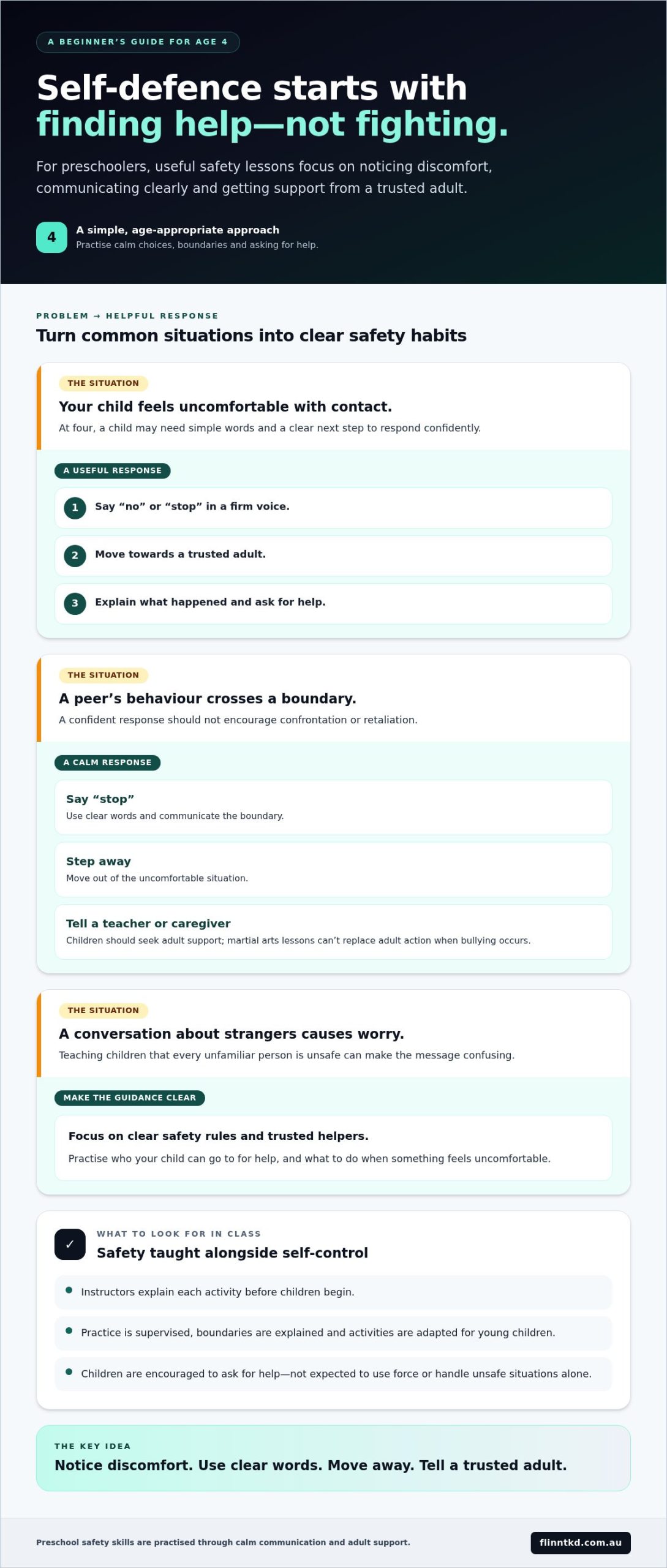
For a four-year-old, self-defence starts with noticing discomfort and finding help, not fighting. A useful lesson practises simple actions: say “no”, move towards a trusted adult and explain what happened. Conversations about strangers should avoid teaching children that every unfamiliar person is unsafe. Focus instead on clear rules and trusted helpers.
Taekwondo, karate, judo and Brazilian jiu-jitsu can all be taught to preschoolers, but class structure matters more than the style name. Choose an age-appropriate class where instructors adapt activities, explain boundaries and don’t expect young children to use force.
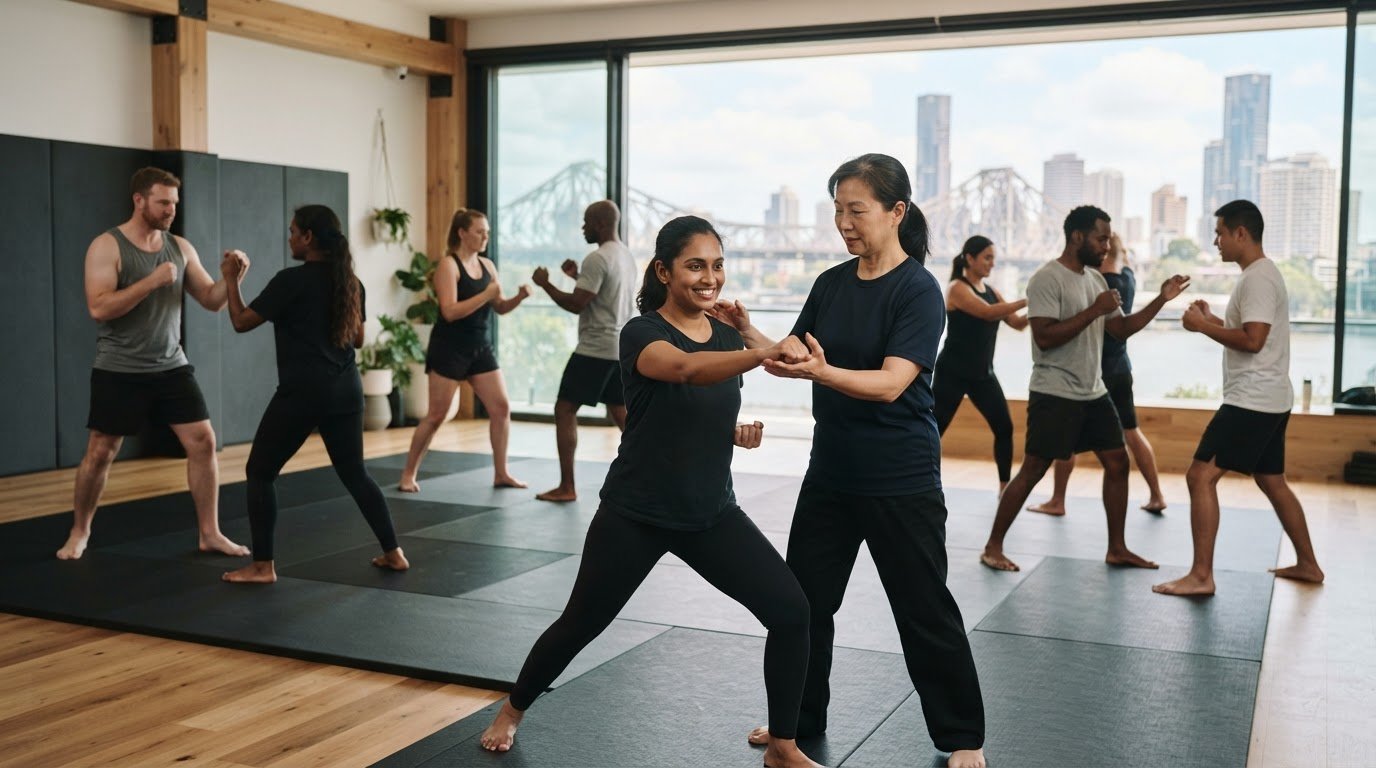
Wing Chun introduces hand movements and close-range techniques, while Japanese jujitsu may teach ways to redirect or escape contact. Brazilian jiu-jitsu focuses on grappling, and judo includes balance and throwing skills. For preschoolers, classes should emphasise controlled practice, safe movement and listening before techniques.
Connect self-defence with anti-bullying by practising a calm response. Your child can say “stop”, step away, then tell a teacher or caregiver. Martial arts lessons can practise confident posture and clear communication, but they can’t replace adult action when bullying occurs. Ask how instructors teach children to seek help rather than retaliate.
Structured learning can also support focus and school readiness. Following a two-step instruction, such as “stand on your spot, then copy this movement”, gives children practice listening and switching activities. These routines can help them join a group, wait for a turn and regain focus after excitement.
During class, notice whether instructors explain each activity before children begin and pause when a student seems unsure. Ask how the class handles boundaries, partner exercises and requests for help. These practical details show whether self-defence, confidence and self-control are taught together in ways a four-year-old can understand.
Motor skills, coordination and listening
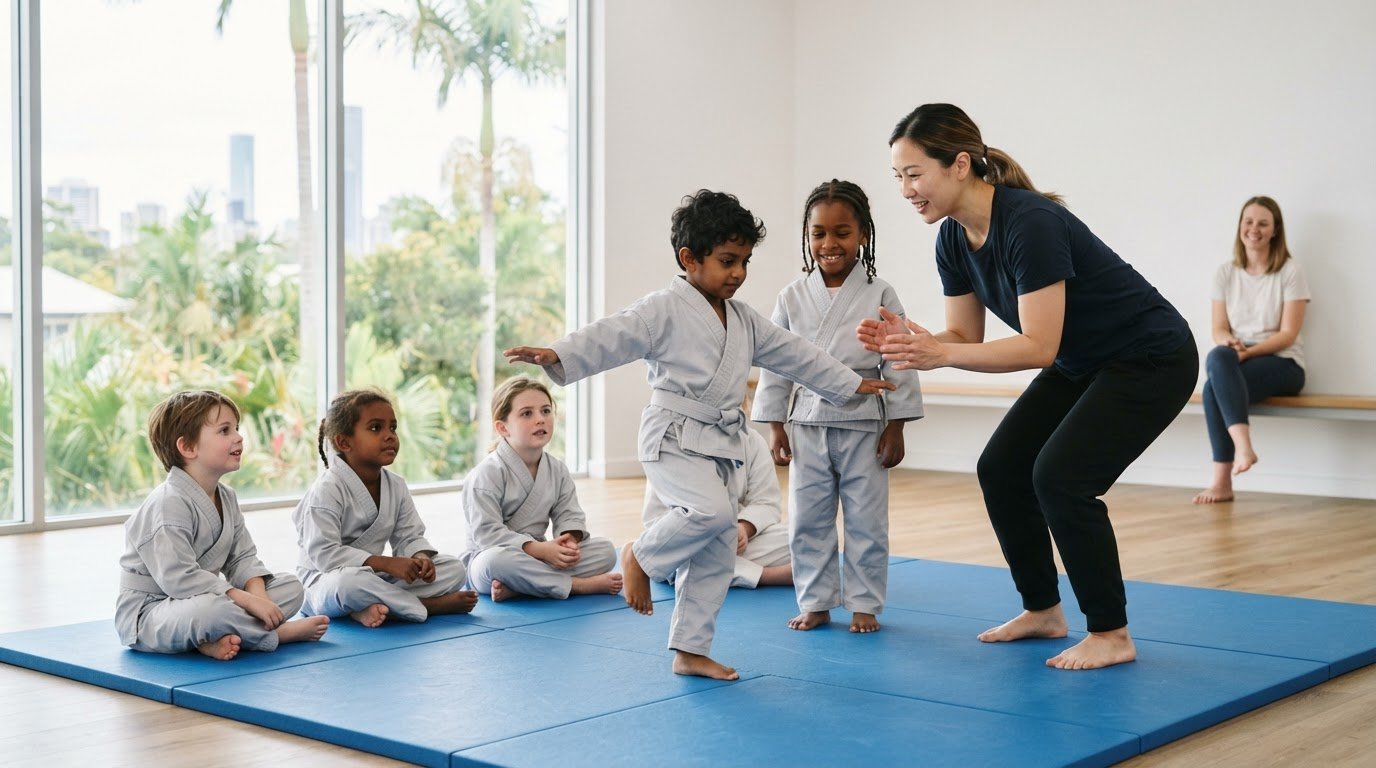
A preschool class can turn movement into guided practice. Children might step between floor markers, copy a slow arm movement, then freeze at the instructor’s signal. These simple sequences let them practise coordination, balance and listening together. The focus is on controlling a movement, not performing it perfectly.
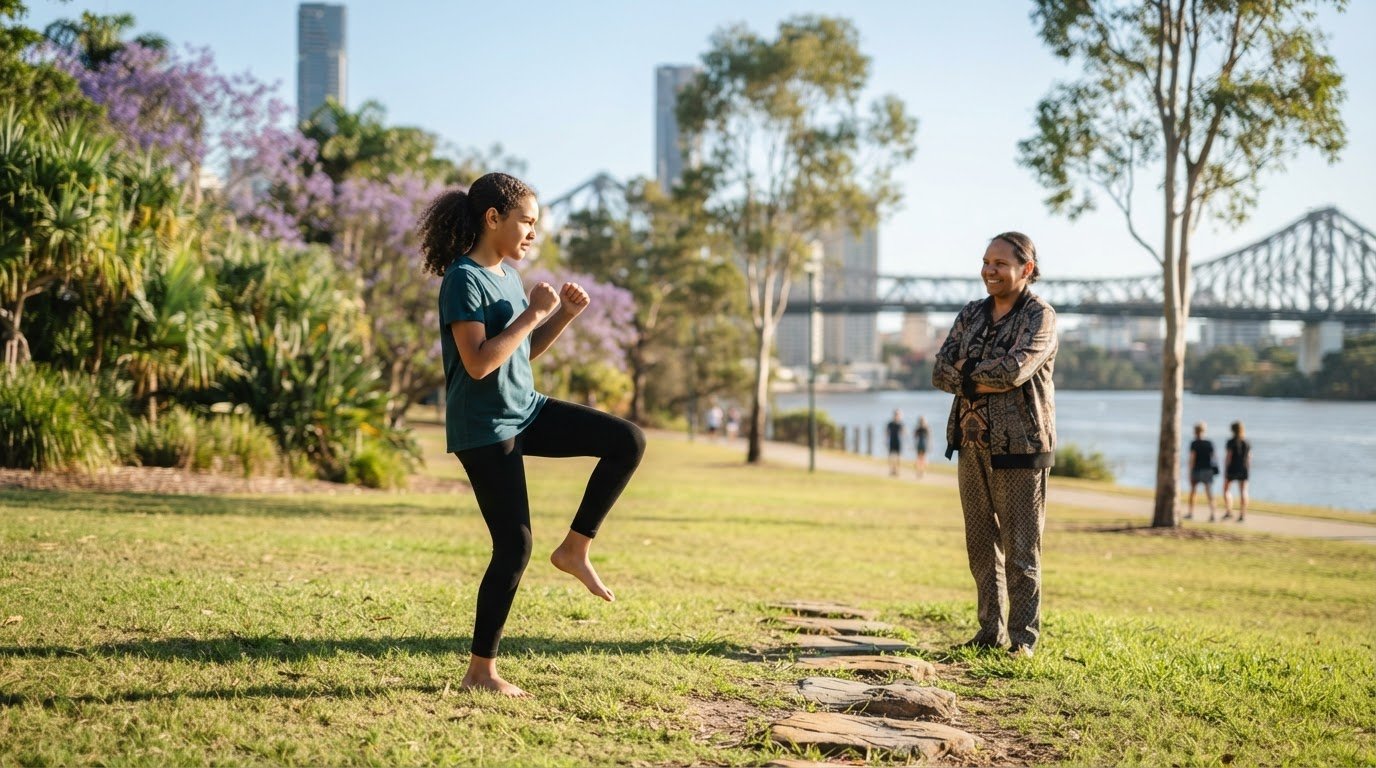
Different activities challenge different skills. A forward step asks a child to shift their weight; raising one knee while standing tests balance. Repeating a simple hand technique develops control, while moving safely through a marked space builds awareness of other students. Instructors can break movements into smaller actions so children can watch, try and adjust.
Active class activities such as stepping, gentle kicking motions and returning to a ready stance can help develop fitness and strength. These movements use a child’s own body and can be adapted to their ability. Look for instruction that values safe effort and rest rather than pushing children to continue when they’re tired.
Listening is part of the physical challenge. During class, children can practise this sequence: listen for the instruction, wait for the signal, then copy the movement. A supportive instructor uses clear cues and demonstrations to connect words with actions. This practice can make group routines easier to follow while respecting shared space.
A welcoming atmosphere matters, too. Notice whether students have room to practise without crowding and whether instructors correct movements calmly. If a child loses balance, for example, they can reset their feet and try again rather than rushing to keep pace with friends. This makes practice purposeful and gives coordination time to develop.
Want to see how structured Taekwondo practice can build movement skills? Explore Taekwondo training and consider how its activities could suit your child.
Flinn Taekwondo Academy: Little Tigers Program (4-6 years)
Flinn Taekwondo Academy’s Little Tigers Program is for children aged 4-6, making it a relevant next step for a four-year-old ready to explore Taekwondo. It gives your family an age-matched option after considering what helps a young child feel comfortable in a class.
Choose this pathway if you want your child to start martial arts in a program designed for their age group, with no previous experience needed. Use the first visit to see how your child responds to the setting and whether the class feels like a good fit. Keep expectations simple: readiness may mean being willing to join in, listen and try unfamiliar movements.
As your child grows, the academy also has a Junior Taekwondo Program for ages 7-12. For now, focus on finding a positive first step that supports steady development and confidence.
Contact Flinn Taekwondo Academy to learn about the Little Tigers Program for your child.
Choose a confident first step
Your child’s first class doesn’t need to be a test of skill. Treat it as a chance to see how they respond to a new routine, instructor and group. As you explore martial arts for four-year-olds in Brisbane, focus on what matters to your family: a welcoming start, age-appropriate teaching and a path your child can grow into.
Flinn Taekwondo Academy offers a Little Tigers Program for ages 4-6, a Junior Taekwondo Program for ages 7-12, and a Senior & Adult Taekwondo Program for ages 13+. That gives families options as children grow and interests develop.
Take the next step at your child’s pace. Share what you’re looking for and learn more about the Little Tigers Program directly from the academy.
Contact Flinn Taekwondo Academy to explore a positive beginning for your child.
Frequently Asked Questions
Are Parents Allowed To Watch?
Whether parents can watch from the training area depends on the class arrangements, so follow the instructor’s direction when you arrive. Support your child by helping them prepare beforehand and asking afterwards what they enjoyed. If they feel unsettled, a calm goodbye and familiar collection routine can make the first visit easier.
Are classes based on age groups?
Yes, Flinn Taekwondo Academy has age-based programs: Little Tigers for ages 4-6, Junior Taekwondo for ages 7-12, and Senior & Adult Taekwondo for ages 13+. Choose the group that matches your child’s age rather than comparing them with older students. These age ranges help you identify the relevant program as your child grows and their interests change.
How do I book or view the timetable?
You can book a free trial through Flinn Taekwondo Academy’s website. Use the academy’s published schedule to plan your visit, and note its stated operating hours: Monday, 5:30 pm to 8:00 pm, and Thursday, 5:30 pm to 8:00 pm. These are operating hours, so use the class timetable for the specific session time that suits your family.
What Do I Need To Bring To My First Martial Arts Lesson?
For a first lesson, choose comfortable clothing that lets your child move freely, and bring a water bottle labelled with their name. Arrive with time to settle in and hear any instructions before class begins. Flinn Taekwondo Academy provides a free uniform for new starters, so you don’t need to buy one before beginning.
What does my child need to bring to class?
Pack a named water bottle and any personal items your child needs before or after training. Keep belongings together so they’re easy to collect, and choose clothing suited to movement if your child hasn’t received a uniform yet. For later sessions, follow the instructor’s guidance about what to wear or bring.
Will My Child Become A Bully?
Learning Taekwondo doesn’t mean a child will become a bully. Class routines can reinforce respectful behaviour, listening and self-control, while instructors guide students to use techniques responsibly. At home, talk about the difference between practising a movement in class and using it to hurt someone. Encourage your child to tell a trusted adult if they see bullying or feel unsafe.