Confidence doesn’t require an outgoing personality. For Brisbane families looking for activities for introverted children to build confidence, four helpful approaches are kinder self-talk, strength-based activities, gradual social practice and accepting shyness as a natural trait. Each gives your child room to take small steps without being pushed to act like someone else.
It’s understandable to want your child to feel comfortable joining in, making friends and speaking up. Confidence can grow through small, manageable experiences and encouragement that recognises effort, rather than demands a big personality change.
You’ll learn how to help your child challenge unkind thoughts, choose activities that match their interests and become more familiar with social situations at their own pace. You’ll also see why accepting shyness can support confidence, not stand in its way.
Key Takeaways
- Help your child notice and reframe self-critical thoughts, while recognising the effort behind small steps.
- Choose activities around your child’s age, interests and needs so participation feels comfortable and meaningful.
- Build social confidence gradually, starting with manageable interactions and increasing the challenge at your child’s pace.
- Accept shyness as a natural trait, and support your child without expecting them to become more outgoing.
1. Negative thought patterns and self-confidence
Confidence-building activities for introverted children in Brisbane can include creative projects, gentle social practice and structured movement. Choose something that lets your child use a strength, such as drawing, careful observation or learning a physical skill. After a class or shared task, ask what felt manageable. “You kept practising that move” praises effort and gives your child a specific reason to trust their growing abilities.
Notice negative self-talk without treating it as fact. If your child says, “I’m bad at meeting people,” acknowledge the feeling, then explore a more balanced thought: “Starting a conversation feels hard, and I can practise saying hello.” This cognitive-behavioural approach helps children identify and challenge discouraging thoughts. Avoid repeatedly labelling a child “shy”; describe the situation instead, such as “You like time to warm up.” This supports a positive self-concept without turning temperament into a limitation.
Build emotional resilience through small, achievable steps. Your child might first watch a group activity, then join one shared task, such as building a puzzle with a peer. Recognise each attempt, even if your child says little. This connects effort with progress and supports self-esteem. Focus feedback on skills and choices, not on whether your child seems outgoing. Give them time to express their feelings before offering advice.
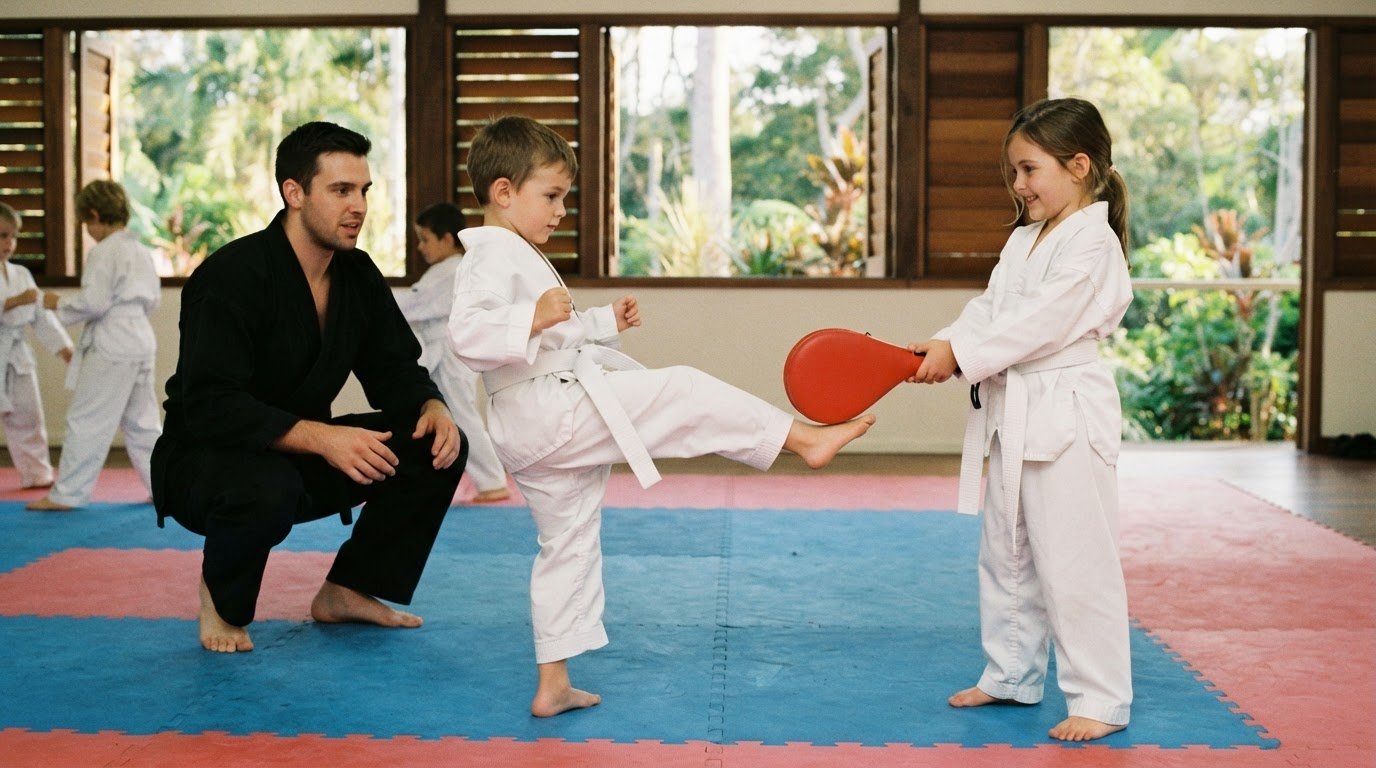
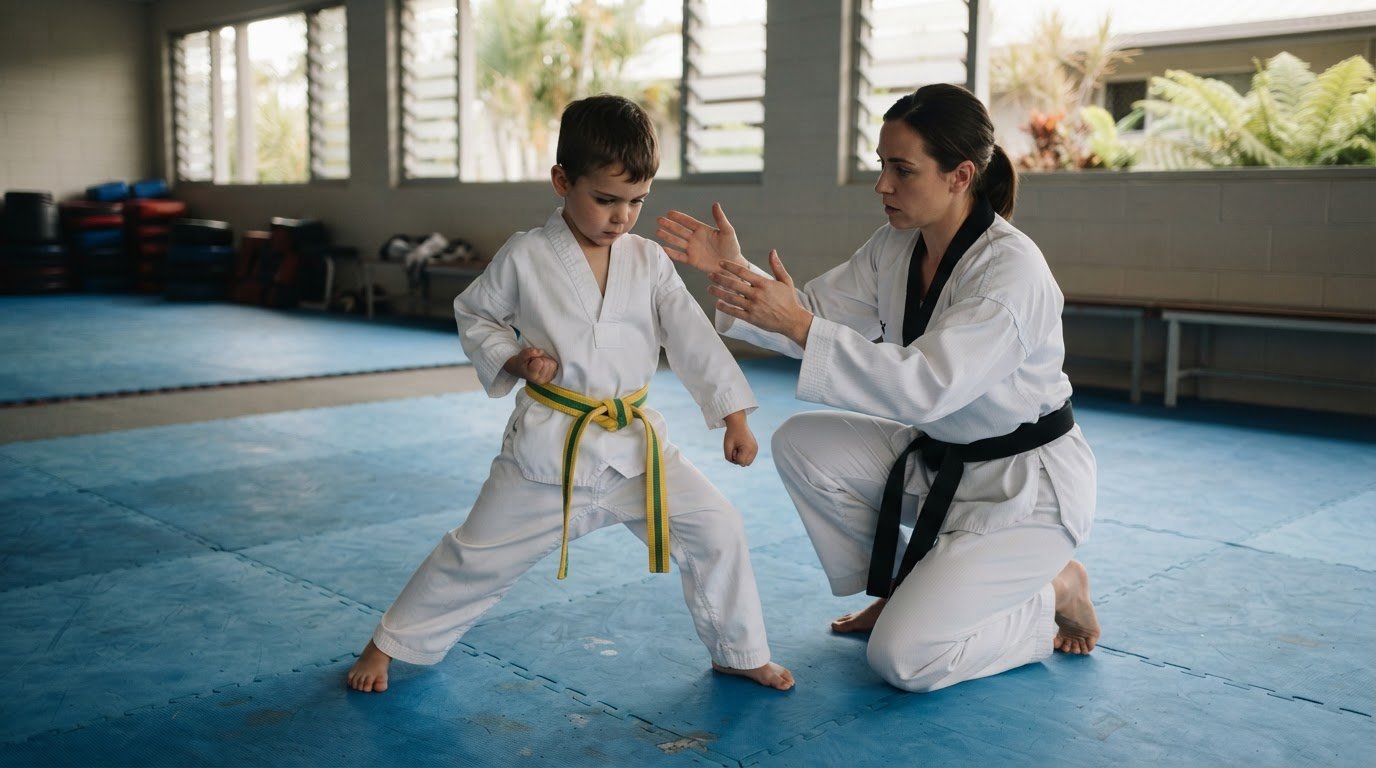
Movement can provide another way to practise confidence and self-belief. Some children may enjoy yoga’s individual poses; others may prefer structured martial arts or self-defence, where they can practise a skill step by step. Brazilian Jiu-Jitsu is another martial art, but it is distinct from general self-defence training. Let your child’s interest and comfort guide the choice. If negative thoughts or distress are affecting everyday life, a child psychologist or counsellor can help your family consider appropriate support.
Choosing activities based on a child’s age, interests and needs
Start with your child’s age, interests and comfort in groups. A preschooler who enjoys drawing might find it easier to share materials than join a competitive game. A school-aged child interested in movement may prefer a class with clear routines and repeated skills. Choose an activity that builds on strengths while offering a manageable challenge, then notice whether your child wants to return.
A shared interest can make interaction feel less demanding. Invite one compatible peer to work on a puzzle, make a craft or care for a small garden. The activity gives both children something concrete to talk about, helping them practise turn-taking and social skills without carrying a conversation alone. Keep the first meeting simple, and let your child help choose the activity.
For small-group options, look for Brisbane clubs or classes with predictable activities, such as guided crafts, team games or structured movement. A class can help children develop confidence through repeated routines and clear expectations. If considering martial arts, structured martial arts activities provide skill-based practice; choose a format that suits your child’s age and interests.
Brisbane library and community-centre event listings can point you to children’s story sessions, craft activities and group events. Look for a specific shared task rather than an unstructured gathering, giving your child an easy way to join in.
Before enrolling, ask the instructor: “How large is the class? Can children participate gradually? What settling-in support do you offer?” The answers can clarify how activities work and how your child can become familiar with the routine. For anxiety or ongoing social-confidence challenges, a child psychologist or counsellor can help assess support needs. A group class can complement, but doesn’t replace, individual guidance.
Use each experience to shape the next step. If your child enjoyed watching but didn’t join the group, agree on one small participation goal for next time. This encourages progress without making school friendships or group participation feel like a test.
3. Gradual exposure to social situations
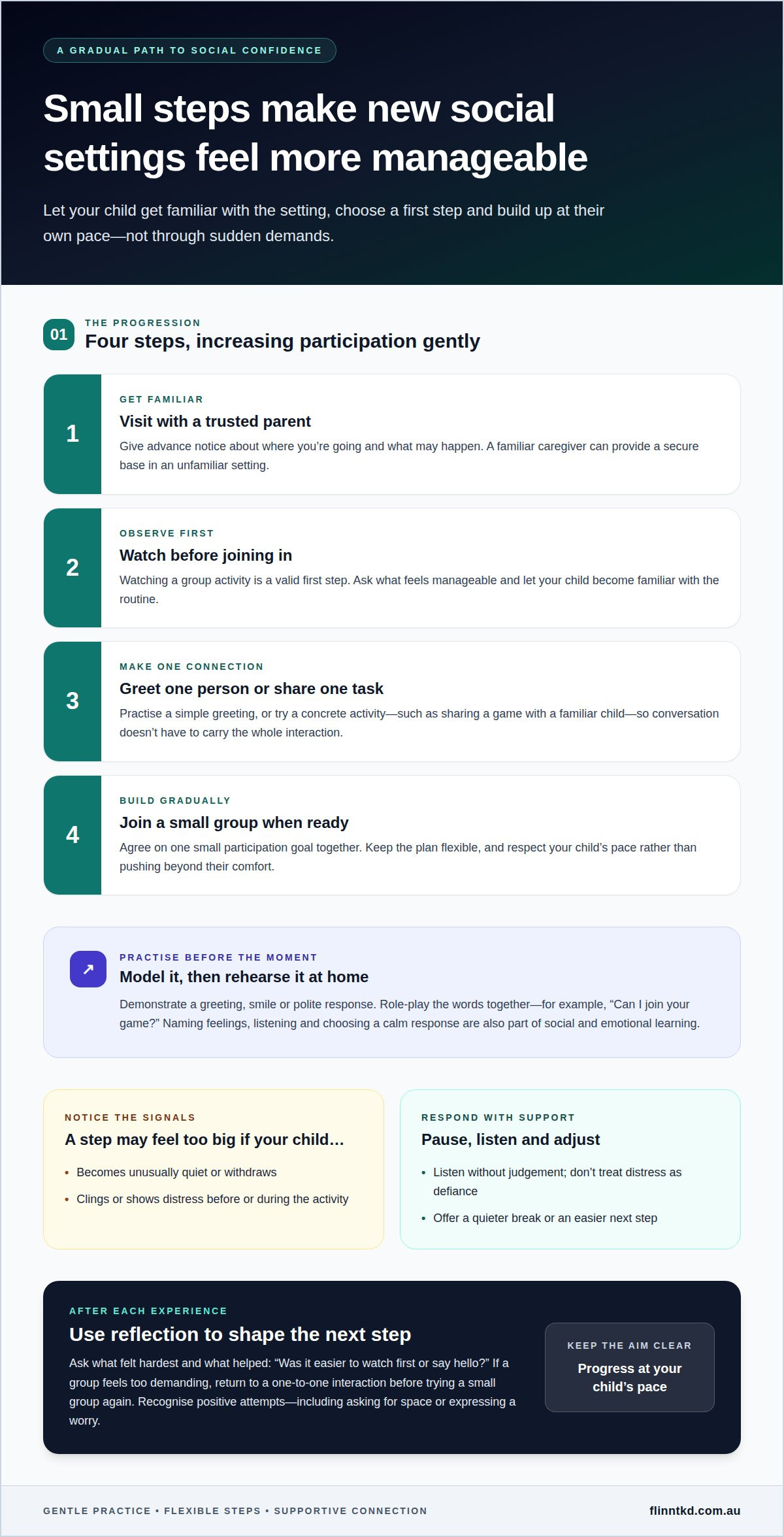
Build social confidence through manageable steps, not sudden demands. Your child might first visit a new activity with a trusted parent, then watch, greet one person and later join a small group. Give advance notice about where you’re going and what may happen. This helps children learn the routine and choose a first step.
A secure relationship with a caregiver can give a child a base for exploring unfamiliar settings. Listen closely when your child describes a worry, reflect the feeling and agree on a small goal together. For example: “You’re unsure about the new class. Would you like to watch before joining?” Keep the plan flexible and respect your child’s pace rather than pushing beyond their comfort.
Children learn social skills by seeing them modelled and practising them in everyday moments. Demonstrate a greeting, a smile or a polite response, then role-play the words at home. Social and Emotional Learning can include naming feelings, listening to someone else and choosing a calm response. At a playground, you might practise saying, “Can I join your game?” before your child approaches peers.
Signs an activity may feel overwhelming include your child becoming unusually quiet, clinging, withdrawing or showing distress before or during participation. Pause, listen without judgement and offer a quieter break or an easier next step. Don’t treat distress as defiance.
After the activity, talk about the hardest moment and what helped. Ask, “Was it easier to watch first or say hello?” This gives you useful information for adjusting the next experience. If a group feels too demanding, return to a one-to-one interaction, such as sharing a game with a familiar child, before trying a small group again. Praise positive attempts, including asking for space or expressing a worry. These strategies make social learning gradual, responsive and grounded in trust.
4. Shyness as a natural personality trait
Shyness is a natural personality trait, not a behaviour that needs fixing. A child may prefer listening before speaking or enjoy one close friend rather than a busy group. These preferences can go hand in hand with empathy, careful observation and strong focus. Help your child describe what suits them, such as needing quiet time after school, rather than treating introversion as a flaw. Confidence means acting with self-belief while still being themselves.
Choose outdoor experiences that match how your child enjoys exploring. A family nature walk can invite quiet observation, such as spotting leaves or birds together. A gentle hike offers a shared goal and pauses for conversation, while a supervised boating outing may appeal to a child who enjoys being on the water. Let your child help choose the activity and its pace. For autistic children, nature exploration can provide sensory stimulation and help calm their senses.
Make group activities inclusive by respecting different ways of joining in. At a park meet-up, your child might watch friends play before taking a turn. On a walk, they might talk more easily side by side than face to face. Notice what helps your child participate, and avoid comparing their behaviour with that of a more outgoing sibling. A quiet response can reflect temperament, not a lack of interest or social ability.
Acceptance doesn’t mean ignoring distress. If shyness causes ongoing difficulty with school, friendships or daily activities, talk with your child and consider guidance from a child psychologist or counsellor. Therapy can help when a child needs support beyond ordinary opportunities to practise at their own pace. For a structured activity that develops skills and confidence, explore confidence-building activities that let your child learn alongside others while respecting their temperament.
Your child’s empathy, sensitivity and listening can be strengths in their own right. Let them be themselves rather than pressuring them to become outgoing.
Flinn Taekwondo Academy
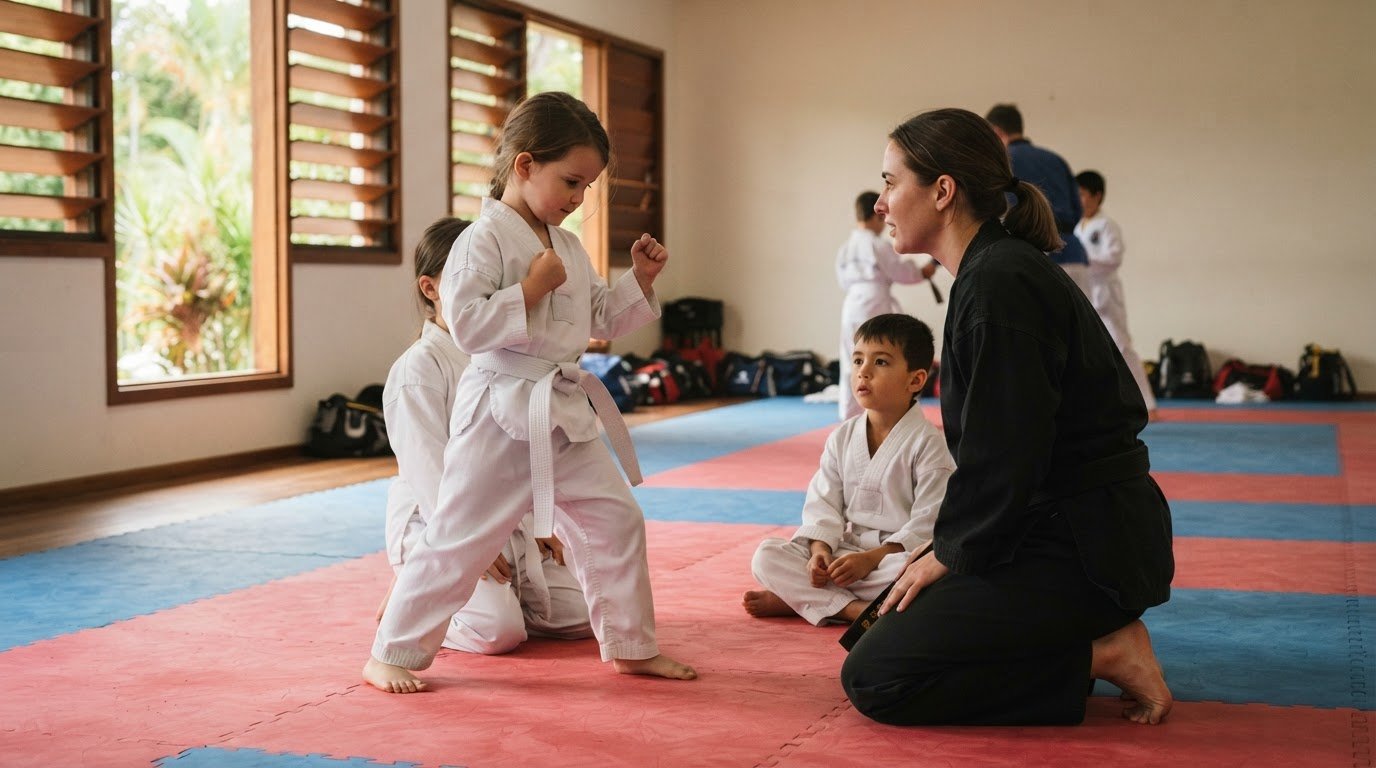
Flinn Taekwondo Academy in North Brisbane offers structured Taekwondo training where children practise skills and discipline alongside others. The Little Tigers and Children’s Classes provide a guided group setting for children ready to explore an activity at their own pace.
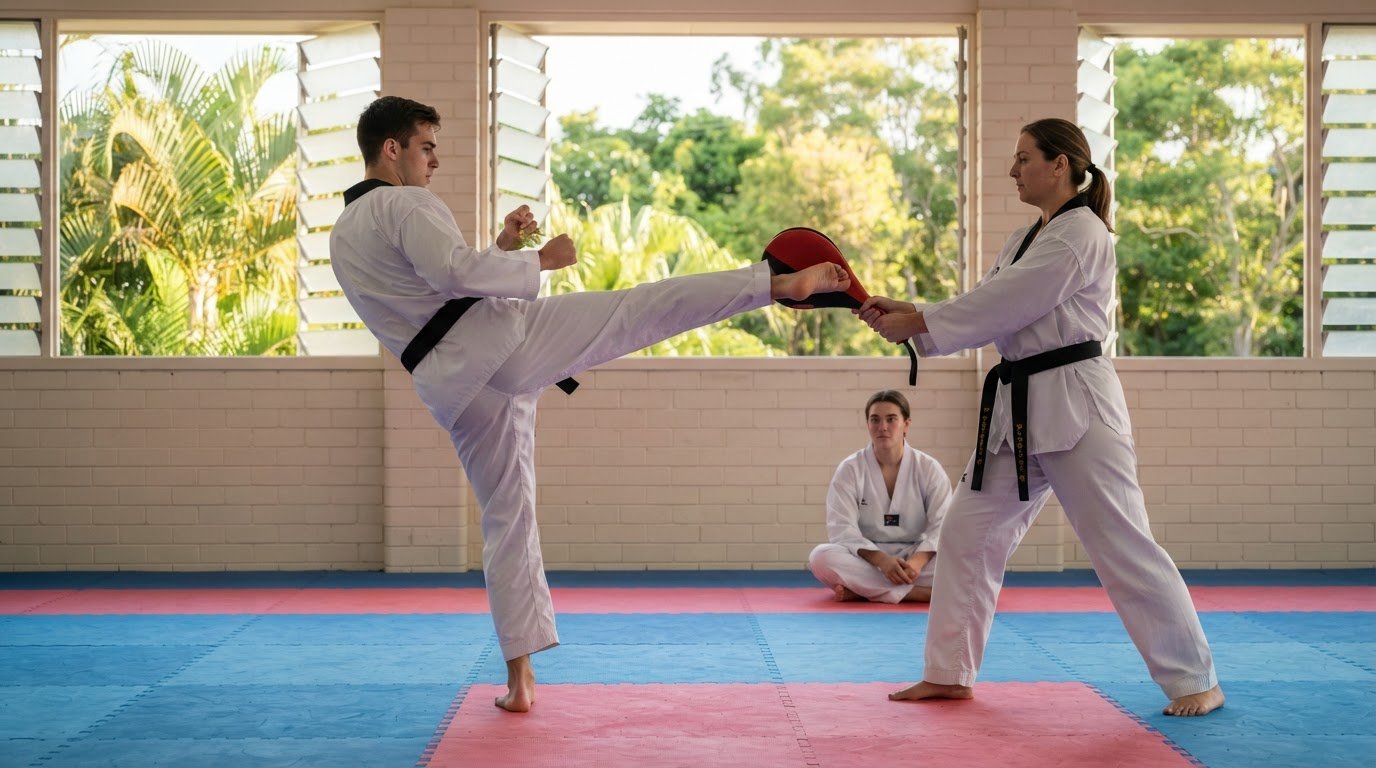
Choose the program that matches your child’s age: Little Tigers is for ages 4-6, and Junior Taekwondo is for ages 7-12. The Senior & Adult Taekwondo Program is for ages 13 and over. Training offers a clear focus for each session, so children can concentrate on learning and steady personal progress rather than needing to be the loudest in the room.
If structured martial arts feels like a good fit for your child, contact Flinn Taekwondo Academy to take the next step.
Choose a first step that feels right
Your child doesn’t need to become the most outgoing person in the room to grow. A meaningful next step could be trying a new activity, practising a skill or feeling more at ease in a familiar group. Let your child’s interests guide the choice, and treat their willingness to explore as progress.
As you consider activities for introverted children to build confidence in Brisbane, look for an environment where your child can learn at a steady pace and develop confidence through practice. Taekwondo training may offer a structured way to work towards personal goals and build skills alongside others.
If you’d like to explore whether this could suit your child, contact Flinn Taekwondo Academy. A thoughtful first step can help your child discover what they’re capable of, while still feeling free to be themselves.
Frequently Asked Questions
Want to Help Your Child Feel More Confident?
Yes. Start by asking your child what would make a new activity feel more manageable, such as knowing what to bring or how a session begins. Agree on one small personal goal, like learning a movement or greeting a coach. Afterward, talk about what they discovered. This keeps progress focused on their own effort, not comparisons with more outgoing children.
What age groups and skill levels do Brisbane confidence-building programs cater for?
Flinn Taekwondo Academy’s programs span young children, school-age children, teens and adults. Its listed age groups are Little Tigers (4-6 years), Junior Taekwondo (7-12 years) and Senior & Adult Taekwondo (13+ years). The academy describes a supportive environment for individuals of all levels, so a student’s age and experience can both guide where they begin.
How can parents choose a supportive activity for an introverted child?
Look for an activity with a clear purpose, welcoming instruction and room for your child to participate without being singled out. Before deciding, describe the session together and ask what your child hopes to learn. After trying it, discuss whether they felt comfortable, interested and willing to return. Your child’s perspective can help you decide whether to continue or explore another option.
Which Brisbane clubs and classes offer small-group activities for shy children?
Look for Brisbane clubs or classes with predictable activities, such as guided crafts, team games or structured movement. Flinn Taekwondo Academy offers structured Taekwondo training where children practise skills alongside others. Book a free trial to explore the class together.