Fear doesn’t have to take control of sparring. Effective mental preparation for sparring starts with acknowledging your nerves and directing your attention to your breathing, your response and your next decision. Before you begin, take three deep breaths, in through your nose and out through your mouth.
Feeling anxious before sparring is understandable. The goal isn’t to eliminate every nerve, but to stay present and move with purpose, even when a round gets demanding.
In this guide, you’ll learn how to channel anxiety, visualise responses to specific situations and use a simple breathing rhythm to steady your focus. You’ll also find ways to prepare for fatigue and keep making composed decisions as your energy drops. Each skill gives your mind a clear action to return to, helping you build steadiness one round at a time.
Key Takeaways
- Accept nervous energy and redirect your attention towards a clear, purposeful action.
- Practise visualising your responses so you can focus on your next move instead of guessing what your opponent might do.
- Use a steady breathing rhythm before sparring and between rounds to help settle your focus.
- Prepare for tired moments by keeping your attention on simple decisions and staying composed as your energy fades.
1. Accepting and channelling fear and adrenaline
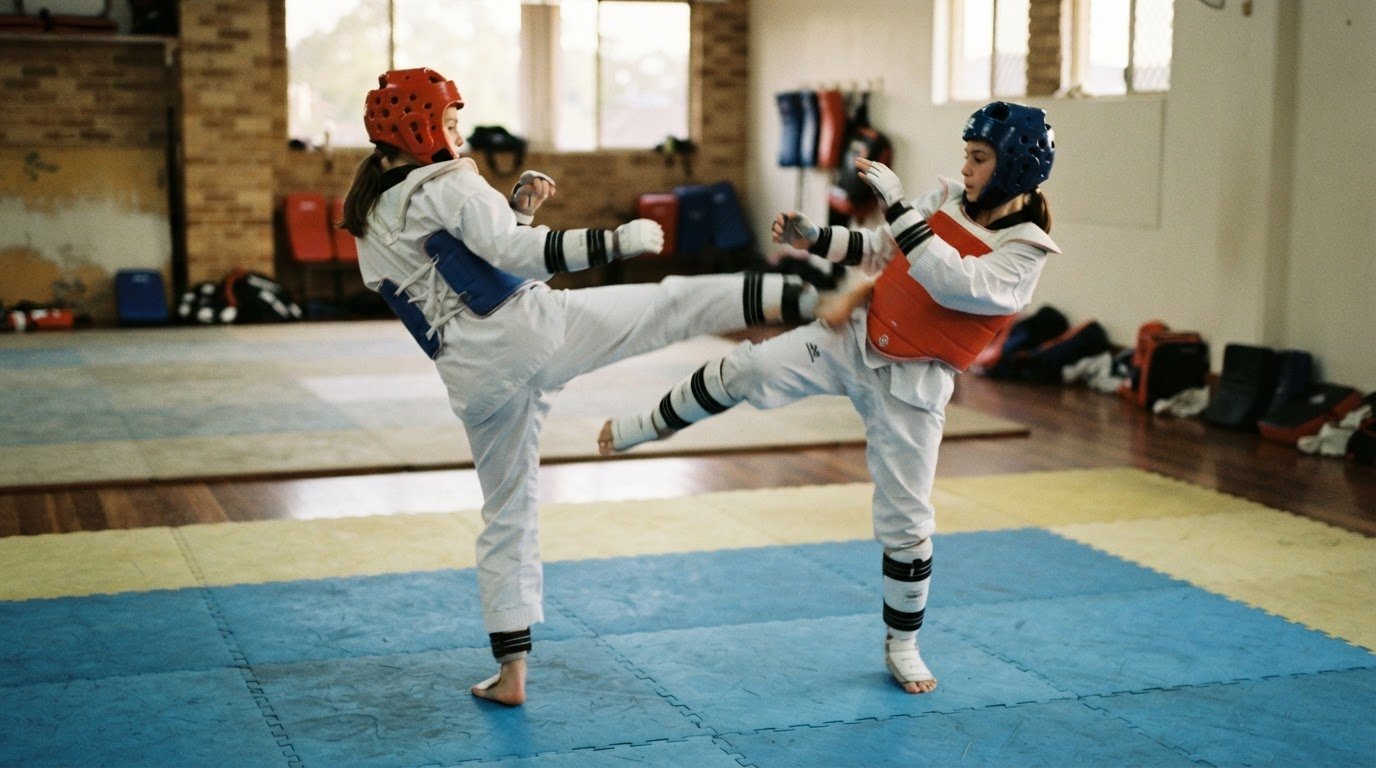
Stay calm by acknowledging your nerves, then choosing one simple task: watch your partner’s stance and respond with your trained guard. Accepting fear doesn’t mean letting it steer your choices. Focus on one controlled decision at a time, such as moving into position rather than rushing forward. This practical approach can help you stay composed under sparring pressure.
Adrenaline can feel uncomfortable, but you can channel that energy into alertness and focus. The first 30 to 60 seconds of a fight can bring an adrenaline dump, when your energy or composure suddenly feels harder to manage. Don’t treat that sensation as a cue to throw techniques wildly. Keep your attention on a clear task, like maintaining your stance or watching your partner’s movement, and let your training guide your next action.
Build a short pre-sparring routine so nerves don’t dictate your first move. Before stepping onto the mat, check your equipment, settle into your stance and choose a simple focus cue, such as “guard first”. Progressive muscle relaxation can also help: tense one major muscle group for five seconds, then release it before moving to the next. This gives your attention a sequence to follow instead of circling around worries about the round.
Keep the routine familiar, especially before competition. A 5 to 10 minute visualisation session can include arriving on the mat, hearing the start and beginning with a controlled response. Picture yourself feeling nervous, then returning to your stance and focus cue. The goal isn’t to predict every exchange. It’s to rehearse how you’ll reset when pressure rises. Practise this routine during training, so it feels usable when sparring starts. With repetition, you can notice adrenaline without letting it make your decisions.
2. Visualising responses to specific situations
Make mental rehearsal specific, rather than picturing an entire match. Spend 10 to 15 minutes each day in the weeks before competition. Imagine yourself stepping onto the mat, seeing your partner’s stance, then choosing a response you’ve practised. Keep the scene clear: notice the distance, keep your guard set, and move with control. This gives your attention a sequence to follow when the real exchange begins.
Base your visualisation on situations you encounter in training. Picture an opponent moving forward, then rehearse stepping back into range or shifting to the side. Imagine missing a technique, recovering your stance and staying focused instead of rushing into your next move. The aim is to prepare your own actions, not predict every choice your opponent might make. Rehearse moments that match techniques and decisions you can perform.
Kobus Huisamen described recognising his opponent’s prepared stance within the first two seconds of the bell during a national kickboxing title fight. Use that example as a prompt, not a promise: practise noticing a stance and recalling your planned response. Keep the rehearsal flexible. If your opponent changes position, picture yourself resetting and choosing another familiar action. This keeps your focus on what you can control.
Visualising victory can help you picture a purposeful outcome, but make the image about your conduct. See yourself listening for the start, defending with discipline, and returning to your stance after an exchange. Include a difficult moment, such as getting pressured near the edge, and rehearse responding calmly. Finish by picturing yourself showing respect after the round, whatever the result. To make those scenes relevant, practise your visualised responses in sparring and refine them through real movement.
3. Breathing exercises before and between rounds
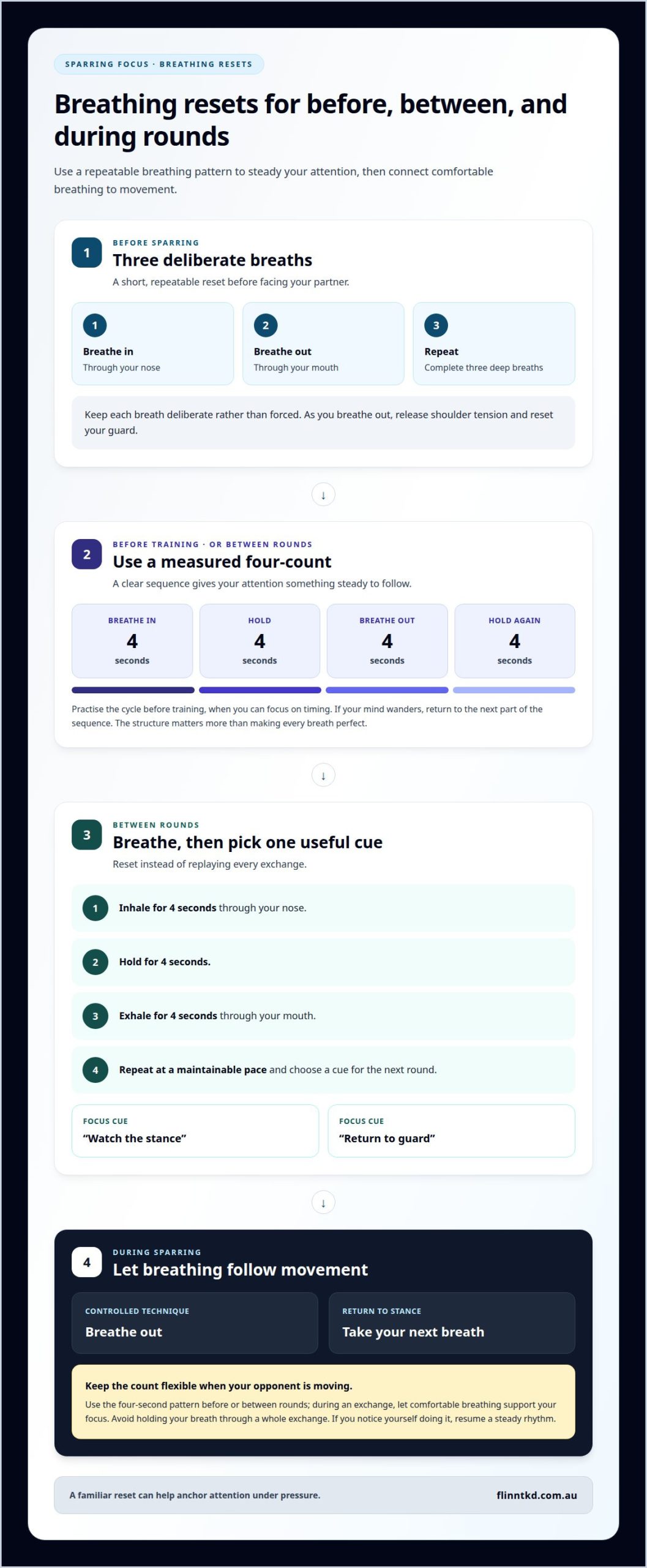
Use a set breathing pattern to give your attention a clear anchor. Before sparring, take three deep breaths, inhaling through your nose and exhaling through your mouth. Keep each breath deliberate rather than forcing it. As you breathe out, release tension in your shoulders and reset your guard. This short routine gives you a repeatable action before facing an opponent, instead of letting pre-round thoughts take over.
Box breathing offers another simple sequence: breathe in for four seconds, hold for four, breathe out for four, then hold again for four. Practise the cycle before training, when you can focus on the timing without an exchange in front of you. If your mind wanders, return to the next part of the sequence. The structure matters more than making every breath perfect.
Between rounds, use the pause to reset rather than replaying every exchange. Start with a controlled four-second inhale through your nose, hold for four seconds, then exhale through your mouth for four seconds. Repeat at a pace you can maintain. As you breathe, choose one useful cue for the next round, such as “watch the stance” or “return to guard”. This connects the breathing pattern to a practical decision.
Keep your breathing connected to movement during sparring. For example, breathe out as you make a controlled technique, then take your next breath while returning to stance. Avoid holding your breath through a whole exchange. If you notice yourself doing it, resume a steady rhythm. The goal isn’t to follow a rigid count while your opponent moves. Use the four-second pattern before or between rounds, then let comfortable breathing support your focus as you move. Repeating the same steps in training helps make the reset familiar under pressure.
4. Mental preparation for sparring while tired
Fatigue can narrow your attention, so decide what success means before the session. Choose one technical goal, such as returning to stance after an attack, and one conduct goal, such as staying respectful under pressure. This makes mental preparation for sparring practical: you’re measuring choices you can control, not whether you win every exchange. Keep each goal simple enough to remember when your legs feel heavy.
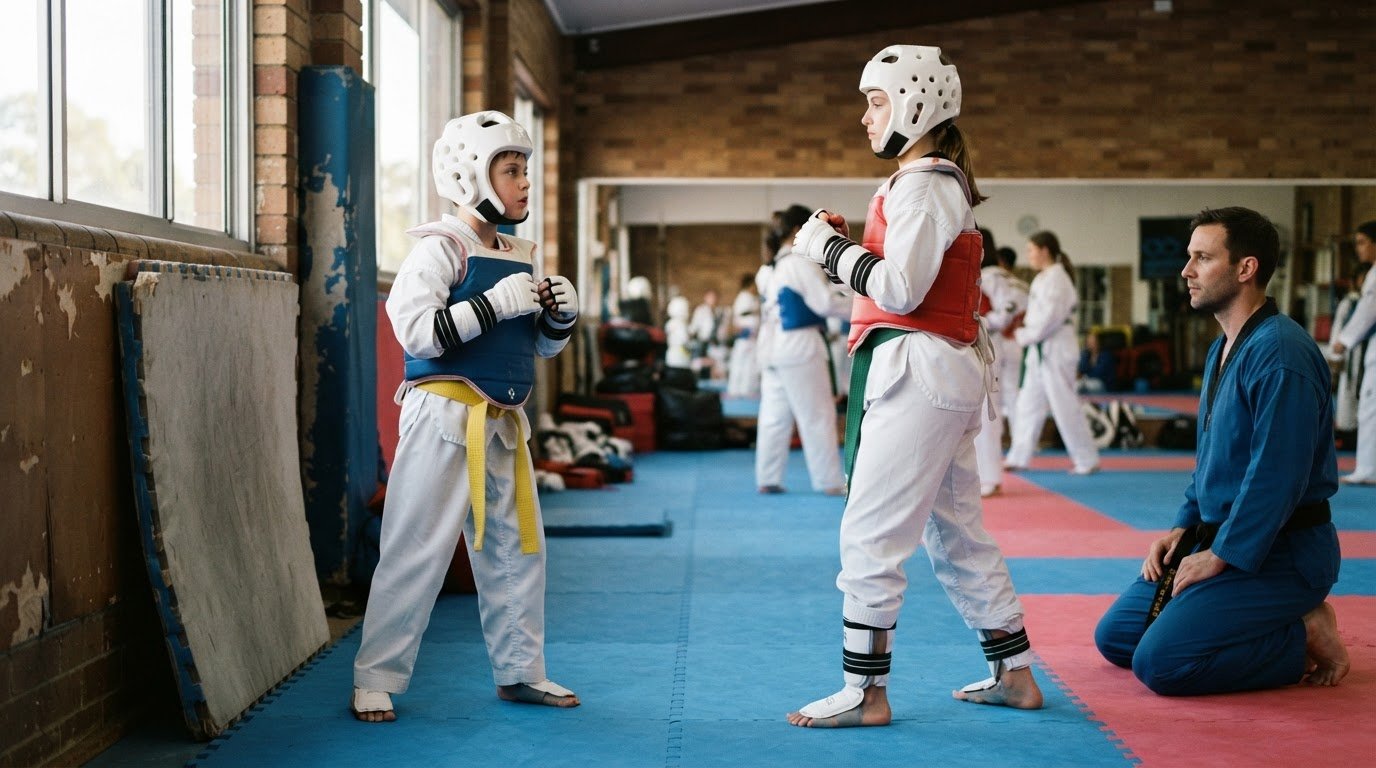
Discuss your goals with your coach and sparring partner before starting. Agree on the drill, its intended pace and how you’ll communicate if you need a pause. Explain what tends to unsettle you, such as losing track of instructions or feeling rushed. Preparing for those moments helps you stay engaged without pretending that tiredness or nerves aren’t affecting you.
During a round, use a brief reset when you notice your focus slipping. Return your attention to one cue, such as watching your partner’s movement or maintaining your guard. If you can’t follow instructions, feel overwhelmed or can’t continue with control, stop and tell your coach. Recognising that point is a responsible decision, not a failure.
After training, consider one moment when fatigue changed your choices. Note what happened and what you’d try next time. A coach can help turn that reflection into a realistic session goal. Preparing mentally for exhaustion is part of the work; one coach’s advice describes preparation as 80% of the battle. For beginners in Australia, Flinn Taekwondo Academy’s Sparring Training offers a Taekwondo setting to develop skills through coached practice. Ask your coach how the session is structured and share your experience level before joining in. This kind of mental preparation for sparring helps you approach practice with a clear focus, even when tiredness makes decisions feel harder.
Build confidence through steady practice, not by forcing yourself through every difficult moment. Explore coached sparring practice as a next step in your training.
Flinn Taekwondo Academy: Sparring Training
Flinn Taekwondo Academy’s Sparring Training gives you a place to practise the focus, composure and responses covered in this guide. Turn to structured sparring practice when you’re ready to work on those skills with a training partner and coach.
New to Taekwondo? You can build your foundations through the program suited to your age: Little Tigers for ages 4-6, Junior Taekwondo for ages 7-12, or Senior & Adult Taekwondo for ages 13 and over. As you progress, you can bring your breathing routine, focus cue and session goals into sparring practice.
For a supportive next step in your Taekwondo training, contact Flinn Taekwondo Academy to discuss Sparring Training.
Carry your focus into the next round
Confidence grows through the choices you practise, especially when a moment feels difficult. Treat each sparring session as a chance to learn how you respond under pressure, not as a test of perfection. Your mental preparation for sparring can develop alongside your technique, helping you approach each challenge with greater purpose.
Choose one intention for your next session, such as staying composed after a missed technique or refocusing when tired. Then reflect on what you learned. This steady process builds discipline you can carry beyond the mat, too.
Ready to continue your Taekwondo journey? Contact Flinn Taekwondo Academy to take your next step. Keep showing up, keep learning, and let each session strengthen your confidence.
Frequently Asked Questions
How do I deal with pre-fight anxiety?
Manage pre-fight anxiety by narrowing your attention to what’s happening now. Before the session begins, notice your feet on the mat, your partner’s position and the coach’s instruction. Name the feeling without judging it, then choose one controllable task, such as keeping your distance. If anxiety keeps rising, pause and tell your coach rather than hiding it.
Is it normal to feel scared before sparring?
Yes, feeling scared before sparring can be a normal response to uncertainty, contact or being watched. Fear doesn’t automatically mean you’re unprepared. Treat it as information: identify what concerns you, such as an unfamiliar partner or an unclear drill, then raise it before starting. Clear expectations can make the session feel more manageable and help you decide what you’re ready to attempt.
How can I mentally prepare for sparring before training?
Mental preparation for sparring works best when it connects to what you’ll actually practise. Before class, recall one technique you already know and consider how you’ll respond if you lose track of the drill. Tell your coach what you’re working on, then listen for feedback during practice. This gives you a learning focus beyond simply trying to perform well.
What pre-sparring routines help reduce nerves and improve focus?
Choose a simple routine you can repeat without adding extra pressure. For example, put your phone away, take in the class space and listen to the coach’s instructions before your turn. Keep the same order each session so you’re not deciding what to do while feeling nervous. A routine should help you become present, not become another test you must complete perfectly.
How can beginners manage fear and anxiety during sparring?
Beginners can manage fear by speaking up about unfamiliar drills, unclear instructions or a partner they haven’t trained with before. In Brisbane, Flinn Taekwondo Academy offers Sparring Training for students developing their Taekwondo skills. Share your experience with the coach before taking part, and focus on understanding the exercise rather than comparing yourself with more experienced students.
What breathing and visualization techniques help before a fight?
Combine breathing and visualisation by imagining a moment that could unsettle you, such as losing track of an instruction. Picture yourself pausing, listening and returning to the task while keeping your breathing steady. This rehearsal is more useful than imagining only a perfect performance because it gives you a response for an unexpected moment. Practise the sequence before training, then use it as a reminder.