What if your child traded just 45 minutes of daily screen time for a level of focus that transforms their school grades and personal confidence? You already know that keeping your family active is a priority, but the sheer variety of martial arts schools in North Brisbane can leave you feeling stuck. It’s common to worry about whether a club is safe or if the instructors truly have the qualifications to mentor your kids. You want a community where they can grow, not just a place to sweat. We understand that finding the right fit for your family is about more than just physical kicks; it’s about building life skills.
This guide helps you discover everything you need to know about TKD, from its traditional Korean roots to finding the perfect local classes. We’ll show you how training in tkd builds the resilience needed for Black Belt excellence while connecting you with a supportive community. You’ll get a clear roadmap for your journey from white belt to the ultimate goal of a Black Belt in 2026 and beyond. This article provides a detailed look at instructor standards and the specific benefits of joining a disciplined, family-oriented dojang in your local area.
Key Takeaways
- Explore the “Way of the Foot and Fist” to understand how tkd uses high, fast kicks to build incredible agility and cardiovascular health.
- Learn to distinguish between the technical precision of Poomsae and the competitive strategy of sparring to find your personal path to mastery.
- Discover how training develops “Black Belt Excellence” in your child, fostering resilience and focus that translates from the mats to the classroom.
- Use our 5-point checklist to verify instructor Dan rankings and QLD Blue Card compliance for a safe, professional training environment.
- See how the Flinn Taekwondo community in Albany Creek provides specialized programs that empower everyone from young beginners to elite athletes.
What is TKD? Understanding the World’s Most Popular Martial Art
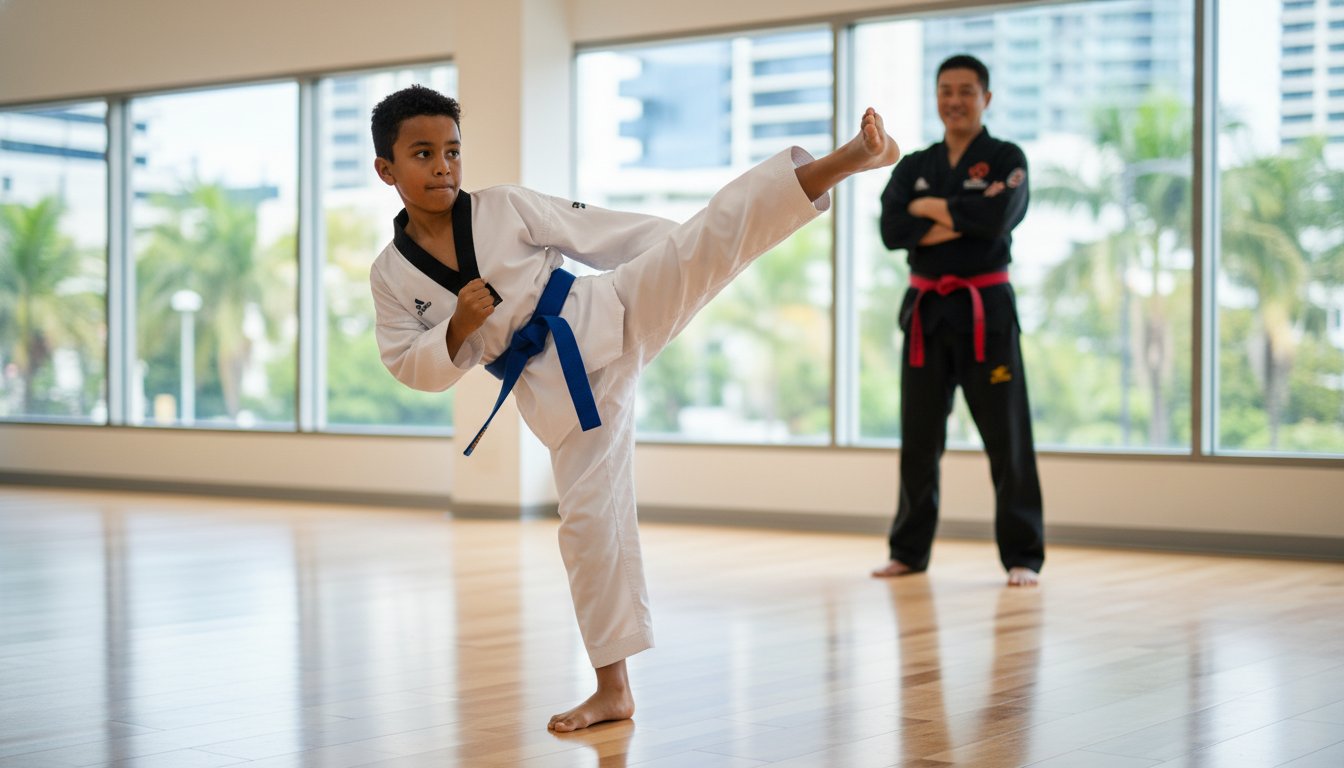
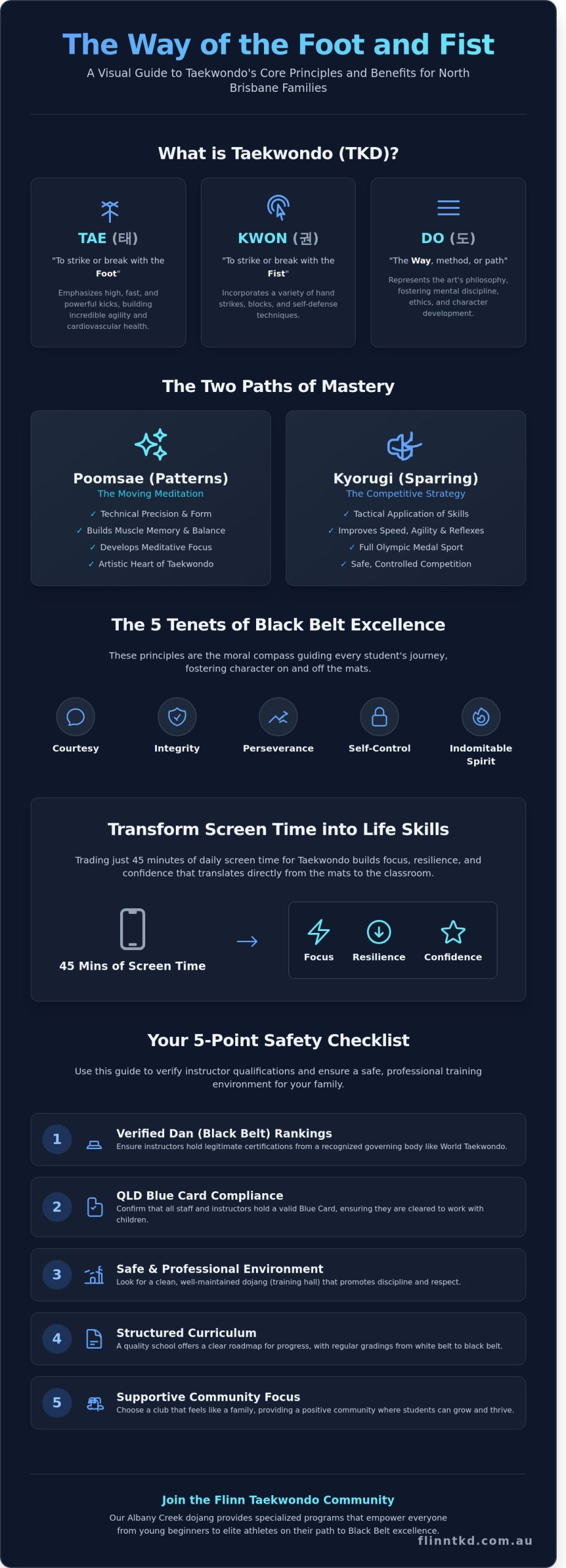
You’ve likely seen the spectacular, high-flying kicks and explosive spinning techniques that define tkd. Taekwondo is a dynamic Korean martial art that has captured the world’s imagination, but it’s much more than just a series of physical strikes. The name itself reveals its soul. Broken down, “Tae” means to strike with the foot, “Kwon” means to strike with the hand, and “Do” represents the way or the path. Together, they form the “Way of the Foot and Fist.”
At Flinn Taekwondo, we teach you that this art is a holistic system for self-growth. While the physical mechanics are impressive, the true power lies in mental discipline and ethical conduct. To understand What is Taekwondo?, you must look at how it builds resilience, focus, and respect. Practitioners follow a strict code of conduct designed to foster peace and confidence. You aren’t just learning how to fight; you’re learning how to carry yourself with “Black Belt excellence” in every aspect of your life.
The sport is generally split into two main areas. Traditional styles focus on Poomsae (patterns), self-defense, and the foundational philosophy of the art. Olympic-style sparring, on the other hand, is a fast-paced, tactical game of speed and precision. Whether you are looking for a community-focused environment for your child or a high-performance challenge for yourself, tkd offers a structured path to success.
A Brief History of Taekwondo
Taekwondo traces its lineage back over 2,000 years to ancient Korean combat systems like Taekkyeon and Subak. These arts focused on leg-based combat to keep opponents at a distance. The modern version of the sport was formalised in 1955 when various martial arts schools, or Kwans, unified under a single name. Its global rise was rapid, leading to its debut as a full medal sport at the Sydney 2000 Olympic Games. This milestone cemented its status as a premier global sport with deep roots in tradition.
Why ‘TKD’ is a Global Phenomenon
World Taekwondo (WT) currently oversees 210 member nations, making it one of the most widely practiced martial arts on the planet. Millions of people join “Team Flinn” and similar communities because the benefits extend far beyond the dojang. Unlike Karate, which often emphasizes hand strikes, or BJJ, which focuses on ground grappling, TKD is the undisputed master of the kicking game. It offers a unique blend of aerobic fitness, flexibility, and life skills. This combination of physical mastery and character building is why families across Brisbane and the world choose this path for empowerment and health.
The Core Pillars of Taekwondo: Poomsae, Sparring, and Discipline
To master tkd, you must look beyond the physical strikes and understand the traditional pillars that define this Korean martial art. Training isn’t just about fitness; it’s a structured journey built on technical precision, combat application, and a strict moral code. Every student at Flinn Taekwondo Academy begins by learning the five tenets: Courtesy, Integrity, Perseverance, Self-Control, and Indomitable Spirit. These aren’t just words to recite. They’re practical tools that help members handle pressure both on the mats and in daily life.
Research from Australian Taekwondo highlights the benefits of Taekwondo for families, noting how these pillars foster physical health and mental clarity across all age groups. Whether you’re a child learning focus or an adult seeking stress relief, these core elements provide a roadmap for “Black Belt excellence.”
Mastering Poomsae: The Moving Meditation
Poomsae, or patterns, are choreographed sequences of movements that simulate a fight against imaginary opponents. For beginners in Brisbane, these patterns are essential for building muscle memory and improving core balance. You’ll practice specific stances and blocks repeatedly until they become second nature. This technical training is vital for your success during belt gradings, which typically occur every three to four months at our academy. Poomsae serves as the artistic and technical heart of the martial art, blending movement with meditative focus. By focusing on the details of every strike, you develop a level of concentration that carries over into school or work.
Olympic Sparring and Competition
Kyorugi, or sparring, is where you put your skills to the test in a fast-paced, controlled environment. We follow the high-performance rules set by World Taekwondo, which are used in elite Australian competitions and the Olympic Games. Safety is our priority, so full-contact training requires WT-approved protective gear, including head guards, chest protectors (hogos), and shin guards. Flinn Taekwondo Academy prepares athletes for these tournaments by teaching advanced footwork and tactical scoring. You’ll learn how to manage distance and timing while maintaining the “indomitable spirit” required for high-level tkd matches.
Kyokpa: Power and Accuracy
Kyokpa involves breaking solid objects, such as pine boards or tiles, to demonstrate the devastating power of a well-executed technique. It’s a true test of your precision. You can’t break a board with speed alone; you need the correct angle and a focused “kiai” (shout) to channel your energy. This practice proves to students that they can overcome physical and mental barriers through dedicated practice. If you’re ready to see what your body is capable of achieving, book a trial session with our team and start your journey toward mastery today.
Why Brisbane Families Choose TKD for Kids and Adults
Brisbane families face a growing health challenge. Recent data indicates that approximately 67% of Queensland adults and 25% of children are living with overweight or obesity. Traditional sports often leave participants on the sidelines, but tkd provides a high-energy solution that keeps everyone moving. Training at Flinn Taekwondo focuses on improving agility and cardiovascular fitness, ensuring your heart health stays as sharp as your kicks. By understanding the health benefits of Taekwondo, you’ll see how this practice builds functional strength and coordination that carries over into every aspect of Queensland life.
Beyond the physical, we cultivate “Black Belt Excellence.” This isn’t just a rank; it’s a standard of living we apply to schoolwork and professional careers. Our students learn that the discipline required to master a complex Poomsae is the same discipline needed to excel in a boardroom or a university lecture hall. For the North Brisbane community, self-defence serves as a core life skill. You’ll gain the confidence to navigate the world safely, knowing you have the tools to protect yourself and your loved ones. Most importantly, you aren’t just joining a gym; you’re finding a second family. At our local dojang, the social bonds of “Team Flinn” create a support network that lasts a lifetime.
Benefits for Kids and Teens
School-aged children in Brisbane often struggle with digital distractions. Our tkd programs help sharpen focus and extend attention spans through structured, goal-oriented training. Your child will learn to block out noise and concentrate on the task at hand, a skill that translates directly to better classroom performance. We build resilience by guiding students through the challenge of belt gradings. They learn that success is earned through persistence, not handed out. To ensure your family feels secure both on and off the mats, explore our guide on Self Defence Classes Brisbane for more safety strategies.
Taekwondo for Adults: Fitness with a Purpose
Ditch the repetitive grind of a traditional Brisbane gym membership. Taekwondo offers a more engaging alternative because every session has a clear purpose and a new skill to master. You’ll experience significant stress relief and mental clarity through disciplined physical movement; it’s the perfect way to decompress after a long day in the CBD. Adult classes at Flinn are designed to be inclusive. We cater to all fitness levels and ages, ensuring you progress at a pace that suits your body while still pushing your limits. Whether you’re 18 or 55, the Flinn way empowers you to reclaim your vitality and confidence.
Finding the Right TKD School in North Brisbane: A 5-Point Checklist
Choosing a martial arts school is a significant decision for your family. The quality of instruction directly impacts your child’s safety, progress, and enthusiasm. Use this 5-point checklist to evaluate any tkd provider in the North Brisbane region.
- Instructor Qualifications: Verify that the Head Instructor holds an internationally recognized Dan ranking (Black Belt). Look for certifications from bodies like Kukkiwon to ensure the training meets global standards.
- Safety and Compliance: Every instructor and volunteer must hold a current QLD Blue Card. This Working with Children Check is a non-negotiable legal requirement in Queensland.
- Culture and Atmosphere: Visit the school during a busy session. You want to see a balance of high-energy discipline and a welcoming, family-oriented environment where students support one another.
- Modern Facilities: Inspect the training surface. Professional martial arts mats are essential for shock absorption and injury prevention during high-impact kicks.
- Trial Periods: Legitimate schools offer a trial session. Avoid any dojang that pressures you into a long-term financial contract before you’ve stepped onto the mats.
What to Look for in a Brisbane Dojang
A permanent, dedicated training facility offers distinct advantages over part-time community halls. Dedicated spaces allow for specialized equipment like heavy bags and electronic scoring systems to remain set up, maximizing training time. You should also be wary of “McDojos” schools that prioritize profit over skill and hand out belts based on attendance rather than merit. Ask the Head Instructor about their lineage. Knowing who taught your teacher provides insight into the authenticity of the Taekwondo being practiced.
Local Considerations for Albany Creek and Surrounds
Convenience matters for busy North Brisbane families. Look for a school located near residential hubs and local schools like Albany Hills State School to minimize commute times. The best schools offer age-specific programs, such as Little Tigers classes designed specifically for the developmental needs of 4 to 6 year olds. A school deeply rooted in the North Brisbane community creates a support network that extends far beyond the training mat, fostering accountability and long-term success for every student. This local connection ensures your child trains alongside peers from their own neighborhood, strengthening their social bonds while they master tkd techniques.
Ready to experience the Flinn way for yourself? Book your introductory trial session today and join our community of achievers.
Join the Flinn Taekwondo Community: Excellence in Albany Creek
Choosing a dojang is a commitment to your personal growth and physical health. At Flinn Taekwondo Academy, you’re stepping into a legacy shaped by over 30 years of martial arts mastery. Master Jeff Flinn, a 7th Dan Black Belt, leads our school with a passion for developing character through disciplined movement. We practice “The Flinn Way,” a philosophy that blends the deep-rooted traditions of tkd with modern, science-based coaching techniques. This ensures you receive training that’s both culturally authentic and physically optimized for the modern athlete. We’ve built a community where every member feels empowered to reach their full potential through hard work and mutual respect.
Our Programs for Every Stage of Life
Growth happens in stages at our academy. The Little Tigers program provides a safe, energetic environment for 4 to 6 year olds to develop balance and coordination. Instructors prioritize “life skills” like focus and respect, giving Brisbane’s youngest martial artists a head start in their early development. Our Junior and Senior classes transition into more complex patterns and technical sparring drills. These sessions are designed to build cardiovascular fitness while fostering the mental resilience required for modern life. For those with competitive aspirations, our high-performance coaching provides a rigorous path toward state and national titles. Athletes receive the specific tactical training and conditioning needed to excel in the 2026 tournament circuit.
Start Your Journey Today
You don’t need any prior experience or special equipment to begin your martial arts path. For your first session at our Albany Creek location, simply wear comfortable gym gear and bring a water bottle. We’ve built a culture that’s warm and welcoming, ensuring you feel like part of “Team Flinn” from the moment you walk through the door. You’ll notice the professional yet friendly vibe that sets our North Brisbane academy apart. Our instructors guide you through every movement, ensuring safety and proper technique during high-quality tkd training. It’s about more than just fitness; it’s about joining a local institution that takes pride in your success on and off the mats.
Begin Your Journey Toward Black Belt Excellence
Choosing tkd means committing to more than just physical fitness; it’s a blueprint for building resilience and focus. You’ve seen how the core pillars of poomsae and sparring develop the discipline needed for success in all areas of life. For North Brisbane families, the right school provides a safe, structured environment where these skills flourish under expert guidance. It’s about finding a community that supports your personal growth while maintaining the highest standards of martial arts practice.
Flinn Taekwondo has served the Albany Creek area as a family-owned academy since 2013. Led by 7th Dan Master Jeff Flinn, our school offers specialized programs designed for students from age 4 through to adults. We pride ourselves on fostering a supportive atmosphere where every member strives for Black Belt excellence. This isn’t just about learning to kick and punch; it’s about joining a team that values your character and development as much as you do. Our structured classes ensure that every student moves at a pace that builds confidence and technical precision.
Start your Taekwondo journey with a trial at Flinn Academy!
We look forward to seeing you on the mats and helping you reach your full potential soon.
Frequently Asked Questions
Is TKD safe for young children?
Yes, Taekwondo is very safe for children as young as 4 years old because our programs focus on controlled movements and non-contact drills. At Flinn Academy, we maintain a strict student-to-instructor ratio of 10:1 to ensure your child receives constant supervision. Our 2026 safety protocols prioritize high-quality padded equipment and soft landing mats to minimize any risk of injury. You’ll see your child build coordination and confidence in a secure environment designed specifically for their developmental stage.
What is the difference between TKD and Karate?
The primary difference lies in the technique; Taekwondo emphasizes dynamic kicking while Karate focuses more on hand strikes and linear movements. In a typical tkd session, you’ll spend about 70% of your time mastering high, fast kicks and jumping strikes. This Korean martial art prioritizes speed and agility over the static power often found in Japanese Karate styles. Both disciplines build incredible discipline, but Taekwondo offers a more aerobic, leg-focused workout that improves flexibility quickly.
How long does it take to get a Black Belt in Brisbane?
It typically takes between 3 and 5 years of consistent training to earn a Black Belt at Flinn Academy. This timeline depends on your personal dedication and passing our regular grading assessments held every 3 months. We follow the rigorous standards set by World Taekwondo, ensuring your rank is recognized globally. Earning your belt is a journey of resilience, requiring you to master specific Poomsae and sparring techniques at each level before reaching Black Belt excellence.
Am I too old to start Taekwondo at Flinn Academy?
You’re never too old to start your journey with Team Flinn. We have many students starting in their 40s, 50s, and even 60s who find the low-impact stretches and structured movements perfect for improving mobility. Our adult classes are tailored to your individual fitness level, allowing you to progress at a pace that feels comfortable for your body. You’ll join a welcoming community that values personal growth and health, regardless of when you begin your first class.
What equipment do I need to start TKD classes?
You only need a white Taekwondo uniform, known as a Dobok, and a white belt to begin your first tkd class. We provide a trial pack for new members that includes these essentials so you can step onto the mats immediately. As you progress to sparring, you’ll eventually need headgear, chest protectors, and shin guards. Our dedicated staff will guide you through the 4 main pieces of safety gear required as you advance through the ranks.
Are there family discounts for martial arts classes in North Brisbane?
Yes, Flinn Academy provides tiered family discounts to make training accessible for the whole household. When 3 or more family members join Team Flinn, you’ll receive a reduced monthly rate compared to individual memberships. We believe martial arts is a powerful bonding tool, and these packages help North Brisbane families build a culture of fitness together. Contact our front desk for the specific percentage breakdowns based on your family size and chosen program.
What does a typical Taekwondo class involve?
A standard 60-minute class begins with a 10-minute dynamic warm-up to prepare your muscles and joints. You’ll then move into 20 minutes of technical kicking drills followed by 15 minutes of Poomsae, which are choreographed patterns of movement. The session often concludes with light sparring or fitness challenges before a final cool-down stretch. This structured rhythm ensures you develop both the physical mechanics and the mental focus necessary to succeed in the dojang.
How many times a week should I train to see progress?
You should aim to train at least 2 times per week to see consistent physical and technical progress. Students who attend 3 sessions weekly often reach their goals 25% faster than those who only attend once. Regular attendance helps your muscle memory take hold and keeps you connected with the Flinn community. This frequency allows you to balance your training with other life commitments while still maintaining a steady, rewarding path toward your next belt.