What if your child’s boundless energy could become a chance to practise focus, skills and confidence? If you’re searching for a constructive outlet for energetic kids north brisbane, you’re likely looking for more than a way to keep them busy. You want an activity that gives movement a purpose, holds their interest and helps them become familiar with a class routine.
Taekwondo offers children guided movement, technique practice and clear instructions. In class, kids can practise coordination, listening and taking turns while learning martial arts skills. Every child is different, and confidence develops at an individual pace, but a consistent class gives them the chance to participate and try.
This guide explains what children can practise in Taekwondo, what to consider when choosing an activity in North Brisbane and how to prepare a young beginner for a new class. You’ll also learn about Flinn Taekwondo Academy’s Little Tigers Program for children aged 4-6.
Key Takeaways
- A constructive outlet for energetic kids north brisbane pairs purposeful movement with guidance, clear boundaries and encouragement.
- Compare activities by the movement, structure and skills they offer, then consider your child’s age, interests and comfort in a group.
- Use a simple checklist to clarify your priorities and talk with your child about trying a new class and its expectations.
- Taekwondo gives children skills to practise within a guided class, making it more than simply an opportunity to exercise.
- Flinn Taekwondo Academy’s Little Tigers Program is for children aged 4-6. The family-owned academy was established in 2013.
Why North Brisbane Parents Seek a Constructive Outlet for Energetic Kids
Some children are almost always in motion; others show their energy in bursts, through animated conversation, frequent changes of activity or a strong urge to explore. That liveliness isn’t a behaviour problem to fix. It’s one part of who a child is, and it can vary from day to day. Parents may be looking for an activity that engages both body and attention in a positive, manageable way.
A constructive outlet is more than somewhere to run around. It pairs purposeful movement with guidance, clear boundaries and encouragement. That definition leaves room for different interests and temperaments. No single activity suits every child or family, so look for a setting your child can enjoy and your family can fit into its routine.
Energy is not a behaviour problem to fix
A lively child might love to move, ask questions, switch quickly between tasks or throw themselves into a new challenge. These are descriptions, not labels or diagnoses. If your child has a lot of energy, you may be looking for a regular opportunity to move while practising how to listen, take turns and join a group activity.
Start with your child’s interests and comfort. One child may enjoy learning movements alongside others; another may prefer a different activity or need time to feel at ease in a group. Consider your family’s priorities too, including travel and the kind of learning environment you want. There’s no universal best choice.
What makes an activity feel constructive?
Structure gives movement a purpose. An activity might offer a simple goal, a skill to practise and guidance on what to do next. Encouragement can make effort part of the experience without expecting a child to master something straight away. These elements create a clearer learning path than movement without a particular skill or class routine.
Taekwondo combines physical movement with technique practice and instructor guidance. It is a Korean martial art with its own history and traditions; Taekwondo offers a general overview. In class, a child can learn movements, practise them and respond to instructions. That’s different from simply being active: attention is directed towards learning a skill as well as moving.
For parents weighing up this option, the North Brisbane Taekwondo classes guide explains the local class pathway. As you explore activities, look beyond the name. Consider whether the structure, teaching style and expectations suit your child’s age and interests.
That’s a practical starting point for finding a constructive outlet for energetic kids north brisbane: consider what your child enjoys, then look for purposeful movement paired with clear guidance. The right fit should feel like an opportunity to participate and learn, not a demand for every child to behave or progress in exactly the same way.
How Taekwondo Gives Energetic Kids Purposeful Movement
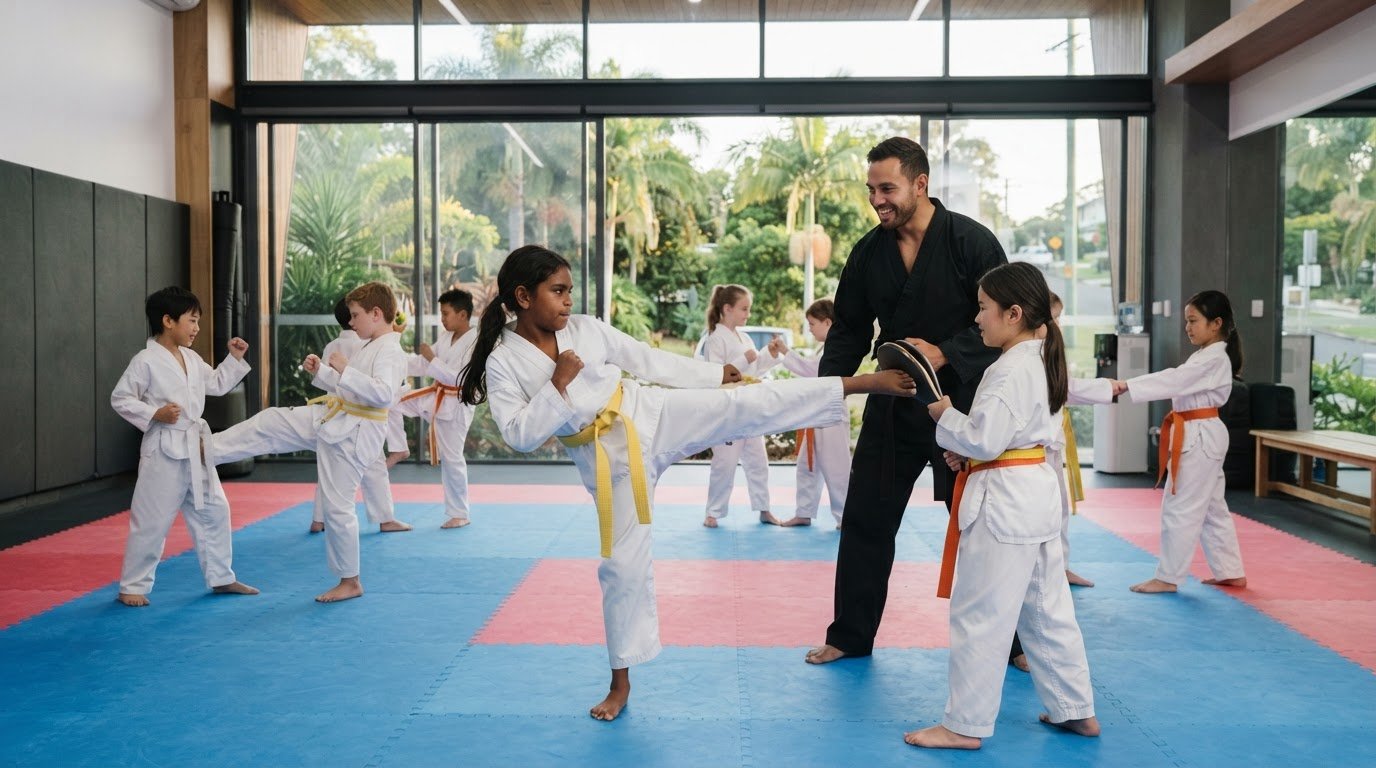
Taekwondo gives movement a learning goal. Children practise techniques with instructor guidance rather than simply being asked to keep moving. They’re shown what to try, given time to practise and guided through a class with clear expectations. This connects activity with learning without assuming every child will respond or progress in the same way.
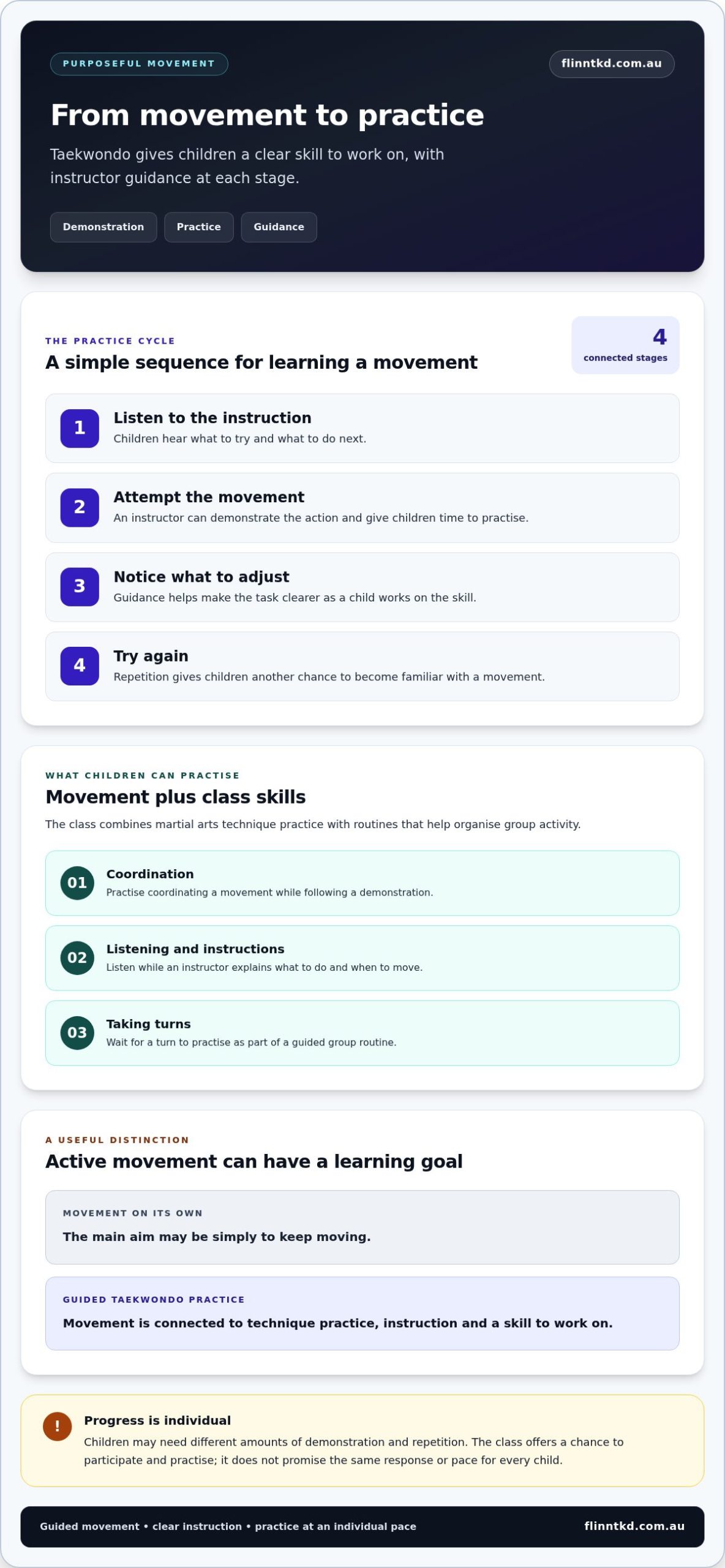
Taekwondo is structured physical practice built around skills children can learn, practise and refine. The process is straightforward: listen to an instruction, attempt a movement, notice what to adjust and try again. That’s different from exercise where the main aim is simply continuous movement.
Movement, techniques and practice goals
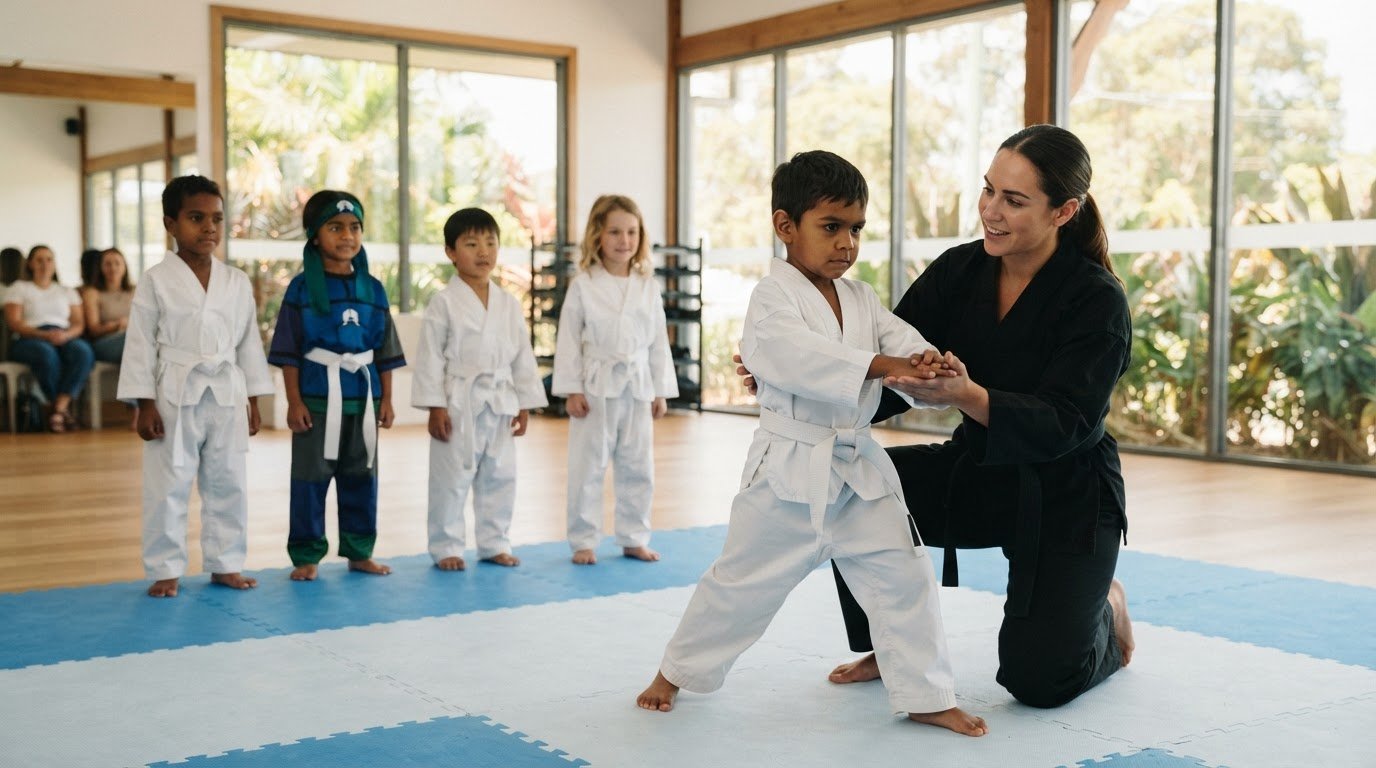
A class involves movements and techniques, with pace and content suited to the training. For a child new to martial arts, an unfamiliar action can be introduced in manageable steps. An instructor can demonstrate a movement, explain what to do and give children time to practise before adding another detail.
Repetition gives children a chance to become familiar with a skill. It doesn’t guarantee a particular change in behaviour or ability. Instead, it provides a clear task to work on in the moment, whether that means following a demonstration, coordinating a movement or trying again after an initial attempt.
For young students, accessible explanations matter. Short directions and demonstrations can help children understand what they’re being asked to do. Look for teaching that makes martial arts concepts understandable without expecting a child to know technical terms before they begin.
Structure, listening and encouragement in class
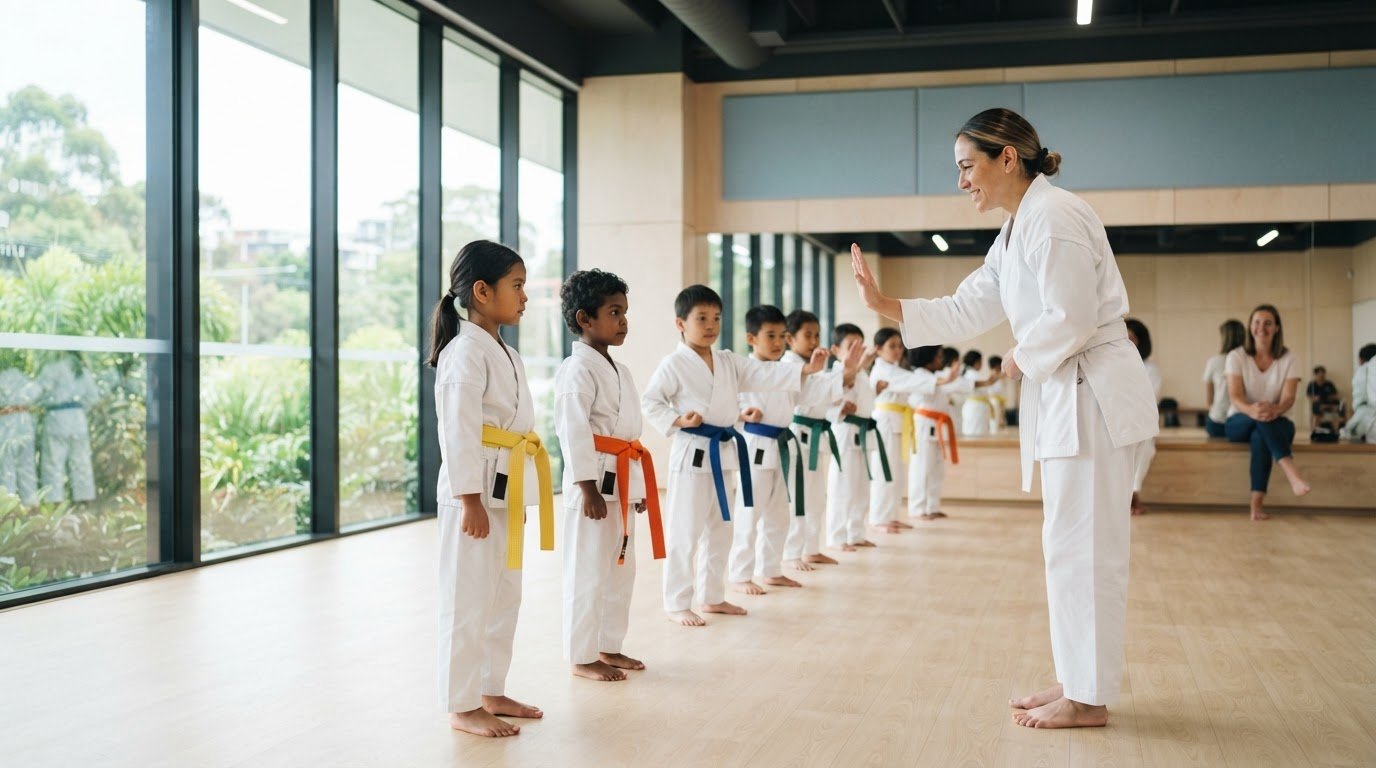
Class guidance helps organise movement. Children may be asked to listen while an instructor explains, take turns practising or wait until it’s their time to move. These routines give each child a clearer sense of what to do and when. They also distinguish guided practice from free play, while leaving room for children to learn at their own pace.
Encouragement can recognise effort, participation and willingness to practise, not just polished technique. One child may pick up a movement quickly; another may need more demonstration and repetition. Progress looks different across children, and that variation is part of learning a physical skill. The complete Taekwondo guide for Brisbane families offers further context on the martial art and its practice.
Regular movement is one part of children’s wellbeing. The US Office of Disease Prevention and Health Promotion’s Physical Activity Guidelines for Americans provides background on activity for children and adolescents. For families considering a constructive outlet for energetic kids north brisbane, Taekwondo is one structured option to explore alongside a child’s interests and comfort with group learning.
If guided practice sounds like a possible fit, explore Flinn Taekwondo Academy and its Taekwondo classes in North Brisbane.
How to Compare Children’s Activities in North Brisbane
Activity listings can show what’s available, but the best fit depends on what happens once your child joins in. Compare the experience, not just the activity name. Is movement guided or open-ended? Do children learn a skill, follow a routine or explore at their own pace? Also consider practical family priorities, such as travel time and how an activity fits your week in North Brisbane.
Ask four questions: How will my child move, what structure will guide them, what can they learn, and does it suit our family? Use the table as a starting point, then weigh your child’s age, interests and comfort with group learning.
| Activity type | Movement | Structure | Skill learning | Parent priorities to consider |
|---|---|---|---|---|
| Open-ended play | Child-led and varied | Often flexible | Exploration through play | Space to explore, flexibility and opportunities for self-directed activity |
| Team sport | Movement shaped by the game | Rules and shared play | Game-specific skills and teamwork | Interest in the sport, group participation and the activity’s routine |
| Taekwondo class | Movement paired with technique practice | Instructor-guided practice | Martial arts movements practised step by step | Age fit, teaching approach and your child’s comfort following group instruction |
| One-off outing | Depends on the activity | Usually limited to that visit | May offer a new experience or activity | Convenience, variety and whether you’re seeking a single outing or regular learning |
Questions to help assess class fit
Notice how the activity is introduced. Are instructions clear and suitable for the age group? Is there a balance of moving, listening and trying a skill? Think about what your child seems drawn to: copying demonstrations, playing freely, solving a challenge or being part of a team. Their interest and comfort are useful clues, though one visit may not tell the whole story.
Don’t assume an energetic child needs a particular kind of class. One may enjoy a defined routine; another may feel more at ease with open-ended play. Compare activities based on your child’s interests and needs, rather than a general idea of what lively children need.
Taekwondo compared with general play and sport
General play leaves room for children to invent games, change direction and explore. Team sport organises movement around a shared game and its rules. Taekwondo focuses on guided technique practice, with movements taught and practised within a class. Each offers a different balance of structure, exploration and group participation.
Neither format is automatically better for every child. A child who enjoys repeating a movement may find skill practice engaging, while another may prefer the freedom of play or the shared aim of a game. Ongoing classes also differ from one-off outings: regular sessions provide an activity to return to, while an outing offers variety without the same ongoing commitment. Both can have a place in family life.
Use these comparisons to narrow your search for a constructive outlet for energetic kids north brisbane. Start with your child’s age and interests, then weigh the teaching style and routine against what feels manageable for your family.
What Parents Can Do Before Choosing a North Brisbane Class
A little preparation can make a new activity feel more familiar for you and your child. Before choosing a North Brisbane class, think about what your child enjoys, what they’re ready to try and how an ongoing activity would fit your family’s routine. Use this checklist to focus on the experience, not on whether your child can perform perfectly from day one.
- Match the activity to your child’s age. Look for an option designed with their stage of learning in mind. Consider whether the instructions and expectations seem understandable and manageable.
- Start with their interests. Talk about what they like doing, such as copying movements, learning a new skill or joining a group. Their preferences can help you decide which kind of activity to explore.
- Picture the routine. Think about travel, timing and how regular classes would fit around school, rest and family commitments. An activity should make sense in your week, not just sound appealing in theory.
- Explain what participation involves. Tell your child they’ll have a chance to move, listen to an instructor and practise alongside others. Keep it simple and invite questions.
- Focus on the experience, not instant results. Notice whether your child is willing to take part and seems comfortable trying. Learning a new activity takes time, and early participation matters more than polished performance.
Prepare your child for a new activity
Present a class as a chance to learn and practise, not a test to pass. You might explain, “The instructor will show you what to do, and you’ll get a turn to try.” Mention simple expectations, like listening while instructions are given and taking turns. Then pause. Your child’s questions, enthusiasm or uncertainty can guide how much more you explain.
Keep the conversation open. A child who feels unsure may want to know what the room looks like or what they’ll be asked to do. You don’t need to promise that everything will feel easy. A calm, honest explanation can make the first step less unfamiliar.
Set realistic expectations for the first stages
Every child responds to a new setting in their own way. Some may join in quickly; others may need time to watch, listen and grow comfortable with the routine. Treat early classes as an introduction to participation and learning, not a measure of ability. A class can offer purposeful activity, but don’t expect it to resolve restlessness or guarantee better concentration.
For families considering martial arts, the guide to finding martial arts near you in North Brisbane can help you think through the local search. If structured Taekwondo feels like a promising fit, explore Flinn Taekwondo Academy’s children’s classes as you consider a constructive outlet for energetic kids north brisbane.
Meet Flinn Taekwondo Academy’s Little Tigers in North Brisbane
For North Brisbane families looking for a local martial arts activity for a young child, Flinn Taekwondo Academy offers the Little Tigers Program for children aged 4-6. The family-owned academy was established in 2013 and offers Taekwondo training for children and adults. Children can engage with movement and skill practice in a guided martial arts setting.
Choosing a class is a personal decision. Your child’s age, interests and readiness to join a group all matter. The Little Tigers age range gives parents of younger children a clear starting point as they consider whether Taekwondo could suit their family. It’s an opportunity to explore a structured activity with a martial arts focus, not a promise of particular results.
A program for children aged four to six
The Little Tigers Program is for children aged 4-6, making it an option for families considering an early-years activity. Children in this age range can differ widely in what they enjoy and how they approach a new setting, so think about your individual child rather than expecting a particular response.
As Taekwondo training, the program introduces young children to martial arts practice. You can explain that class is a place to learn and try, not a test of ability. That framing can help a child approach a new activity with curiosity, while leaving space for their questions and comfort to guide the conversation.
If you’re comparing options, consider whether your child is interested in learning physical skills and taking part in a group setting. The Little Tigers age range can help focus your search, while your child’s interests and your family’s routine help you decide whether it’s a practical fit.
A local academy with experienced leadership
Flinn Taekwondo Academy is family-owned and was established in 2013. The academy is led by Master Jeff Flinn, a 7th Dan Black Belt with international accreditation. The school offers Taekwondo training in North Brisbane, with experienced and internationally accredited instructors supporting students’ learning.
When exploring a children’s activity, consider both the program’s age range and the leadership behind the academy. Those details clarify who the program is designed for and the experience guiding its martial arts instruction. From there, talk with your child about what learning Taekwondo might involve and whether they’re interested in giving it a try.
If you’re searching for a constructive outlet for energetic kids north brisbane, start with Flinn Taekwondo Academy’s Little Tigers Program. Explore the Little Tigers Program to learn more about Taekwondo for children aged 4-6.
Take the Next Step at Your Child’s Pace
Choosing a constructive outlet for energetic kids north brisbane doesn’t mean expecting your child to change who they are. It means finding an opportunity to explore purposeful movement and decide whether a class suits their age, interests and comfort. Start with a conversation: ask what they’d like to try, explain that learning takes practice and give them room to share questions.
You don’t need to make the decision feel big. Explore the program, consider how it could fit your family’s routine and talk through what your child might enjoy about learning Taekwondo. Their first steps can be small, and their experience will be their own.
Ready to explore a local option? Explore Flinn Taekwondo Academy’s Little Tigers Program and see whether it feels like a positive next step for your family. Every new skill begins with the chance to give it a go.
Frequently Asked Questions
Is Taekwondo suitable for an energetic four-year-old?
It may suit a four-year-old who’s curious about movement and ready to explore a guided activity. Flinn Taekwondo Academy’s Little Tigers Program is for children aged 4-6, so a four-year-old is within its stated age range. Consider how your child responds to group settings and new instructions, too. Energy alone doesn’t determine whether Taekwondo will feel enjoyable; individual interest and comfort matter.
Can martial arts give a lively child a structured activity?
Yes, martial arts training can offer a lively child guided practice and a learning focus. In Taekwondo, an instructor demonstrates a movement, explains it and gives students a chance to practise. For families looking for a constructive outlet for energetic kids north brisbane, this is one option to consider. It provides a structured activity, but doesn’t guarantee changes in behaviour or concentration.
What happens if my child feels shy in their first Taekwondo class?
Feeling shy is a normal response to an unfamiliar setting, and your child doesn’t have to be the first to join in. Before class, explain what they might see and encourage them to ask questions. Afterwards, ask what felt interesting or uncertain, without treating quietness as a setback. A child’s comfort can take time to develop, so listen to their response rather than expecting instant enthusiasm.
How do I know whether a children’s class is a good fit?
A class may be a good fit if its expectations suit your child’s age and they show some interest in participating. Notice how they respond to learning with others, following instructions and practising something new. Afterwards, ask a specific question such as, “Which part would you like to try again?” Their answer can tell you more than simply asking whether they liked it.
Does my child need martial arts experience before starting Taekwondo?
No previous martial arts knowledge is needed to understand the idea of starting Taekwondo. Children are introduced to movements and practise them, rather than arriving already knowing the techniques. Reassure your child that they aren’t expected to perform perfectly or keep up with everyone straight away. Being willing to listen, have a go and learn at their own pace is a sensible starting mindset.
What should parents look for in a North Brisbane children’s activity?
Look for an activity that suits your child’s age and interests and works with your family’s routine. In North Brisbane, travel time can shape whether attending regularly feels practical, so consider the journey alongside the class itself. Think about the kind of experience you want: a chance to explore freely, learn a particular skill or take part in guided group practice. A good choice should make sense for both child and family.
How is a Taekwondo class different from general play or sport?
Taekwondo centres on learning and practising martial arts techniques with instructor guidance. General play is often more open-ended, while sport typically organises activity around a game and its rules. Each offers a different experience, and none is automatically the right choice for every child. Consider whether your child is drawn to practising movements, inventing their own games or joining in with a team activity.