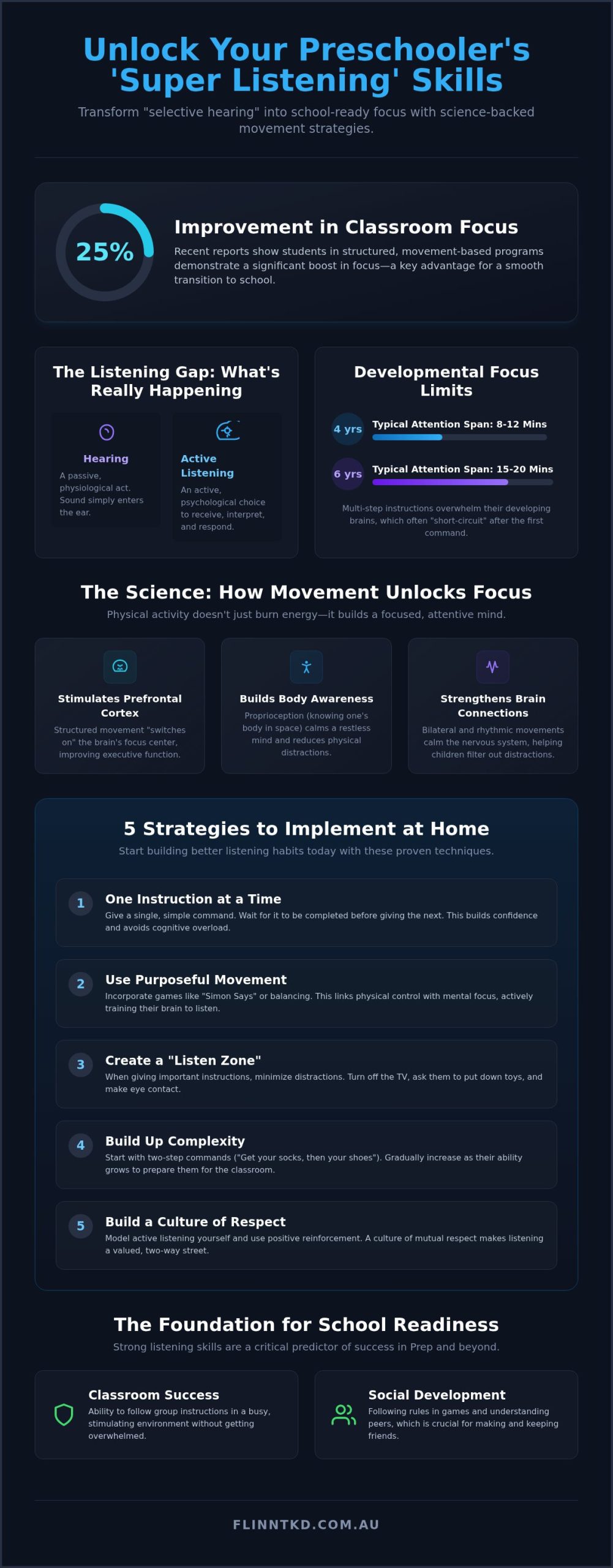
What if the secret to getting your child to listen isn’t more “time-outs” or repeating yourself for the tenth time, but actually getting them moving? Many parents across Queensland find themselves stuck in a loop of constant instruction, worrying that their child’s lack of focus might lead to negative feedback once they hit the school gates. Improving listening skills for preschoolers Brisbane families can trust often starts with a shift in perspective. Recent 2025 reports from local educators suggest that students engaged in structured, movement-based discipline show a 25% improvement in classroom focus compared to their peers.
You want a child who follows instructions the first time and feels confident in their ability to concentrate. It’s natural to feel like your voice is just background noise, but we’ve seen how the right environment transforms “selective hearing” into genuine mental fortitude. This article shares proven strategies and active learning techniques to help your preschooler develop the essential habits needed for school and life. We’ll look at how to replace the frustration of “timeout” with the power of personal agency, creating a calmer home environment and a smoother transition to the Prep classroom.
Key Takeaways
- Identify the developmental gap between hearing and processing to help your child bridge the distance between an instruction and an action.
- Discover the science of focus and how purposeful movement stimulates the prefrontal cortex to calm a restless mind.
- Implement immediate home strategies for improving listening skills for preschoolers brisbane parents can use to end the cycle of constant repetition.
- Gain a competitive edge for the transition to Prep by training your child to follow complex group instructions in a distraction-free zone.
- See how the ‘Yes Sir’ culture of the Little Tigers program builds a foundation of respect and mental fortitude for life.
What are Listening Skills for Preschoolers and Why Do They Struggle?
Listening isn’t just about being quiet while someone else speaks. It’s a complex cycle where your child must receive, interpret, and then respond to information correctly. In our fast-paced 2026 Brisbane lifestyle, preschoolers are constantly bombarded by digital noise and rapid-fire visuals. This makes the process of listening more challenging than ever before. There’s a massive difference between hearing and active listening. Hearing is a physiological act where sound hits the eardrum. Active listening is a psychological and behavioural choice to engage. When we focus on improving listening skills for preschoolers brisbane parents often realize their child can hear a snack wrapper from three rooms away but misses an instruction given from three feet away.
This struggle often stems from a developmental gap. A child might hear the sound of your voice but lack the cognitive processing speed to turn that sound into a completed task. Their brains are still building the pathways required to filter out distractions and prioritise your voice over the hum of the fridge or the sight of a toy.
The Difference Between Selective Hearing and Developmental Focus
What looks like selective hearing is usually a sign of underdeveloped executive function. Your four-year-old isn’t necessarily ignoring you; they might simply lack the mental bridge required to turn a sound into an action. A typical four-year-old has an attention span of about eight to twelve minutes. By age six, this pushes toward fifteen or twenty minutes. If you give a three-step instruction like “put your shoes on, grab your hat, and wait by the door,” a preschooler’s brain often short-circuits after the first step. They aren’t being defiant. They’re overwhelmed by the sequence. Understanding these limits helps us coach them toward better results without the frustration of constant repetition.
Why Listening is the Foundation of School Readiness in Queensland
As your child prepares for their first year of Prep in Brisbane, teachers look for school readiness. This relies heavily on a child’s ability to follow group instructions in a busy classroom. Poor listening has real social consequences on the playground too. If a child can’t follow the rules of a game, they often struggle to make and keep friends. We define active listening as both a physical stance and a mental state where the body is still and the mind is ready to receive. Improving listening skills for preschoolers brisbane families prioritise now will prevent the anxiety of negative teacher feedback once school begins in 2026.
The Science of Focus: Why Movement Improves Listening
Most people assume that for a child to listen, they must be perfectly still. Science tells us a different story, especially for the developing preschool brain. Physical activity directly stimulates the prefrontal cortex, which acts as the brain’s focus centre. When children engage in structured movement, they aren’t just burning energy; they are “switching on” the parts of the brain responsible for executive function. Building this physical awareness is a key component of improving listening skills for preschoolers brisbane educators recommend for long-term success. Proprioception, or the awareness of one’s body in space, is essential for calming a frantic mind. When a child feels grounded and in control of their limbs, they’re no longer distracted by their own restlessness. This is why high-energy kids often thrive when participating in active listening activities that require them to move with purpose.
The Connection Between Balance and Brain Power
Focus is a full-body experience. When a child practices standing on one leg or navigating an obstacle course, they’re using the same neural circuits required to listen to a teacher’s instructions. These bilateral movements, which require both sides of the body to work together, strengthen the connection between the brain’s hemispheres. This cross-lateral brain work is a foundational step in improving listening skills for preschoolers brisbane parents look for when prepping for school. Rhythmic movements, like those found in basic martial arts patterns, provide a calming effect on the nervous system. This rhythm reduces sensory overload, allowing the child to filter out background noise and prioritise the coach’s or parent’s voice.
Creating a ‘Quiet Mind’ Through Active Discipline
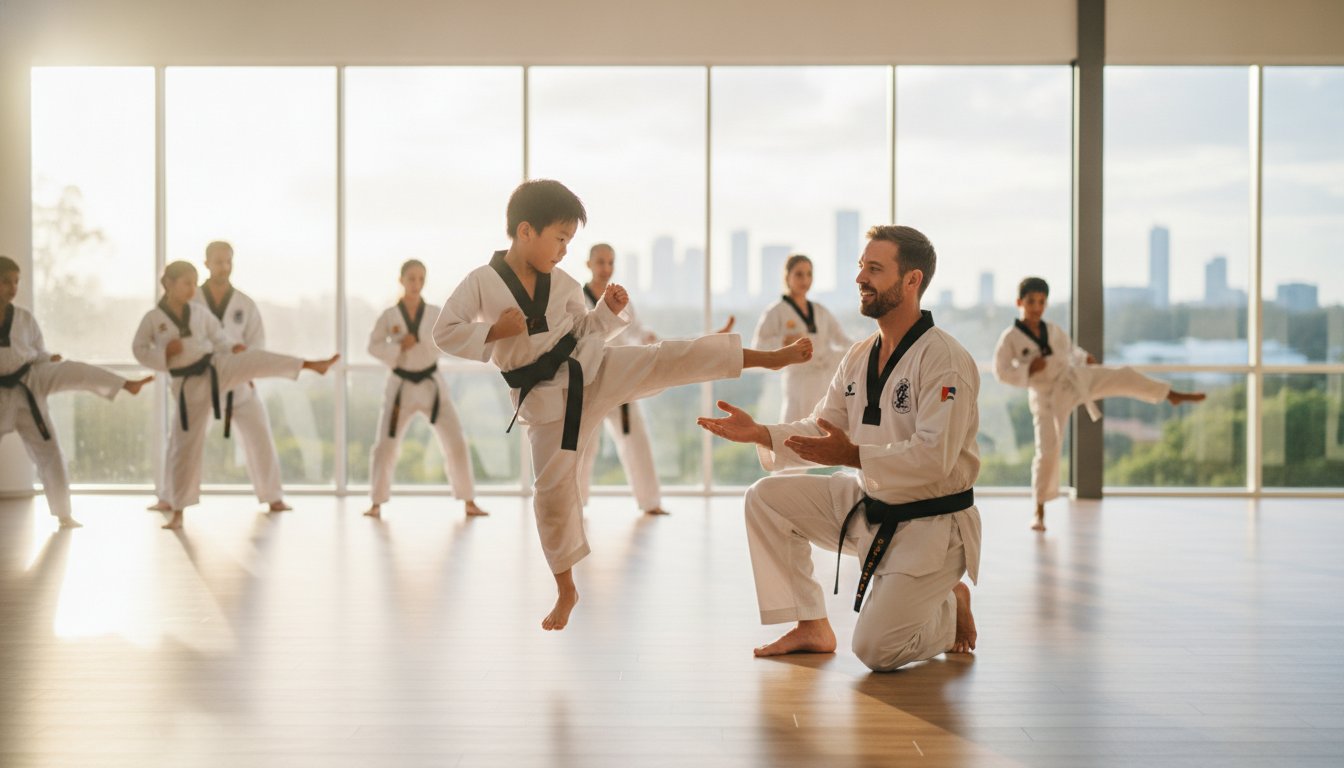
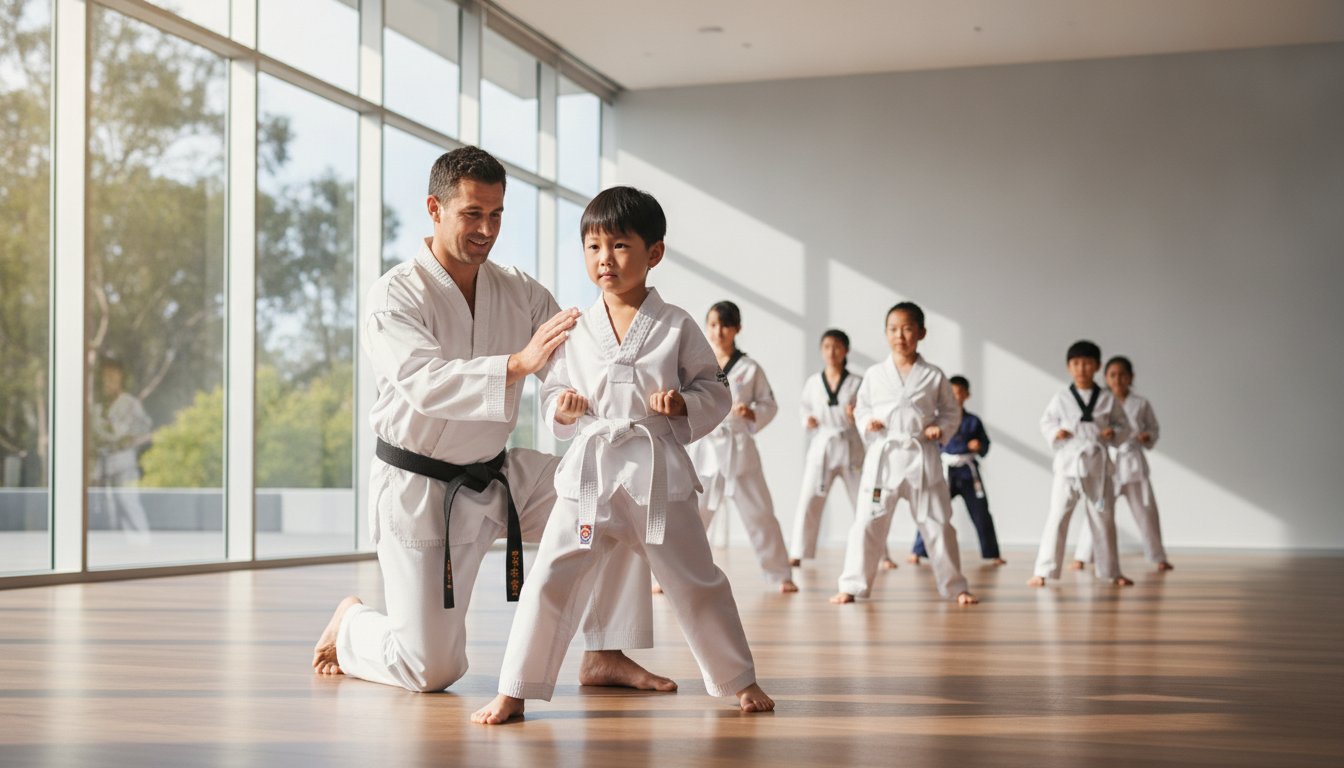
We view discipline as a tool for empowerment rather than a form of punishment. It’s the practice of training for focus. In a dedicated training space, every movement has a meaning. For example, the ‘Ready Stance’ isn’t just a physical position; it’s a mental trigger that says, “I am ready to receive information.” This physical anchor helps preschoolers transition from play-mode to listen-mode instantly. The psychological impact of a uniform also shouldn’t be underestimated. It creates a clear boundary between home life and training time, helping the child ‘switch on’ their concentration. By reducing the visual and auditory clutter found in typical play environments, a dojang provides a distraction-free zone where focus becomes a habit. If you’re looking for a community-focused way to build these habits, the Little Tigers program offers a structured path toward better focus and school readiness.
5 Strategies for Improving Listening Skills at Home
Transforming your home from a place of constant repetition into a zone of clear communication requires a structured approach. You can start improving listening skills for preschoolers brisbane families need for a peaceful household by implementing these five practical strategies today. These techniques move beyond just “telling” and focus on building the mental fortitude your child needs to process information effectively.
- The ‘Eye-to-Eye’ Rule: Never shout instructions from another room. Walk over, get down to your child’s physical level, and ensure you have a gentle eye-to-eye connection before you speak. This physical proximity signals to their brain that important information is coming.
- The ‘Repeat Back’ Technique: After giving an instruction, ask your child to tell you what they heard. This verifies their understanding and forces them to move from passive hearing to active processing.
- Visual Cues: Supplement your voice with hand signals or a simple visual chart. For a preschooler, seeing a picture of a toothbrush while you say “brush your teeth” creates a dual-sensory path for the instruction to stick.
- Gamify Your Drills: Use games like ‘Simon Says’ to make focus fun. These aren’t just games; they are high-impact listening drills that train the brain to wait for specific cues before acting.
- The ‘One-Step-at-a-Time’ Method: Avoid multi-step commands that overwhelm a young mind. Give one clear instruction, wait for completion, and then provide the next. This builds confidence and ensures success every time.
Gamifying the Listening Experience
Play is the primary language of a preschooler. You can use the ‘Freeze Game’ to build impulse control; simply play music and have them stop the moment it cuts out. This requires intense auditory focus. Try using ‘Whisper Instructions’ for daily tasks. When you lower your volume, your child must lean in and concentrate harder to catch the details. Remember that ‘Simon Says’ builds response inhibition by teaching children to ignore instructions that aren’t preceded by the correct prompt. These playful moments are actually foundational steps in improving listening skills for preschoolers brisbane parents can integrate into any afternoon at the park.
Creating a Home Environment That Supports Focus
A cluttered auditory environment leads to listening fatigue. Turn off the TV and put away tablets during instruction time to reduce background noise. Predictable routines also help because they lower the cognitive load on your child; when they know what comes next, they are more likely to listen to the specific details of the task. Finally, focus on positive reinforcement. ‘Catch them listening’ by praising them the moment they follow a first-time instruction. This builds personal agency and makes them want to succeed again.
Preparing for Brisbane Schools: The Little Tigers Advantage
The transition to Prep is a major milestone for families in North Brisbane. Schools in areas like Brendale and Strathpine evaluate school readiness through more than just a child’s ability to recognise letters or numbers. They look for the social and emotional capacity to function within a group. This includes following multi-step instructions and maintaining focus amidst the buzz of a busy classroom. For many children, the gap between “home rules” and “school rules” feels vast. A neutral third space, like a professional dojang, acts as a bridge. It provides a structured environment where the expectations mirror the classroom, making improving listening skills for preschoolers brisbane an attainable goal before the first bell rings in 2026.
Confidence is the silent partner of listening. When a child doesn’t understand an instruction, they often shut down or act out. We train our students to have the courage to speak up and ask for clarification. This simple skill prevents the “listening lag” that often leads to frustration in a school setting. By mastering this early, your child enters Prep with the tools to navigate complex social and academic instructions with ease.
Social Listening: Learning from Peers and Mentors
It’s a common phenomenon: children often listen to a “Master” or “Coach” with a level of attention they don’t always show at home. This isn’t a reflection of your parenting; it’s the power of a mentor-led environment. In our classes, your child sees other Little Tigers standing tall and focusing on the task at hand. This peer modelling is incredibly persuasive. When a preschooler sees their teammates following a command, they naturally want to join that collective rhythm. They learn to take turns and remain quiet while others speak, which is a fundamental requirement for success in any Brisbane primary school.
Developing Resilience Through Martial Arts
Listening is also about receiving feedback. In a world where every mistake can feel like a failure, we teach children that feedback is just “data” for improvement. This builds the mental fortitude needed to handle corrections from a teacher without losing confidence. As they progress through the Junior Taekwondo Brisbane pathway, they develop the grit to stay focused even when a task becomes physically or mentally challenging. This resilience ensures that when they encounter a difficult instruction at school, they don’t give up; they listen harder. To see this transformation in action, we invite you to book a trial for your child today.
How Flinn Taekwondo’s Little Tigers Program Builds ‘Super Listening’
At Flinn Taekwondo Academy, we’ve spent over a decade refining a curriculum that turns high-energy preschoolers into focused, respectful listeners. Our specialized Little Tigers program, designed specifically for children aged 4 to 6, is led by Master Jeff Flinn, a 7th Dan Black Belt with deep expertise in child development. We understand that improving listening skills for preschoolers brisbane families can rely on requires more than just telling a child to “pay attention.” It requires a structured environment where focus is practiced as a physical discipline. Since our establishment in 2013, we’ve seen how martial arts serves as a powerful tool for character building and mental fortitude.
One of the most effective pillars of our program is the ‘Yes Sir’ and ‘Yes Ma’am’ culture. This isn’t merely about tradition or politeness; it’s a strategic psychological tool. When your child responds verbally to an instruction, they’re forced to close the communication loop. This verbal acknowledgement confirms that their brain has received, interpreted, and accepted the instruction. By making this response a habit, we eliminate the “selective hearing” that causes so much frustration at home. It builds a foundation of respect that carries over into every interaction they have with parents, teachers, and peers.
Our Proprietary Focus Methodology
We believe in breaking down complex tasks into “bite-sized” martial arts moves that a preschooler can master. This prevents the cognitive overload that often leads to a child tuning out. A core part of our training involves the ‘Focus Mitt’ drill. In this exercise, a student must maintain constant visual contact with the target while listening for a specific auditory cue from the instructor. This drill creates a direct link between visual focus and physical response. To keep motivation high, we actively reward the ‘Best Listener’ in every class. This creates a positive association with attentive behaviour, encouraging students to take pride in their ability to concentrate.
Joining the Flinn Taekwondo Academy Community in North Brisbane
Our dojang is a distraction-free zone where your child can escape the digital noise of modern life and focus on personal growth. We offer a welcoming, family-oriented atmosphere that feels like a second home for our North Brisbane members. We take pride in seeing our participants succeed both on the mats and in their daily lives. Our curriculum is a proven pathway for school readiness for Brendale parents who want their children to enter the Prep classroom with confidence and discipline. Improving listening skills for preschoolers brisbane is a journey we take together as a team. Are you ready to see your child transform into a focused, resilient leader? Book a trial for our Little Tigers Program today!
Empower Your Child for a Lifetime of Success
Building strong communication habits starts with a single, purposeful step. You now have the strategies to transform your child’s focus from “selective hearing” into a foundation of mental fortitude. Remember that listening is a physical skill that thrives on structured movement and positive reinforcement. By bridging the gap between home and school, you’re setting your preschooler up for a confident start in the Prep classroom. Improving listening skills for preschoolers brisbane families value isn’t just about following rules; it’s about giving your child the personal agency to lead with respect and clarity.
At Flinn Taekwondo Academy, we’ve been a family-owned North Brisbane institution since 2013. Led by 7th Dan Master Jeff Flinn, our specialized curriculum for 4 to 6 year olds provides the distraction-free zone your child needs to flourish. We invite you to join our community and see the transformative power of disciplined training firsthand. Start your child’s journey to better focus – Book a Little Tigers Trial at Flinn Taekwondo! We look forward to welcoming your family to our team and celebrating every developmental breakthrough together.
Frequently Asked Questions
How long does it take for a preschooler to improve their listening skills?
Progress varies between individuals, but many students see a noticeable difference within their first six months. Flinn Taekwondo Academy reports that students often achieve a 40% increase in school focus within that initial period. Consistency is the primary factor in reinforcing these new neural pathways and ensuring the habits stick for the long term as they prepare for school.
Is my child too young for Taekwondo if they can’t sit still for 5 minutes?
No, the inability to sit still is exactly why our program exists. We don’t expect preschoolers to be stationary; instead, we use structured movement to channel that energy into focus. Our Little Tigers Program is designed specifically for children aged 4 to 6 who are still developing their impulse control and need a physical outlet for their energy.
Can martial arts help a child with ADHD or high energy levels listen better?
Yes, martial arts provides the high-intensity engagement and clear structure that children with ADHD often crave. By linking physical action with auditory cues, we help high-energy kids ground themselves. This process is essential for improving listening skills for preschoolers brisbane families who are navigating neurodiversity or high activity levels and want a supportive, distraction-free environment for growth.
What should I do if my child refuses to follow instructions during a class?
Stay calm and allow our experienced instructors to handle the situation. We use positive reinforcement and clear boundaries to guide children back to the group rhythm. Refusal is often just a sign of a child feeling temporarily overwhelmed; our mentors are trained to help them reset their focus without the need for traditional “timeout” or parental frustration.
How does the Little Tigers program differ from a standard gym class?
Unlike a standard gym class that focuses purely on physical mechanics, Little Tigers emphasizes character development and mental fortitude. Every kick and punch is contextualized within a narrative of self-improvement and respect. We focus on the long-term journey of building a high standard of living through disciplined habits rather than just general fitness or casual play.
Are there specific listening exercises I can do with my child in North Brisbane parks?
You can practice “Red Light, Green Light” or “Simon Says” at local parks in Brendale or Strathpine. These games are excellent for training response inhibition. They require your child to filter out the distractions of the park and focus solely on your verbal commands, which is a great way to practice improving listening skills for preschoolers brisbane outside the dojang.
What is the best age to start focus-based training for kids?
The ages of 4 to 6 are considered the “golden window” for developing foundational listening habits. During this period, the brain is highly plastic and ready to absorb the routines needed for school readiness. Starting early ensures your child has the mental discipline required before they enter the Queensland Prep system and face the challenges of a busy classroom.
How do Flinn Taekwondo instructors handle children who aren’t listening?
Our instructors act as trusted mentors, using a structured progression to regain a child’s attention. We might use a sharp verbal cue, a physical “Ready Stance,” or a brief one-on-one check-in to reinforce the standard of the discipline. We prioritize a welcoming, family-oriented atmosphere where every child feels safe enough to try again and learn from their mistakes.