You’ve spent months perfecting your roundhouse kick in the dojang, but the real victory at your first tournament is decided weeks before you ever step into the ring. Preparing for your first taekwondo competition is about more than just physical drills; it’s a journey of character development and mental fortitude. It’s natural to feel a knot in your stomach when thinking about sparring under the bright lights of a Brisbane venue or keeping track of the new 15-point gap rule. We understand the pressure of wanting to perform your best while managing the logistics of WT-approved equipment and registration requirements.
You deserve to step onto the mats feeling like a champion before the first whistle blows. This guide provides a clear, disciplined roadmap to master the physical, mental, and logistical steps of your tournament debut. We’ll explore the updated 2026 World Taekwondo combat rules, including the 6-point turning head kick, and provide a complete checklist for competition day. From your final sparring sessions to the moment you bow in, you’ll have the tools to compete with precision, pride, and total confidence.
Key Takeaways
- Understand the Queensland tournament landscape by distinguishing between Sparring and Poomsae streams and how divisions ensure fair play.
- Follow a disciplined 6-week blueprint to build your physical stamina and technical precision before stepping into the ring.
- Master your mindset with visualization tools that transform first-tournament anxiety into a calm, competitive focus.
- Use our comprehensive checklist to ensure you have all mandatory WT-approved gear and the right nutrition for preparing for your first taekwondo competition.
- Discover how High Performance Competition Training provides the specialized technical edge needed to succeed at state and national levels.
Understanding the Taekwondo Tournament Landscape in Queensland
Stepping into the competitive arena in South East Queensland is an exhilarating milestone in your martial arts journey. Brisbane athletes are fortunate to live in a thriving hub for the sport, with a clear pathway from local club meets to the prestigious ATQ State Open. When you’re preparing for your first taekwondo competition, it’s vital to understand that modern Australian tournaments follow the latest World Taekwondo (WT) standards. These rules ensure that every match is fast-paced, fair, and focused on technical excellence. For a deeper look at the sport’s global foundations, this Taekwondo overview provides excellent context on how these traditions evolved into the Olympic discipline we practice today.
Sparring vs. Poomsae: Which is Right for Your First Event?
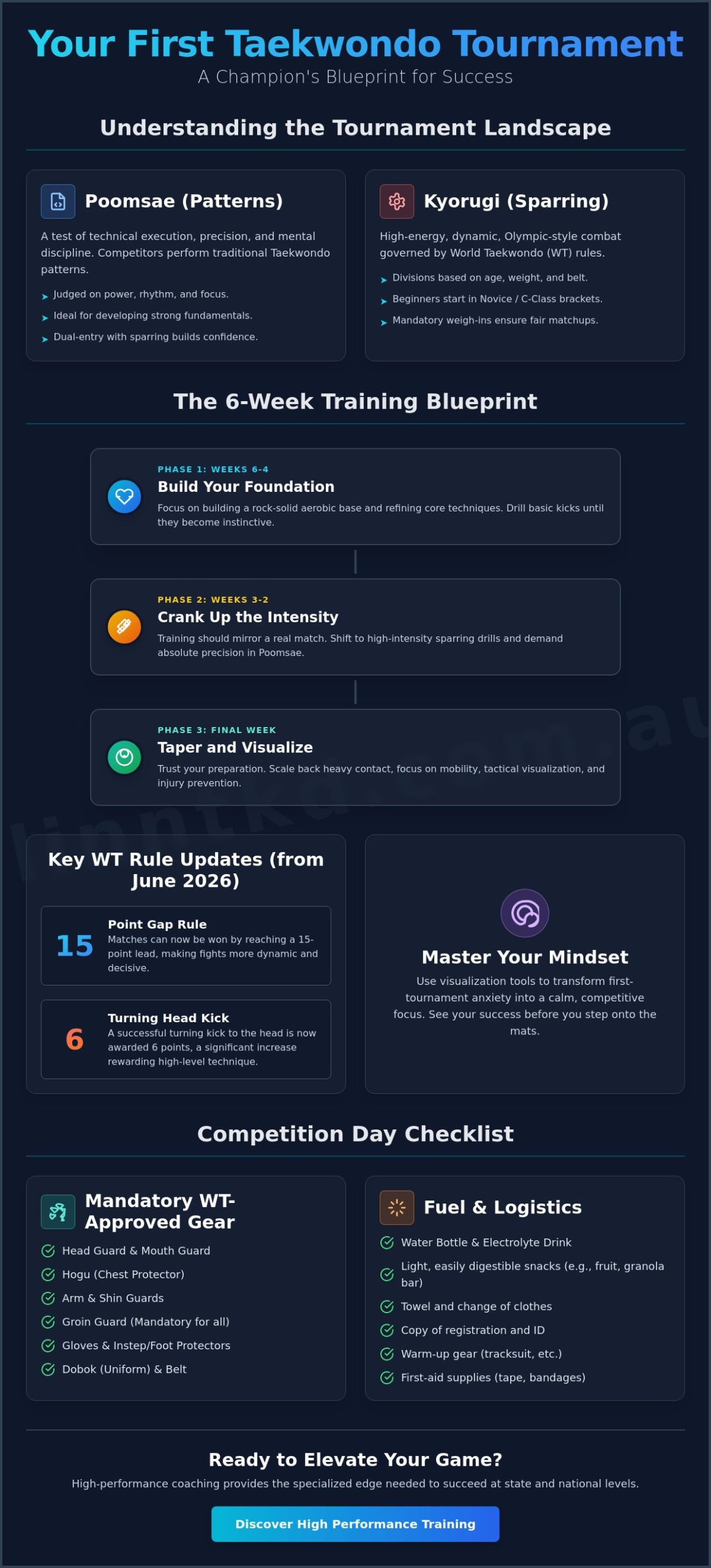
Queensland tournaments typically offer two primary streams: Kyorugi (sparring) and Poomsae (technical patterns). Sparring is the high-energy, Olympic-style combat most people recognize. As of June 1, 2026, new WT rules have increased the point gap to 15, making matches more dynamic than ever. If you prefer a test of precision and mental discipline, Poomsae focuses on the technical execution of traditional movements. Judges look for power, rhythm, and focus. Many first-timers choose a dual-entry approach by competing in both. This builds well-rounded confidence and gives you more time on the mats for your entry fee. At the state level, this often includes a base fee for your first event and a smaller, discounted rate for each additional category you enter.
Division Classifications: Ensuring a Level Playing Field
Safety and fairness are the cornerstones of the Australian Taekwondo Queensland (ATQ) tournament structure. You won’t be thrown in with world-class athletes on your first day. Instead, you’ll compete in divisions based on your age, weight, and belt rank. Most beginners start in “Novice” or “C-Class” brackets. These are specifically designed for those with limited tournament experience to ensure everyone feels safe and supported. For sparring athletes, accurate weigh-ins are mandatory. This process ensures you face opponents of a similar size and power level. This structure allows you to test your skills in a controlled environment where personal growth is the priority. Whether you’re aiming for the Gold Coast President’s Cup in June or a local Brisbane inter-club meet, these divisions ensure your first experience is both challenging and rewarding.
The 6-Week Training Blueprint: Physical and Technical Readiness
Peak performance isn’t an accident. It’s the result of a disciplined, structured training cycle that prepares your body and mind for the intensity of the mats. Preparing for your first taekwondo competition requires a strategic balance of raw power, cardiovascular endurance, and refined technique. By following a dedicated 6-week blueprint, you’ll transform your initial nerves into focused, competitive energy. This period is about building the “martial engine” that will carry you through every round with confidence.
During Weeks 6 to 4, your primary focus is building a rock-solid aerobic base. You can’t execute a winning kick if you’re out of breath by the end of the first round. Spend this time refining core techniques and drilling basic kicks until they become instinctive. This is an ideal stage to integrate High Performance Taekwondo Brisbane pathways into your routine. Observing how elite athletes structure their base phases can provide valuable insights into your own technical development.
As you move into Weeks 3 and 2, crank up the intensity. Your training should now mirror the specific demands of a real match. Shift toward high-intensity sparring drills and demand absolute precision in your Poomsae. Every movement must have purpose, power, and clear intent. In the final week, trust your preparation. This is the tapering phase. Scale back heavy contact and focus on mobility, tactical visualization, and injury prevention. You want your body to feel light, rested, and explosive when you finally bow into the ring.
Technical Drills for Sparring Success
Mastering the clinch is vital for controlling the pace and rhythm of a match. Work on your distance management to stay safely out of your opponent’s striking range while remaining close enough to launch your own attacks. Develop explosive counter-kicking combinations that catch your opponent off-guard the moment they commit to a move. Focus on the roundhouse kick as the foundational scoring tool in 2026 tournaments. It remains the most versatile and reliable weapon in any competitor’s arsenal. If you’re looking to sharpen these specific skills, our Sparring Training classes offer the perfect environment to test your timing.
Conditioning and Recovery for Athletes
Use specific interval training to match the 2-minute round rhythm of a standard competition match. Go at 100% intensity for two minutes, rest for one, and repeat. This specific conditioning prepares your heart and lungs for the unique “stop-start” nature of taekwondo combat. Prioritize daily flexibility routines to improve your kick height and prevent muscle strain during high-intensity exchanges. Don’t underestimate the power of recovery. Deep sleep and consistent hydration in the final fortnight are just as critical to your success as the hours you spend in the dojang.
Mastering the Mental Game: Overcoming First-Tournament Nerves
The physical preparation is complete. Your kicks are sharp, and your cardio is peaked. However, the most challenging opponent you’ll face when preparing for your first taekwondo competition isn’t the person standing across the ring. It’s the voice in your head. Performance anxiety is a natural part of the journey. In fact, that racing heart and those sweaty palms are simply your body’s way of surging adrenaline to prepare you for action. Instead of fighting these feelings, learn to channel them into focus. At Flinn Taekwondo Academy, we call this the “Flinn Way.” We use the discipline of our daily training to override the “fight or flight” response, turning nervous energy into precise, controlled movements.
Visualisation is your most powerful mental tool. Spend ten minutes each night walking through the match in your mind. Don’t just imagine winning. Imagine the specific sights of a Brisbane tournament venue, the sound of the referee’s commands, and the feeling of your feet on the mats. If you’ve already visualised yourself scoring a turning head kick under the 2026 rules, your brain will recognize the moment when it actually happens. This mental rehearsal bridges the gap between the dojang and the competition floor, making the unfamiliar feel like home.
Setting the right goals is crucial for long-term success. While everyone wants a trophy, your first goal shouldn’t be “winning gold.” This creates unnecessary pressure that can lead to hesitation. Instead, set performance-based goals. Aim to execute one specific combination you’ve been practicing or to maintain your stance even when tired. When you focus on the quality of your taekwondo rather than the scoreboard, the results usually take care of themselves. This mindset fosters resilience and ensures you walk away from your first event with a sense of pride, regardless of the final tally.
Pre-Match Rituals to Stay Grounded
Consistency creates calm. Develop a 15-minute warm-up routine that you perform exactly the same way every time. This signals to your brain that it’s time to work, not time to worry. Use “anchor words” like “breathe,” “focus,” or “strong” to pull your attention back when your mind starts to wander in the marshalling area. Waiting for your turn can be the most stressful part of the day. Stay active, keep your muscles warm, and trust in the work you’ve already put in.
The Role of the Coach on Competition Day
Your coach is your greatest asset in the heat of battle. They see the openings you might miss and provide the tactical adjustments needed to overcome a difficult opponent. Trust is the foundation of this relationship. When you hear your instructor’s voice from the corner, follow their signals without hesitation. This connection is a core part of our High Performance Competition Training. By building a supportive team environment with your club-mates, you aren’t just competing as an individual. You’re stepping onto the mat with the strength of the entire academy behind you.
The Ultimate Competition Day Checklist: Gear and Logistics
Success on the mat begins with a well-packed gear bag. Preparing for your first taekwondo competition requires more than just physical skill; it demands logistical precision. Small oversights like a forgotten mouthguard or arriving late for weigh-ins can derail your focus before the match even begins. In 2026, Australian tournaments have strict standards for safety and technology. Being prepared means you can spend your energy on your performance rather than scrambling for equipment in the marshalling area. If you’re a parent helping your child get ready, check out our guide on Junior Taekwondo Brisbane for specific tips on managing the day’s excitement.
Mandatory Equipment for Sparring
Safety is our highest priority and a non-negotiable part of the discipline. As of January 1, 2026, all competitors in sanctioned Australian tournaments must use World Taekwondo (WT) approved uniforms and protective gear. You’ll need the “Big Five”: a head guard, chest guard (hogu), shin guards, forearm guards, and a mouthguard. Your Dobok should be a competition-grade uniform that allows for a full range of motion during those high-scoring turning head kicks. Most modern Queensland events now utilize electronic scoring systems. This means you’ll likely need your own pair of electronic sensor socks, such as Daedo or KP&P, to ensure your points register accurately on the scoreboard. Double-check your bag the night before to ensure everything is clean, functional, and packed.
Fueling Your Performance
Brisbane’s humidity can be a silent opponent if you aren’t prepared. Managing your energy levels throughout a long tournament day requires a strategic approach to nutrition. Start your morning with slow-release carbohydrates like oats or whole-grain toast to provide sustained energy. Your snack box should include essentials like bananas for potassium, raw nuts, and electrolyte drinks to replace minerals lost through sweat. Avoid heavy, greasy meals between matches. You want to feel light and explosive, not sluggish. Hydrate consistently in small sips rather than gulping water right before you step into the ring. This keeps your focus sharp and your body ready for the high-intensity demands of a two-minute round.
Plan to arrive at the venue at least 60 to 90 minutes before your scheduled division. This gives you ample time for registration, gear checks, and a thorough warm-up. If you have questions about the specific requirements for your next event, our Junior Taekwondo Program instructors are always available to walk you through the process. Being organized is the first step toward a disciplined, successful competition debut.
Elevating Your Game with High Performance Coaching at Flinn
You don’t have to walk the path to your first tournament alone. While the individual effort you put into training is essential, the environment where you prepare makes all the difference. Preparing for your first taekwondo competition is a team effort. At Flinn Taekwondo Academy, we specialize in transforming local students into confident state and national representatives. Our methodology blends traditional discipline with modern athletic science. Master Jeff Flinn brings extensive international experience to our North Brisbane mats, providing beginners with the same technical insights used at the highest levels of the sport. This elite perspective is a game-changer. It ensures you develop the right habits from your very first session.
Our academy offers a clear pathway for athletes aiming for the podium. You can access specialized Sparring Training and Poomsae Technical Training designed to sharpen your competitive edge. These classes focus on the specific tactical requirements of the 2026 World Taekwondo rules. We don’t just teach you how to kick; we teach you how to score. Whether you’re a student in our Junior Taekwondo Program or an adult starting your journey, our high-performance coaching scales to your needs. We take pride in our participants’ successes. We’ve seen our athletes contribute to Australia’s growing reputation on the world stage, such as the national team’s third-place overall finish at the 2026 Canada Open.
Our High Performance Environment
Success is contagious. When you join our competition sessions, you’ll train with a team of motivated, like-minded athletes who push you to reach your full potential. This community-focused atmosphere fosters a sense of belonging and collective growth. We utilize personalized feedback loops to identify and fix technical errors quickly. This precision prevents bad habits from taking root and accelerates your progress. You aren’t just another face in a crowd here. You’re a valued member of a dedicated squad. Discover more about our regional leadership and training philosophy by visiting our Taekwondo North Brisbane Academy page.
Join the Flinn Competition Team
Transitioning from regular classes to the competition squad is a significant step in your martial arts journey. It marks a commitment to personal agency and character development. We make this transition seamless by providing structured support for both athletes and their families. We understand that preparing for your first taekwondo competition involves a learning curve for parents too. Our coaches provide clear guidance on tournament calendars, registration through Australian Taekwondo, and logistical requirements. We’re here to ensure the journey is positive and aspirational for everyone involved. Ready to take your training to the next level? Book a High Performance Consultation Today and start your journey toward the mats with the region’s premier coaching team.
Step Onto the Mat with Confidence
Your journey from the training floor to the competition ring is a powerful opportunity for personal growth. By mastering the 6-week training blueprint and refining your mental game, you’ve already done the hard work. Preparing for your first taekwondo competition is a milestone that builds resilience and discipline far beyond the scoreboard. You now have the technical knowledge of 2026 WT rules and a complete checklist for your gear bag. Success isn’t just about the medals; it’s about the character you build during the preparation.
The final step is choosing a team that supports your aspirations. Flinn Taekwondo Academy provides a world-class environment for athletes of all ages. Led by 7th Dan Master Jeff Flinn, our academy offers internationally accredited coaching and a proven track record of developing state and national champions. We believe every student has the potential to achieve excellence through hard work and expert guidance. You’ll find a community here that values tradition while embracing modern athletic standards.
Don’t wait for the perfect moment to start your competitive career. Join our High Performance Competition Team in Brisbane and take your place among a collective dedicated to your success. We’re ready to help you reach your highest standard of achievement both on and off the mats. Your first tournament is just the beginning of an incredible adventure.
Frequently Asked Questions
What age can children start competing in Taekwondo?
Children can begin their journey in specialized programs like our Little Tigers from age 4. Most sanctioned tournaments in Queensland offer competitive divisions starting from age 6 or 7. Starting early helps build the focus and discipline needed for future success. In fact, 90% of students who start at age 4 at Flinn Taekwondo show improved focus within 12 weeks, providing a rock-solid foundation for their eventual competitive debut.
Do I need to buy my own electronic scoring socks for my first tournament?
Yes, you generally need to provide your own electronic sensor socks for sparring events. As of 2026, most Australian tournaments use Daedo or KP&P electronic scoring systems to ensure objective and accurate results. Purchasing your own pair ensures a proper fit and better hygiene. When preparing for your first taekwondo competition, check with your instructor to confirm which specific brand is required for your upcoming Brisbane event.
How long does a typical Taekwondo competition day last?
A typical competition day is a full-day commitment, often lasting between six and ten hours. The day usually begins with early morning weigh-ins and registrations, followed by matches that run throughout the afternoon. While your individual match may only last a few minutes, staying to support your club-mates and observe other divisions is vital. This builds the community spirit and “team” identity that we value at Flinn Taekwondo Academy.
What happens if I lose my first match?
Most tournaments follow a single-elimination format, but some events offer a repechage or “bronze medal” match for those who lose to the eventual finalists. Regardless of the scoreboard, every match is a victory for your personal development. Losing provides the technical data needed to refine your training and come back stronger. It’s a chance to practice resilience and mental fortitude, which are the true hallmarks of a martial artist.
Is Taekwondo sparring safe for beginners?
Taekwondo is a highly regulated and safe sport, especially for beginners in supervised environments. Injury rates in sanctioned competitions are below 1.5%, which is significantly lower than many popular contact team sports in Australia. Mandatory WT-approved protective gear, strict refereeing, and divisions matched by weight and belt rank ensure that your safety remains the highest priority while you test your skills on the mats.
Can I compete if I only have a Yellow Belt?
You can absolutely compete as a Yellow Belt. Most tournaments feature “Novice” or “C-Class” divisions specifically designed for lower belt ranks. This ensures you face opponents with a similar level of experience and technical knowledge. Competing early in your journey is an excellent way to build confidence and apply the skills you’ve learned in our Junior or Senior Taekwondo programs in a supportive, controlled environment.
What should I do if I forget my mouthguard on competition day?
You cannot step onto the mats without a mouthguard, as it’s a mandatory safety requirement under World Taekwondo rules. If you forget yours, check the equipment stalls at the venue, as many Brisbane tournaments have vendors selling WT-approved gear on-site. To avoid the stress of last-minute replacements when preparing for your first taekwondo competition, we recommend keeping a spare, molded mouthguard in your gear bag at all times.
How do I find out about upcoming Taekwondo tournaments in Brisbane?
The Australian Taekwondo Queensland (ATQ) official website is the primary source for sanctioned local and state-level event calendars. They manage the registration process for major meets like the ATQ State Open. At Flinn Taekwondo Academy, we also provide our students with a curated list of upcoming tournaments that align with our high-performance training cycles. Simply talk to your coach to identify which events best suit your current goals.