Your child gets stuck on a tricky puzzle, misses a goal or struggles to learn a new skill. Do you encourage one more try, or suggest a break? If you’ve searched “how to teach perseverance to a child brisbane,” you’re likely looking for practical guidance, not pressure to push through every frustration. Children build persistence when challenges feel manageable and support is close by.
Everyday moments offer useful practice. Acknowledge your child’s feelings, break a task into smaller steps and notice the effort they’re making, even when the result isn’t perfect. Sometimes a pause is more helpful than another attempt. The aim is to respond calmly when your child feels stuck and help them build realistic habits for trying again at their own pace.
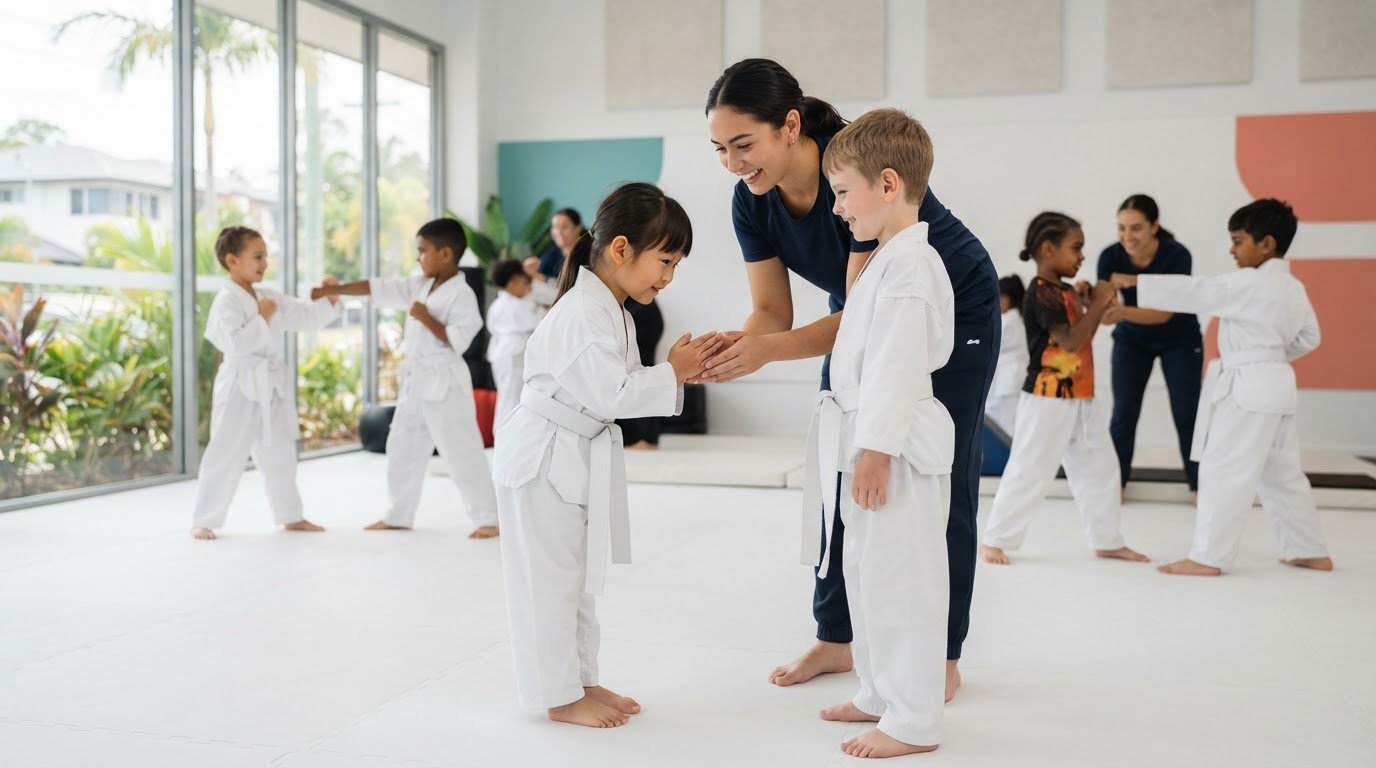
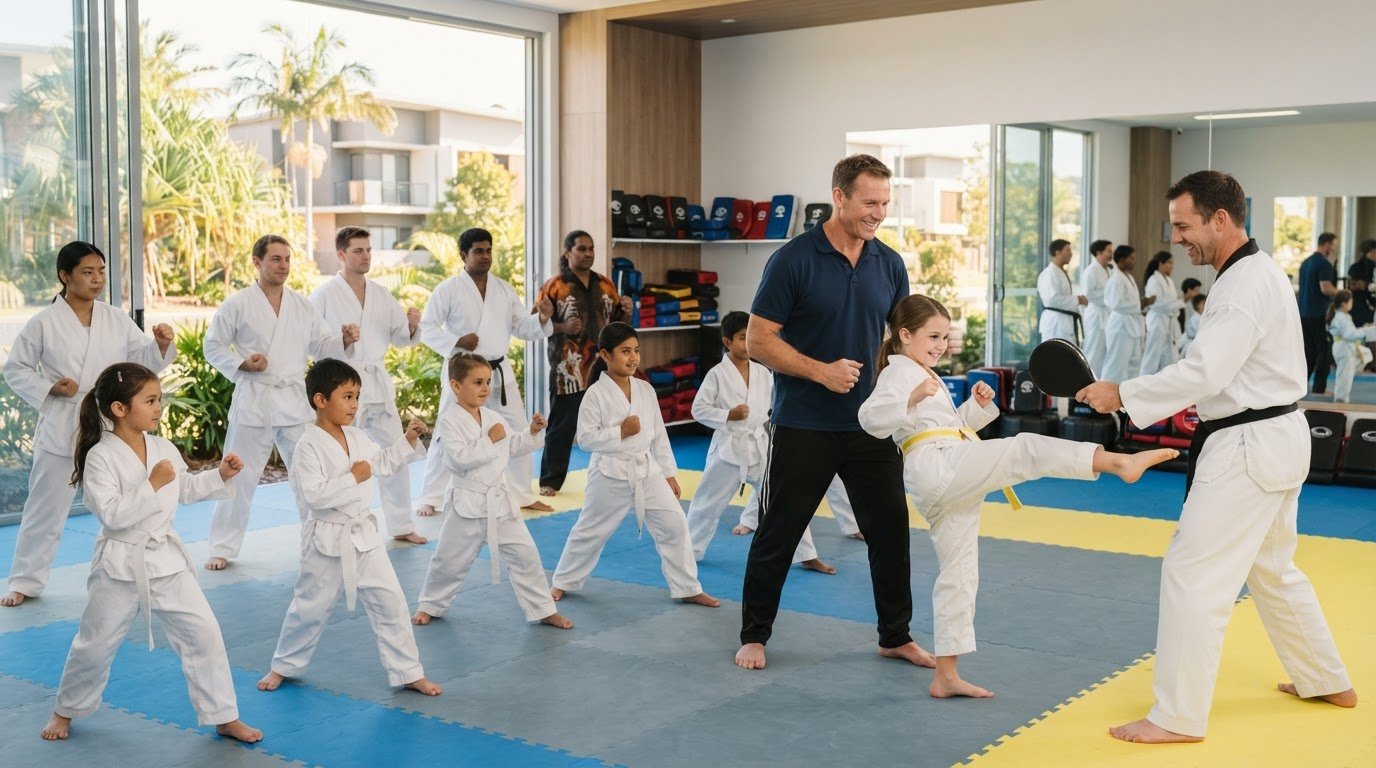
This guide shares age-appropriate ways to support perseverance at home, during play and in activities around Brisbane. It also explains how Taekwondo can give children opportunities to practise persistence through gradual learning. At Flinn Taekwondo Academy in North Brisbane, Little Tigers classes are for ages 4-6, and Junior Taekwondo is for ages 7-12.
Key Takeaways
- Recognise perseverance as returning to a manageable challenge, not striving for perfection or ignoring distress.
- Use a calm response to help your child feel heard, choose what comes next and take one small step.
- Find practical ways to support perseverance through everyday routines at home, school and play in Brisbane.
- Build a simple routine that makes trying, pausing and reflecting part of your child’s approach to challenges.
- Explore how Taekwondo can give children structured opportunities to practise skills and work through challenges.
What perseverance looks like for a child in Brisbane
Perseverance is returning to a manageable challenge after difficulty, with support and realistic expectations. Your child might have another go at tying a shoelace, try a different piece in a puzzle or return to a drawing after a mistake. Progress can be small. The point isn’t to get everything right, but to stay open to learning, ask for help when needed and take a pause when it’s useful.
This is different from perfectionism. Perseverance doesn’t mean repeating a task until it’s flawless, hiding frustration or finishing every activity no matter how tired or upset a child feels. The idea of Grit also connects passion with perseverance. In everyday parenting, focus on how your child responds to one achievable challenge at a time. If you’re considering how to teach perseverance to a child brisbane, notice the small choices your child makes when something feels hard.
How can you recognise perseverance in everyday moments?
It might look like a young child asking you to show them one step, then trying it themselves. An older child might take a breather after a difficult homework question and return to it, or change their approach after a mistake in a game. Children respond differently, so look for their effort rather than a particular reaction. You could say, “You tried another way,” or, “You asked for help when you needed it.”
Why does a child’s age and situation matter?
Attention, frustration tolerance and independence vary from child to child, and can change with the task or the day. A child who manages a familiar routine might feel overwhelmed by a new one, especially when tired or under pressure. Set expectations for the child in front of you. Offer a small, clear next step, then adjust it if the challenge is too easy, too difficult or simply not right for the moment.
For example, if a puzzle feels frustrating, suggest looking for one matching piece together. If your child makes a mistake while practising a skill, acknowledge the disappointment before offering another attempt or a pause. These responses show that difficulty is part of learning, not a test of character. You’re not asking your child to carry on at all costs. You’re helping them work out what to try next, with support within reach.
Teaching Perseverance Through Your Response
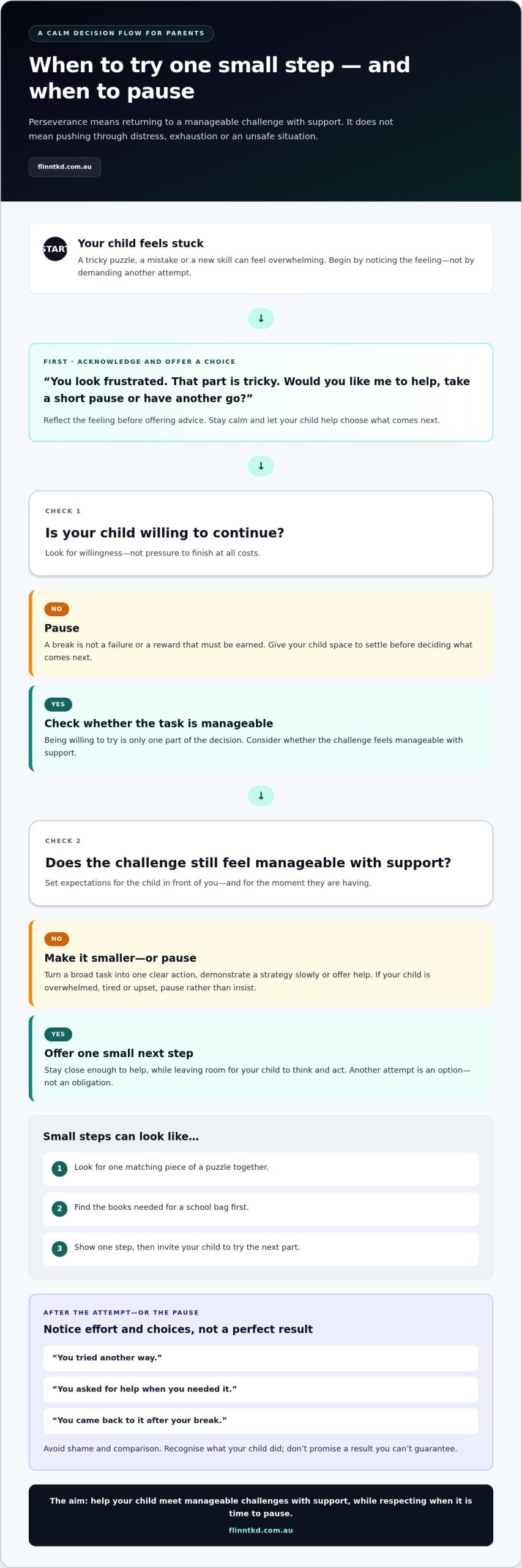
Your response can make a difficult moment feel less overwhelming. Notice what your child is feeling, acknowledge it, offer a choice, then suggest one small next step. For example: “You look frustrated. That part is tricky. Would you like me to help, take a short pause or have another go?” This shows you’ve heard them before asking them to act.
Calm support helps a child see that a challenge can be approached one manageable step at a time. That doesn’t mean promising they’ll succeed or expecting them to continue straight away. If you’re wondering how to teach perseverance to a child brisbane, a steady response gives your child a repeatable way to move from frustration towards a choice.
What should you say when your child wants to give up?
Reflect the feeling before offering advice. Try, “You’ve been working hard, and this feels frustrating,” or, “It’s disappointing when it doesn’t go the way you hoped.” Then ask what support would help: “Would you like me to sit with you, take a short break or try one more step together?”
Keep your language free of shame and comparison. Calling a child “lazy” or pointing to a sibling who seems to manage easily can add pressure without showing them what to do next. Instead, recognise their effort or choice: “You came back to it after your break,” or, “You tried a different approach.” Praise what you can see, not a result you can’t guarantee.
How can you make a difficult task feel achievable?
Turn a broad instruction into one clear action. If your child is struggling to organise their school bag, ask them to find the books they need first. When they’re unsure how to begin, demonstrate a strategy slowly, then invite them to try the next part themselves. Stay close enough to help, but leave room for them to think and act.
Notice problem-solving as well as effort. “You checked the list and worked out what was missing” tells your child which useful action they took. If they get stuck again, offer a smaller step or ask what they might try differently. The American Psychological Association’s Resilience guide for parents also shares strategies for supporting children through challenges.
Some children find it helpful to practise with consistent guidance and achievable steps. A structured activity such as Taekwondo offers opportunities to learn skills gradually. At Flinn Taekwondo Academy in North Brisbane, children can take part in the Little Tigers Program for ages 4-6 or the Junior Taekwondo Program for ages 7-12. Explore children’s Taekwondo programs to learn more.
Does teaching perseverance mean making a child push through?
No. Perseverance isn’t forcing a child to continue through distress, exhaustion or an unsafe situation. It’s helping them meet manageable challenges while respecting their needs. There’s a difference between encouraging a child to try one more puzzle piece when they’re still willing and insisting they finish after frustration has escalated into tears. The first leaves room for choice; the second can turn practice into pressure.
When thinking about how to teach perseverance to a child brisbane, ask: is your child willing to continue, and does the task still feel manageable with support? If both answers are yes, suggest one small step. If not, pause. A break isn’t a failure or a reward that must be earned. It gives a child space to settle before deciding whether to return, change the approach or stop for the day.
When should you encourage another try, and when should you pause?
Pay attention to what’s happening in the moment, not just whether the task is unfinished. A child who’s disappointed but still engaged may be ready to try a different piece of a school project or repeat one part of a new skill. If their frustration is rising, they’re becoming overwhelmed or they’re tired, pause and focus on wellbeing. Completing the task matters less than keeping the challenge safe and manageable.
You might say, “Would you like to try one more step, or take a break and come back later?” If your child chooses to stop, accept that decision without labelling them a quitter. You can revisit the task when they’re ready, or recognise that today isn’t the right time. Avoid comparing their pace with a sibling’s or another child’s. Each child and situation is different.
How can you avoid turning encouragement into pressure?
Keep encouragement invitational. “I can see you’re working hard. What would help right now?” gives your child room to answer honestly. “You have to finish” or “Your brother can do it” shifts attention from learning to meeting someone else’s expectation. Praise a sincere attempt, a useful strategy or asking for support, while accepting that stopping can sometimes be the right call.
This balance of warmth and clear expectations is discussed in Michigan State University Extension’s overview of the authoritative parenting style. You can set a gentle boundary, such as putting away materials safely, without demanding that a child complete the challenge.
If difficulties around frustration or everyday tasks persist, cause significant concern, or affect family or school life, consider discussing them with a GP or another qualified health professional. You don’t need to diagnose the cause to ask for guidance. Start with what you’ve observed and what support might help your child.
A practical Brisbane parent’s plan for building perseverance
Make practice part of ordinary life, not another performance your child has to get right. A short routine can help you support effort while leaving room to adapt when your child is tired, distracted or ready for a challenge.
- 1. Choose a manageable challenge. Pick something that matters to your child, such as completing a puzzle, learning a new movement or helping with an age-appropriate household task.
- 2. Agree on a first step. Keep it clear and achievable: find the corner pieces, practise one part of the movement or put the clean clothes in a drawer.
- 3. Practise. Give your child time to attempt the step. Offer help if they ask, or demonstrate a strategy and let them have a turn.
- 4. Pause if needed. If frustration rises, take a break or decide together to return later. Adjust the challenge if it feels too big.
- 5. Reflect. Ask what they tried, what helped and what they might do next time. Keep the conversation curious, not critical.
This routine can fit around home life, play and schoolwork. Your child might try a different way to build a block tower, revise one section of a class project or practise a new movement during a structured activity. Keep expectations flexible. There’s no fixed timeline for persistence to develop, and one difficult day doesn’t erase earlier effort.
Which everyday activities give children a chance to practise?
Choose activities with a clear, safe next step: puzzles, drawing or craft projects, learning a new movement, or simple jobs such as sorting cutlery. Let your child attempt what they can safely manage before stepping in. You can offer a hint or show one strategy without taking over. Structured sport is another option, not a requirement. The best practice is an activity that suits your child and feels worth returning to.
How can you notice progress without adding pressure?
Notice a specific action rather than measuring success: “You came back to your drawing after a break,” or, “You tried a new way to solve that.” Later, ask, “What felt tricky?” and, “What helped?” A warm, private comment can be enough. You don’t need to praise every attempt or turn practice into a public display. Brisbane families exploring a structured activity can explore children’s Taekwondo programs at Flinn Taekwondo Academy. The academy’s Little Tigers Program is for ages 4-6, and Junior Taekwondo is for ages 7-12. Taekwondo offers opportunities to practise skills gradually, without promising a particular outcome. The goal is a flexible habit of trying, adjusting and reflecting, not a perfect record of finishing every task.
How Taekwondo can help Brisbane children practise perseverance
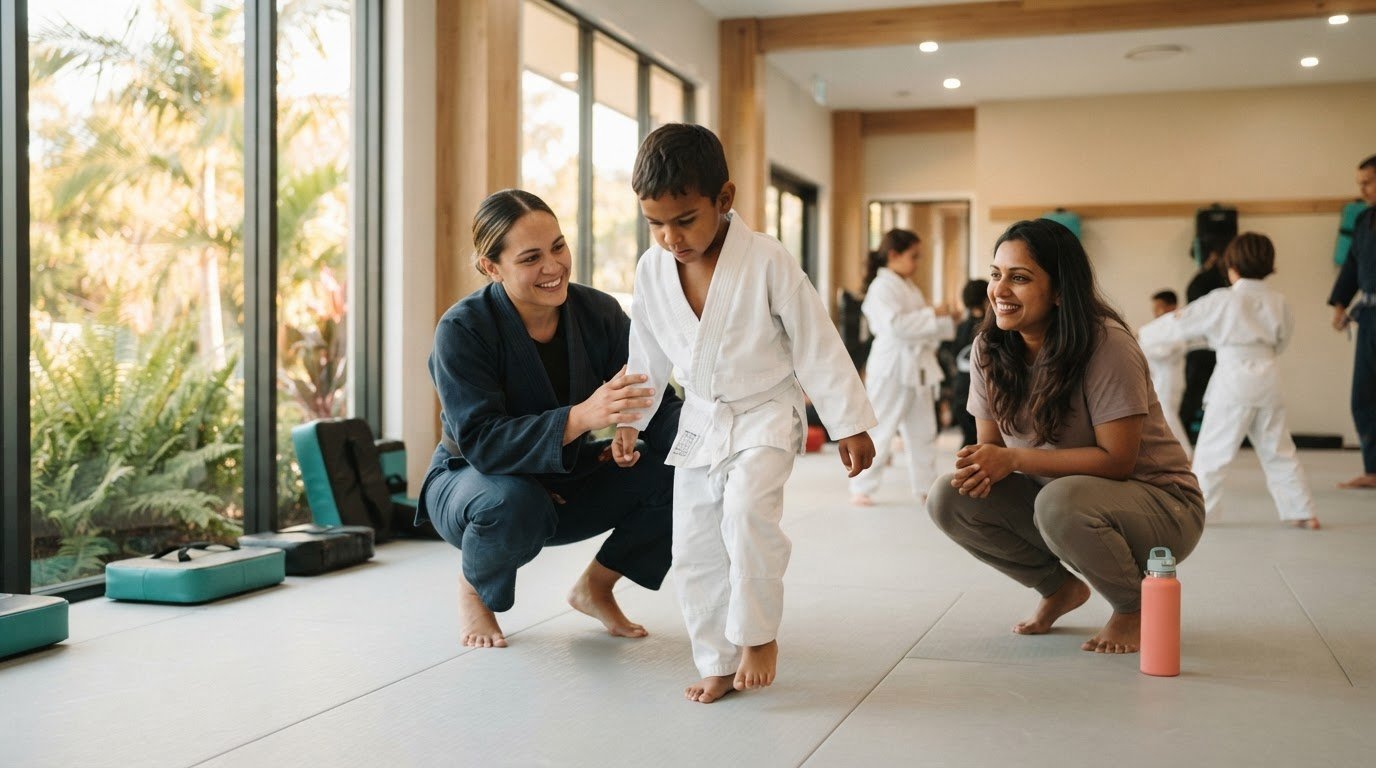
Taekwondo gives children repeated opportunities to learn and practise skills, with each new movement offering a chance to respond to a challenge. A technique may take several attempts to feel familiar. Rather than expecting a child to master it immediately, focus on one manageable step: listen to the instructor’s guidance, practise one part of the movement, then try again when ready.
This gradual approach can complement what you do at home: support your child to take a small next step, notice what they learn and allow time for practice. Taekwondo isn’t a guarantee of perseverance or a particular behaviour change. It’s a structured activity where children can encounter challenges and practise responding to them. For an overview of the activity and its principles, read the complete Taekwondo guide for Brisbane families.
What can children learn from practising Taekwondo over time?
With repeated instruction and practice, a child can work on remembering a movement, adjusting their technique and trying again after feedback. If they find one part difficult, they can focus on that step rather than judging their whole performance. You can reinforce this by asking, “What’s one part you’d like to practise next?” That keeps attention on learning, not instant results, while leaving room for your child to pause or ask for help.
Families considering how to teach perseverance to a child brisbane can think about whether a structured activity fits their child’s interests and needs. It’s also fine if it doesn’t. Everyday practice at home, school and play remains valuable, whether or not a child trains.
Which Flinn Taekwondo program may suit your child’s age?
Flinn Taekwondo Academy is a family-owned North Brisbane school. Its Little Tigers Program is for children aged 4-6, and the Junior Taekwondo Program is for ages 7-12. These age-specific programs give families a way to explore Taekwondo with supportive, professional instruction. To learn more about the older children’s program, see the parent’s guide to Junior Taekwondo in Brisbane.
If your child is curious about learning Taekwondo, explore these Brisbane programs as one possible place to practise skills gradually. Let their interest, comfort and readiness guide the next step.
Help your child take the next small step
Perseverance grows through manageable challenges, steady support and chances to reflect. Notice your child’s effort, offer a clear next step and remember that pausing can be part of learning. The aim isn’t to push through every difficulty, but to help your child find a way forward that feels achievable.
Taekwondo offers one setting for practising skills gradually, alongside everyday experiences at home, school and play. Flinn Taekwondo Academy is family-owned and operated by Master Jeff Flinn, a 7th Dan Black Belt with international accreditation. The academy’s children’s programs include Little Tigers for ages 4-6 and Junior Taekwondo for ages 7-12.
If you’re exploring how to teach perseverance to a child brisbane, consider what kind of practice suits your child’s interests and readiness. Explore Taekwondo programs for Brisbane families and find a local setting for gradual learning. Each small attempt is a chance to learn, adjust and keep growing.
Frequently Asked Questions
How do I teach perseverance to a child without pressuring them?
Offer a manageable challenge, listen to your child’s feelings and let them choose a next step. You might ask, “Would you like help, a short break or another try?” Notice effort and problem-solving without demanding a particular result. If your child is tired or distressed, pause. The aim is to make trying again feel possible, not to insist that every task must be finished.
What should I do when my child gives up easily?
First, find out what’s making the task hard. Your child may need clearer instructions, a smaller first step, help getting started or time to reset. Acknowledge their frustration, then offer a choice rather than a command. For example, with a puzzle, suggest finding one matching piece together. Keep expectations realistic, and avoid labels or comparisons that could make the moment feel more discouraging.
Can Taekwondo help a child develop perseverance?
Taekwondo gives children repeated opportunities to practise movements, respond to instruction and work through skills gradually. A child may focus on one part of a technique before trying the whole movement again. These experiences provide practice with persistence, but Taekwondo doesn’t guarantee perseverance or particular behavioural outcomes. Whether it suits your child depends on their interests and readiness. Everyday activities at home and school can offer practice too.
At what age can children start learning perseverance?
There’s no single age when a child begins learning perseverance. Children can practise returning to a manageable challenge with an adult’s support, while the kind of task and help they need will vary. Keep the first step suited to your child and the situation. Flinn Taekwondo Academy’s Little Tigers Program is for ages 4-6, and its Junior Taekwondo Program is for ages 7-12, giving Brisbane families age-specific options.
How can I help my child cope with mistakes?
Respond calmly and treat the mistake as information, not a reason for shame. You could say, “That didn’t work the way you expected. What might you try next?” If your child feels upset, acknowledge that before discussing solutions. Then help them identify one useful adjustment, such as checking a step or trying a different approach. Recognise their effort to problem-solve, whether or not the next attempt succeeds.
What is the difference between perseverance and being stubborn?
Perseverance means continuing or returning to a worthwhile, manageable challenge while staying open to support, feedback and changing your approach. Stubbornness often means refusing to reconsider, even when a task is unsafe, overwhelming or no longer appropriate. A persevering child can take a break, ask for help or decide to try differently. Finishing every task or insisting on one method isn’t the measure of persistence.
Where can Brisbane children practise perseverance in a supportive setting?
Children can practise through ordinary activities at home, school and play, as well as structured extracurricular activities that involve learning skills gradually. In North Brisbane, Flinn Taekwondo Academy provides a supportive, professional Taekwondo setting, with Little Tigers for ages 4-6 and Junior Taekwondo for ages 7-12. The academy is family-owned and operated by internationally accredited 7th Dan Black Belt Master Jeff Flinn.