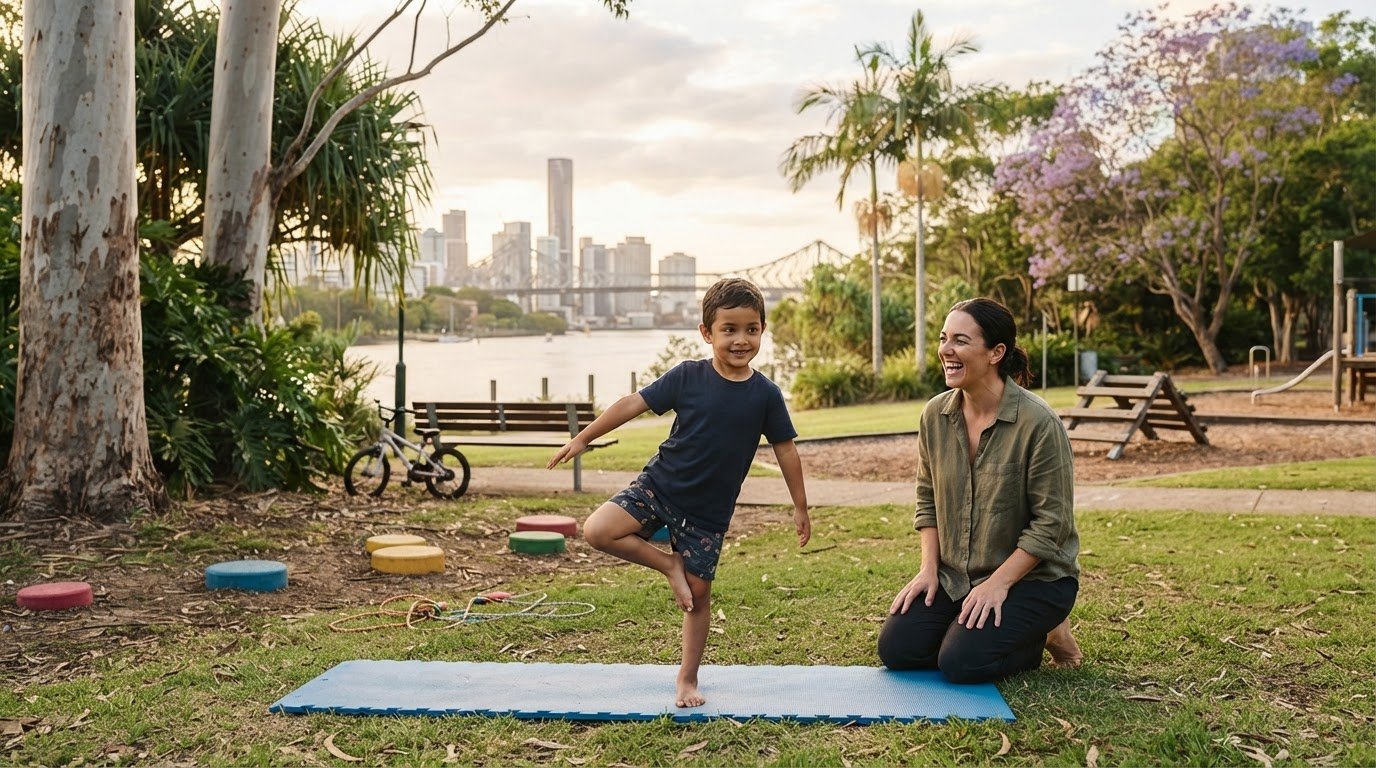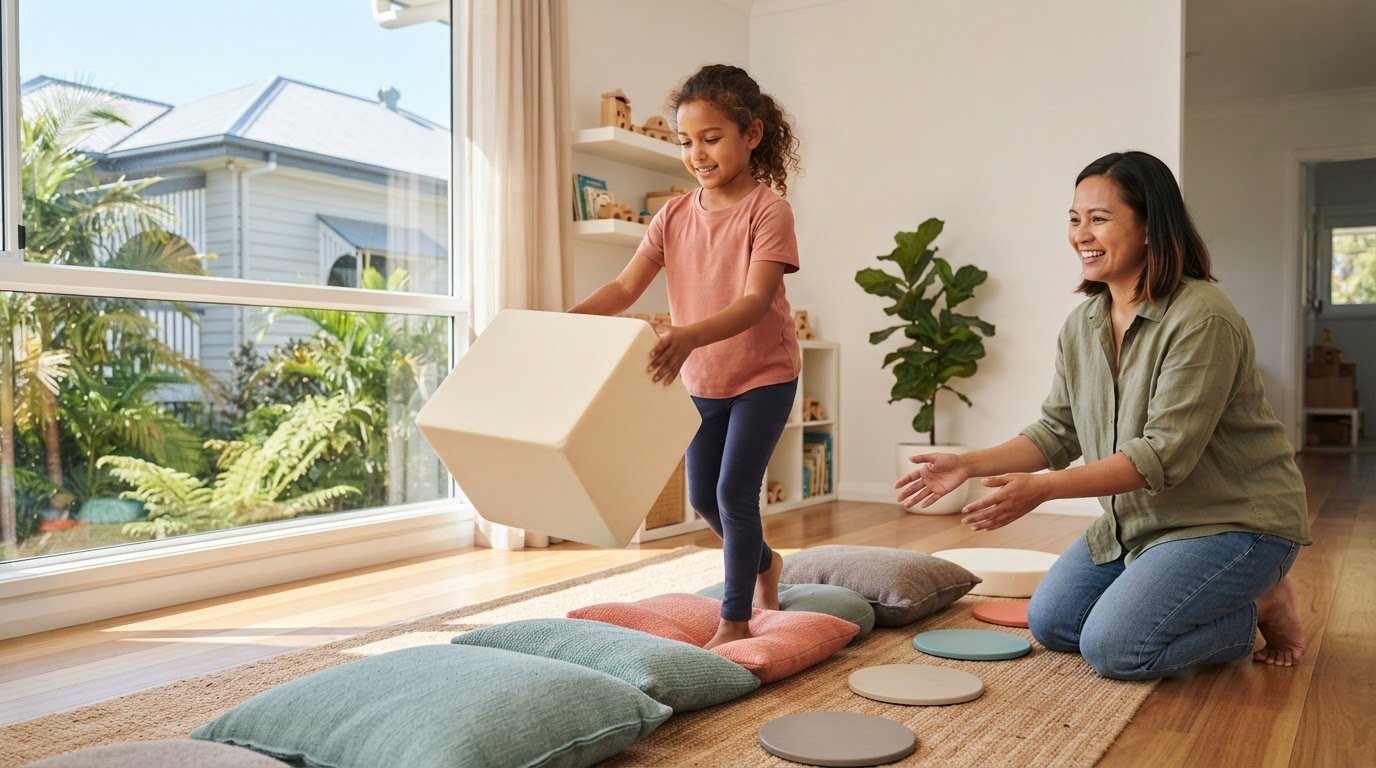
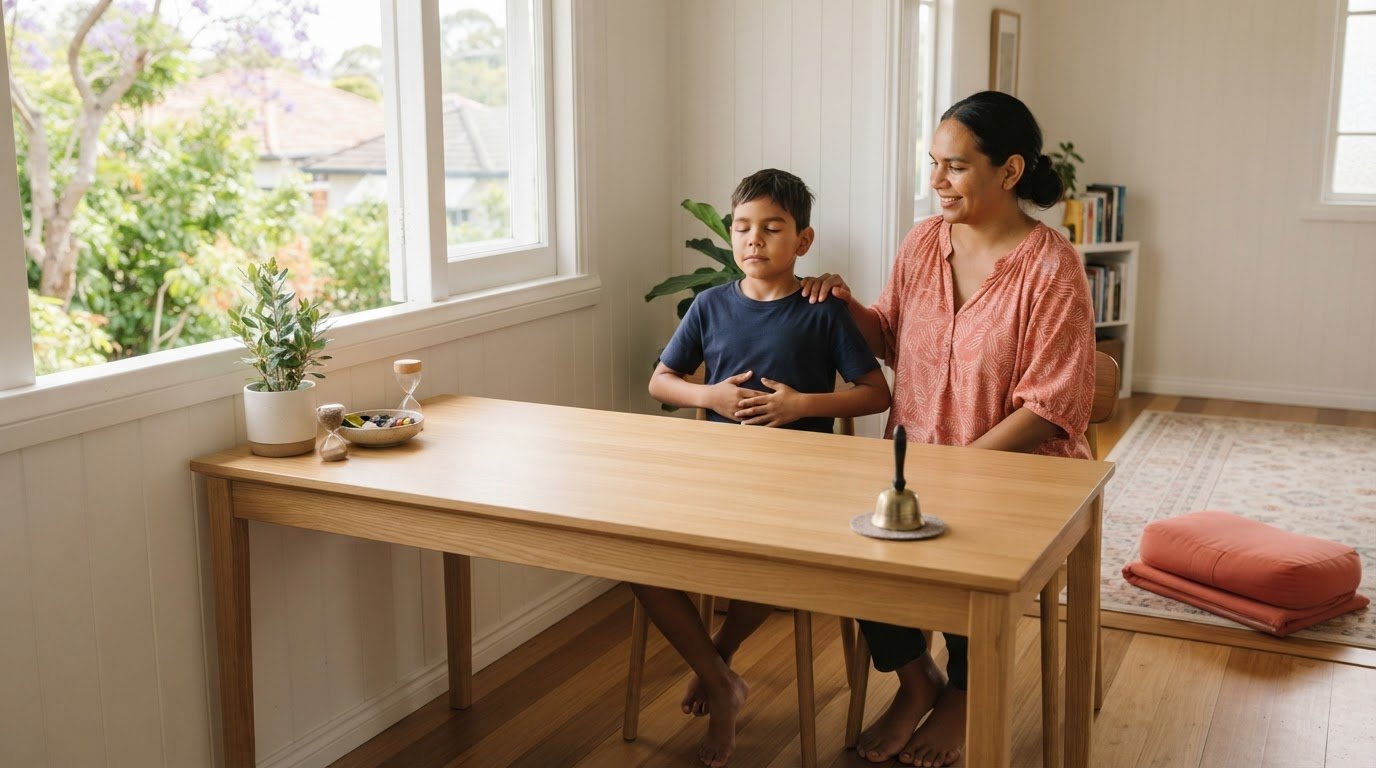
For families searching for activities to improve focus in kids in North Brisbane, start with simple, low-pressure practice at home. Try a listening game, “I spy” or belly breathing to help your child bring their attention back to the present moment. A calm, organised workspace can also make it easier to settle into a task.
When your child’s attention wanders, it can feel frustrating for the whole family. Focus is a skill children can practise, and small routines can make that practice feel manageable rather than like another chore.
This guide shares practical ways to build focus at home, from mindfulness and breathing exercises to reducing distractions and adding movement breaks. You’ll also learn how to match activities to your child’s age, make homework time feel more approachable and recognise when ongoing concentration difficulties may call for extra support.
Key Takeaways
- Use simple listening games and belly breathing to help your child practise bringing attention back to the task.
- Make homework easier to begin by setting up a calm workspace, keeping distractions low and building a predictable routine.
- Look for children’s programs with clear instruction, age-appropriate activities and opportunities to practise focus through movement.
- Keep focus activities realistic and enjoyable; consult a health professional before introducing supplements for your child.
- For structured martial arts training, Flinn Taekwondo Academy’s Little Tigers Program is designed for children aged 4-6.
1. Mindfulness and simple breathing exercises
Mindfulness helps children notice what is happening now rather than rushing to the next task. Practise during familiar moments, such as washing hands, eating a snack or opening a schoolbook. Ask your child to name what they see, hear and feel. This check-in builds awareness and gives their attention a specific place to return when homework feels difficult.
Families in North Brisbane can start with belly breathing. Sit comfortably together and place a hand on the belly. Breathe in gently through the nose, noticing the hand rise, then breathe out slowly as it falls. Keep the pace comfortable rather than turning it into a contest. Deep breathing and short guided meditations can help children notice when their attention drifts.
Make mindfulness playful, not a test. During “I spy,” invite your child to describe one detail at a time, such as a red book or a round window. For a listening game, pause near an open window and identify sounds, from birds to passing traffic. Each game gives children one clear thing to notice and a manageable way to practise present-moment attention.
Keep guided meditation suited to your child’s age and willingness to join in. Shichida recommends planning an activity for roughly the child’s age plus one minute. Shichida gives four minutes as an example of how long a three-year-old may focus on one activity. Treat this as a planning guide, not a demand to sit still. Children’s attention develops as they grow, so let practice progress at their pace.
A Brisbane ferry trip can provide fresh details for a mindfulness game. Brisbane’s CityCat and KittyCat network has 22 terminals, extending from The University of Queensland at St Lucia to Northshore Hamilton, according to Brisbane City Council. Invite your child to notice landmarks, listen for announcements or describe the water’s movement. Keep the activity light, with the journey supplying new things to observe.
Outdoor settings offer other ways to practise observation. Brisbane City Council identifies Bracken Ridge Skate Facility in Fitzgibbon and Monier Road Park in Darra as Brisbane’s two largest BMX parks. From a suitable viewing spot, ask your child to notice movement, sounds or colours. The aim is attentive observation, not riding or following every detail.
Try a breathing practice or attention game before a specific task, such as reading a page or starting a worksheet. Give one clear instruction, practise alongside your child, then ask what they noticed. If frustration rises, pause and return to an easier step. This short routine makes mindfulness practical rather than another demand in an already busy day.
For activities to improve focus in kids in North Brisbane, connect a brief attention exercise to something your child already enjoys. They might notice three sounds before drawing, or take a comfortable breath before packing their school bag. Offer the choice of two simple activities and let your child select one. Regular, low-pressure practice supports wellbeing and develops a skill they can use at home or school.
2. Creating a calm, distraction-minimised environment
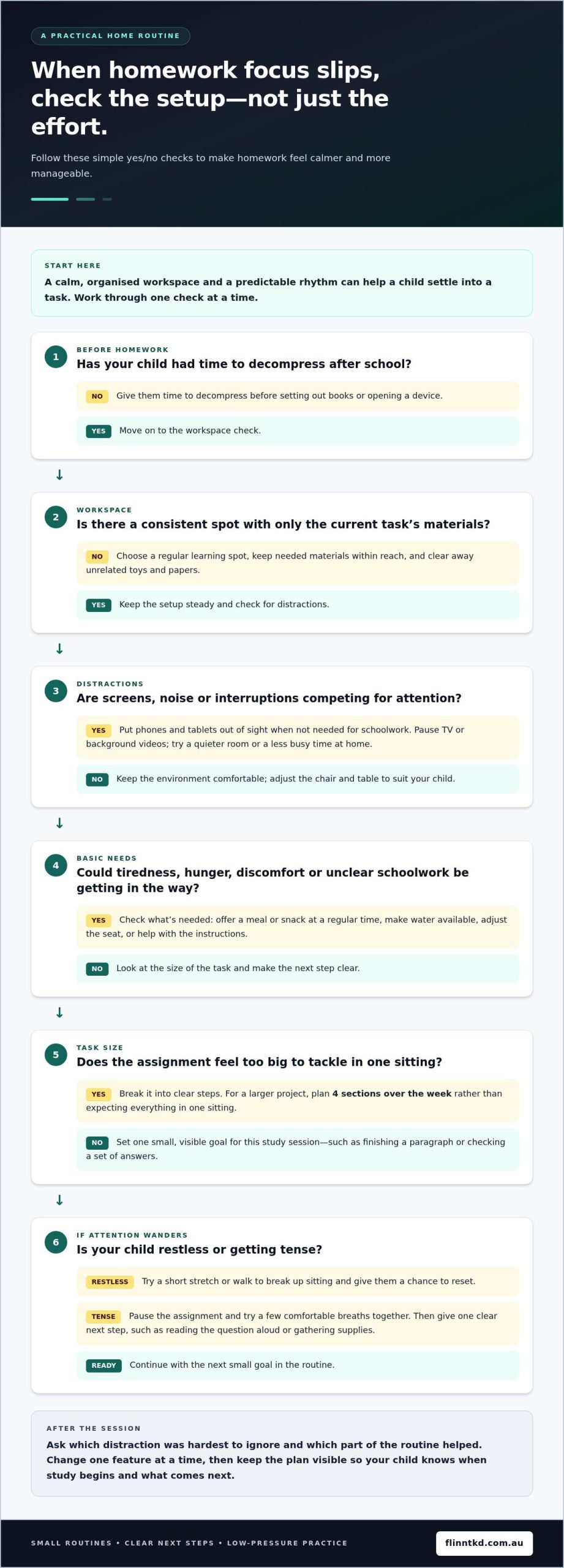
A child’s study setting can support attention or compete with it. Choose a consistent learning spot, such as one end of the dining table, and keep the materials for the current task within reach. Clear away unrelated toys and papers before homework begins. A simple setup reduces distractions and helps your child see what to do next.
Reduce interruptions. Put phones and tablets out of sight when they aren’t needed for schoolwork, and pause television or background videos. If household noise is hard to avoid, choose a quieter room or a time when there is less activity at home. Make the workspace comfortable too. Adjust the chair and table to suit your child, so discomfort is less likely to distract them.
Build a predictable rhythm around homework. Give your child time to decompress after school before setting out books or opening a device. Then agree on a regular study time that fits around meals, play and sleep. Consistent patterns can help children feel prepared. Keep the plan visible, such as a short schedule on the fridge, so your child knows when study begins and what comes next.
Make assignments feel more manageable by dividing the work into clear steps. For a larger project, plan 4 sections over the week instead of expecting your child to complete everything in one sitting. Write down a small, visible goal for each study session, such as finishing a paragraph or checking a set of answers. If your child doesn’t understand the schoolwork, offer support with the instructions before expecting independent focus.
Check your child’s basic needs before interpreting restlessness as a lack of effort. Tiredness, hunger, an uncomfortable seat and difficulty understanding schoolwork can all affect concentration. Offer a meal or snack at a regular time, and make water available at the workspace. A short stretch or walk can break up sitting and give your child a chance to reset before the next task.
Keep the environment calm without demanding silence or perfect behaviour. Emotional stress, a noisy room and digital interruptions can make it harder to settle and stay on task. If your child seems tense, pause the assignment and try a few comfortable breaths together. Then give one clear next step, such as reading the question aloud or gathering the supplies. This keeps the routine steady and support accessible.
Review the setup with your child after a homework session. Ask which distraction was hardest to ignore and which part of the routine helped. Change one feature at a time, such as moving the workspace away from the television or preparing school materials before play. For families seeking a structured setting to practise attention through movement, guided movement and focus practice can complement a calm home routine.
A consistent routine, regular meals and snacks, daily movement, and a calm learning space with fewer distractions can support a child’s focus. Reinforce these habits across the school day.
5. What should parents look for in instructors and programs for children’s attention skills?
Choose an instructor who gives clear directions and shows children what to do. For example, a coach might demonstrate a movement, name its key steps, then invite the child to practise. Clear instructions are easier to follow than several requests delivered at once. Notice whether the instructor allows time to listen, try the task and respond to guidance.
Look for teaching that suits the children taking part. A young child may engage better with a short, playful task, such as copying a simple stance, while an older child may enjoy learning a sequence. The instructor should adapt explanations and make the next action clear. If a child loses track, calm guidance back to the activity is more helpful than criticism.
Pay attention to how the program is structured. A clear session might move from an instructor’s demonstration to guided practice, then to a chance for children to apply the skill. Predictable transitions help children understand what comes next. Activities involving listening, movement and practising a sequence give attention a practical purpose, rather than asking children to sit still without engagement.
Notice how instructors respond when a child finds a task difficult. Helpful coaching can break an action into manageable parts, such as practising a balance before adding an arm movement. Specific feedback, like “keep your eyes on the target,” gives a child something concrete to try. Look for encouragement that recognises effort and persistence, alongside clear, respectful expectations.
Consider whether the program supports skills beyond following instructions. A suitable activity can give children opportunities to practise patience, self-control and respectful participation. Waiting for a turn, listening while another child practises and returning equipment to its place all involve attention. These are practical signs that focus is being practised through real actions.
Make the fit personal. Consider your child’s age, interests, confidence and comfort with group activities. A child who enjoys active learning may respond well to movement-based instruction, while another may prefer a quieter introduction to unfamiliar routines. Notice whether your child can explain what the instructor asked them to do and whether the session feels engaging rather than overwhelming.
After a class or activity, talk with your child about a specific moment. Ask what they practised, what felt challenging and what helped them pay attention. Their answers can show whether the instructions made sense and the activity held their interest. Share useful observations with the instructor, such as your child following demonstrations more easily than spoken directions.
Focus on the quality of the learning experience, not claims of instant results. An instructor should explain activities plainly and set realistic expectations about practice. Look for opportunities to listen, try, receive feedback and try again. If concentration difficulties persist across home, school and relationships, discuss the pattern with a health professional. A class cannot assess underlying learning or attention concerns.
4. Are there risks or limitations to activities marketed as improving children’s focus?
Focus activities can offer useful practice, but no game or routine suits every child. A listening game might engage one child and frustrate another who is tired or unsure of the instructions. Treat the activity as an opportunity to practise attention, not a test of character. Notice whether your child can take part comfortably, and adjust the task if they become upset or overwhelmed.
Keep expectations realistic. Completing a puzzle, practising breathing or following a movement sequence provides a clear focus task. It can’t establish why a child finds schoolwork difficult, and it doesn’t replace help with unclear instructions or a challenging assignment. If a child struggles with a worksheet, first check whether they understand what it asks. Address the learning need rather than adding more focus exercises.
Watch for signs that an activity is creating pressure instead of useful practice. A child who becomes distressed when asked to sit through a meditation, for example, may prefer a shorter, more active exercise. Invite them to choose between listening for household sounds or doing a gentle stretch. If their attention drops, pause and try again later rather than using the activity as punishment or demanding perfect stillness.
Be cautious about claims that a product or program will quickly solve concentration problems. Ask what children actually do during the activity and how instructions are adapted when a child needs help. A practical session might involve listening to a direction, attempting a task and receiving feedback. Promises of guaranteed results don’t explain how a child’s learning, wellbeing or daily routine will be supported.
Supplements need particular care. Iron, zinc and omega-3s play roles in general health, including normal brain function and development, but that doesn’t mean a supplement is automatically suitable for a child. Consult a healthcare professional before introducing any supplement. Bring the product details and explain your child’s usual diet, health concerns and current medicines, so the professional can consider the relevant factors.
Concentration can change with everyday conditions. Tiredness, hunger, an uncomfortable seat or difficulty understanding schoolwork can make it harder to focus. Before starting, check whether your child has eaten, rested and has a comfortable place to work. If the room is noisy or a device keeps interrupting, remove that distraction before deciding the activity has failed.
Look for patterns across settings, not just one difficult homework session. Keep brief notes about when concentration problems occur, what your child was doing and what seemed to help. Share those observations with the teacher, then discuss repeated difficulties affecting learning, behaviour or relationships with a health professional. Parents and teachers can work together on simple adjustments, such as clearer instructions or a different seat.
Choose activities that support practice without replacing appropriate help. If you want to explore structured movement as one way to practise listening and following directions, explore guided focus activities. Keep noticing your child’s response, and seek professional guidance when ongoing concentration difficulties affect everyday life.
Flinn Taekwondo Academy: Little Tigers Program (4-6 years)
Flinn Taekwondo Academy’s Little Tigers Program gives children aged 4-6 a structured way to practise listening, following instructions and participating in martial arts. If your child enjoys active learning, guided movement can complement simple focus activities at home. Consistent practice gives them opportunities to concentrate on a task, respond to direction and build confidence through participation.
For older children, the Junior Taekwondo Program is for ages 7-12, while the Senior & Adult Taekwondo Program is for ages 13 and over. Choose the age-appropriate program that fits your family’s next step. To learn more, contact Flinn Taekwondo Academy or visit flinntkd.com.au.
Build focus through the next step
Help your child make attention practice a steady part of their growth. Activities to improve focus in kids in North Brisbane can be a starting point, while a structured group activity may suit a child who learns best through movement, listening and guidance. Choose the next step to suit your child’s readiness, then give them room to build confidence through regular participation.
Flinn Taekwondo Academy offers the Little Tigers Program for children aged 4-6, the Junior Taekwondo Program for ages 7-12, and the Senior & Adult Taekwondo Program for ages 13 and over. These age-based options give families a clear place to begin exploring Taekwondo training.
Contact Flinn Taekwondo Academy to learn more about a suitable program for your family. Keep encouraging each effort, and give your child room to grow one focused step at a time.
Frequently Asked Questions
How Can I Help My Child Focus?
Help your child focus by making the next action clear and achievable. Ask them to put their school bag away, then bring out one book, rather than giving several instructions at once. Notice what interrupts their attention, such as uncertainty about a task or a worry they want to discuss. A brief check-in can reveal what support they need before trying again.
What activities help improve focus and attention in children?
Memory games, puzzles and age-appropriate strategy games give children a specific challenge to follow. Try a matching game where your child remembers where two cards are, or invite them to plan moves in a simple board game. Cooking together can also practise attention: ask your child to find ingredients, follow a recipe step and say what comes next. Keep the task engaging and suited to their interests.
What North Brisbane sports and movement activities help children with concentration?
Choose movement activities that involve listening, timing or remembering a sequence. Taekwondo, for example, involves practising movements and responding to instruction, while ball games can involve tracking play and waiting for a turn. In North Brisbane, consider what your child enjoys and whether they prefer individual practice or a group. Interest matters: children are more likely to engage with an activity they want to return to.
What are the age ranges, schedules and costs of kids’ focus-building activities in North Brisbane?
Flinn Taekwondo Academy lists Little Tigers for ages 4-6 and Junior Taekwondo for ages 7-12. Its listed operating hours are Monday: 5:30 pm – 8:00 pm and Thursday: 5:30 pm – 8:00 pm; these are operating hours, not a class timetable. The academy offers a free trial, a free uniform for new starters, and two free classes on sign-up. For ongoing costs, request a quote; costs depend on membership and any applicable grading or equipment needs.
How do I choose an activity for a child with attention difficulties or ADHD?
Start with your child’s interests, sensory preferences and comfort in a group. A child who enjoys movement might prefer an active class, while another may engage more with a quiet, hands-on activity. Look for clear instructions and constructive feedback. If attention difficulties affect learning, behaviour or relationships, discuss your observations with a health professional and work with your child’s teacher on practical support.
How can parents practise focus-building activities at home?
Use everyday jobs as short opportunities to practise attention. Ask your child to sort clean laundry by colour, follow the steps for packing a lunchbox, or remember what belongs in a school bag. Give one instruction, let them complete it, then add the next. Praise a specific action, such as checking the lunchbox list, so your child knows what helped them stay on task.