Four simple activities help preschoolers practise active listening: act out a chosen word in a story, follow everyday instructions, identify sounds hidden in containers, and copy a sound pattern. Active listening means paying attention to a sound or instruction, understanding it, and responding. For Brisbane families, activities for developing listening skills in preschoolers can turn everyday moments into manageable practice.
It’s normal for children to need time and repetition to focus on sounds, especially when there’s a lot happening around them. Keep games playful and suited to your child: a short story game can build attention, while a simple sound hunt encourages careful listening. Try these four practical ideas at home or in an early learning setting, and adjust each activity as your child grows more confident.
主要心得
- Turn a favourite story into a listening game by choosing a word that prompts an action, then adjust the pace to suit your child.
- Build practice into everyday routines with simple instructions and fewer competing sounds to help your child focus.
- Use familiar objects in containers to explore how different materials sound, and invite your child to listen closely and guess.
- Choose activities that match your preschooler’s stage, then make them more challenging as their attention and confidence grow.
1. Story-based listening games for preschool children
For children aged 3-5, make storytime interactive with a listening cue. Choose a phrase, such as “bear hunt”, and invite your child to growl whenever it appears. Pause after the cue so they can respond. As they become familiar with the game, shorten the pause or let them choose an action. This turns listening into an active part of the story.
Story sequencing builds another skill: remembering what happened and putting events in order. For children aged 3-6, begin with three picture cards showing a simple event, such as planting a seed, watering it and seeing a sprout. Ask your child to listen to the story, then arrange the cards. Add cards gradually, working towards six to eight as their confidence grows.
Take a familiar book to a park and bring the surroundings into storytime. At a Brisbane park, pause to notice a bird call, rustling leaves, or a passing bus, then connect one sound to the story. Invite your child to listen for that sound again. A quieter spot can make spoken words easier to follow.
Brisbane City Council’s annual Summer Reading program runs from 1 December to 31 January, according to Brisbane City Council. It is hosted by 33 libraries, plus the Mobile Library and Pop-Up Library. These are local places to explore story-based activities. Ask the library about current story or music sessions and any costs.
If your child has hearing loss, speech delays, or sensory needs, reduce background noise and face them while speaking. Pair a spoken cue with a picture, gesture, or visible action. Keep the story predictable, and let your child respond by pointing, moving, or using words.
There’s no single screen-time amount that suits every preschooler. Choose an audio story to listen to together, pause to discuss it, and balance listening with conversation and play. Audio stories can provide practice when your child pays attention to the words and responds to prompts.
Responding to a name and following simple instructions typically emerge by ages 2-3. If your child often misses their name or spoken directions, especially in quiet surroundings, arrange a hearing assessment in Queensland through a GP or audiology service.
2. Listening practice at home and in early learning settings
Children from birth to five can practise listening during familiar routines. Most children are born with good hearing, but attention to sounds develops through experience. At breakfast, ask your preschooler to fetch a cup and place it beside their plate. Give one instruction at a time before trying a short sequence. During tidy-up, name a toy and ask your child to put it in a specific basket. These small tasks make listening purposeful without creating a separate lesson.
For toddlers aged 18 months to three years, keep activities very short, around two to five minutes. Try a sound pause: stop talking, listen together, then name what you hear. A toddler may turn towards a familiar noise or look at you when you speak. Brief eye contact of 10-15 seconds can be practised, but looking directly at someone isn’t the only way to show attention. Notice whether your child responds to the sound or instruction.
Preschool listening activities can last five to ten minutes. Try a treasure hunt with two steps, such as, “Find the red block and bring it to the table.” Let your child complete both before adding another instruction. At home or in an early learning room, switch off background music during the game. One clear voice is easier to follow than competing sounds from music, conversation, and toys.
Adults can use a hand clap as a simple signal before speaking. Agree on what the clap means, such as pausing and turning towards the speaker, then use it consistently. In a group, an educator can invite children to notice sounds in the room and record their answers on a sound chart. At home, make a similar list together. If your child loses focus, reduce distractions or shorten the activity, then try again during a calmer routine.
For babies, adults can scrunch bubble wrap, tissue paper, or wrapping paper to make noise. Children can also notice dogs barking, buses passing, or people talking in other rooms.
3. Listening to sounds made by objects in containers
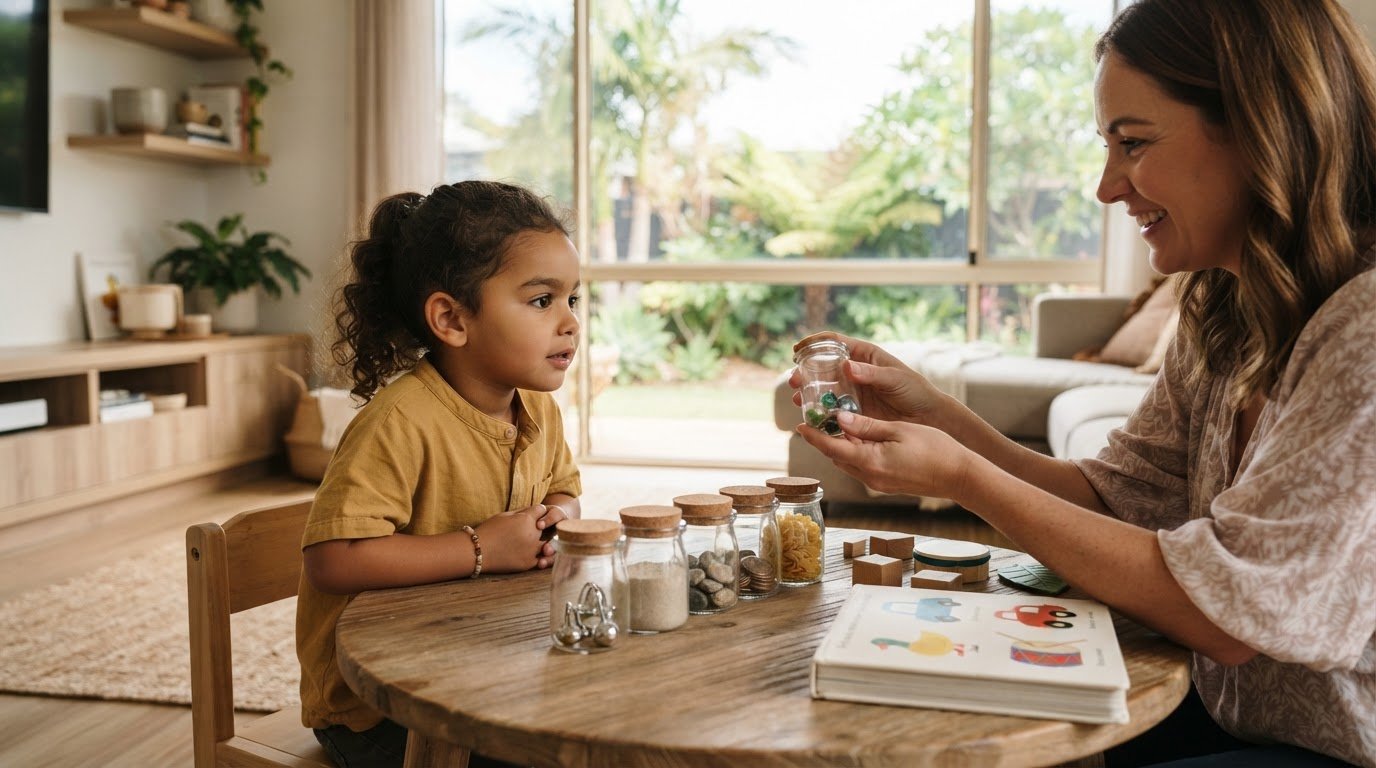
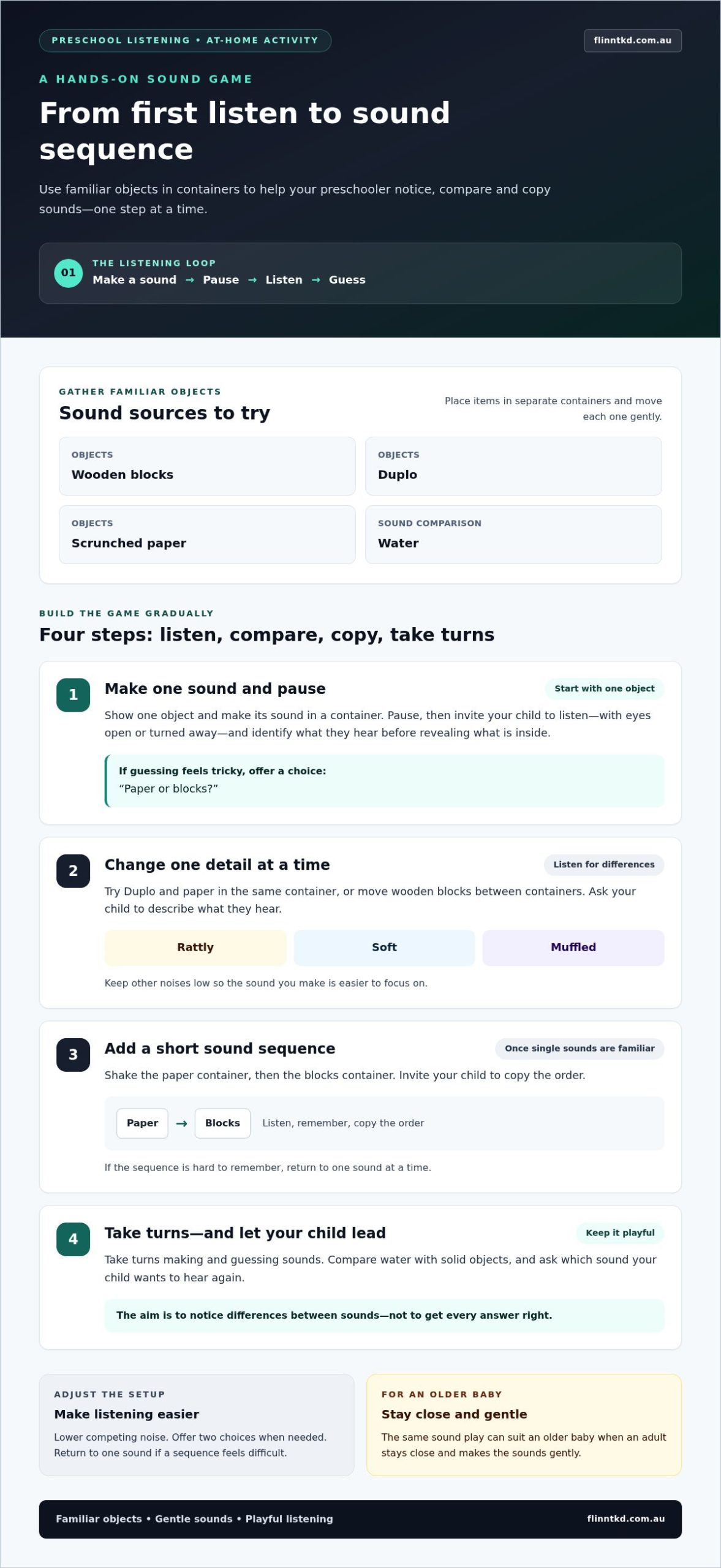
In Brisbane, families can explore listening with simple household objects. Place wooden blocks, Duplo, scrunched paper, or water in separate containers. Gently move one container and ask your child what they hear. Offer choices, such as “paper or blocks?” They can point, choose, or describe the sound. These activities for developing listening skills in preschoolers can make careful listening playful and hands-on at home in Brisbane.
Start by showing one object and making its sound. Shake the container, pause, then invite your preschooler to listen with their eyes open or turned away. Ask them to identify the sound before revealing what’s inside. If guessing feels tricky, offer two objects to choose from. The aim is to notice differences between sounds, not to get every answer right.
Change one detail at a time. Put Duplo and paper in the same container, or move wooden blocks between containers. Ask whether a sound is rattly, soft, or muffled. Describing what they hear helps children compare sounds and explain their choices. Keep other noises low so your child can focus on the sound you make.
Once your child recognises individual sounds, try a short sequence. Shake the paper container, then the blocks container, and invite them to copy the order. If the sequence is hard to remember, return to one sound at a time. Take turns making and guessing sounds, and give your child a chance to lead the game.
Brisbane families can also use water for sound comparison. Gently move its container, then compare the sound with those made by solid objects. Ask which one your child wants to hear again. This choice gives them an active role and helps sustain attention through a simple, repeatable game.
The same sound play can suit an older baby when an adult stays close and makes the sounds gently. Use containers and items such as wooden blocks, Duplo, scrunched-up paper, or water to explore different sounds. Let the baby listen as you move each container, pausing between sounds so there’s time to notice and respond.
4. Age-appropriate listening activities for preschoolers
Choose games that match your child’s age and current listening ability. Basic skills, including responding to names and following simple instructions, typically emerge by ages 2-3. For preschoolers aged 3-5, practise listening for a cue, following two steps and responding with an action. These skills build a foundation for classroom routines and everyday conversations.
Try an echo game, recommended for children aged 2-4. Say a short sound pattern, such as “clap, tap,” and invite your child to copy it. Keep the pattern brief, then add a sound when they’re ready. For ages 3-7, musical statues can practise listening for a stop signal. Play music, pause it, and have children freeze when the sound ends.
Sound-pattern recognition also suits children aged 3-7. Tap a simple rhythm on a table, then ask your child to repeat it. Start with two different sounds, such as a clap followed by a tap. Change the order once your child recognises the pattern. Give them a turn to create a rhythm for you to copy.
For children aged 4-8, an emotion detective game encourages attention to voice and meaning. Read a short sentence in different tones, then ask your child what feeling they hear. Keep the words familiar, such as “The game is over,” and vary your voice to suggest happiness or disappointment. Let your child explain their choice.
Preschoolers can practise following two-step instructions reliably. Make the task clear: “Pick up the ball, then put it in the basket.” As skills develop, add variety through movement, sounds or simple choices. More complex listening, such as identifying a story’s main idea, develops between ages 5-8, so keep preschool games focused on cues and short instructions.
For another way to practise focus and responding to direction, explore structured activities that build listening and focus.
Flinn Taekwondo Academy: Little Tigers Program (4-6 years)
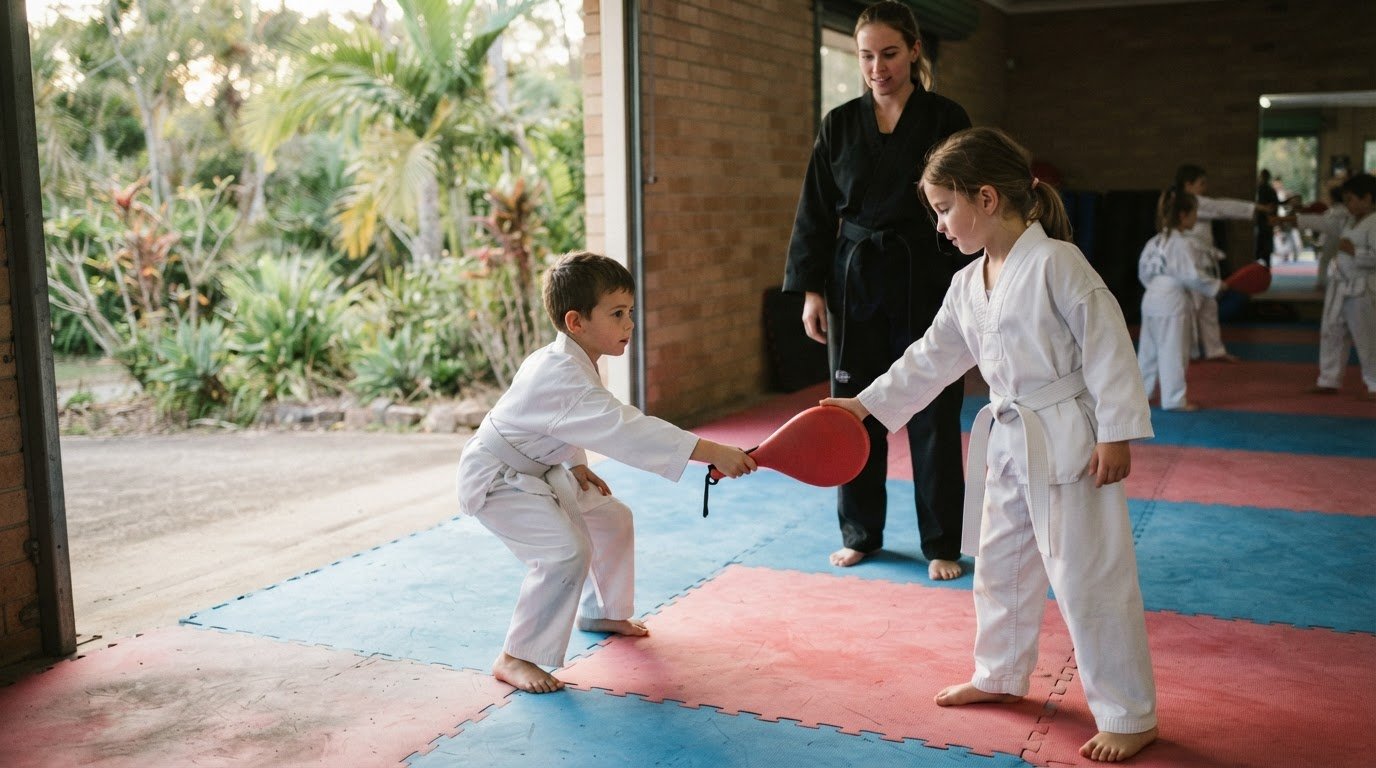
Flinn Taekwondo Academy’s Little Tigers Program gives children aged 4-6 a Taekwondo setting to practise focus, discipline and confidence through martial arts training. If your preschooler enjoys active games and is ready to learn alongside an instructor, it can be a natural next step beyond listening practice at home. Listening for guidance and responding with purposeful movement can help children connect attention with action. Families can consider the program when they want their child’s learning to include physical activity and personal development, rather than relying only on story games or sound play. Every child develops at their own pace, so keep home activities encouraging and build skills through regular practice in everyday routines. To learn more, contact Flinn Taekwondo Academy or visit flinntkd.com.au.
Make listening part of your child’s next step
Progress comes through steady opportunities to pay attention, respond, and try again. Choose one small listening challenge for the week, such as following a new direction during play or noticing a sound on the way home. Watch what captures your child’s attention, then build the next activity around that interest. The best activities for developing listening skills in preschoolers in Brisbane are practical, familiar, and enjoyable enough to revisit.
As your child becomes ready for more structured learning, guided movement offers another way to practise focus and responding to instructions. Flinn Taekwondo Academy offers children’s Taekwondo classes in North Brisbane, with a supportive environment for families exploring a next step beyond home activities. Book a free trial to see if a class feels right for your child.
Every child’s learning journey is their own. Keep celebrating effort, make room for practice and choose a setting that supports your family’s goals. Contact Flinn Taekwondo Academy to explore the next step for your family.
常見問題
What is active listening for kids?
Active listening means a child takes in what someone says and responds in a way that shows understanding. For example, after hearing, “Your teddy is under the chair,” your child might find it or ask which chair. Notice their response, not just whether they sit still. An appropriate action, answer, or follow-up question can show they’re processing the message.
What fun listening games can parents play with preschoolers at home?
Try “Silly Sentence”: say a familiar sentence with an amusing mistake, such as, “We wear socks on our hands.” Ask your child to spot the mix-up and explain what makes more sense. You can also play “Listen and Draw”: describe a simple scene, such as a house beside a tree, while your child draws the details. Keep descriptions clear and let your child add ideas.