Respect isn’t just good manners; it’s how children learn to value themselves and other people. For Brisbane families wondering how to teach children respect for others, focus on four everyday practices: model respectful language, listen to children’s feelings, help them repair harm, and nurture self-respect alongside consideration for others. These habits give children practical ways to treat people with care, even when they disagree.
It’s natural to want children to speak politely, but respect also shows in how they listen, set boundaries and respond when someone is hurt. Small moments at home can help make these skills part of everyday life. Explore four ways to practise them, from showing children how to apologise sincerely to helping them understand the impact of their actions and speak up with confidence.
主要心得
- Show what respect sounds like in everyday conversations, including how you respond when you make a mistake.
- Give children space to share their feelings, then listen calmly and help them find words for what they need.
- When someone is hurt, guide your child to understand the impact and choose a meaningful way to make things right.
- Teach children to value differences while setting boundaries and speaking up for themselves respectfully.
1. Modelling respectful language and accepting apologies
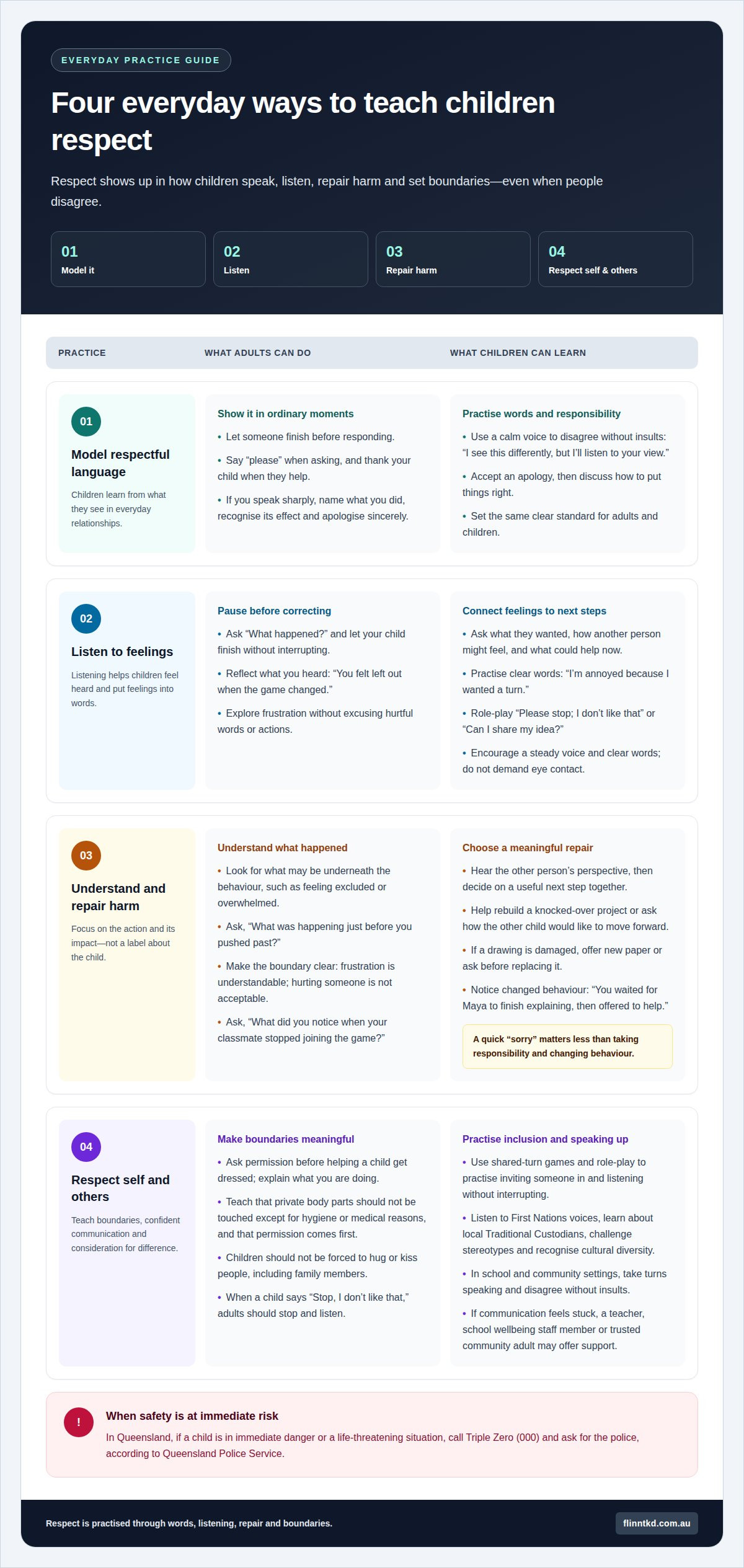
Children copy the behaviour they see, especially in everyday relationships with parents and other adults. At breakfast, model respectful conversation by waiting for someone to finish before responding. Say “please” when asking for help, and thank your child when they share a toy or pass a plate. These small examples make respect visible, not just a rule adults expect children to follow.
Adults make mistakes, too. If you speak sharply, pause and offer a sincere apology: “I raised my voice. That wasn’t kind, and I’m sorry.” Name what you did, recognise how it may have affected your child, then explain what you’ll try next time. This teaches children that apologising means taking responsibility, not making excuses. When your child apologises, acknowledge the effort and discuss how to put things right.
Respect doesn’t require agreement. In a family conversation, you can say, “I see this differently, but I’ll listen to your view.” Set a clear boundary around hurtful behaviour: “You can be angry, but you can’t call your brother names.” Use a calm voice and apply the same standard to adults and children. This shows that people can disagree without insults or put-downs.
Model respect for personal boundaries through simple choices. Before helping a child get dressed, ask permission and explain what you’re doing. Teach them that private body parts should not be touched except for hygiene or medical reasons, and that permission comes first. A child can practise saying, “Stop, I don’t like that,” and adults should stop and listen.
Use a practical resource, such as a family chart, to show respectful words and actions. Invite children to suggest examples, including taking turns and asking before borrowing. In Queensland, call Triple Zero (000) and ask for the police if a child is in immediate danger or in a life-threatening situation, according to Queensland Police Service. This clear response reinforces that safety and boundaries matter.
2. Listen to children’s feelings and communication
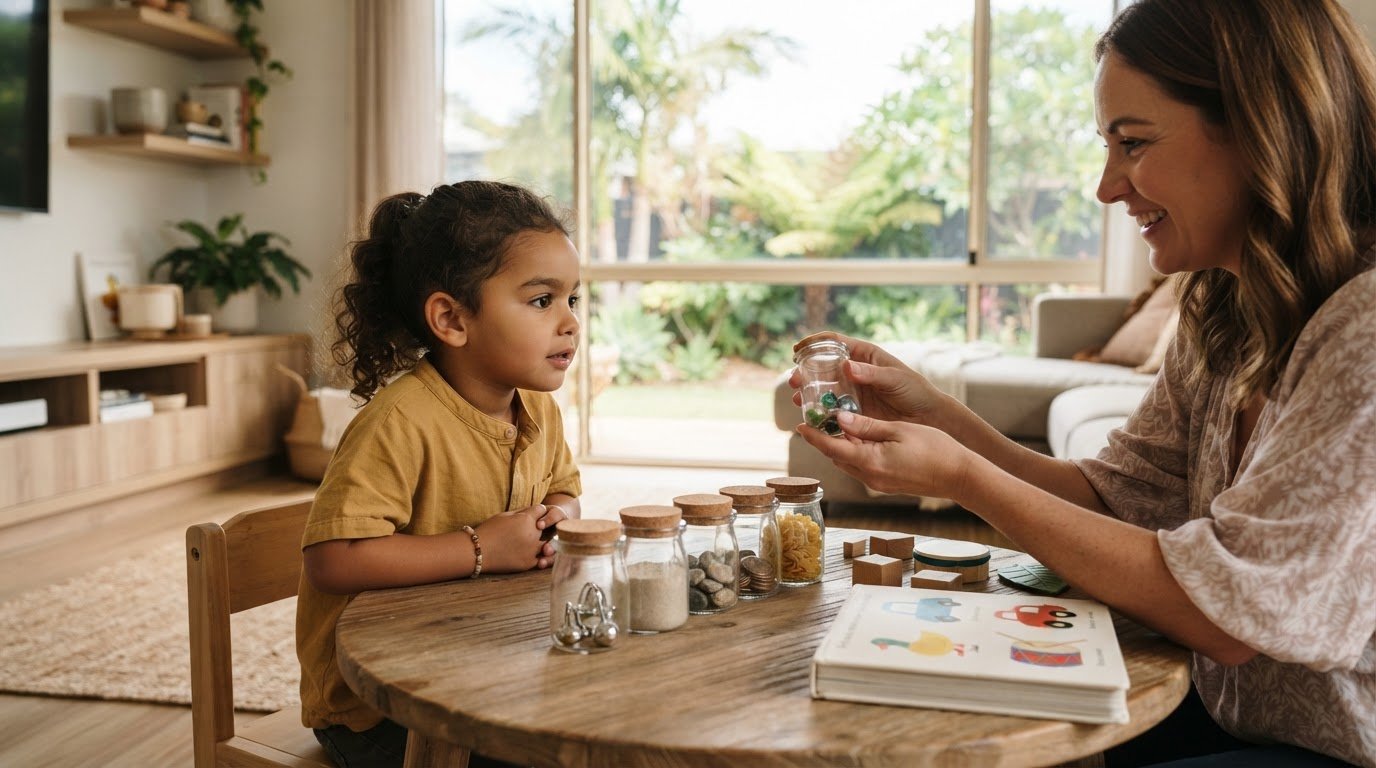
Listening helps children feel heard and gives you clues about what drives their actions. When your child comes home from school upset, pause before correcting their behaviour. Ask, “What happened?” and let them finish without interrupting. Reflect back the key point: “You felt left out when the game changed.” This demonstrates active listening and helps children connect feelings with words.
Help your child move from emotion to a practical next step. Ask what they wanted, what the other person might have felt, and what could help now. If your child calls a sibling hurtful names, explore the frustration without excusing the words. Then discuss better ways to express it, such as, “I’m annoyed because I wanted a turn.” Explain consequences calmly and connect them to actions, not the child’s character.
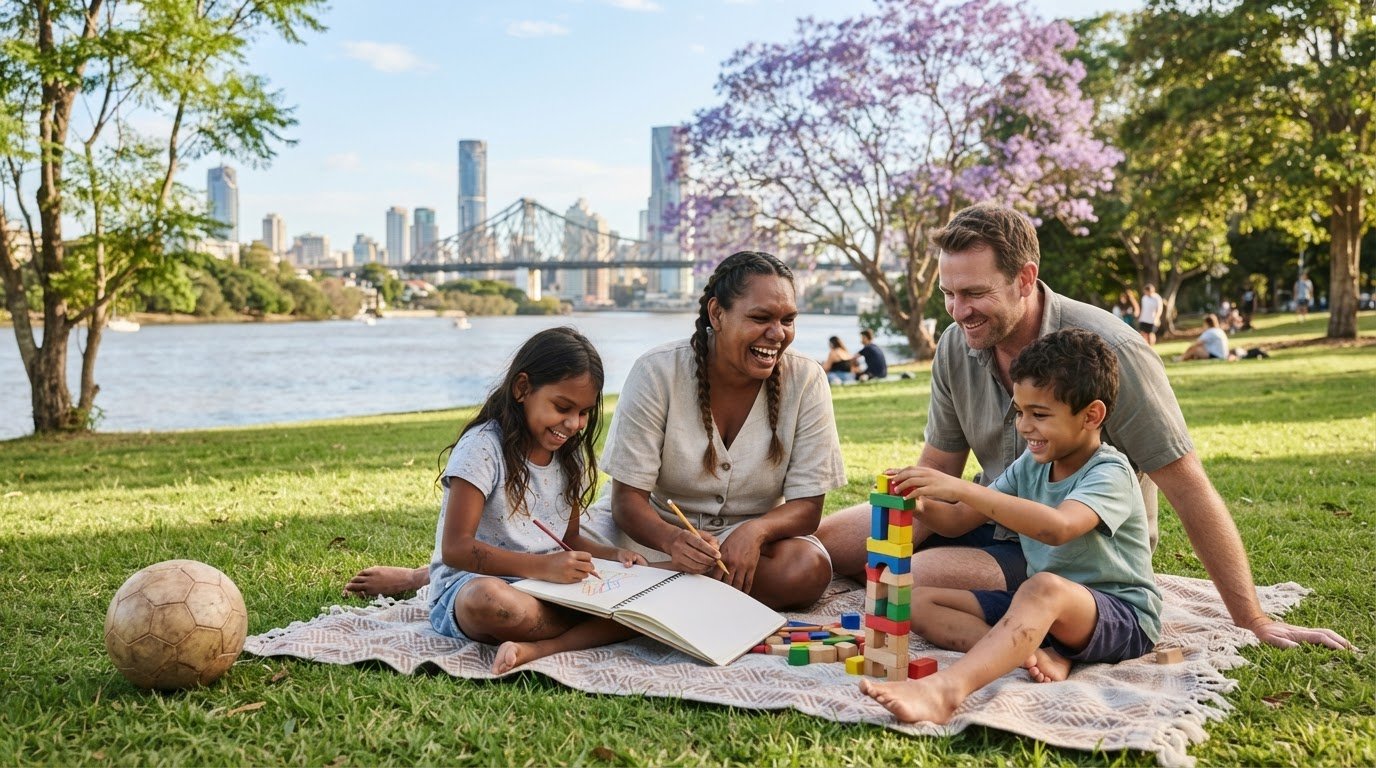
Families can teach respect for Aboriginal and Torres Strait Islander peoples and cultures by listening to First Nations voices and learning about the Traditional Custodians of the Country where they live. Use respectful language, challenge stereotypes, and discuss the diversity of Aboriginal and Torres Strait Islander cultures rather than treating them as one.
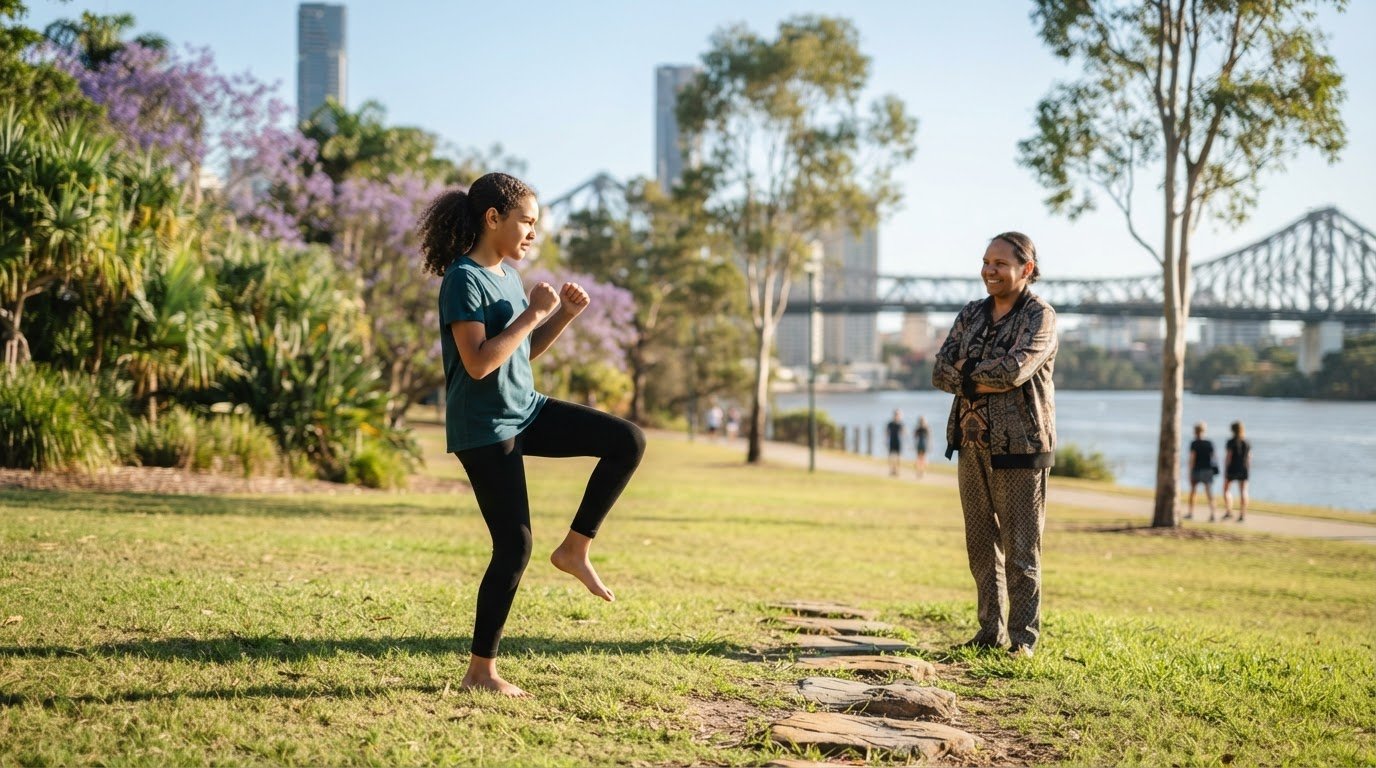
Practise assertive communication through short role-plays at home. Your child might say, “Please stop; I don’t like that,” or “Can I share my idea?” Encourage a steady voice, clear words and attentive posture, without demanding eye contact. At school or in the community, children can listen to others’ views, take turns speaking and disagree without insults. These skills make respectful conversations possible in different settings.
Use family and community support resources when communication feels stuck. A teacher or school wellbeing staff member can help you understand classroom dynamics; a trusted community adult may offer another perspective. Keep conversations open by asking your child which support feels comfortable. For structured practice, explore ways to build respectful communication through activity.
Children should not be forced to hug or kiss people, including family members. Parents can model assertive communication by calmly and firmly asking for what they want, without being passive or aggressive.
3. Help children understand and repair harm
When a child acts out, look beyond the behaviour before deciding how to respond. They may feel embarrassed after losing a game, excluded by classmates, or overwhelmed by a noisy setting. Ask, “What was happening just before you pushed past?” Then listen for the need beneath the action without excusing harm. Recognise the feeling while making the boundary clear: frustration is understandable, but hurting someone isn’t acceptable.
Help your child see the impact through calm, specific questions. “What did you notice when your classmate stopped joining the game?” invites them to consider another person’s experience. Avoid labels such as “You’re mean”; focus on the action and its effect. Guide them to repair the harm: acknowledge what happened, hear the other person’s perspective, then choose a useful next step. That might mean helping rebuild a knocked-over project or asking how the other child would like to move forward. A quick “sorry” matters less than changed behaviour.
Activities involving shared decisions can build empathy, listening and inclusion. Try a board game where players take turns choosing, or role-play a scenario where someone is left out of a group activity. Ask each child to describe what the characters might feel, then practise inviting someone in or listening without interrupting.
Children also need to learn that everyone can repair mistakes. If your child damages a sibling’s drawing, guide them to recognise the harm and offer a sincere apology. Discuss practical ways to help, such as offering new paper or asking before replacing the picture. Encourage your child to make the repair rather than taking over. Later, notice and name a positive change: “You waited for Maya to finish explaining, then offered to help.” This reinforces behaviour you want them to use again. Keep correction private where possible, so your child can focus on learning instead of feeling shamed. Consistent, calm responses help make accountability a skill, not a punishment.
4. Teaching self-respect and respect for others
For families considering how to teach children respect for others in Brisbane, start by connecting self-respect with care for other people. Children can learn to notice their needs, name their emotions and speak up without putting someone else down. Practise phrases such as, “I’d like a turn, please,” or, “I need some quiet time.” Respect their answer when they set a boundary, while helping them express it appropriately.
Age-appropriate practice helps children develop social skills. Queensland consent education describes preschool-age children as 3 to 5 years, primary school-aged children as 6 to 12 years, and teenagers as 13 to 17 years. For preschoolers, use picture books to talk about feelings and fairness. Invite primary-aged children to consider different viewpoints. Give teenagers a voice in family decisions while maintaining clear expectations.
Make respect for difference part of ordinary family life. Share stories featuring people from varied backgrounds and abilities, then discuss how the characters include one another. If your child repeats a stereotype, explain calmly why it can exclude people and invite them to think of a fairer response. In Brisbane, look for everyday opportunities to practise inclusion, such as welcoming a new classmate or making space for someone in a group activity.
Try activities that let children practise both confidence and consideration. During a board game, invite each player to suggest a fair rule and listen to others’ ideas. Afterwards, ask what helped everyone feel included. Praise specific actions, such as asking before joining a game or sharing a decision. The lasting lesson is that children can value themselves while treating others with dignity. Explore respectful activities for children to support your child’s confidence, cooperation and inclusion.
Parents can help teens develop self-respect by giving them responsibilities suited to their maturity and personality. Children deserve respect and kindness as well as the chance to show respect to others. Teach them that respect means considering others and how they are treated, not merely using polite words.
Respect involves accepting and valuing people regardless of differences such as age, opinion, race or religion. Teach children to respect people of different backgrounds, cultures and abilities. Challenge DV describes valuing differences and showing kindness as ways to practise respect.
Flinn Taekwondo Academy: Little Tigers Program (4-6 years)
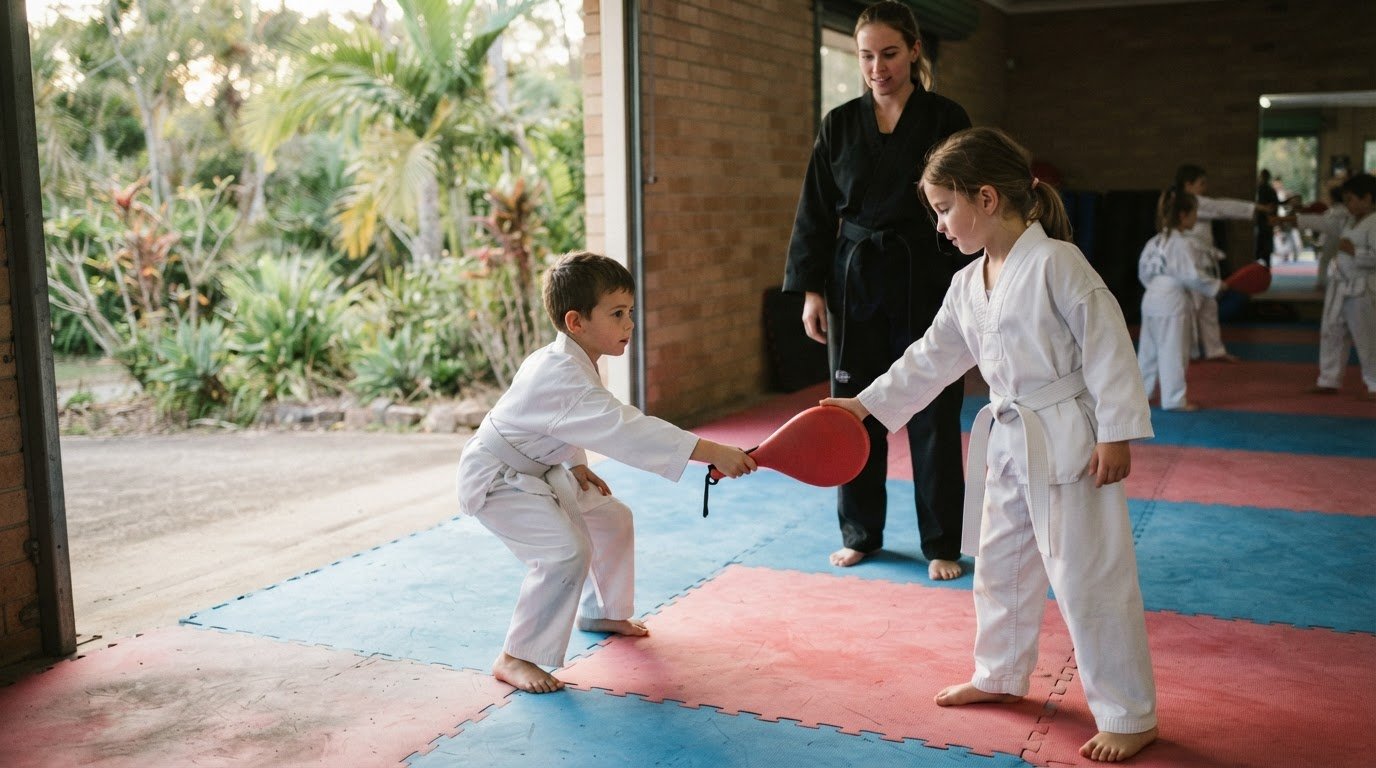
Flinn Taekwondo Academy’s Little Tigers Program (4-6 years) gives young children a structured setting to practise discipline, confidence and respect. Consider this next step if your child benefits from guided activities alongside the everyday examples you build at home. Taekwondo can help children practise listening, following instructions and interacting thoughtfully with others, while developing skills they can carry into family and community life.
For older children, the Junior Taekwondo Program is for ages 7-12 years, while the Senior & Adult Taekwondo Program is for ages 13+ years. Choose an age-appropriate program as your child grows and looks for continued opportunities to develop.
To explore whether the Little Tigers Program suits your family, visit Flinn Taekwondo Academy online.
Make respect part of everyday growth
Respect grows through steady practice, not one perfect conversation. Choose a small moment this week to notice how your family speaks, listens and responds to one another. Then invite your child to help set a shared intention, such as making room for everyone’s ideas during dinner. Returning to that intention gives your child a clear way to practise, reflect and try again.
Learning how to teach children respect for others in Brisbane can also mean creating supportive places where children build confidence alongside social skills. If your child is ready to practise discipline and respectful interactions in a structured setting, Flinn Taekwondo Academy offers age-based Taekwondo programs for young children, school-aged children and teens or adults.
Take the next step at your family’s pace. Contact Flinn Taekwondo Academy to explore a suitable program and help your child keep growing with confidence.
常見問題
How can parents model respectful behaviour for children?
Show respect in interactions your child can observe, including moments outside the family. For example, speak courteously to a bus driver, listen while a neighbour shares a concern, and avoid mocking someone after they leave. If you disagree with another adult, explain your view without belittling theirs. Children learn from these everyday examples that respect applies to everyone, not only people they know well.
How should parents respond when a child is disrespectful or bullies others?
Stop harmful behaviour promptly, make sure the targeted child is safe, and speak with your child calmly and privately. Ask what happened, listen to each person separately, and distinguish a one-off conflict from repeated behaviour intended to hurt or exclude someone. Agree on a specific action to address the impact, then follow up with your child and, if it involves school, communicate with the teacher about a consistent response.