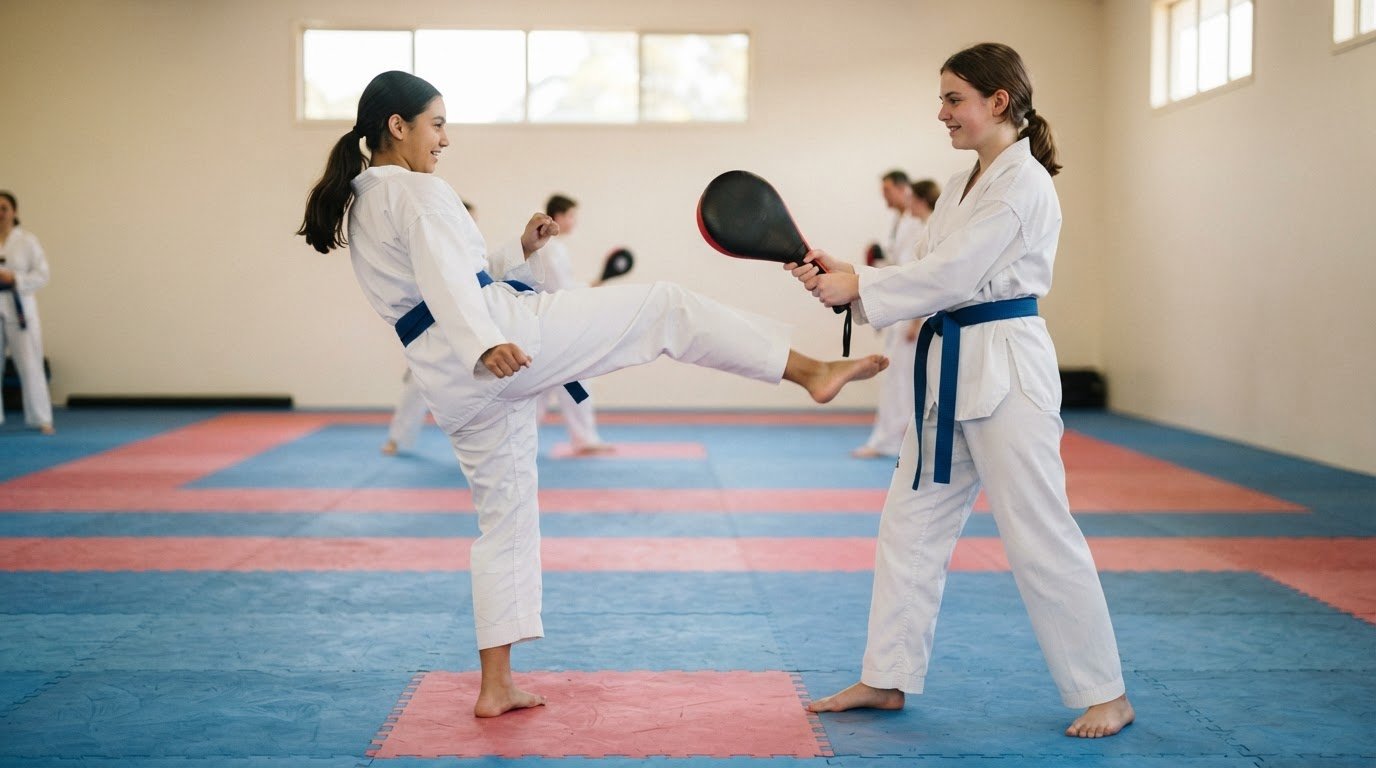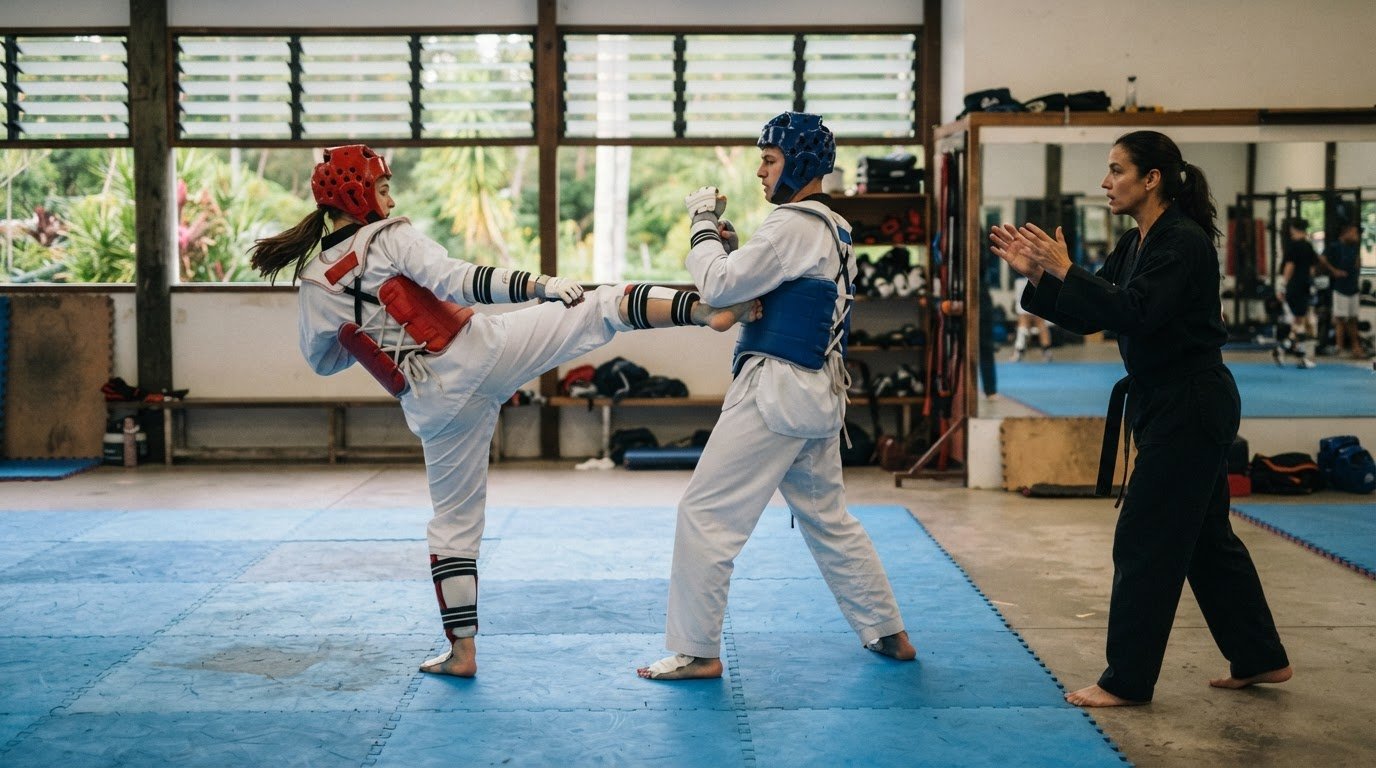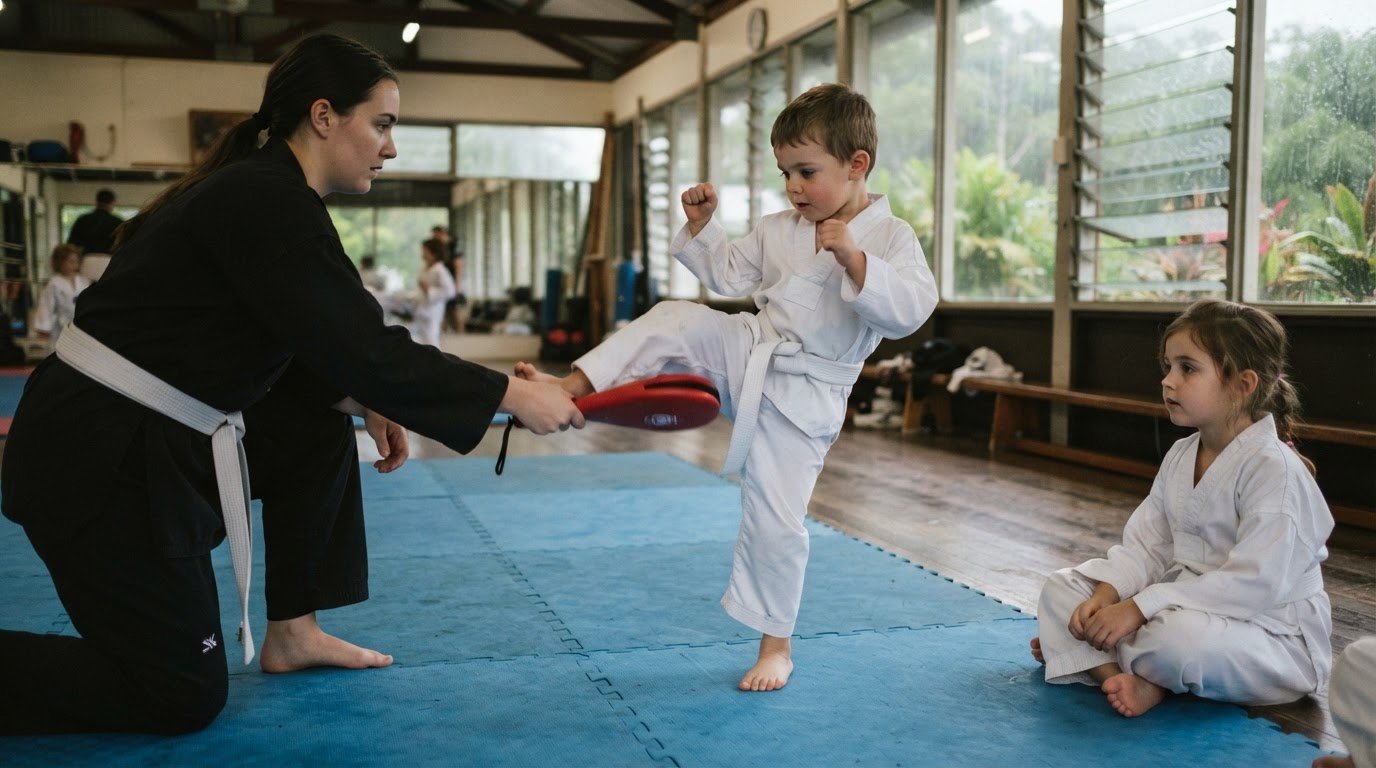
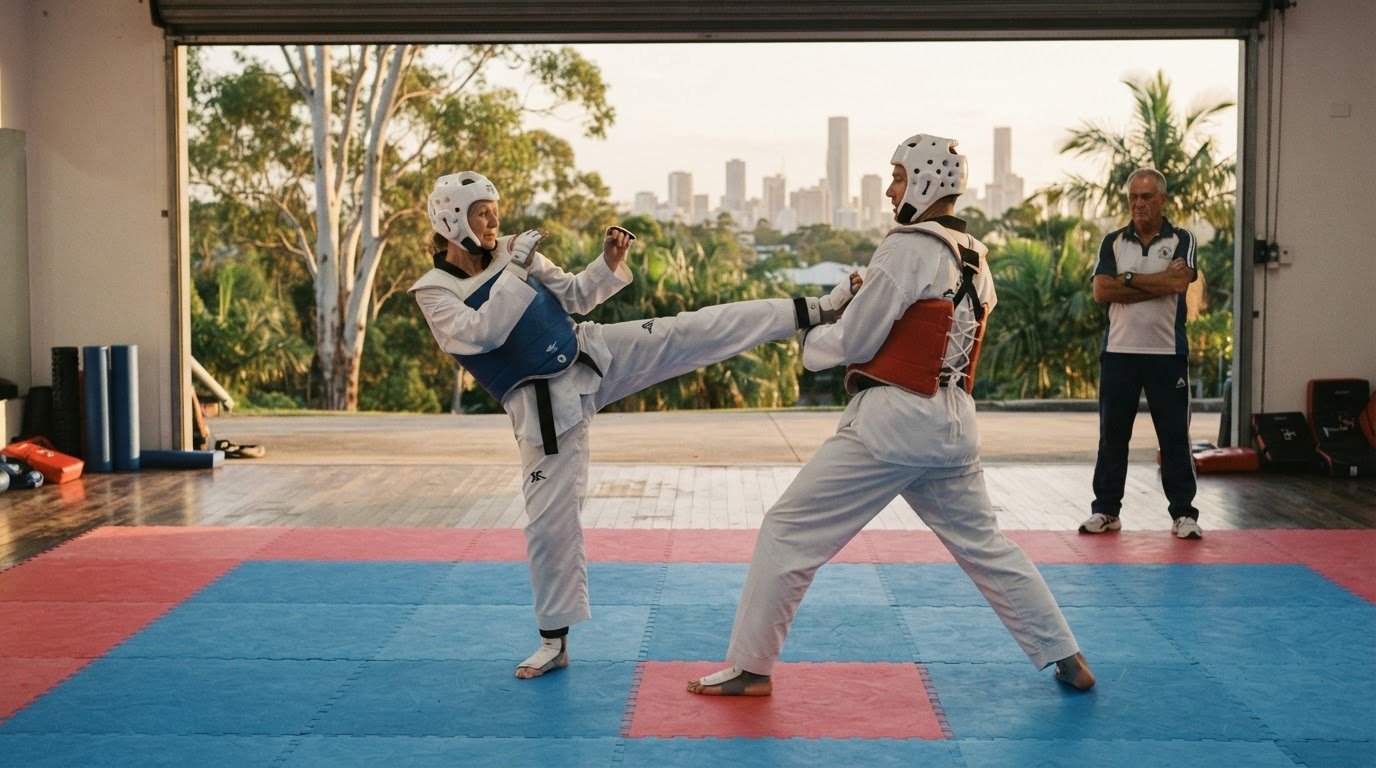
An Olympic place is earned through a performance pathway, not a single tournament. The pathway to Olympic taekwondo in Australia involves developing as an athlete, progressing through high-performance opportunities and working towards continental and world championships before Olympic selection. Taekwondo has been an Olympic sport since Sydney 2000, and Australian planning now includes the Los Angeles 2028 and Brisbane 2032 selection cycles.
If you’re serious about taekwondo, it’s natural to want a clear picture of what progress takes and how selection works. Training builds skill and discipline, while competition experience and performance standards shape an athlete’s development.
This guide explains how Australia’s performance pathways connect with Olympic preparation, what selection policies mean and how Brisbane 2032 fits into the longer-term picture. You’ll see where focused training can support your next step, whether you’re just starting out or already competing.
主要心得
- Map your development from foundational skills towards performance training, competition experience and higher-level opportunities.
- Understand how international competition can contribute to preparation, while travel and event choices need to fit an athlete’s development plan.
- Use the relevant Olympic cycle’s nomination policy to understand selection criteria and which events may count.
- Separate long-term qualification goals from the next practical step: consistent training that builds technical skill, discipline and competitive readiness.
Australian taekwondo performance pathways
Australia’s performance pathway connects skill development with high-performance training and competition. Athletes can prepare for major events through structured training, while support for balancing study and sport can also play a role.
High-Performance Training Programs
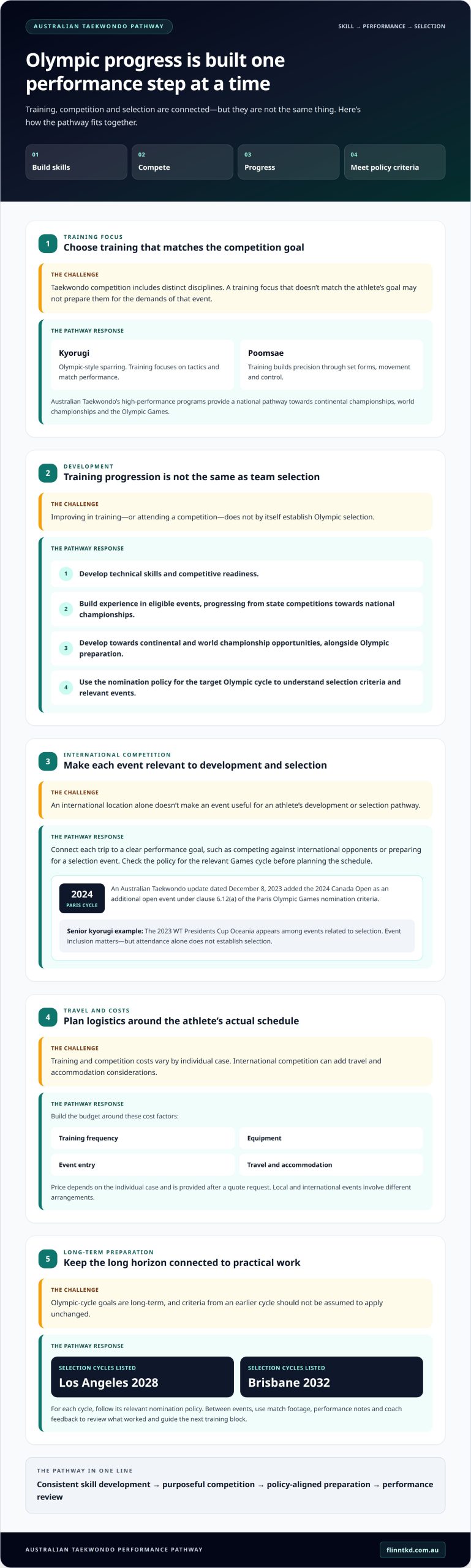
High-performance taekwondo training develops the skills athletes need for demanding competition. Sparring focuses on tactics and match performance, while poomsae training builds precision through set forms, movement and control. These are distinct disciplines, so match your training focus to your competition goals. Australian Taekwondo’s programs provide a national performance pathway towards continental championships, world championships and the Olympic Games.
Olympic-style sparring is called kyorugi. Australian Taekwondo’s high-performance programs form the national pathway described here; athletes develop sparring skills through club training and progress into competition.
Performance Centre and Pathway Project
The National Performance Centre is an important part of the high-performance pathway. A centralised environment can connect athlete preparation with coaching and performance goals. Australian Taekwondo’s high-performance programs provide daily training environments for top athletes and aspiring stars, supporting progression towards international championships.
Study can be part of an athlete’s sporting development. ACPE partnered with Australian Taekwondo and the Performance Pathway Project to support athletes pursuing both study and sport. This is an example of support that considers life beyond training. Funding and scholarship options depend on the particular program; the partnership itself is a study-and-sport support initiative.
Olympic Qualification Pathway
Progression starts with skill development, then builds through competition experience and higher-level performance opportunities. To move from state competitions towards national championships, athletes need to develop their technical performance and gain experience in eligible events. Australian Taekwondo’s performance pathways connect athletes with opportunities at continental and world championship level, as well as Olympic preparation.
Selection is separate from training progression. The nomination policy for the relevant Olympic cycle sets the criteria and events for team selection, so athletes need to align their preparation with that policy. The pathway to Olympic taekwondo in Australia combines sustained development with performance against the applicable selection requirements.
Training and Competition Costs
Training and competition costs in Australia depend on factors such as training frequency, equipment, event entry and travel. Price depends on the individual case and is provided after a quote request; these factors shape the total. International competition can add travel and accommodation considerations, while local events involve different arrangements.
Plan costs around the athlete’s training and competition schedule. Support for balancing study and sport may also be relevant, as shown by the ACPE partnership with Australian Taekwondo and the Performance Pathway Project.
Olympic preparation and international travel
International competition can test an athlete’s preparation beyond domestic events. Each trip should connect to a clear performance goal, such as gaining experience against international opponents or preparing for a selection event. Australian Taekwondo’s Olympic cycles give that planning a longer horizon: its selection guidelines list Los Angeles 2028 and Brisbane 2032.
Selection criteria can also shape which events matter. Australian Taekwondo identified an additional-events update dated December 8, 2023, for the Paris Olympic Games nomination criteria. It added the 2024 Canada Open as an additional open event under clause 6.12(a). That example shows why athletes need to understand the relevant cycle’s policy before building an international competition schedule.
For senior kyorugi, the 2023 WT Presidents Cup Oceania appears among events related to selection. An event’s place in a policy matters, but attending alone doesn’t establish selection. Athletes need to connect competition choices with the criteria and nomination process for their Olympic cycle.
Start travel preparation with the event’s purpose and schedule. Before an overseas competition, athletes and coaches can align training priorities, competition plans and recovery. Organise travel documents, accommodation, equipment and transport early to keep the focus on preparation and performance, particularly when travelling with a team.
International trips also demand flexibility. Travel can disrupt familiar routines, so athletes should plan how to maintain their preparation while away. The right event depends on its relevance to the athlete’s development and the applicable selection policy, not simply its international location. For context, Bailey Lewis, Leon Sejranovic and Stacey Hymer were named to Australia’s Paris 2024 Olympic taekwondo team.
Use each competition to review what worked and what needs attention. Match footage, performance notes and coach feedback can guide the next training block. For Brisbane 2032 planning, that steady cycle of preparation, competition and review keeps long-term ambition connected to practical work.
Olympic taekwondo nomination and team selection policies
Olympic selection depends on the nomination policy for the relevant Games cycle. Australian Taekwondo lists Los Angeles 2028 and Brisbane 2032 as Olympic selection cycles on its guidelines page. Athletes should use the policy for their target cycle, rather than assume earlier criteria will carry forward unchanged.
Age, belt rank and competition experience must be considered in light of the event and nomination requirements. No single belt milestone replaces the selection criteria. Competition experience helps athletes develop and demonstrate performance, but participation alone doesn’t determine team nomination. The policy for the relevant cycle is the practical reference for eligibility and selection.
Weight categories are part of Olympic kyorugi, and athletes compete in the division that applies to them. The relevant event rules determine division requirements and match procedures. These rules are separate from nomination criteria: meeting a division’s requirements does not itself secure selection.
Australian Taekwondo’s Paris 2024 criteria show how event lists can be updated. The organisation identified an additional-events update dated December 8, 2023, for the Paris Olympic Games nomination criteria. It named the 2024 Canada Open as an additional open event and added the events to clause 6.12(a) of those criteria. This illustrates why athletes must read the details and amendments for their own cycle.
Events related to senior kyorugi selection included the 2023 WT Presidents Cup Oceania. For pathway athletes, the key step is to distinguish events that contribute to a selection process from competitions that provide development experience. Check how the current policy treats each event before planning a competition schedule.
Australia’s Paris 2024 team included Bailey Lewis, Leon Sejranovic and Stacey Hymer. Their selection provides a concrete example of the outcome, while the policy remains the guide to the process. For Los Angeles 2028 or Brisbane 2032, athletes can organise preparation around the relevant cycle’s criteria, eligible events and performance requirements.
What is the pathway to qualify for Olympic taekwondo in Australia?
Qualification begins with sustained development in Olympic-style kyorugi and progression into performance competition. Training builds technical skill, tactical judgement and match experience. Athletes then use relevant events to demonstrate performance against the requirements set for their Olympic cycle. Australian Taekwondo lists Los Angeles 2028 and Brisbane 2032 as selection cycles, so the applicable policy depends on the Games targeted.
Think of the pathway as connected stages, not one qualifying tournament. Club and state competitions can build experience, while higher-level events test performance in stronger fields. National and international opportunities may form part of an athlete’s progression. The selection policy defines how nominated athletes are assessed. Competing often can support development, but it does not replace the policy’s eligibility and nomination requirements.
- Build foundations: Develop sound technique, fitness and discipline through consistent training.
- Gain competition experience: Progress through events that match your skill level and performance goals.
- Align with the cycle: Use the relevant Australian Taekwondo nomination policy to understand eligible events and selection criteria.
For example, Australian Taekwondo’s Paris 2024 nomination criteria included an update adding the 2024 Canada Open under clause 6.12(a). That example shows why athletes must distinguish an event’s role from general competition experience. The policy for Brisbane 2032 may set different criteria, so preparation needs to follow that cycle’s published requirements.
Age, belt rank and experience do not replace the current nomination criteria. Focus first on developing as a competitive athlete, then align event choices and performance goals with the relevant policy. That is the practical route from training towards Olympic selection in Australia.
No particular age, belt rank or level of competition experience is sufficient on its own. Athletes need to build competition experience and meet the eligibility and nomination requirements in the policy for their Olympic cycle.
Flinn 跆拳道學院
Flinn Taekwondo Academy helps you build the discipline, technique and confidence that support long-term taekwondo development in Brisbane. Beginners can build a foundation through the academy’s classes, while athletes preparing to compete can progress through High Performance training. Training supports development, but Olympic team selection follows the applicable Australian Taekwondo nomination policy.
Choose the next step that fits your current stage: Little Tigers Program (4-6 years), Junior Taekwondo Program (7-12 years), or Senior & Adult Taekwondo Program (13+ years). For competitive athletes, focused preparation can help turn selection goals into purposeful training priorities.
For a conversation about your training goals, contact Flinn Taekwondo Academy.
Make your next training step count
An Olympic ambition can feel far away, but progress starts with the work in front of you. Set a training goal you can act on now, build consistency, sharpen your technique and learn from each competition. As your experience grows, keep your preparation aligned with the selection requirements for your target cycle. That steady approach makes the pathway to Olympic taekwondo in Australia a practical journey, not just a distant dream.
Your next step doesn’t need to be dramatic. You might strengthen a skill, commit to regular training or explore whether competition suits you. The right support can help you set a clear direction and keep developing with purpose.
If you’re ready to take that step, contact Flinn Taekwondo Academy. Bring your goals, start where you are and keep moving forward with discipline and confidence.
常見問題
What are the selection criteria for the Australian national taekwondo team and Olympic squad?
Australian team and Olympic squad selection depend on the applicable nomination policy, not one universal test. For an Olympic campaign, use the policy for that Games cycle to understand its eligibility requirements, relevant events and nomination process. Treat national team selection and Olympic nomination as distinct decisions, and plan competition goals around the criteria for each.
How does Australia qualify taekwondo athletes for the Olympic Games, and what are the quota rules?
Australian athletes pursue Olympic selection under the nomination policy for the relevant cycle, while Olympic quota rules govern how places at the Games are allocated. These are related but separate steps: an athlete’s performance and nomination process do not, by themselves, explain how quota places are allocated. For a specific cycle, read the Australian criteria alongside the applicable Olympic qualification framework.
What are the injury risks and training demands of pursuing elite Olympic taekwondo?
Elite taekwondo involves consistent technical practice, physical preparation, sparring and competition, including contact and repeated effort during training. Recovery and sensible progression are important parts of preparation. Workload depends on the athlete’s stage and programme. If pain or injury affects training, pause and seek guidance from an appropriate health professional before returning to full activity.
What funding, scholarships, and athlete support are available for Australian taekwondo competitors?
ACPE partnered with Australian Taekwondo and the Performance Pathway Project to support athletes pursuing both study and sport. Funding and scholarship options depend on the particular program.