What if your child doesn’t need a push to be more outgoing, but safe chances to connect at their own pace? If you’re searching for “helping my shy child make friends brisbane,” you may be worried they’re lonely or being left out, while wondering whether to step in or give them more time. Shyness isn’t a flaw to fix. Your child deserves to feel understood, not labelled.
Friendship confidence can grow through small, repeated chances to practise, rather than pressure to perform. This guide explains how to notice what makes connecting difficult, try simple steps at home, and choose a group activity that feels manageable. It also covers signs that your child may need more support.
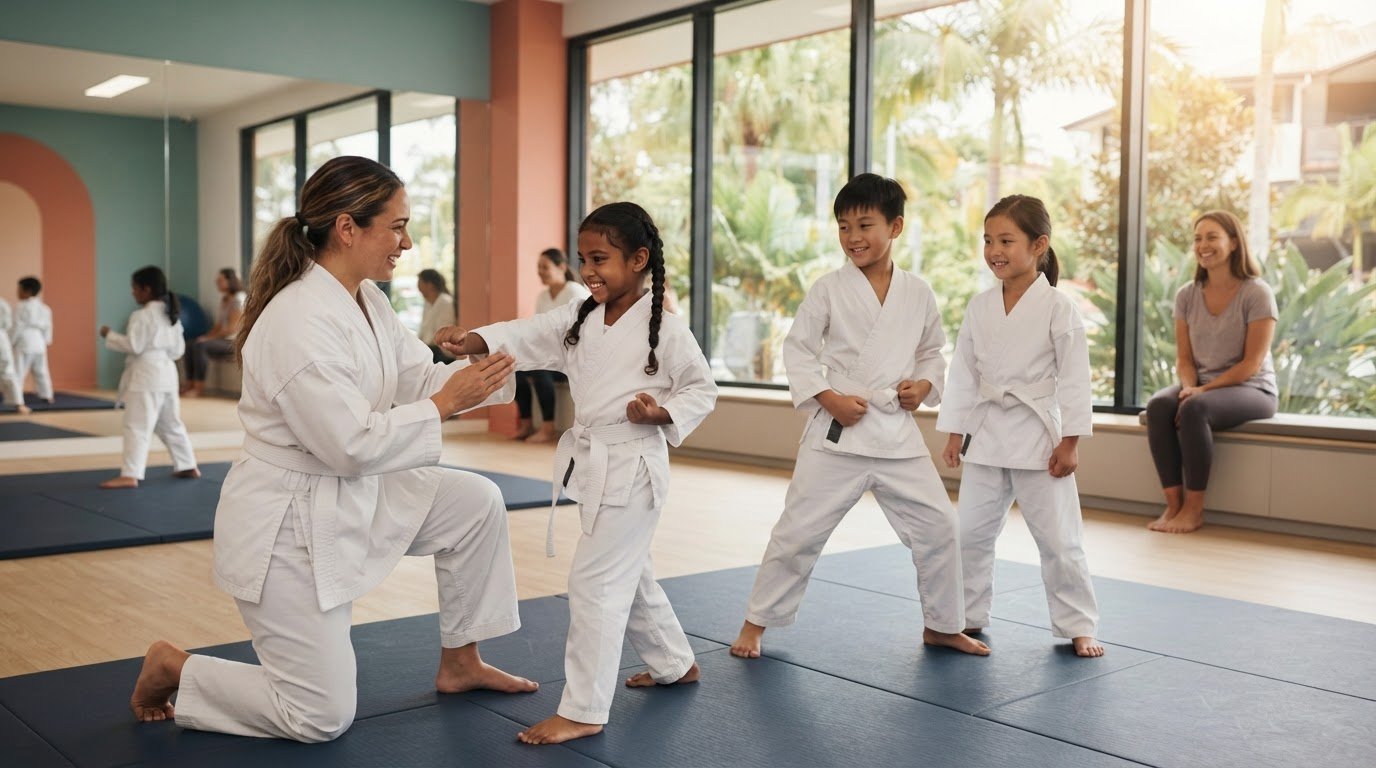
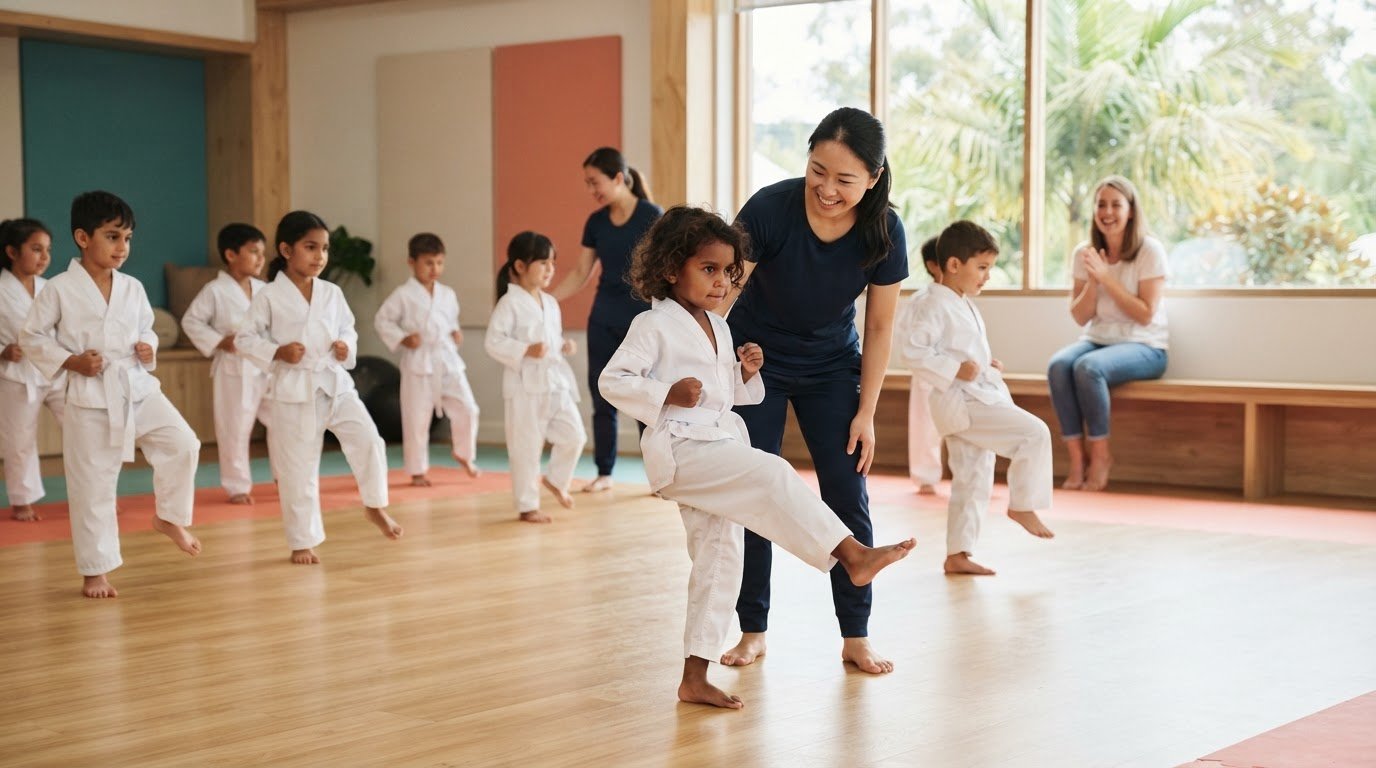
A structured activity can give children a steady way to practise listening, taking turns and participating alongside others. At Flinn Taekwondo Academy, Little Tigers is for ages 4-6 and Juniors is for ages 7-12. Taekwondo offers a shared focus and regular practice, though no activity can guarantee friendships or change a child’s personality.
主要心得
- Quietness alone doesn’t mean your child has a problem; notice whether they’re simply slow to warm up or feel persistently left out.
- Help your child practise connecting in small steps: start with an interest, rehearse a simple invitation, and try it in a manageable setting.
- Compare informal play, structured activities and tailored professional support to find an approach that fits your child’s needs and pace.
- Use a simple plan for helping my shy child make friends in Brisbane: listen, choose one achievable goal, practise, then reflect together.
- Consider whether shared routines in a Taekwondo class could give your child a comfortable way to practise participation, listening and confidence.
Helping a shy child make friends in Brisbane starts with understanding their pace
It can be hard to watch your child hover near a game, wait for someone else to speak first or come home without mentioning a friend. Your concern makes sense. Still, quietness on its own doesn’t mean something is wrong. Some children take longer to feel comfortable in a new group, while others are happiest with one familiar friend or a little time on their own.
In everyday terms, shyness is hesitation or reserve in social situations, especially unfamiliar ones. A child might want company but feel unsure how to enter a conversation or join play. The overview of Shyness describes it as a trait that can show up differently from person to person. The useful starting point for parents is not a label, but noticing what happens before, during and after social situations.
Low-pressure social confidence is the growing sense that a child can try a small social step, in their own time, without needing to get it perfect. That step could be answering a question, standing near a group or asking one child to play. It’s about having room to practise, not expecting an outgoing performance.
What might shyness look like in everyday friendships?
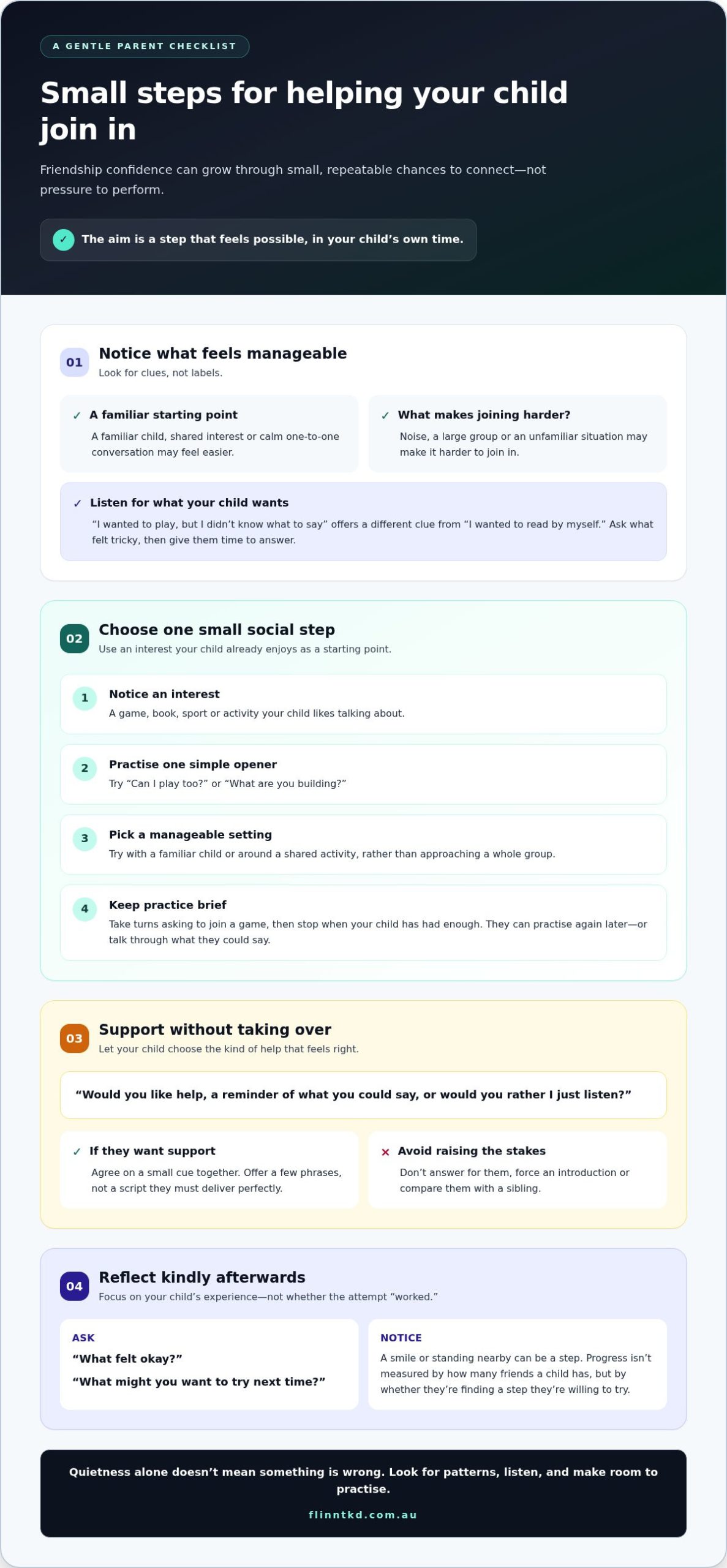
A child may watch a group they’d like to join, wait for an invitation, or stick close to a familiar friend at school or a local activity. They might chat freely with cousins but stay quiet around new children. Noise and a large group can make joining feel harder than a calm, one-to-one conversation. These differences offer clues about what feels manageable, rather than proof that your child doesn’t want friends.
Notice your child’s words and actions. “I wanted to play, but I didn’t know what to say” tells you something different from “I wanted to read by myself.” Ask what they enjoyed or found tricky, then give them time to answer. Describe what you saw without defining who they are: “You watched the game for a while before joining” is more open than “You’re too shy.”
When does a quiet temperament become a concern for parents?
Look for a pattern, not one awkward afternoon. You might notice repeated exclusion, distress before a social activity, or your child avoiding something they say they want to do. Consider whether it’s affecting their sense of belonging or participation in everyday life. A child who needs time to warm up may still feel content and connected; ongoing difficulty deserves a closer, compassionate conversation.
Choose a calm moment, not the rushed trip home or a time when your child is upset. Try open questions such as, “What happens when you want to join in?” or “Is there a part of play that feels tricky?” Listen before offering solutions. When thinking about helping my shy child make friends in Brisbane, these observations can help you distinguish a slow-to-warm-up temperament from a persistent friendship difficulty and choose a next step that responds to your child’s needs.
What helps a shy child feel safer joining play and making friends?
Social confidence doesn’t have to arrive in one big leap. Your child can build it through small, repeatable chances to connect, with permission to pause or try another day. The goal isn’t to make them perform as the most outgoing child in the room. It’s to help them discover a step that feels possible and practise it with your support.
Manageable practice makes connection feel less like a sudden test and more like a skill your child can build, one small step at a time. Start with something your child already enjoys, then make the social goal specific and modest:
- Notice an interest: Is there a game, book, sport or activity your child likes talking about?
- Choose one invitation: Practise a simple opener, such as “Can I play too?” or “What are you building?”
- Try it in a manageable setting: A familiar child or shared activity may feel easier than approaching a whole group.
- Reflect kindly: Ask what felt okay and what they might want to try next time, without judging the result.
Keep practice brief. You could take turns being the person asking to join a game, then stop when your child has had enough. They might choose to practise again later or simply talk through what they could say. Children’s Health offers additional parent ideas in Helping Children Make Friends, including creating opportunities around shared activities.
Small conversation and joining-in steps to practise
Offer a few phrases, not a script your child must deliver perfectly. “Can I have a turn after you?” might suit a playground game; “I like that book too” could open a conversation during a quiet activity. At the moment itself, your child may only manage a smile or standing nearby. Notice that effort. Progress isn’t measured by how many friends they have, but by whether they’re finding a step they’re willing to try.
How parents can support without taking over
Before stepping in, ask, “Would you like help, a reminder of what you could say, or would you rather I just listen?” If they want support, agree on a small cue together. Avoid answering for them, forcing an introduction or comparing them with a sibling. Those responses can make a social moment feel higher-stakes and leave less room for your child to act independently.
Where practical, arrange a low-key opportunity around a shared interest or a familiar child, and let your child know what to expect. Afterwards, focus on their experience: “What was easier than you expected?” or “What would you change next time?” Children’s Taekwondo training gives children a shared activity and routine where they can practise participating without making friendship the test of success.
Can a structured activity help a shy child make friends in Brisbane?
A group activity can give a child a reason to be alongside others without making conversation the whole focus. But it’s only one option. Informal play, a structured class and tailored professional support each serve a different purpose. The right fit depends on your child’s interests, comfort and needs. A child doesn’t have to become outgoing for an activity to be worthwhile. Taking part, observing or gradually becoming more familiar with the setting can all be meaningful.
| Setting | What it can offer | Pace and purpose |
|---|---|---|
| Informal play | Flexible time with a familiar child or shared activity | Led by the children, with room to keep things small and relaxed |
| Structured class | Shared instructions, routines and an activity to focus on together | Led by an instructor; participation can build as the child gets comfortable |
| Tailored professional support | Individualised guidance for a specific social, emotional or developmental concern | Shaped around the child and family’s needs, rather than a general activity goal |
These options aren’t interchangeable. A class can provide regular opportunities to practise participation, but it isn’t therapy and can’t guarantee friendships. If your child is experiencing ongoing distress or needs support tailored to a particular concern, an extracurricular activity shouldn’t be treated as a substitute for individual professional guidance.
What a structured Taekwondo class can offer
Taekwondo brings students together around shared instruction and movement. Following a demonstration, listening for directions and practising alongside others give children ways to take part without needing to start a conversation. Flinn Taekwondo Academy provides a supportive learning environment led by internationally accredited instructors, including Master Jeff Flinn, a 7th Dan Black Belt. Classes offer a coached setting to practise participation and confidence, not a promised social outcome.
How to tell whether the setting feels manageable
Watch your child’s response over time. Do they show curiosity, settle into the routine, or express interest in returning? They don’t need to speak readily or look confident straight away. Some children first take in what’s happening before joining more actively. Ask what felt comfortable or difficult, and take their answer seriously. If the setting consistently brings distress, pause and consider whether another approach better suits their needs.
If you’re considering helping my shy child make friends in Brisbane, think of a structured class as one possible place to practise being part of a group, not a test your child has to pass. Match the activity to what interests them, allow time to adjust, and value participation in whatever form feels manageable for your child.
A practical Brisbane parent plan for helping a shy child connect
A steady plan can turn a broad worry into one small next step. Keep your child involved in choosing that step, and let their response guide what happens next. Brisbane families can find everyday chances to practise, from greeting a familiar classmate at school pick-up to chatting with another child during a regular park visit. You don’t need to create a big event; familiar routines can be a comfortable starting point.
A gradual four-step plan parents can try
- Listen first. Ask, “What feels hard about joining in?” or “Is there a moment you wish went differently?” Give your child space to answer, even if they need time to think. Their perspective can help you understand whether the challenge is starting a conversation, entering an established game or feeling unsure in a busy setting.
- Choose one manageable goal together. Keep it specific and within your child’s control. They might say hello to a peer, ask one question about a game, or stay nearby while other children play. Agreeing on the goal together makes it practice, not a demand to make a friend.
- Practise in a familiar way. Briefly rehearse the words at home or talk through where and when your child might use them. Then look for a natural opportunity during an ordinary school, sport or community routine. You can offer a quiet reminder if your child wants one, but leave the speaking to them where possible.
- Review and adjust. Afterwards, ask what felt comfortable, what was difficult and whether they’d like to try the same step again or change it. Recognise effort, including an attempt that didn’t lead to a conversation. The aim is to learn what helps your child feel ready, not to score the interaction.
When the child needs a different pace or kind of support
Reluctance is useful information. If your child looks increasingly distressed, is fatigued, or asks to stop, pause rather than turning attendance or friendship into a test. You might shorten the activity, choose a familiar person or return to a smaller goal another time. A step back can protect trust and help you understand what made the situation feel too demanding.
If exclusion or distress keeps affecting your child, talk calmly with trusted adults already involved in their life, such as a teacher or activity leader. Sharing what you’ve noticed can help you understand whether the same pattern appears in other settings and agree on a consistent, supportive response.
If a structured activity seems like a possible fit, the Taekwondo classes guide for North Brisbane can help you explore that option. Families wanting an introduction to the martial art can also read the complete Taekwondo guide for Brisbane families. Flinn Taekwondo Academy offers children’s Taekwondo in a coached setting where children can practise participation through shared activity. Explore children’s Taekwondo at Flinn Taekwondo Academy.
How Flinn Taekwondo Academy can support confidence through shared practice
For some children, a shared activity can make being part of a group feel more natural. Attention is on learning and practising, rather than on having to start a conversation straight away. Flinn Taekwondo Academy is a family-owned North Brisbane school offering children’s Taekwondo programs in a supportive environment. Its classes give children a coached setting to practise listening, participating and building confidence at their own pace.
This may suit a child who enjoys movement, responds well to clear instruction or feels more comfortable connecting while doing an activity together. It’s also fine if your child needs time to watch and become familiar with the setting. There’s no requirement to become outgoing, make friends immediately or change their personality for the experience to have value. A class can offer opportunities to practise alongside other students, but it can’t guarantee friendships and isn’t therapy or individualised professional support.
Which Flinn Taekwondo Academy children’s program may fit your child’s age?
Flinn Taekwondo Academy’s Little Tigers Program is for children aged 4-6. The Junior Taekwondo Program is for children aged 7-12. These age ranges help families identify the program designed for their child’s stage. As you consider a class, think about your child’s interest in Taekwondo and how they usually respond to learning in a group. The right starting point should feel like an opportunity to explore, not a test of social confidence.
What families can expect from a supportive learning environment
Instruction is led by internationally accredited instructors, including Master Jeff Flinn, a 7th Dan Black Belt. In a coached Taekwondo setting, children can listen, observe and take part in shared practice. These routines create opportunities to work on focus and participation alongside others. Each child’s experience will be their own, so approach confidence-building as a gradual possibility rather than a promised outcome.
As you think about helping my shy child make friends in Brisbane, consider whether the activity itself appeals to your child, not just whether it might lead to new friendships. Talk together about what they’d like to learn and what would help them feel comfortable starting something new. Their response can guide a calm decision about whether a structured martial arts activity feels like a suitable next step.
Flinn Taekwondo Academy offers a supportive place for children to learn Taekwondo and practise taking part alongside others. Explore children’s Taekwondo at Flinn Taekwondo Academy to see whether its age-based programs feel like a positive next step for your family.
Take one comfortable step forward together
Your child doesn’t need to become the loudest voice in the group to build meaningful connections. Start by staying curious about what feels manageable for them, then give them room to choose a next step. A greeting, a shared activity or simply feeling ready to return can all help your child move forward at their own pace.
If you’re thinking about helping my shy child make friends in Brisbane, let your child’s interests guide the possibilities. A structured activity may offer a welcoming place to practise participation and focus alongside others, while you continue to support their confidence beyond class. Keep the goal simple: help your child feel capable of trying, not pressured to prove anything.
Flinn Taekwondo Academy offers a supportive place for children to learn Taekwondo and practise taking part alongside others. Explore children’s Taekwondo at Flinn Academy as one possible setting for shared practice and personal growth. Small steps count, and your encouragement can help your child take them with confidence.
常見問題
Is it normal for a child to be shy and have only one friend?
Yes. A child can be shy and feel happy with one close friendship; the number of friends alone doesn’t tell you whether they’re struggling. Notice how they talk about their day and whether they seem comfortable spending time with that friend. If they say they feel left out, ask what happened and what they’d like to be different. Their own experience matters more than comparisons with siblings or classmates.
How can I help my child join a group of children?
Ask what part feels hardest, such as approaching the group or knowing what to say. If your child wants to try, agree on one phrase they can remember, like “Is there room for me?” A shared activity, such as drawing or kicking a ball, can give them something to focus on while they join. Stay close if requested, then let your child take the lead. Praise their attempt, whatever the response.
Should I make my shy child attend social activities?
Don’t make attendance a test your child has to pass. Talk through what appeals to them and what feels daunting, then consider a small, agreed first step, such as watching an activity before deciding whether to participate. If they become distressed or ask to stop, take that seriously and reassess. Offering choices helps your child practise having a voice, while pressure to perform socially can make an already difficult situation feel harder.
Can Taekwondo help a shy child feel more confident?
Taekwondo offers a structured setting where a child learns movements, follows instruction and practises alongside other students. Those experiences may give them chances to participate and develop confidence, but each child responds differently. A class can’t promise new friendships or replace individualised support when that’s needed. Consider whether your child is interested in the activity and how they feel in a group learning environment before choosing it as an option.
What should I say when my child says they have no friends?
Start by acknowledging the feeling: “That sounds lonely.” Then give your child time to explain rather than immediately reassuring them that everything is fine. You might ask, “When do you feel most on your own?” or “Who would you like to get to know better?” If they’re ready, help them identify one small next step, such as spending time with a familiar classmate. Check in again later, even if the first conversation is brief.
When should I seek extra support for my child’s friendship difficulties?
Consider seeking further guidance if loneliness, exclusion or distress keeps recurring and begins affecting school, activities or your child’s wellbeing. Keep a brief record of what your child describes, when it happens and whether anything seems to help. Listen without trying to diagnose the reason. If a teacher or another trusted wellbeing support is already involved, share your observations and ask how you can work together to support your child’s sense of belonging.