What if the best way to build your child’s movement skills isn’t another drill, but more chances to play? If “how to improve child’s gross motor skills brisbane” is the question on your mind, start by looking at the movements your child enjoys and has opportunities to practise. Gross motor skills use the body’s larger muscles for everyday movement. Children develop them through repeated, varied experiences, encouragement and play that feels manageable for them.
This guide explains gross motor development in plain language and shares practical activities to try at home or outdoors in Brisbane. It also compares different ways to make movement part of family life, including structured Taekwondo practice. Flinn Taekwondo Academy’s Little Tigers Program gives children aged 4-6 opportunities to practise guided movement, balance and coordination. It can complement everyday play, not replace it or individual professional advice. If you’re concerned about your child’s progress, a qualified practitioner can help you understand what support may be useful.
主要心得
- Gross motor skills involve large muscle movements, while fine motor skills use smaller, more precise movements. Both support everyday activities.
- Playful repetition, variety and encouragement give children chances to practise balance, coordination and strength.
- Home play, playgrounds, organised sport and structured classes offer different movement opportunities. Choose what fits your child and family routine.
- If you’re wondering how to improve child’s gross motor skills brisbane, start with practical play and local activities that help your child move at a comfortable pace.
- Note specific movement concerns to discuss with a health professional. Little Tigers offers structured Taekwondo movement practice for children aged 4-6.
What Are Gross Motor Skills, and Why Do They Matter for Brisbane Children?
Running across a playground, stepping over a log or balancing while putting on shoes all ask a child’s body to work as a team. These movements use large muscle groups in the legs, arms, torso and back. Together, they’re called gross motor skills. The 粗大動作技能 overview describes how these abilities support broad movements such as walking and jumping.
Gross motor control differs from fine motor control. Walking up steps or throwing a ball relies on larger body movements; picking up a small toy, turning a page or drawing uses precise movements of the hands and fingers. Children use both throughout the day, sometimes in the same activity. For example, climbing onto a playground platform uses the whole body, while gripping the rails also calls on hand control.
Movement helps children explore, join games and take part in everyday routines. As they practise, they can discover what their bodies can do and become more willing to try. There’s no single activity every child needs to enjoy. Interests and opportunities shape what they practise, whether that means kicking a ball in the yard, walking along a path or climbing at a Brisbane playground.
Which movements count as gross motor skills?
Common examples include walking, running, jumping, climbing, balancing and throwing. Play often combines several skills: chasing a ball might involve running, changing direction, stopping, balancing and kicking. A playground visit can involve climbing, stepping, reaching and landing. Notice the range of movements your child tries, rather than focusing on whether they can perform one action on cue. Their favourite games and the play spaces available to them influence what they practise.
How can parents notice movement development?
Look at everyday participation rather than measuring your child against siblings or peers. Do they try movements that interest them? Do they join active play in ways that seem comfortable? A single stumble or reluctance to try a game doesn’t diagnose a developmental difficulty. If something concerns you, note the specific movement, where it happens and whether you notice changes over time. Share those observations and your questions with your GP or a qualified child-development professional.
If you’re considering how to improve child’s gross motor skills brisbane, begin by noticing which movements your child enjoys and where they can practise them. Keep activities playful and encouraging. Children develop at different rates, so patterns over time can give you a clearer picture than one moment on the playground.
How Do Children Build Balance, Coordination, and Strength Through Play?
Children build movement skills by trying actions, repeating them and exploring small challenges that feel enjoyable. A game can invite another attempt without making practice feel like a test. Keep the activity safe and let your child set the pace. If they lose interest, change the game or take a break.
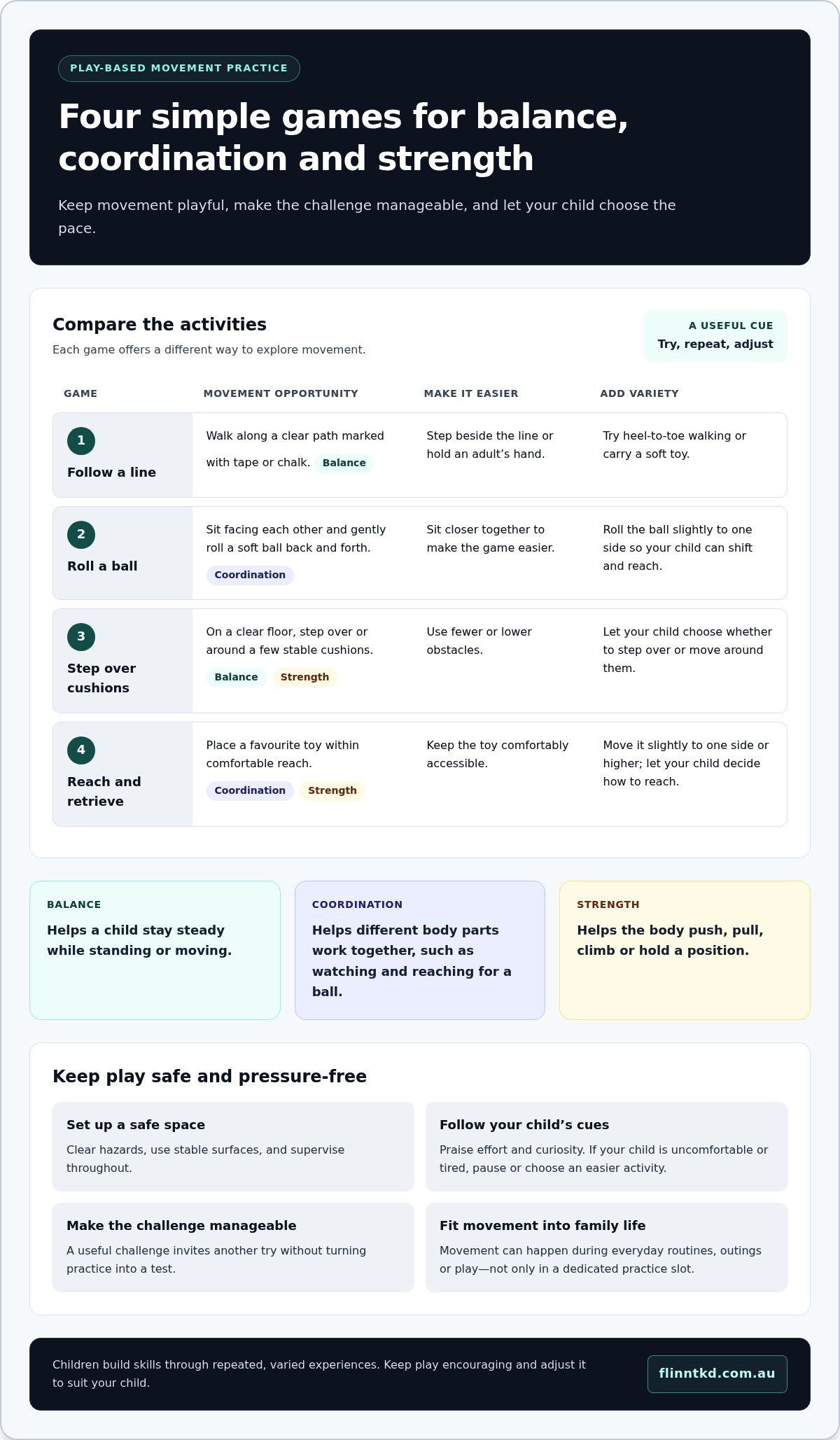
Balance helps a child stay steady while standing or moving. Coordination helps different body parts work together, such as watching and reaching for a ball. Strength helps the body push, pull, climb or hold a position. These skills support one another, but they aren’t interchangeable. A child might confidently step over an obstacle while still learning to catch a ball.
Simple balance and coordination games to try
Use what you have at home and adjust the challenge to suit your child’s confidence and ability. Keep the play area clear and supervise throughout:
- Follow a line: Mark a clear path on the floor or ground with tape or chalk. Invite your child to walk along it. For an easier version, let them step beside the line or hold your hand. If they’re keen, they can try walking heel-to-toe or carrying a soft toy.
- Roll a ball: Sit facing each other and gently roll a soft ball back and forth. Sit closer together to make the game easier. To add variety, roll the ball slightly to one side so your child can shift position and reach.
- Step over cushions: Place a few stable cushions with space between them on a clear floor. Supervise as your child steps over or around them. Use fewer or lower obstacles to make the route simpler.
- Reach and retrieve: Put a favourite toy within comfortable reach, then move it slightly to one side or higher. Keep it accessible and let your child choose whether to reach, bend or take a step.
Stay close, clear away hazards and use stable surfaces. Praise effort and curiosity, not just a successful attempt. A useful challenge invites another try without creating pressure. If your child is uncomfortable or tired, pause or choose an easier activity.
Make movement part of everyday routines
Movement doesn’t need a dedicated training slot. At home, invite your child to carry a light item or copy simple actions as you tidy up. At childcare, a playground or on a family outing, give them time to explore age-appropriate spaces at their own pace. Short, regular opportunities to move can fit more naturally into family life than a rigid practice schedule.
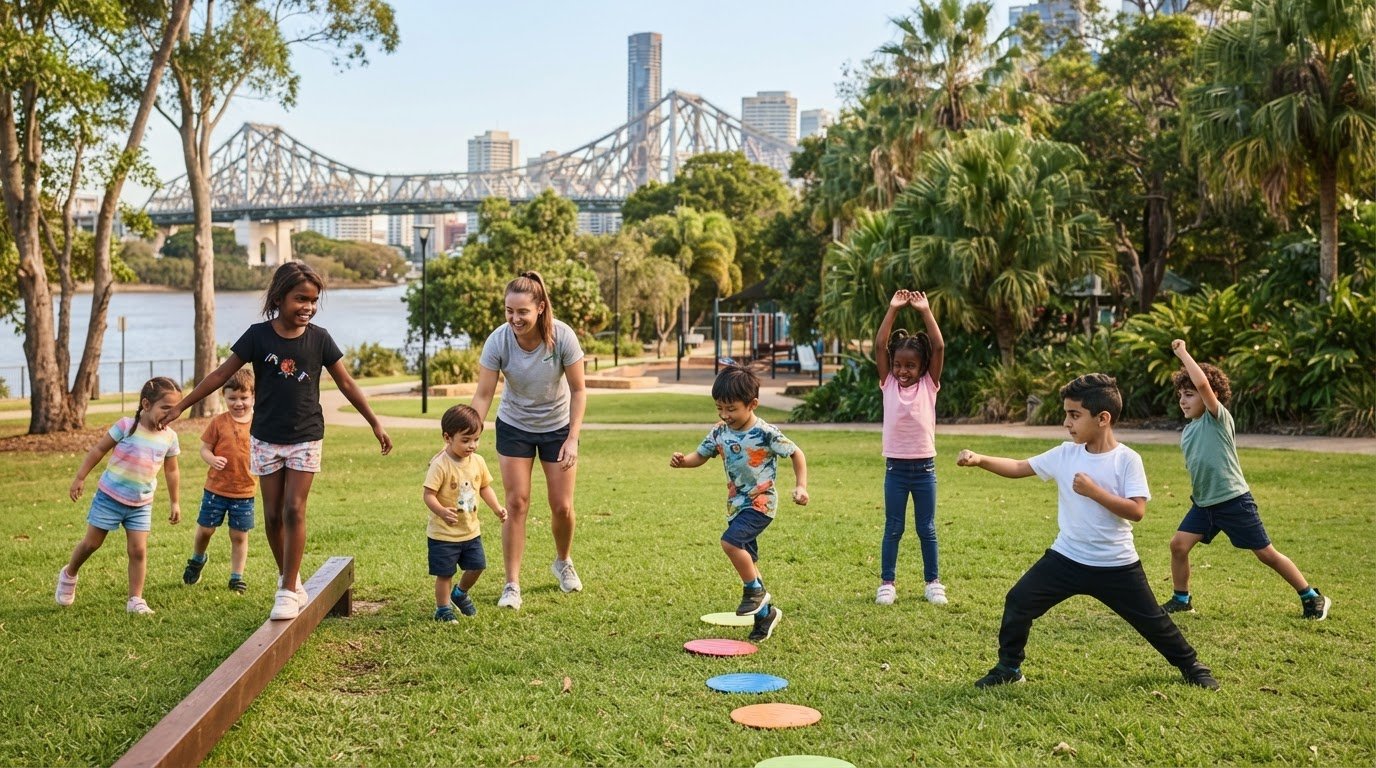
In Brisbane, adapt outdoor play to the weather. Look for shade on hot, sunny days and choose a surface suited to the activity. If rain or heat changes your plans, try a clear indoor space instead. Families looking for structured activity alongside everyday play can explore Little Tigers Taekwondo classes for children aged 4-6.
Varied, enjoyable play gives children repeated chances to practise balance, coordination and strength in ways that suit their interests and confidence.
Which Brisbane Activities Give Children More Chances to Move?
Brisbane families can build movement into everyday play, playground visits, organised sport and structured movement classes. Each setting offers different ways to practise, and these options can complement one another. The best fit depends on what your child enjoys, how they feel in a group and which movements they’re ready to explore.
| Setting | Movement opportunities | Adult support | Adaptability |
|---|---|---|---|
| Home play | Dance, follow-the-leader games, simple obstacle routes | A parent or carer can join in and supervise | Easy to adjust the space, pace and activity |
| Playground | Climbing, running, balancing and exploring equipment | An adult can stay nearby and help keep play safe | Children can choose what to try and take breaks |
| Organised sport | Running, kicking, throwing and changing direction | A coach guides group activities; adults can encourage participation | Activities follow a group structure and may involve shared rules |
| Structured movement class | Practising guided movements, stepping and balance | An instructor leads the session, with family encouragement | Practice follows the class format and can offer clear prompts |
How to choose an activity that suits your child
Start with your child’s interests. A child who enjoys copying actions may like a guided class, while one who prefers exploring independently might feel more at ease at home or in a playground. Also consider their energy, comfort in groups and current confidence. Look for clear instructions, appropriate supervision and opportunities to participate at their own pace. If you’re exploring how to improve child’s gross motor skills brisbane, trying different settings can show you which activities feel encouraging and enjoyable for your child.
What structured Taekwondo can add to active play
Taekwondo is one structured movement option, not therapy and not a replacement for free play. Age-appropriate practice can involve stepping, controlled movements and balance, with an instructor providing guidance and opportunities to repeat actions. Following instructions and practising alongside others can also give children opportunities to participate and build confidence, although each child’s experience is individual.
Flinn Taekwondo Academy’s Little Tigers Program is for children aged 4-6. It provides a structured setting to explore movement alongside the active opportunities families find in everyday life. For more background, read the complete guide to Taekwondo for Brisbane families.
When Should Brisbane Parents Seek Advice About Gross Motor Development?
Children develop movement skills at different rates, and milestones are guides rather than pass-or-fail tests. One missed jump, a cautious approach to climbing or an awkward moment on the playground doesn’t diagnose a problem. Look for patterns over time and consider how your child participates in different everyday situations.
If you have an ongoing concern, you don’t need to wait until you’re certain something is wrong. A conversation with your GP or an appropriate child-health professional can help you work out whether an individual assessment or further support may be helpful. Seek prompt professional advice if your child suddenly loses abilities they previously had, such as walking independently or climbing stairs.
What should you observe before asking for help?
Make a few brief notes to help explain what you’ve noticed. Include the movement, the setting and how your child responds. For example, do they find it difficult to step up at home but move comfortably at the playground? Does the same challenge appear in different games, or only in a busy group? These details provide more context than a single observation.
Include your child’s perspective, too. Note what they enjoy, what they avoid and whether they seem worried, tired or eager to join in. You could record:
- Which movements seem difficult and which feel comfortable.
- Where and during which activities the challenge appears.
- Whether you’ve noticed a change over time or across different settings.
- What your child says or shows about taking part.
How can Brisbane families take a practical next step?
Bring your notes and questions to your GP or a qualified child-development professional. An individual assessment can consider your child’s broader circumstances rather than judging progress from one skill or comparing them with another child. You might ask what to watch for, whether further assessment is appropriate and how to support safe participation in everyday activities.
Keep enjoyable movement opportunities available while following professional guidance. Adjust activities to your child’s comfort, and avoid turning practice into pressure. If you’re exploring how to improve child’s gross motor skills brisbane through active play, a structured class can complement everyday movement, but it isn’t a substitute for individual advice about a concern.
For children aged 4-6, Flinn Taekwondo Academy’s Little Tigers Program offers structured Taekwondo practice with opportunities to move, balance and coordinate. Explore Little Tigers Taekwondo as one active option alongside play and any professional guidance your family receives.
How Can Flinn Taekwondo Academy Support Active Growth in North Brisbane?
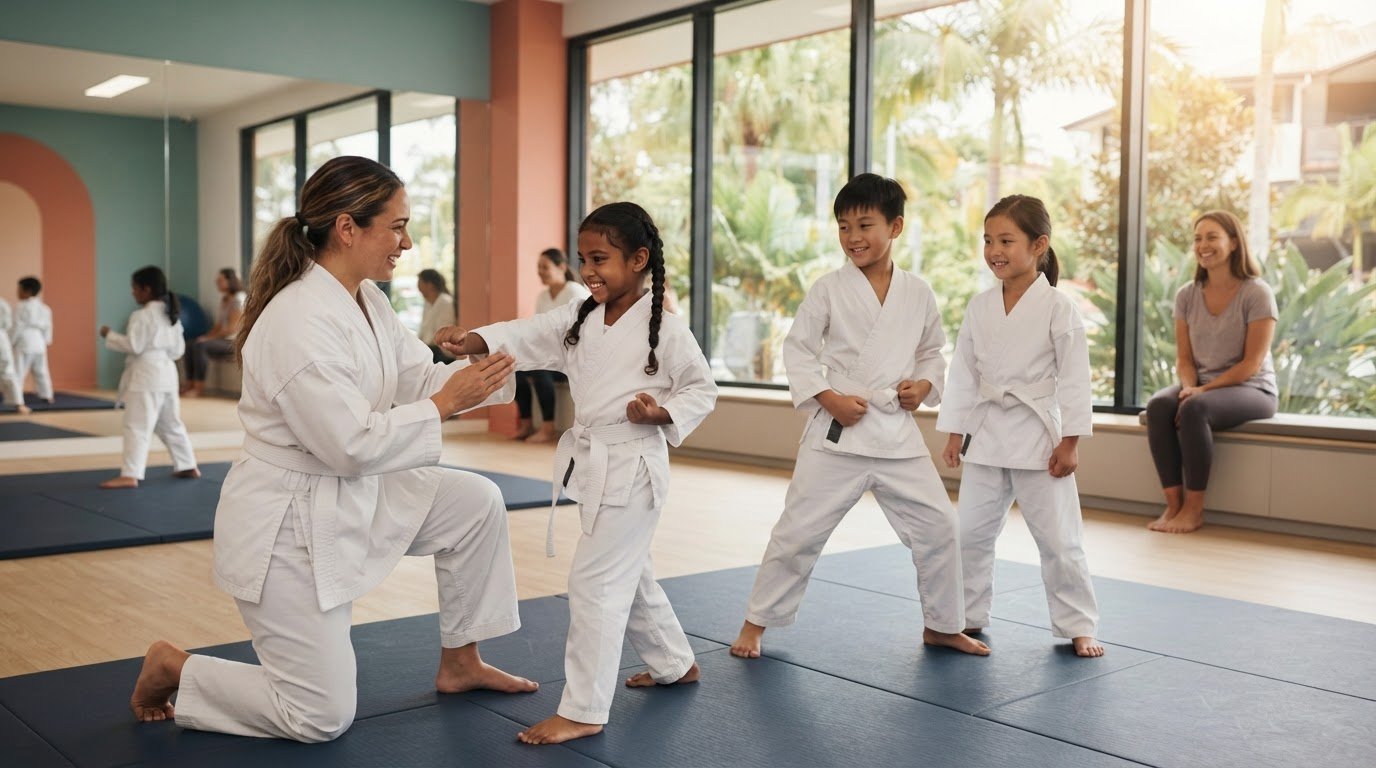
Play at home and time outdoors give children freedom to explore movement. A structured class adds a different opportunity: guided practice, clear instructions and encouragement to keep trying. Flinn Taekwondo Academy’s Little Tigers Program is designed for children aged 4-6 and provides Taekwondo training in a supportive, structured setting.
Taekwondo isn’t therapy, and no class can guarantee a particular developmental result. It does give children a chance to practise movement skills as part of an activity with guidance and structure. For families exploring how to improve child’s gross motor skills brisbane, it can be one option alongside playful movement at home and other activities their child enjoys.
What can children experience in the Little Tigers Program?
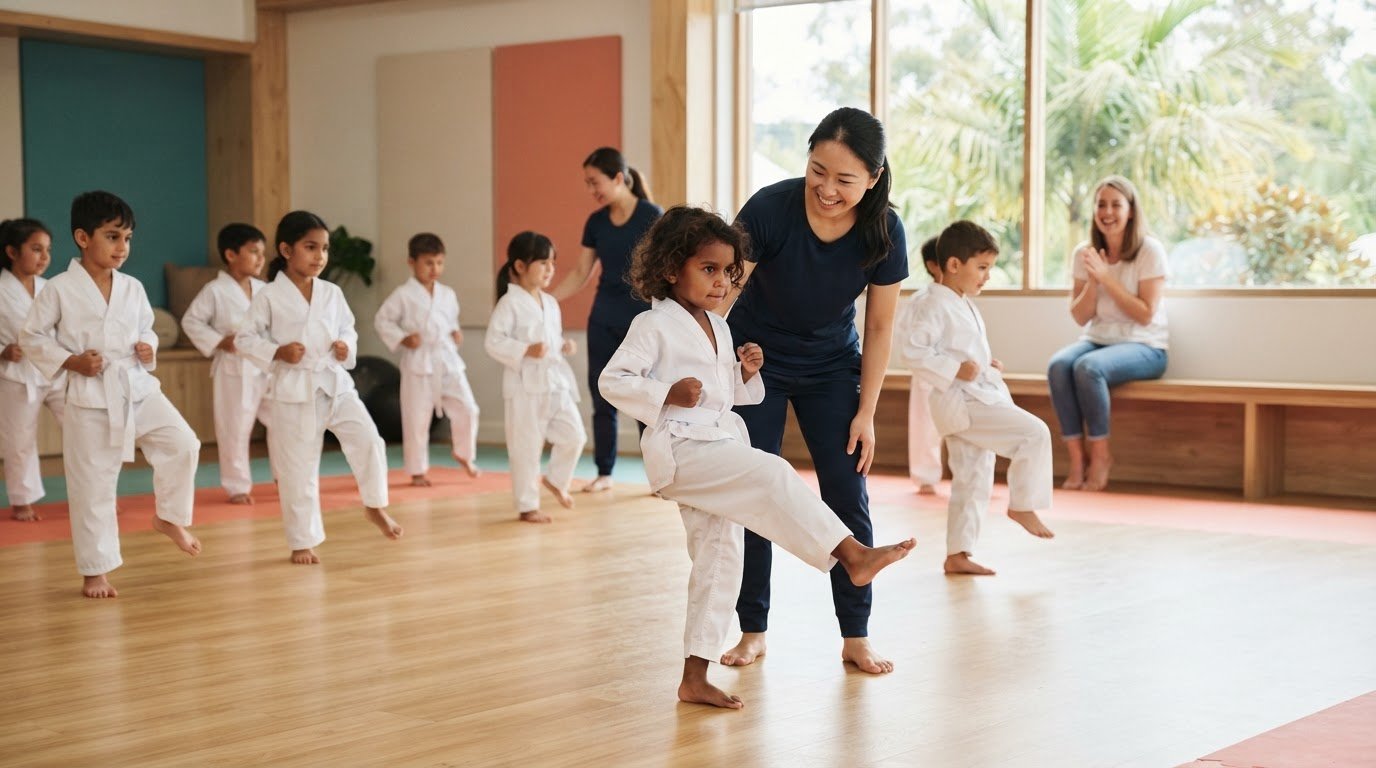
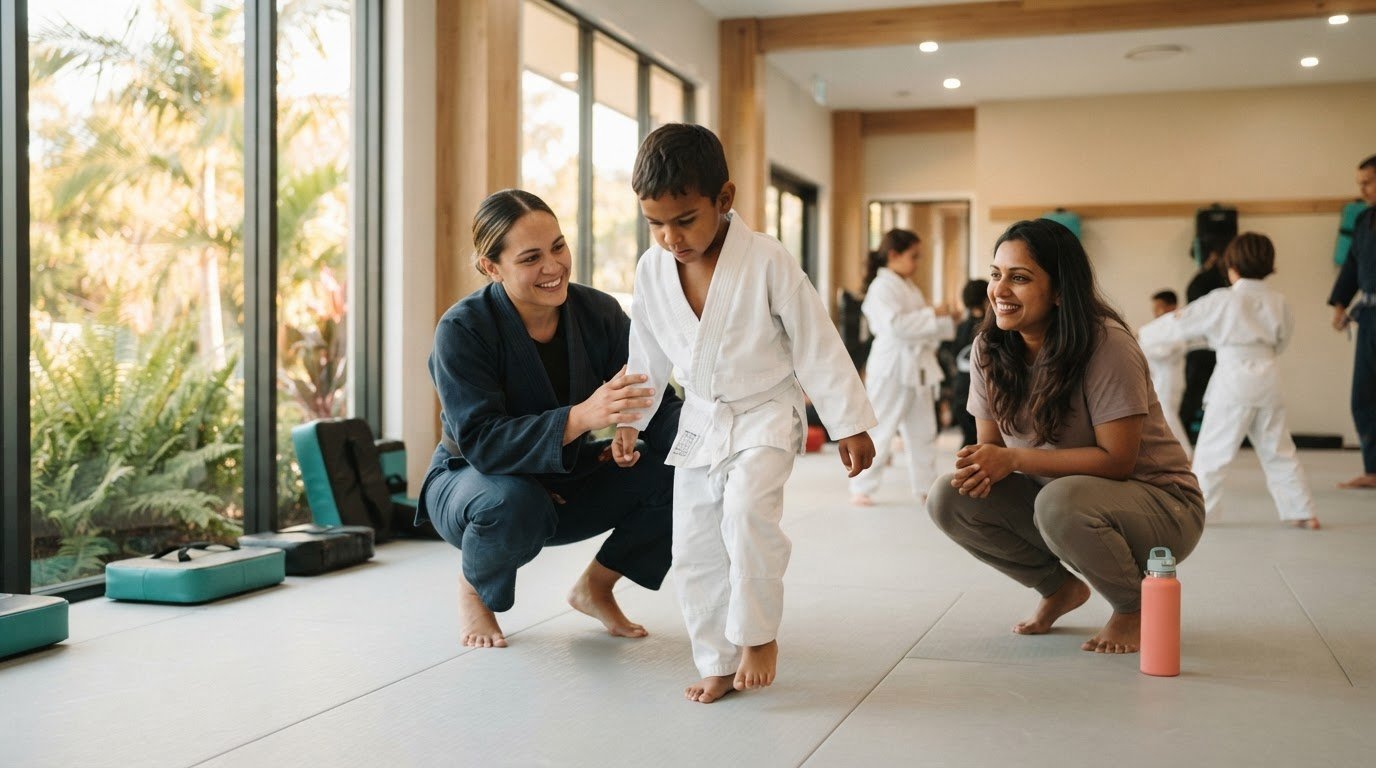
Children in Little Tigers take part in age-appropriate Taekwondo practice. Guided movement may involve stepping, controlled actions and balance, with opportunities to listen, try and practise. Encouragement supports children to approach each activity at their own pace and take part in a supportive learning environment.
Class participation involves more than movement alone. A structured routine gives children opportunities to practise focus, discipline and confidence while learning alongside others. Each child responds differently, so the aim is to support participation and effort rather than promise a specific outcome. Families can continue to offer relaxed, enjoyable movement at home as well.
How can parents explore Taekwondo in North Brisbane?
Consider how a class could fit your family’s routine and your child’s interests. Some children enjoy the rhythm of guided activities; others may need time to become comfortable in a new setting. Taekwondo can sit alongside playground visits, family outings and informal play rather than replacing those experiences.
Flinn Taekwondo Academy offers Taekwondo classes in North Brisbane, including the Little Tigers Program for children aged 4-6. If you have an ongoing concern about your child’s movement, discuss it with a GP or qualified child-development professional. A class can complement professional guidance, but it doesn’t replace individual advice or assessment.
If Little Tigers sounds like a possible fit for your child and family routine, Explore the Little Tigers Program.
Build Confidence Through Everyday Movement
Helping your child develop gross motor skills doesn’t require perfect drills or a packed schedule. Varied, enjoyable play gives them chances to practise balance, coordination and strength at their own pace. Home activities, Brisbane playgrounds and structured classes can all contribute, while ongoing concerns are best discussed with a GP or qualified child-development professional.
If you’re exploring how to improve child’s gross motor skills brisbane, consider what makes movement enjoyable for your child and build from there. For children aged 4-6, Flinn Taekwondo Academy’s Little Tigers Program offers structured Taekwondo practice with opportunities to try guided movement. Established in 2013, the academy is led by Master Jeff Flinn, a 7th Dan Black Belt with international accreditation.
Explore the Little Tigers Program to see how structured Taekwondo could complement your family’s active routine. Explore the Little Tigers Program.
常見問題
What are gross motor skills in children?
Gross motor skills are movements that use the body’s large muscle groups, including those in the arms, legs and torso. Children use them to walk, run, jump, climb, balance and throw. These broad movements differ from fine motor tasks, which need smaller, more precise movements, such as drawing, turning a page or picking up a small object. Both types of skills help children take part in everyday activities and play.
How can I improve my child’s gross motor skills at home?
Offer enjoyable, supervised games that invite your child to move, such as dancing, following a simple path or rolling a soft ball together. Repeat favourite activities, then make small changes if your child is keen, like moving the ball farther away. Keep the space clear and the challenge comfortable. If you’re researching how to improve child’s gross motor skills brisbane, remember that children differ, and movement practice should feel encouraging, not pressured.
What activities help children develop balance and coordination?
Try walking along a clear line, stepping over stable cushions or rolling a soft ball back and forth. These activities invite children to steady their bodies and coordinate movements. Make a game easier by shortening the path, reducing obstacles or moving closer together. Add a small challenge only if your child wants one. Choose a safe space with enough room, supervise closely and stop if your child seems uncomfortable or tired.
At what age should a child develop gross motor skills?
Gross motor skills emerge and change throughout childhood, and children don’t all develop at the same pace. A milestone can help guide observation, but it can’t diagnose a developmental concern on its own. Notice how your child moves during everyday activities and whether particular skills or situations raise questions. If you’re concerned about your child’s progress, talk with your GP or a qualified child-development professional for advice suited to your child.
When should I worry about my child’s gross motor development?
Consider seeking advice if movement difficulties persist, affect participation or appear across different activities and settings. Write down specific examples, when they happen and any changes you’ve noticed, rather than relying on one moment or comparing your child with peers. Discuss your observations with a GP or qualified child-development professional. If your child loses a movement ability they previously had, seek prompt professional advice. An individual assessment can consider the full picture.
Can Taekwondo help improve a child’s gross motor skills?
Age-appropriate Taekwondo classes offer structured opportunities to practise movements such as stepping, controlled actions and balance. Children may also practise listening and taking part in guided activities. Each child’s experience and progress will differ, so a class can’t guarantee developmental outcomes. Taekwondo is not therapy and doesn’t replace tailored clinical support. If you have concerns about your child’s movement, seek advice from a GP or qualified child-development professional.
Where can my child try Taekwondo in North Brisbane?
Flinn Taekwondo Academy in North Brisbane offers a Little Tigers Program for children aged 4-6. In this structured Taekwondo setting, children have opportunities to practise guided movement and learn alongside others with encouragement. The program can complement active play at home and other suitable activities, but it doesn’t replace clinical advice when needed. Explore the Little Tigers Program as a structured movement option for your child and consider how it could fit your family routine.