What if the secret to your child’s school readiness and personal confidence isn’t found in a classroom, but on a training mat? You want an activity that challenges your family physically without the aggressive atmosphere often associated with combat sports. Finding a local club that balances expert accreditation with a welcoming, community-first feel can be difficult. If you’ve been searching for Taekwondo Albany Creek, you’re likely looking for more than just a workout; you’re looking for a developmental pathway that grows with your family.
We understand that your time is valuable and your standards for coaching are high. This guide reveals how elite martial arts training builds lasting discipline and self-defence skills for students of all ages through expert-led coaching. You’ll discover how specialized programs like Little Tigers prepare four-year-olds for the playground, while our high-performance tracks push senior students toward their personal best. From 7th Dan Master-led instruction to a supportive environment that feels like home, see why the right academy makes all the difference for your fitness and focus in 2026.
主要心得
- Understand why local families are moving beyond generic fitness to embrace Taekwondo Albany Creek as a foundation for character building and mental focus.
- Identify the specific developmental benefits of age-segregated training, from our specialized Little Tigers program for preschoolers to our technical Senior curriculum.
- Learn about the elite competitive pathway that bridges the gap between traditional martial arts and high-performance, Olympic-style sport Taekwondo.
- Discover the essential criteria for choosing an academy, focusing on the importance of internationally accredited instructors and a 7th Dan Master’s lineage.
- Prepare for your first visit with clear insights into class structures and the simple steps you can take to begin your journey toward a black belt.
Why Albany Creek Families are Choosing Taekwondo in 2026
Families in North Brisbane are looking for activities that offer more than just a sweat session. You want a program that shapes your child’s character while improving their physical health. This is why Taekwondo Albany Creek has become a cornerstone of local family life. We’ve seen a clear shift from generic, uninspired fitness routines toward goal-oriented martial arts training that provides a clear sense of purpose. In a world where digital distractions are everywhere, our structured environment offers a vital physical antidote to excessive screen time.
The Core Benefits of Martial Arts Training
Training at our academy isn’t just about learning to kick. It’s about developing a robust body and a resilient mind. While the history and philosophy of Taekwondo are steeped in tradition, the modern application of these skills is incredibly practical for today’s world. You’ll notice improvements in your coordination, functional strength, and flexibility within just a few weeks. Beyond the physical, we cultivate the ‘indomitable spirit’, which is a mental fortitude that helps students face daily challenges with unwavering confidence.
Safety is always our priority. Our students learn practical self-defence classes in a controlled, supportive setting. We focus on several key areas of growth:
- Building physical resilience through disciplined technical drills.
- Enhancing situational awareness to ensure everyday safety.
- Developing the agency to stand tall in any social environment.
Building Community in North Brisbane
When you join Flinn Taekwondo Academy, you aren’t just another number on a spreadsheet. You’re part of a family-owned institution that takes pride in the success of every member. Local parents often tell us they prefer our academy over large franchises because of the personal connection we foster. We aim to create respectful, community-minded citizens who carry the values of the mat into their schools and workplaces. It’s about raising the standard of living for everyone in our local area.
Our academy serves as a hub for like-minded families who value discipline and hard work. By training together, students build lasting friendships and a genuine sense of belonging to a team. This community focus ensures that every session is encouraging and inclusive. It makes us the premier choice for Taekwondo Albany Creek residents who want an authentic, high-standard training experience for their families.
Age-Specific Programs: From Little Tigers to Adult Excellence
Effective martial arts training isn’t a one-size-fits-all experience. At Flinn Taekwondo Academy, we believe that age-segregated training is vital for both technical precision and social development. When students train with peers of a similar developmental stage, they progress faster and feel more comfortable taking risks. Our curriculum structure ensures that every student, from a preschooler to a working professional, receives instruction tailored to their specific needs. This organized approach is why many families seeking Taekwondo Albany Creek trust us with their long-term growth.
The journey begins with foundational movements and gradually transitions into advanced technical poomsae. By separating classes, we ensure that the intensity and complexity match the student’s capability. This prevents younger children from feeling overwhelmed while allowing adults to push their physical limits. We align our teaching methods with the latest Junior Taekwondo Brisbane standards, ensuring a consistent level of quality across all age groups.
Little Tigers: Focus for 4-6 Year Olds
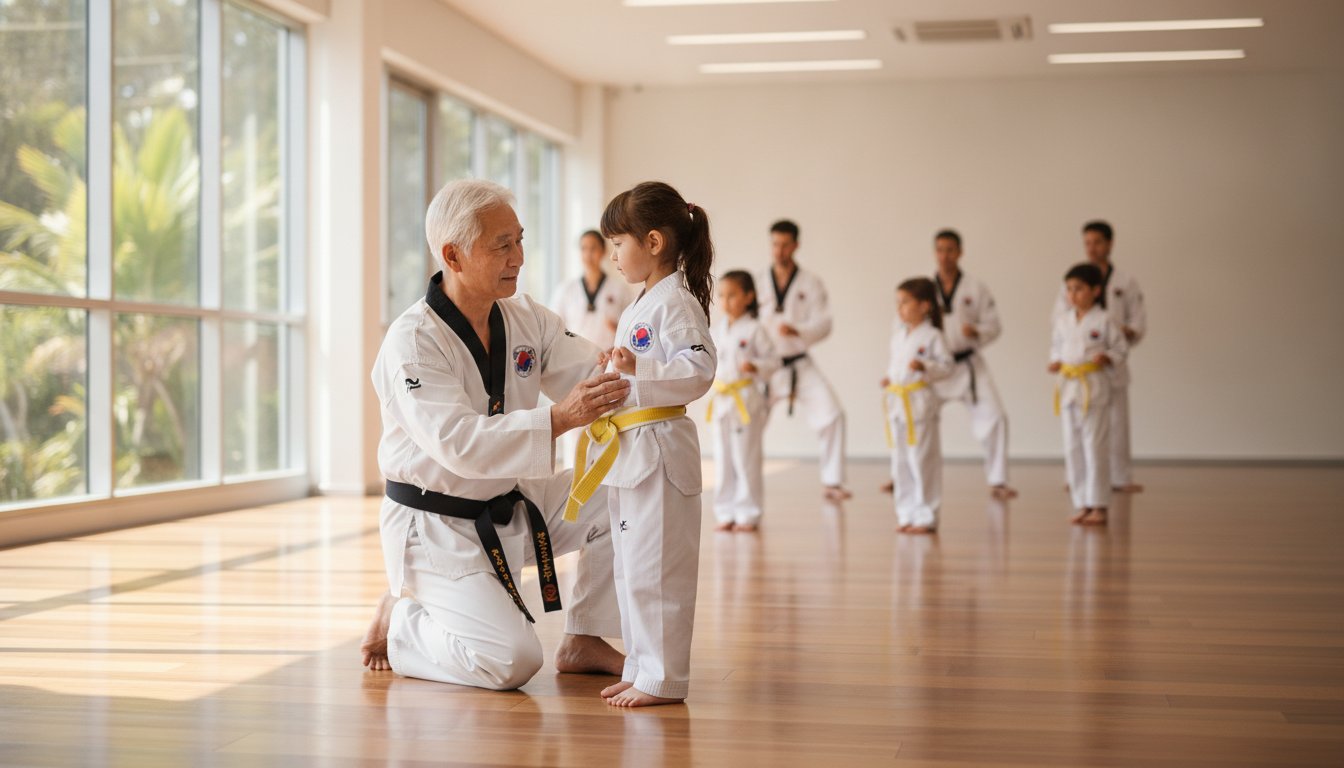
Our Little Tigers Program (4-6 years) is designed specifically for early childhood development. We focus on building school readiness through enhanced listening skills and the discipline to follow multi-step instructions. Instead of complex combat, we use fun-based drills to improve balance and gross motor skills. Your child will gain the confidence to lead their peers and the focus required for a classroom environment. We prioritize a supportive atmosphere where every small victory is celebrated, helping preschoolers develop a positive relationship with physical activity from their very first lesson.
Junior and Adult Pathways
As students grow, our Junior Taekwondo Program (7-12 years) shifts toward leadership, grit, and technical proficiency. We challenge these students to master intricate patterns and sparring techniques, fostering a sense of achievement that carries over into their academic lives. For older participants, our Senior & Adult Taekwondo Program (13+ years) offers a powerful outlet for stress relief and functional fitness. Whether you’re interested in the technical aspects of an official Olympic sport or simply want to improve your stamina, our pathway from white belt to black belt supports your individual goals.
Adults often find that the structured nature of our classes provides a mental break from professional responsibilities. You’ll work on flexibility, core strength, and cardiovascular health in a respectful environment. If you’re looking for a way to challenge yourself while learning a practical skill, exploring our adult classes is an excellent place to start. Our Taekwondo Albany Creek community is ready to welcome you, regardless of your current fitness level or previous experience.
The High-Performance Edge: Competitive Taekwondo in Albany Creek
High-level training transforms a hobby into a pursuit of excellence. While some local clubs focus solely on traditional forms, Taekwondo Albany Creek at our academy offers a distinct pathway for those with competitive aspirations. We bridge the gap between recreational activity and elite sport by integrating High Performance Taekwondo Brisbane techniques into our daily sessions. This approach ensures you develop the speed, agility, and tactical mindset required for modern competition. Whether your goal is a state title or national recognition, we provide the platform to test your limits.
Competition isn’t just about winning medals. It’s a powerful tool for character building. Stepping onto the mats in a tournament setting teaches students how to manage pressure and bounce back from setbacks. You’ll learn that success comes from months of disciplined preparation and the courage to face an opponent. We’ve seen how this high-performance environment fosters a unique type of resilience that benefits students in their academic and professional lives long after the match ends. It’s about developing the agency to perform when the stakes are high.
Olympic-Style Sparring and Poomsae
We specialize in World Taekwondo (WT) rules, which are the same standards used in the Olympic Games. Our coaching covers advanced sparring strategies, focusing on timing, footwork, and explosive scoring techniques. For those who prefer technical mastery, our Poomsae technical training demands absolute precision and mental focus. We prioritize safety by using industry-compliant protective gear, ensuring you can train effectively while minimizing the risk of injury. Every drill is designed to refine your technical execution to an elite standard.
Expert Leadership under Master Jeff Flinn
Quality instruction starts at the top. Training at Flinn Taekwondo Academy means you’re learning under the direct guidance of Master Jeff Flinn, a 7th Dan Black Belt. Established in 2013, our academy benefits from Master Flinn’s extensive international experience and accredited coaching methodology. This level of expertise is rare in the North Brisbane area and ensures you receive the highest standard of instruction available. You aren’t just learning moves; you’re following a proven system of success.
Master Flinn’s mentorship extends beyond the technical mechanics of a kick. He focuses on the holistic development of every athlete, guiding you through the mental hurdles of high-level training. You’ll belong to a team that values tradition while embracing modern athletic standards. This combination of accredited leadership and a supportive community makes our Taekwondo Albany Creek programs the premier choice for families who want to see their children reach their full potential on and off the mats.

What to Expect: Starting Your Journey at Flinn Taekwondo
Entering the dojang for the first time should feel like an invitation to grow, not an intimidating trial. We’ve built a culture at Flinn Taekwondo Academy that prioritizes your comfort while maintaining the discipline of the art. When you search for Taekwondo Albany Creek, you’re looking for a place where your family feels safe and supported from day one. You don’t need a uniform for your first session; just wear comfortable sports clothes and bring a water bottle. We handle the rest, ensuring you have the guidance needed to step onto the mats with confidence.
Every beginner starts by learning the heart of our practice: the Five Tenets of Taekwondo. These are Courtesy, Integrity, Perseverance, Self-Control, and Indomitable Spirit. These aren’t just words to memorize; they’re the standards we live by both inside and outside the academy. By grounding your training in these values, we ensure that every session builds your character as much as your physical skill. It’s about developing a mindset that helps you navigate life’s challenges with poise.
Your First Class Step-by-Step
Your journey begins with a formal introduction to your instructor. We use a traditional bowing-in ceremony to signal respect and readiness to learn. You’ll then join a structured warm-up designed to prime your muscles for movement. We focus on foundational drills that introduce you to the basic stances and strikes. During the session, you’ll have the chance to observe advanced students. This allows you to see the 跆拳道 pathway in action, giving you a clear vision of what you can achieve with dedication and time.
The Path to Black Belt
Progression in our academy is marked by belt gradings. These milestones are opportunities to demonstrate your technical growth and earn your next rank. While there are certification fees associated with these steps, we focus on the intrinsic value of reaching your personal goals. Most students find that consistent attendance is the key to steady advancement in Taekwondo Albany Creek. Our monthly membership model is designed to support this consistency, making it easy for families to integrate training into their weekly schedules without the stress of casual, walk-in uncertainty.
The timeline from white belt to black belt is a marathon, not a sprint. We help you set realistic goals and celebrate every achievement along the way. If you’re ready to see how our community can support your personal growth, contact us to book your introductory session today. We look forward to seeing you on the mats and helping you begin this transformative journey.
Choosing the Right Martial Arts Academy Near You
Selecting a school for Taekwondo Albany Creek involves more than just checking a map. While proximity is convenient, the quality of instruction and the training environment are far more important for your long-term success. Many local options operate out of shared community halls or school grounds on a part-time basis. While these serve a purpose, they often lack the specialized equipment and consistent atmosphere of a dedicated facility. A permanent dojang allows for high-impact mats and a focused space where you can fully immerse yourself in the discipline without the distractions of a multi-purpose room.
Instructor lineage and accreditation are the most critical factors in your decision. You want a mentor who isn’t just a local enthusiast, but an internationally recognized expert. Training under a 7th Dan Master like Jeff Flinn ensures that the techniques you learn are technically sound and globally standardized. This level of expertise prevents the development of poor habits and ensures your belt certifications hold weight anywhere in the world. It is the difference between a generic fitness class and a true martial arts education that grows with you over the years.
Checklist for Parents and Students
Before you commit to a trial, use this checklist to evaluate your options. First, is the head instructor internationally accredited? This guarantees a high standard of safety and technical skill. Second, does the academy offer a specialized program for my specific age group? As we’ve explored, preschoolers have vastly different developmental needs than adults. Third, is there a clear pathway for both fitness and competition? A well-rounded academy should support your personal goals, whether they are recreational or elite athletic pursuits. If an academy cannot answer these questions clearly, they may not be the right fit for your family.
Join the Flinn Taekwondo Community
Taking the first step is often the most challenging part of the journey. We make it simple by offering an introductory trial session that lets you experience our welcoming, high-standard environment firsthand. By joining the Taekwondo North Brisbane Academy, you’re becoming part of a collective team dedicated to personal excellence. We take pride in serving the wider Taekwondo Albany Creek region, providing a mentor-led experience that truly transforms lives.
Don’t wait for the ‘perfect’ time to start your training. The best time to build your confidence, fitness, and discipline is right now. We’re ready to help you unlock your potential and start your journey toward a black belt. Contact us today to book your session and see why our community is the premier choice for families who value tradition, safety, and high standards of living.
Transform Your Family’s Future Through Discipline and Focus
You’ve seen how martial arts training is more than just a physical activity; it’s a tool for building resilient, confident leaders. Whether you’re preparing your preschooler for school or seeking a high-performance athletic pathway, the right environment makes all the difference. Choosing Taekwondo Albany Creek means joining a community that values tradition, safety, and international standards of excellence. Our family-owned and operated academy has been a fixture in North Brisbane since 2013, providing a dedicated space for students to thrive.
With internationally accredited coaching led by 7th Dan Black Belt Master Jeff Flinn, you’re receiving the highest standard of instruction available. We focus on the holistic growth of every student, ensuring that the discipline learned in the dojang translates into success in daily life. It’s time to take that first step toward a black belt mindset and a higher standard of living. Start Your Taekwondo Journey with a Trial at Flinn Academy Today! We look forward to welcoming you to the mats and helping your family reach new heights of personal achievement.
常見問題
Is Taekwondo in Albany Creek safe for young children?
Yes, Taekwondo Albany Creek is exceptionally safe for children because we prioritize age-appropriate drills and accredited supervision. Our Little Tigers program for 4 to 6 year olds focuses on coordination and listening skills rather than contact. By training in a controlled environment, your child builds physical confidence without the risks associated with unorganized play. Every session is led by instructors who understand the developmental needs of young students.
What is the best age to start Taekwondo training?
We recommend starting as early as four years old in our specialized Little Tigers program. This age is perfect for developing the foundational listening skills and gross motor coordination needed for school readiness. If your child is older, our Junior and Senior programs offer tailored entry points that match their physical and social maturity. It’s never too late to begin a journey toward personal excellence and a black belt.
Do I need to be fit before I join an adult martial arts class?
You don’t need to be in peak condition to join our Senior & Adult program. Many of our most successful students started with zero martial arts experience and varying fitness levels. You’ll find that our structured classes naturally improve your core strength, flexibility, and stamina over time. We focus on your individual progress, ensuring you feel challenged but supported as you work toward your fitness goals.
How often should my child attend classes to see progress?
Most students see the best results by attending classes twice per week. This frequency allows for enough repetition to master new techniques while giving the body time to recover. Consistency is the most important factor in reaching belt milestones and building lasting discipline. We’ve designed our schedule to be flexible for busy families, making it easy to maintain a steady training rhythm throughout the year.
What is the difference between Taekwondo and other martial arts like MMA?
Taekwondo is a traditional Korean martial art that emphasizes explosive kicking techniques and mental fortitude. Unlike Mixed Martial Arts, which combines various combat styles, Taekwondo provides a structured, Olympic-standard curriculum focused on technical mastery and character building. It offers a safer, more disciplined environment for families who want the benefits of martial arts without the aggressive culture often found in multi-style combat gyms.
Are there competitions for students in Albany Creek?
Opportunities for competition are a key part of our High Performance track. Students can participate in local, state, and national tournaments sanctioned by Australian Taekwondo. While competing is entirely optional, it’s an excellent way to build resilience and test your skills in a high-pressure environment. We provide specialized sparring and poomsae technical training to ensure every competitor feels confident and prepared before they step onto the mats.
What equipment do I need to buy for my first Taekwondo class?
You don’t need to purchase any gear for your introductory session at Taekwondo Albany Creek. We suggest wearing comfortable sports clothing that allows for a full range of motion. Once you’re ready to commit to your training, we’ll provide information on how to obtain your official uniform and safety equipment. We keep the startup process simple so you can focus on the experience of your first class.
Can parents and children train at the same academy?
Absolutely, we take great pride in being a family-owned and community-focused academy. While we separate classes by age to ensure the highest standard of instruction, many parents and children train at the same facility on the same days. This shared experience allows families to support each other’s progress and celebrate milestones together. It’s a powerful way to bring the tenets of Taekwondo into your daily family life.