A child doesn’t need to love organised sport to stay active. If you’re wondering what to do if your child isn’t sporty in Brisbane, start with movement they enjoy and build from there. Australian children and young people should get at least 60 minutes and up to several hours every week of moderate to vigorous physical activity, with muscle- and bone-strengthening vigorous activities at least three times per week, according to the Australian Government Department of Health and Aged Care.
It’s understandable to worry when your child avoids team games or says they’re “not sporty”. But being active doesn’t have to mean competing. Confidence can grow when the pace and challenge suit your child.
This guide offers practical ways to build movement into everyday life, choose activities that suit your child’s age and interests, and recognise when they may be ready to try something new. You’ll also find ways to explore beginner-friendly options in Brisbane without making exercise another source of pressure. Start small, notice what your child enjoys, and let their readiness shape the next step.
主要心得
- Build coordination, strength and agility through enjoyable everyday movement, not only organised sport.
- Match activities to your child’s interests, confidence and readiness, then increase the challenge gradually.
- Explore beginner-friendly options in Brisbane that let children learn skills without making competition the first priority.
- Respond to anxiety or low confidence with small, manageable steps and encouragement focused on effort.
- Discover how age-specific Taekwondo programs can offer a structured path for children who prefer individual skill-building.
How can I keep my child active even if they are not sporty?
If you’re wondering what to do if your child isn’t sporty in Brisbane, broaden what being active can mean. Try a family walk, backyard dancing, swimming or riding a bike. These activities let children move without joining a team or competing. Offer two choices and let your child pick one. Their interests are a practical starting point for building a routine.
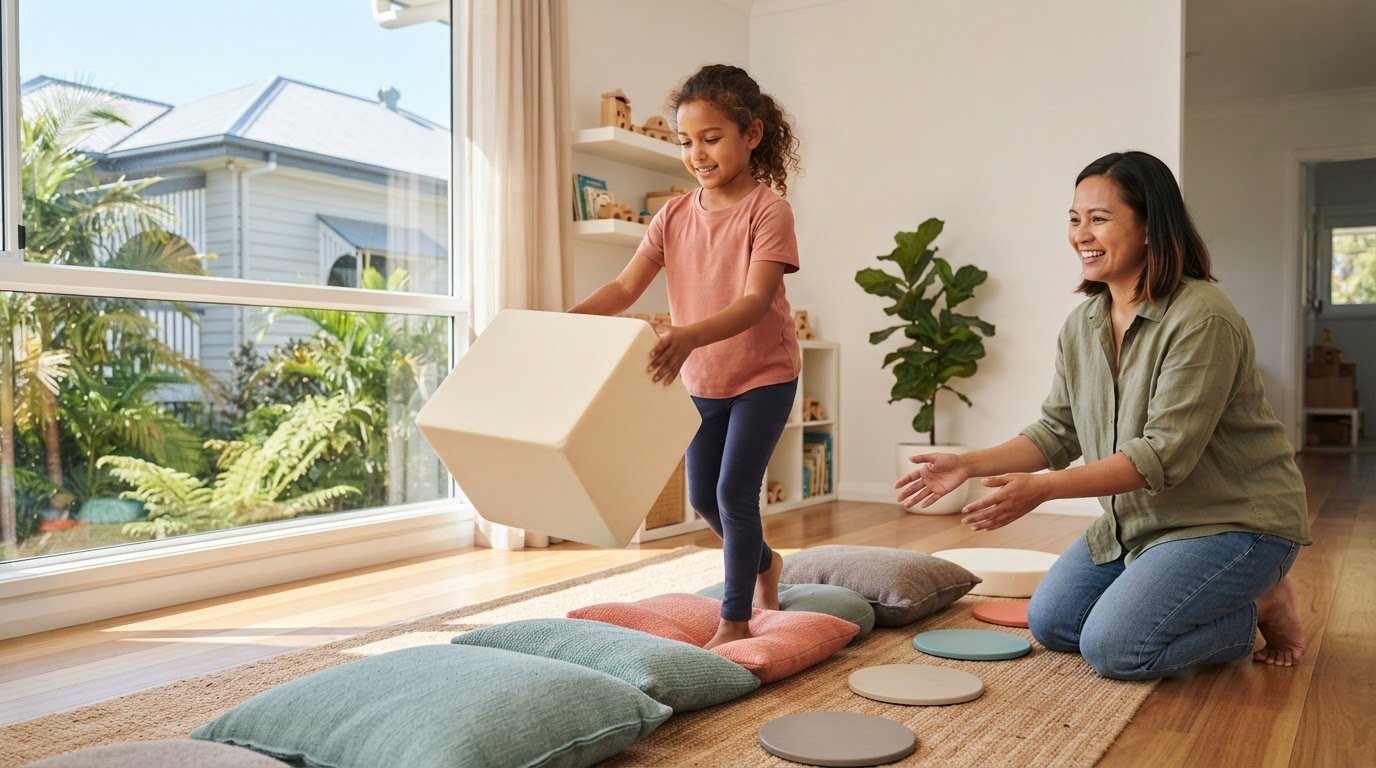
Focus on foundational movements such as running, jumping, balancing, throwing, catching and changing direction. Make a simple obstacle course with cushions to step over, a line to balance along and a soft ball to toss. Your child can practise coordination and agility through play, while you adjust each task to their ability. Repeat a favourite activity and introduce one new movement at a time.
Suitable active play can help children build strength, too. Invite your child to climb at a playground, squat to pick up toys or carry a light ball between two markers. Keep it playful and manageable rather than turning it into a test. The Australian Government Department of Health and Aged Care recommends muscle- and bone-strengthening vigorous activities at least three times a week for children and young people.
For children and young people, the physical activity recommendation is at least 60 minutes and up to several hours every week. Movement can come from different parts of the day, not just a formal training session. A walk to a local park, active play after school and a weekend swim are examples. Choose options your family can repeat, and build activity into routines that already suit your week.
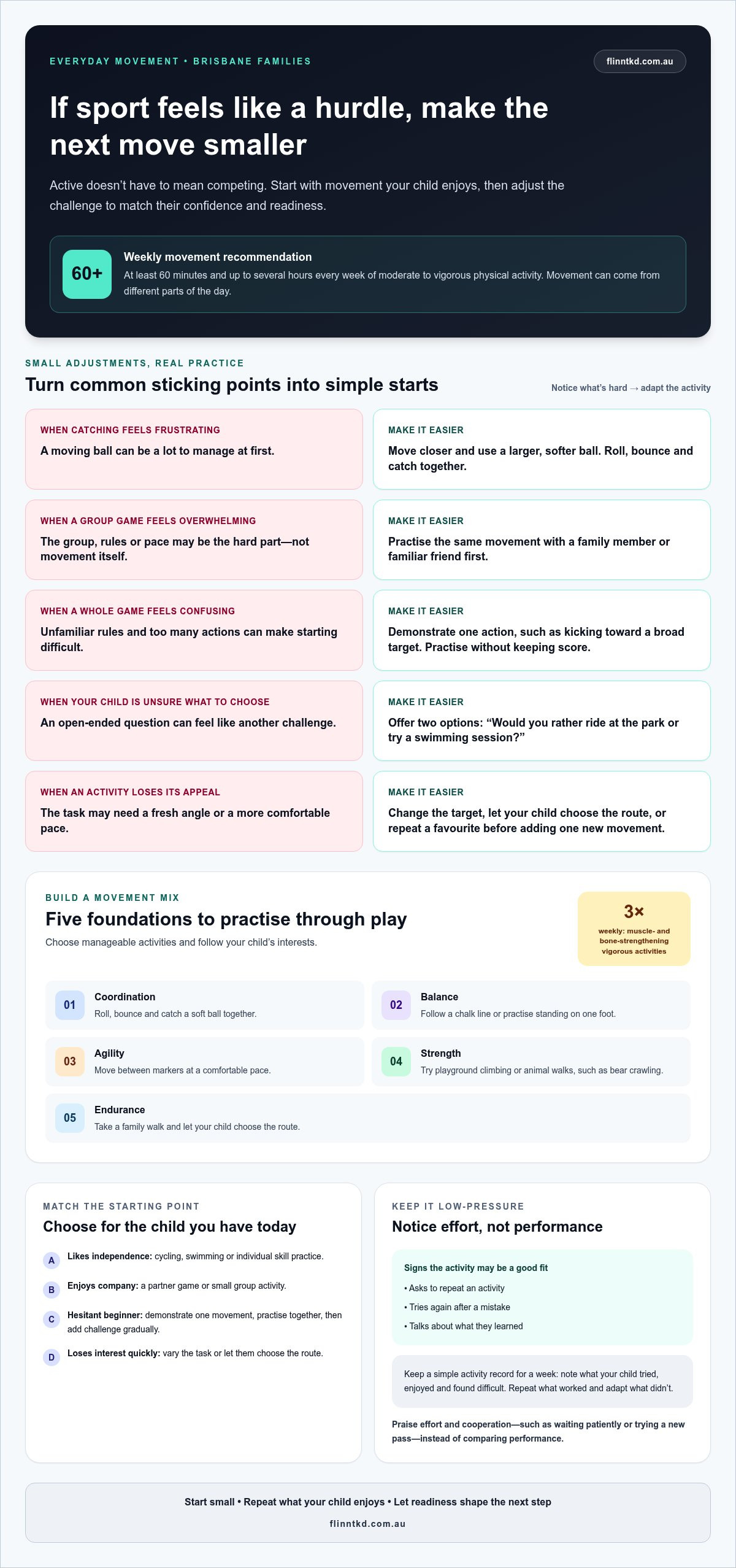
- Coordination: Roll, bounce and catch a soft ball together.
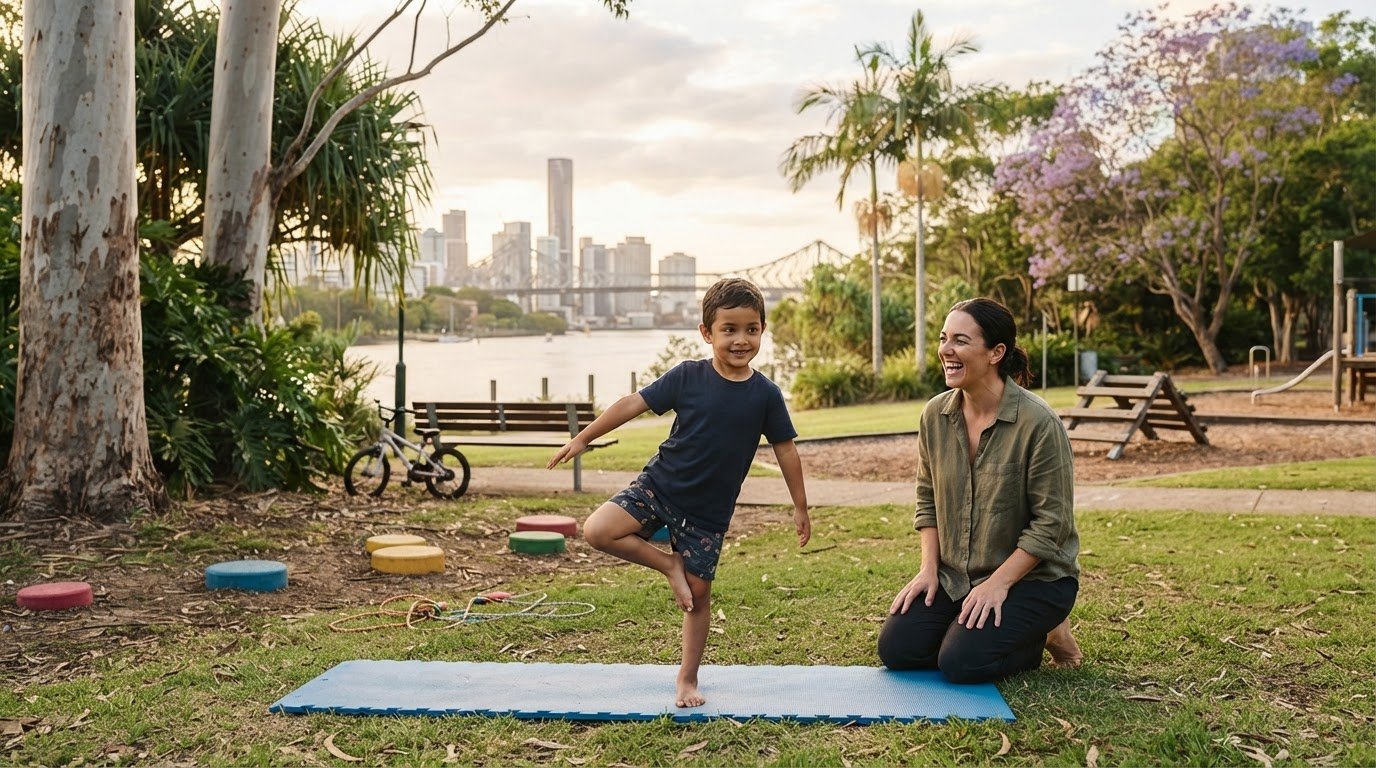
- Balance: Follow a chalk line or practise standing on one foot.
- Agility: Set out markers and move between them at a comfortable pace.
- Strength: Add playground climbing or animal walks, such as bear crawling.
- Endurance: Take a family walk and let your child choose the route.
Movement can also build communication and teamwork without a full team match. In a two-person ball game, take turns choosing a target, passing and calling out whose turn comes next. For a shared obstacle course, let your child explain the route while you follow. These small roles practise listening, turn-taking and giving clear instructions. Praise effort and cooperation, such as waiting patiently or trying a new pass, rather than comparing performance.
Keep a simple activity record for a week: note what your child tried, enjoyed and found difficult. Use these observations to repeat successful activities and adapt the rest. If catching feels frustrating, move closer and use a larger, softer ball. If a group game feels overwhelming, practise the same movement with a family member first. Small adjustments help build skills while keeping activity enjoyable.
Choosing activities that match a child’s readiness and interests
If you’re asking what to do if your child isn’t sporty in Brisbane, start by separating interest from readiness. Your child may enjoy moving but dislike team games, noisy environments or unfamiliar rules. Or they may like being in a group but need time to learn basic skills. Notice what draws them in, what makes them hesitate and whether they prefer moving alone, alongside someone or in a group.
Use age as a guide, not a measure of ability. A 5- or 6-year-old might enjoy riding a bike or swimming, while weightlifting or a 4-mile run may not suit their readiness. Keep the activity simple enough for your child to understand and practise. For a new game, demonstrate one action first, such as kicking a ball towards a broad target, then let them try without keeping score.
Offer a small choice instead of an open-ended question. Ask, “Would you rather ride at the park or try a swimming session?” Then give your child space to explain their preference. Their answer can help you choose an activity they’re more likely to practise. If they choose neither, ask what feels difficult: joining a group, learning the rules or getting tired. Their response may point to a better starting point.
Try a short, low-pressure introduction before settling into a regular routine. Visit a playground together, observe a children’s class or play a simple ball game with a familiar friend. Afterwards, ask what was fun and what they would change. Use their answer to shape the next attempt, perhaps by choosing a quieter setting or practising one skill at home first.
- For a child who likes independence: consider cycling, swimming or individual skill practice.
- For a child who enjoys company: try a partner game or a small group activity.
- For a hesitant beginner: demonstrate one movement, practise together and add challenge gradually.
- For a child who loses interest quickly: vary the task, such as changing a target or letting them choose the route.
Match the challenge to what your child can try today, then build gradually. If catching a ball feels hard, start by rolling it along the ground. If a full game feels confusing, practise passing with one other person before joining a group. These steps help your child become familiar with the activity without making performance the goal.
Look for signs of engagement: asking to repeat an activity, trying again after a mistake, or talking about what they learned. A child’s interests can change, so review the choice after a few attempts rather than labelling them “not sporty.” If guided practice seems appealing, explore structured movement activities as one possible next step.
Which Brisbane clubs offer beginner-friendly sports for children who are not sporty?
Brisbane families can explore several club-based activities without assuming their child needs prior experience. Baseball offers T-ball from age 5 years, giving young children an entry point before traditional baseball. Basketball Queensland Ltd. has 34 affiliated basketball associations across Queensland, while Netball Queensland has 82 affiliated netball associations. Those networks offer places to investigate local junior pathways and suitable starting groups.
Brisbane also has 57 rugby league clubs, three diving clubs and 14 squash clubs. These options suit different interests: a child might enjoy learning ball skills, trying a pool-based activity or practising rallies. The number of clubs doesn’t establish which programs suit every child, so focus on the format available locally. Look for beginner sessions, junior development pathways or activities where foundational skills come before competition.
Table tennis is another activity to consider, with 24 clubs across Australia. That figure is national, not Brisbane-specific. If your child likes quick reactions and individual practice, table tennis may be worth exploring as a sport that develops through repeated, manageable skills. For a different first step, T-ball introduces baseball to children from age 5 years. The right fit depends on whether your child enjoys learning with others, practising independently or moving between both.
Use a simple process to narrow the choices:
- Choose two activities: offer concrete options, such as T-ball and swimming, rather than asking your child to pick from every sport.
- Identify the barrier: ask whether the concern is rules, group size, coordination or fear of making mistakes.
- Look for a beginner pathway: prioritise sessions that teach basic skills before expecting confident game play.
- Observe the setting: notice whether your child is comfortable with the space, pace and group activity.
- Review afterwards: ask what they enjoyed and what they’d change before choosing another session.
Activities can differ in their age groups, session structure and emphasis on competition. A child who enjoys teamwork may prefer a ball sport, while one who wants individual challenges may gravitate towards squash or diving. Treat the first activity as a chance to learn what motivates your child, not as a permanent commitment. They can try another option if the first format feels uncomfortable.
If you’re deciding what to do if your child isn’t sporty in Brisbane, match the activity’s entry point to your child’s current confidence. Look for a beginner pathway, a clear skill to practise and a supportive pace. This can help you work out whether your child dislikes sport itself or simply needs a more suitable way to start.
Are there Brisbane programs for children who feel anxious or unskilled in team sports?
Brisbane has club options across team and individual sports, but the right starting point depends on what makes your child uneasy. Basketball Queensland Ltd. has 34 affiliated associations across Queensland, and Netball Queensland has 82. Brisbane also has 57 rugby league clubs. These figures show the breadth of club networks, not that every club runs a particular beginner program. Start by looking for junior pathways that teach skills before expecting children to perform in games.
If your child worries about making mistakes in front of a team, start with a smaller social step. Practise passing a ball with someone familiar, then try a simple two-person game. You can also visit a club and watch a junior session before taking part. Ask your child to name one thing that felt manageable and one thing they’d like explained. Their answers can help you choose a suitable next step.
Some children prefer an activity with individual turns or a clear skill to practise. Brisbane has three diving clubs and 14 squash clubs, offering examples of sports that differ from a full team match. The format still involves instruction and practice, but the activity can centre on one person’s turn or technique. Discuss what your child finds appealing, such as learning a movement, following a routine or working towards a personal goal.
Use these checks when comparing a local junior option:
- Skill-first structure: look for sessions that teach basic movement before introducing competitive play.
- Clear instructions: a beginner should understand the activity’s first task, such as passing, balancing or serving.
- Manageable participation: ask whether a child can observe briefly or practise a skill before joining a larger game.
- Supportive feedback: notice whether coaches correct actions calmly and recognise effort, not only winning.
- Child-led reflection: after a session, ask what your child would repeat or change next time.
If your child feels unskilled, identify the specific sticking point. If they lose track of basketball rules, practise one action, such as receiving and passing. If they dislike being watched, start with a familiar practice partner before joining a group. A clear, small goal gives your child something specific to focus on instead of comparing themselves with more experienced players.
Respond respectfully to anxiety, too. Agree on a simple plan before a session: where you’ll meet, what the first activity involves and how your child can ask for help. Afterwards, praise a specific effort, such as trying a drill or speaking to another participant. If the setting remains uncomfortable, use that information to choose a different activity or a smaller first step.
Your child
Your child’s response to movement can show you where to begin. Notice what they choose during free play: making up a dance routine, walking the dog, kicking a ball or climbing at a playground. See whether they prefer practising alone, sharing an activity with a sibling or joining a group. These preferences are useful clues, not permanent labels. A child who avoids football might still enjoy learning a physical skill in another setting.
Ask specific questions after an activity. Instead of “Did you like it?”, try “Which part felt easiest?” or “Would you try that game again?” Your child might say they enjoyed kicking but disliked waiting for a turn. That points to a possible adjustment, such as practising kicks together before another group activity. Listen without correcting their feelings or comparing their experience with a sibling’s.
Set a small goal with your child and make it clear how to practise. You might agree to walk to a nearby park, learn a simple dance sequence or pass a ball back and forth. Let your child choose the activity and help decide when it fits the family routine. A useful goal describes an action they can try, rather than an outcome such as winning or being the fastest.
- Notice: Write down the activity your child chooses and what holds their attention.
- Ask: Find out what felt enjoyable, confusing or uncomfortable.
- Adapt: Change one feature, such as the setting, pace or number of people involved.
- Repeat: Return to activities your child wants to practise, then review their interest.
Keep feedback focused on choices and effort. Say, “You kept practising that balance step,” or “You took turns with your cousin.” Specific comments show your child what they did without judging their athletic ability. If they stop enjoying an activity, talk about what changed. It might be the game’s rules, a noisy setting or uncertainty about what to do next.
Agree on a simple plan before trying something unfamiliar in Brisbane. Explain where you’ll go, what your child can expect to do, and how they can tell you if they need a pause. Afterwards, decide together whether to repeat, adapt or choose another activity. If a structured movement setting could suit your child, explore options for getting started.
Flinn Taekwondo Academy: Little Tigers Program (4-6 years)
Flinn Taekwondo Academy offers the Little Tigers Program for children aged 4-6 years who may prefer structured movement over team sports. Taekwondo gives children a way to practise physical skills and build discipline in a martial arts setting. It can suit families looking for a guided activity when their child is ready to try something beyond casual play.
As your child grows, the Junior Taekwondo Program is available for ages 7-12 years. The next step depends on your child’s age and interest in continuing. The aim is steady participation and personal development, not pressure to compete. High Performance Competition Training is also offered for athletes pursuing competition.
If a structured martial arts activity fits your child’s interests, visit flinntkd.com.au to explore the programs.
Choose a first step your child can own
“Not sporty” doesn’t have to define your child’s next chapter. Let them help choose an activity to explore, then focus on taking part and learning rather than measuring performance. If you’re deciding what to do if your child isn’t sporty in Brisbane, look for a setting that suits their age, interests and comfort with structured activity.
Taekwondo is one option for children who want to develop skills outside team sport. Flinn Taekwondo Academy offers the Little Tigers Program (4-6 years), Junior Taekwondo Program (7-12 years), and Senior & Adult Taekwondo Program (13+ years). Each program gives families an age-based pathway to consider as their child grows.
Choose a starting point together, and let your child’s effort lead the way. Contact Flinn Taekwondo Academy to discuss a suitable program. Every confident step begins with the chance to try.
常見問題
What are fun non-competitive physical activities for children in Brisbane?
Try activities centred on exploring or playing, not winning. At a Brisbane park, make a nature hunt by looking for different leaf shapes, or invent a follow-the-leader route along paths and open spaces. At home, play balloon keep-up or set up a pretend delivery route with soft toys. Let your child change the rules; their ideas can keep the game engaging without scores or teams.
What non-sport activities in Brisbane help children stay active, such as dance, swimming, climbing, or martial arts?
Dance, swimming, climbing and martial arts all involve movement, but each offers a different experience. Your child can practise a dance routine to favourite music, build confidence in the water or tackle climbing challenges at their own pace. Taekwondo offers structured movement through martial arts. Ask which activity appeals, then consider whether its setting and style suit your child.
How can parents encourage a child who dislikes sport without putting pressure on them?
Make movement part of family time, not a test of athletic ability. Invite your child to choose music for a kitchen dance break, go for a walk while discussing their day or help plan an active weekend outing. Avoid comparisons with siblings or classmates. Notice specific efforts, such as joining in or trying a new movement, and let your child decide whether to repeat the activity.
What should parents consider when choosing a safe, inclusive activity for a child who is not sporty?
Consider whether an activity welcomes beginners, explains instructions clearly and gives children a suitable pace for learning. Look for a setting where your child can ask for help, take a break and participate without being singled out. Check that the equipment and space suit the activity, and discuss any individual access or sensory needs with the organiser. Your child’s comfort and ability to take part matter.