What if the secret to a respectful home isn’t found in a louder voice or a longer time-out, but in a new set of skills your child actually wants to learn? You’ve likely felt that sting of guilt after losing your patience or wondered why your child listens at school but ignores you at home. It’s exhausting to feel like you’re constantly battling for focus while searching for positive parenting strategies for discipline brisbane families can actually rely on. You aren’t alone in this struggle, and it’s okay to admit that the old ways of reacting aren’t working for your family anymore.
This guide shows you how to transform your child’s behaviour using techniques that build character and mental fortitude, supported by the proven framework of Flinn Taekwondo Academy. You’ll learn how to replace daily frustration with lasting focus and a much calmer household. We’ll explore how to handle tantrums effectively, improve school readiness, and foster social skills that last a lifetime. From our Little Tigers program to our Junior classes, you’ll see how structured training provides the tools your child needs to succeed both in the dojang and in their daily lives.
主要心得
- Learn how to shift your approach from punishment to teaching by prioritising connection before correction in every interaction.
- Discover practical positive parenting strategies for discipline brisbane parents can implement today to uncover the root causes of challenging behaviour.
- Understand why “time-ins” are more effective than “time-outs” for building long-term emotional intelligence and self-regulation in young children.
- Master the art of setting healthy boundaries through family meetings and natural consequences that foster a sense of mutual respect.
- See how the structured environment of Flinn Taekwondo Academy’s Little Tigers program provides a physical space to practice focus and discipline.
Understanding Positive Discipline in a Brisbane Context
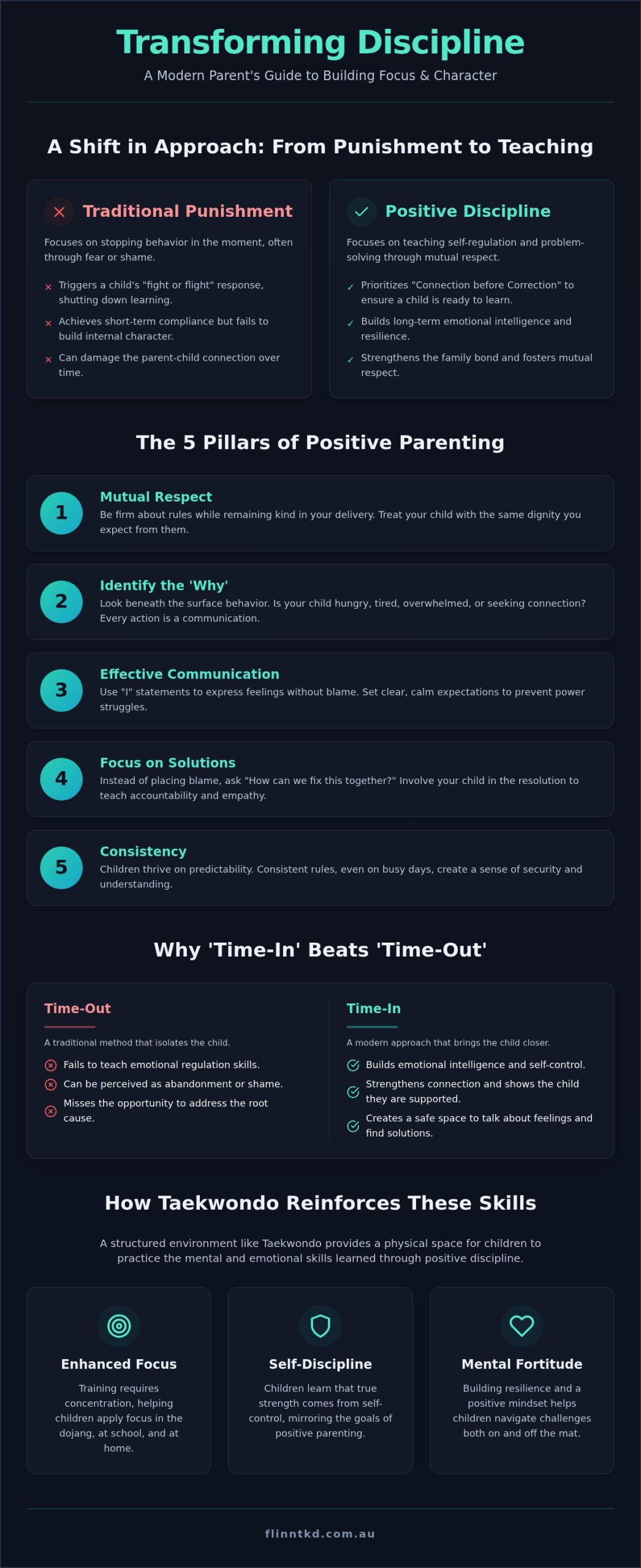
Discipline often carries a heavy weight for parents. Many of us grew up with the idea that discipline means punishment, but in a modern household, the focus has shifted toward growth. Positive discipline is the process of teaching self-regulation through mutual respect. It moves away from the “do it because I said so” mentality and instead focuses on a teaching relationship. When you adopt positive parenting strategies for discipline brisbane families can rely on, you’re choosing to guide your child’s choices rather than just penalising their mistakes.
In North Brisbane, we see unique stressors that impact our kids. Between the high expectations for school readiness and the pressure of extracurricular overload, children often feel the strain. This is why the “Connection before Correction” philosophy is so essential. If a child doesn’t feel seen or heard, they won’t be receptive to your guidance. By building a solid bond first, you ensure your child is emotionally ready to learn the lessons you’re trying to teach.
Why Traditional Punishment Often Fails
Harsh discipline often triggers a child’s “fight or flight” response. When a child is scared or shamed, the learning centre of their brain shuts down, making it impossible for them to process a lesson. While a “naughty corner” might stop a specific behaviour in the moment, it doesn’t teach long-term problem-solving. It creates immediate compliance out of fear, but it fails to build internalised character. We want our children to do the right thing because they understand the value of respect, not because they’re afraid of being isolated.
The Goal of Positive Parenting in 2026
Looking ahead to 2026, the demands on our children are only increasing. We aren’t just raising kids who can follow instructions; we’re raising future leaders who possess grit and resilience. Implementing positive parenting strategies for discipline brisbane helps prepare children for the social demands of local primary schools, where emotional intelligence is just as vital as academic skill. By building a foundation of mutual respect now, you’re securing a relationship that will withstand the challenging teenage years. At Flinn Taekwondo Academy, we mirror this approach in our training, teaching children that true strength comes from self-control and mental fortitude.
The 5 Pillars of Positive Parenting Strategies for Discipline
Building a calm household requires more than just good intentions; it demands a structured framework. These five pillars form the core of positive parenting strategies for discipline brisbane families can use to see real change in their child’s behaviour. Implementing these principles helps move your home from a place of conflict to one of mutual growth.
- Mutual Respect: This means treating your child with the same dignity you expect from them. You can be firm about a rule while remaining kind in your delivery. It’s about respecting their personhood while you maintain the necessary boundaries for their safety.
- Identifying the ‘Why’: Every action is a form of communication. We must look beneath the surface to see what our child is actually trying to tell us. Are they seeking attention, or are they simply overwhelmed by a new task?
- Effective Communication: Use “I” statements like “I feel overwhelmed when the toys aren’t put away” instead of “You never clean up.” Clear expectations prevent future power struggles. When you speak calmly, your child is more likely to listen and less likely to become defensive.
- Focus on Solutions: Instead of asking “Who did this?”, ask “How can we fix this together?” This builds agency and accountability. Involving your child in the resolution process teaches them critical thinking and empathy.
- Consistency: Kids thrive on predictability. When the rules stay the same, even on busy weeknights, children feel secure. Consistency is the secret sauce for Brisbane parents managing tight schedules and multiple commitments.
Using these positive parenting strategies for discipline brisbane ensures that your home remains a place of learning rather than a battlefield. It takes practice, but the long-term rewards for your child’s character are immeasurable.
Identifying the Root Cause of Misbehaviour
Think of your child’s behaviour as an iceberg. The tantrum or the back-talk is just the tip that you see. Beneath the surface, there’s often a root cause like hunger, exhaustion, or a genuine need for connection. Many children struggle to articulate these feelings, so they act them out instead. When you respond to the underlying need rather than just reacting to the action, you solve the problem at its source. This approach prevents the cycle of frustration from repeating and builds a bridge of trust between you and your child.
The Power of Firm but Fair Boundaries
Children actually feel safer when they know exactly where the limits are. Establishing clear house rules creates a predictable environment where they can explore and learn without fear of shifting expectations. This “Mentor” approach allows you to balance warmth with authority. You aren’t a drill sergeant, but you aren’t a pushover either. You’re a dedicated coach guiding them through life’s challenges. If you’re looking for a local environment where these values are reinforced, our Little Tigers program is designed to help children internalise this sense of respect and self-discipline.
Why ‘Time-In’ Beats ‘Time-Out’ for Long-Term Focus
Traditional discipline often relies on the “time-out” to stop unwanted behaviour. While sending a child to their room might provide a momentary pause for you, it rarely teaches the child how to manage their emotions. Isolation can lead to feelings of resentment or abandonment, which actually hinders the learning process. A “time-in” offers a more effective alternative. By staying close to your child during a difficult moment, you provide the co-regulation they need to find their way back to a calm state.
This approach is a vital part of positive parenting strategies for discipline brisbane families can use to foster emotional intelligence. When you choose connection over isolation, you’re teaching your child that their feelings are valid, even if their actions weren’t. You’re showing them how to navigate the internal storm of frustration rather than just punishing them for having it. Over time, this builds the mental fortitude required for long-term focus and self-discipline.
Structured environments play a massive role in this development. A child who understands the “rules of the game” in daily life feels more secure and less likely to lash out. In our Junior Taekwondo Brisbane: The Ultimate Parent’s Guide for 2026, we discuss how the structure of the dojang helps children internalise these lessons of respect and self-control, providing a physical outlet for their energy.
How to Execute an Effective Time-In
Executing a time-in isn’t about giving in to the behaviour. It’s about staying present while the child works through their big emotions. Stay physically close, perhaps sitting on the floor nearby. Don’t try to explain why they were wrong while they’re still in the middle of a meltdown; a stressed brain can’t learn. Wait for the “calm brain” to return before you start a discussion. Use simple, direct language to label their emotions. Saying “You feel frustrated because we have to stop playing” helps them connect their feelings to their actions.
Using Structure to Prevent Meltdowns
Prevention is always better than a cure. A predictable daily rhythm acts as a safety net for young children, reducing the anxiety that often leads to outbursts. Visual schedules are particularly helpful for Brisbane families with busy mornings, as they give kids a clear roadmap of what to expect. Physical activity also serves as a critical release valve. Programs like Taekwondo give children a healthy, disciplined way to channel their frustration, teaching them that they have agency over their bodies and their reactions.
How to Implement Positive Discipline: A Step-by-Step Guide
Implementation is where theory meets the reality of a busy Tuesday morning. To see lasting results, you need a clear, actionable plan. These steps provide a roadmap for integrating positive parenting strategies for discipline brisbane families can use to foster a more cooperative home environment. Moving from conflict to collaboration doesn’t happen overnight, but following a structured process makes the journey attainable.
- Step 1: The Family Meeting. Sit down once a week to discuss goals and expectations. This isn’t a lecture; it’s a collaborative session where everyone has a voice in how the household runs.
- Step 2: Natural Consequences. Let the environment do the teaching. If a child refuses to wear a jacket, they’ll feel cold. This teaches them that their choices have direct, logical outcomes without you needing to play the “bad guy.”
- Step 3: Positive Reinforcement. Actively look for moments where your child is following through. Catching them being “disciplined” is far more effective than only noticing when they slip up.
- Step 4: The ‘Reset’ Button. Bad days happen. When things go off the rails, use a “reset” to acknowledge the struggle, forgive each other, and start fresh without carrying over the guilt.
- Step 5: Seeking Community Support. You don’t have to do this alone. Finding local Brisbane mentors who reinforce these values can be the difference between burnout and success.
If you want to see these values practiced in a high-energy, supportive environment, visit Flinn Taekwondo Academy to see how our structured classes reinforce the same principles of respect and character you’re building at home.
Setting Expectations for Brisbane School Readiness
For families in Brendale and Warner, preparing for the social demands of primary school is a top priority. You can practice “first-time listening” through fun drills at home, like a game of Simon Says that requires quick, focused responses. Encourage independence by letting your child practice packing their own bag or getting dressed without help. These small acts of agency build the confidence they need to thrive in a classroom setting where teachers expect a level of self-reliance and focus.
The Art of Positive Reinforcement
Specific praise is a powerful tool for character development. Move beyond a generic “good job” and instead say, “I noticed how you kept trying even when that puzzle was difficult.” This uses a growth mindset to celebrate effort over perfection. By rewarding character traits like honesty, respect, and perseverance, you’re teaching your child that their internal values are just as important as their external achievements. At Flinn Taekwondo Academy, we use this same approach to help students earn their ranks through hard work and mental fortitude.
How Taekwondo Complements Positive Parenting Strategies
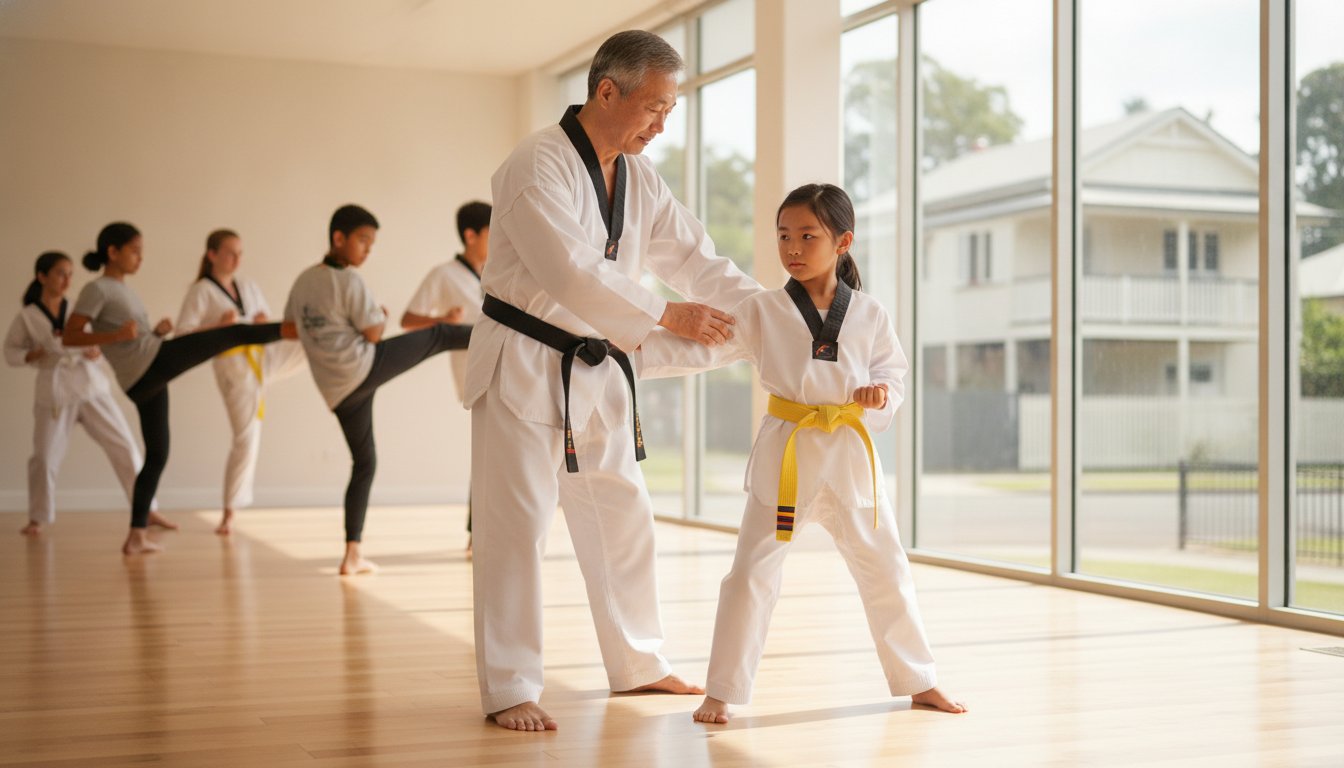
While you work on positive parenting strategies for discipline brisbane at the dinner table or during the morning rush, your child needs a physical environment to put those skills into practice. The “dojang” (training hall) serves as more than just a place for exercise; it’s a safe, highly structured space where respect is the baseline for every interaction. Here, children learn that discipline isn’t a penalty to be paid, but a tool for personal agency and achievement. It’s the active application of the values you’re already building at home.
The relationship between an instructor and a student at Flinn Taekwondo Academy mirrors the mentor model essential for positive parenting. Master Jeff Flinn and our dedicated coaching team guide students with a balance of warmth and high standards. This consistency reinforces your efforts, helping kids understand that the rules of respect and self-control apply everywhere, from the training mat to the local Brisbane playground. For our youngest participants, the Little Tigers Program (4-6 years) provides a specialised focus on early childhood development, ensuring they’re school-ready and socially confident.
The Flinn Academy Way: Discipline Through Encouragement
Master Jeff Flinn, a 7th Dan Black Belt, operates on the philosophy that true confidence is built by overcoming challenges. Our belt system serves as a practical lesson in goal setting and delayed gratification. Students don’t just “get” a new rank; they earn it through focused effort and perseverance. This journey teaches them the “grit” needed to handle life’s frustrations without losing their focus.
- The Bow: A physical gesture practiced at the start and end of every session to signal mutual respect.
- The Tenets: Students internalise core values like integrity, self-control, and indomitable spirit.
- The Standard: We celebrate the effort behind the achievement, encouraging a growth mindset in every student.
Joining the North Brisbane Community
We’re a family-owned institution that’s been a cornerstone of the North Brisbane community since 2013. Families from Strathpine, Bray Park, and surrounding suburbs choose Flinn Taekwondo Academy because they want a training environment that feels like a second home. We take immense pride in our students’ successes, both within our facility and in their daily lives. If you’re ready to see how Taekwondo can support your positive parenting strategies for discipline brisbane, we invite you to visit us and experience the transformative power of our programs firsthand. Starting your journey with a trial class is a low-pressure way to see if our team is the right fit for your family’s growth.
Transform Your Household with Purposeful Discipline
Shifting your approach from reaction to mentorship is the first step toward a more respectful home. By focusing on connection before correction and understanding the root cause of your child’s actions, you build a relationship based on trust rather than fear. Implementing positive parenting strategies for discipline brisbane families can trust ensures your child develops the self-regulation they need for school and beyond. You’ve seen how “time-ins” and structured routines foster emotional intelligence while preparing them for life’s challenges.
At Flinn Taekwondo Academy, we’re proud to partner with you on this journey. Since 2013, our family-owned academy has provided a dedicated space for children to practice focus and grit. Led by 7th Dan Black Belt Master Jeff Flinn, our specialised program for 4-6 year olds is the perfect environment to reinforce the discipline you’re teaching at home. We invite you to see the transformative power of training firsthand.
Book a Trial for Your Little Tiger at Flinn Taekwondo Academy Today!
Your child’s potential is limitless when they have the right tools and a supportive community behind them. Let’s start building their character together today.
常見問題
Is positive discipline the same as having no rules?
Positive discipline is actually built on high standards and firm boundaries, unlike having no rules at all. It focuses on teaching your child what to do rather than just punishing them for what they shouldn’t do. By implementing positive parenting strategies for discipline brisbane families can use, you create a structured environment where rules are clear and consequences are logical. This approach fosters a sense of security and mutual respect within the home.
How long does it take to see results from positive parenting strategies?
You might notice small shifts in connection immediately, but lasting behavioural change typically takes consistent practice over several weeks. Discipline is a skill that both you and your child are learning together. Just like earning a new rank at Flinn Taekwondo Academy, progress comes through repetition and patience. If you stay committed to the process, you’ll see a gradual reduction in power struggles and a significant increase in your child’s ability to self-regulate.
Can martial arts help with my child’s behaviour at school in Brisbane?
Yes, martial arts training provides a physical outlet for energy while teaching the mental fortitude required for a classroom setting. At Flinn Taekwondo Academy, we focus on “first-time listening” and respect for authority figures. These skills translate directly to school life, helping students stay focused on their tasks and interact positively with their peers. Many local parents find that the structure of our dojang complements their positive parenting strategies for discipline brisbane perfectly.
What should I do when my child refuses to follow a positive discipline strategy?
When a strategy seems to fail, it’s often a sign that the child is emotionally overwhelmed and needs a “reset.” Take a moment to reconnect through a “time-in” before attempting to enforce a rule or discuss a consequence. If they’re in a “fight or flight” state, they can’t process logic. Once everyone is calm, you can revisit the expectation together. Remember that consistency doesn’t mean perfection; it means returning to the plan after a setback.
Are the Little Tigers classes at Flinn Taekwondo Academy suitable for very shy children?
Our Little Tigers program is specifically designed to build confidence in a welcoming, low-pressure environment. Master Jeff Flinn and our instructors are trained to support children who may feel hesitant or overwhelmed in new social situations. We use encouragement and small, achievable goals to help shy students find their voice. Over time, the structured routine of the class helps them feel safe enough to step out of their comfort zone and participate fully.
How do I stay consistent with discipline when I’m a busy working parent?
Consistency is easier to maintain when you have a predictable daily rhythm and external support. Focus on one or two core house rules rather than trying to change everything at once. Enrolling your child in a structured program like Taekwondo can also help. Our classes reinforce the same values of respect and self-control you’re teaching at home, providing a reliable environment that supports your family’s goals even on your busiest workdays.
What is the difference between positive discipline and permissive parenting?
The main difference lies in the existence of firm boundaries and accountability. Permissive parenting often lacks rules and allows children to avoid the consequences of their actions, whereas positive discipline is authoritative. It balances warmth and empathy with high standards for behaviour. You’re acting as a mentor or coach who guides the child through challenges rather than a friend who avoids conflict at all costs. This structure helps children feel secure and respected.
Can I start positive parenting strategies if my child is already school-aged?
It is never too late to begin using these strategies, regardless of your child’s age. While it might take a bit longer to break old patterns of communication, school-aged children are often very receptive to the logic and respect found in positive discipline. Starting now can significantly improve your relationship before they hit the teenage years. Our Junior Taekwondo Program is an excellent way to introduce these concepts of self-discipline and character to older children in North Brisbane.