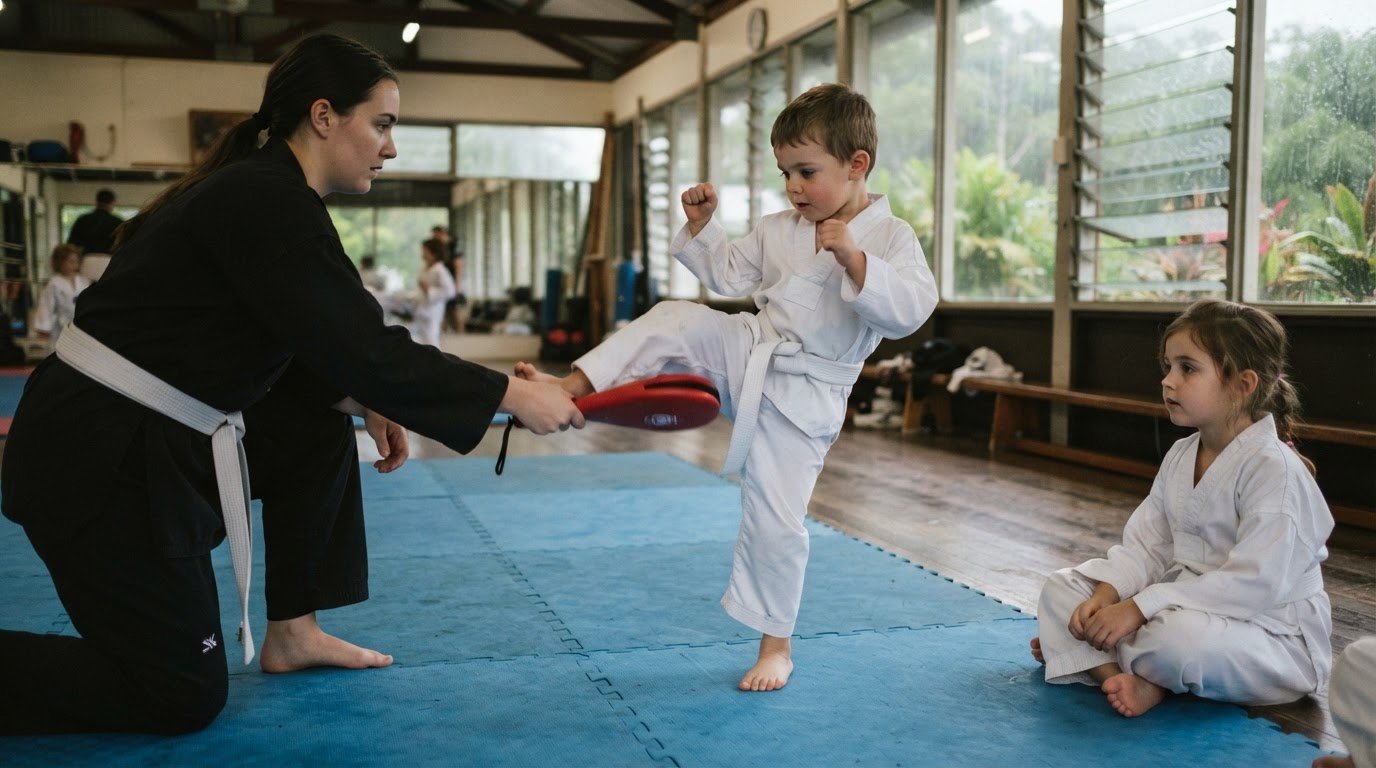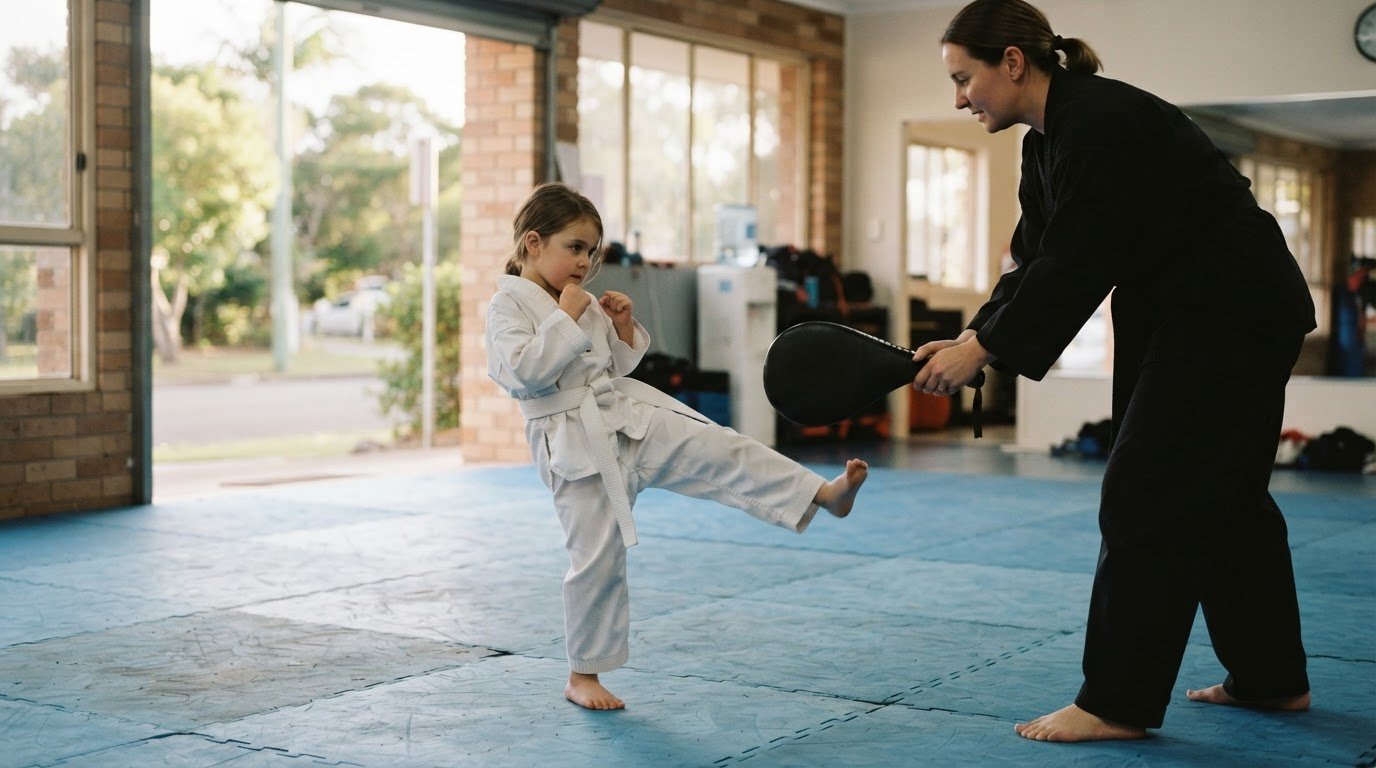
A strong competition record alone doesn’t show whether a coach is right for an athlete. When choosing a high-performance Taekwondo coach in Queensland, look for relevant coaching experience, training that develops competition skills, and a clear link between practice and competition. The right fit should support steady progress as well as performance.
It makes sense to look beyond hard training: athletes and families also want coaching that builds focus, confidence and sound technique. This guide explains how to assess a coach’s experience, what purposeful training can involve, and how competition fits into an athlete’s development. You’ll have a clearer picture of what to look for and how high-performance coaching can support the next stage of a Taekwondo journey.
主要心得
- Assess a coach’s experience by how clearly it connects to athlete development and competition goals.
- Look for training that links technical practice, poomsae or sparring with the demands of competing.
- Understand how specialist coaching supports elite development and fits an athlete’s current stage.
- Learn which credentials and coaching standards can help you assess a high-performance training environment.
Taekwondo coaching and instructor experience
Experience matters most when it informs an athlete’s training. A coach should explain how they develop technique, discipline and competition readiness, then adapt instruction to the athlete’s level. Good leadership also shows in clear feedback, consistent expectations and responsible session management. For a young competitor, that might mean correcting stance and timing before increasing sparring intensity.
Seokhun Lee offers an international coaching example. Before his Australian appointment, he spent five years as head coach of Korea’s professional women’s Taekwondo team, Dongrae-gu. He was scheduled to begin as National Performance Coach for Australia’s high-performance program in early 2022. His role’s core purpose was providing world-class technical coaching to elite athletes.
Brisbane’s Taekwondo history includes Grandmaster Trevor Dicks and Master Instructor Margaret Dicks, who have taught authentic Korean Taekwondo since 1972. Ian Townley’s Taekwondo journey began in 1968 and has continued through six decades. These examples show why experience should be judged by more than years alone: leadership, technical knowledge and the ability to guide athletes through different stages all matter.
In Queensland, athlete safety and safeguarding should be reflected in supervised sessions, clear conduct boundaries and training suited to each athlete’s experience. Accreditation should be relevant to Taekwondo coaching and competition; families can consider how a coach explains their qualifications and safety practices.
For an example of international coaching achievement, Seokhun Lee’s record includes two bronze medals at the World Championships in Manchester. This is a documented coaching achievement, not proof that a particular Queensland coach has produced state, national or international medalists. When assessing a coach’s competition record, distinguish their own results from those of athletes they have guided.
A trial or assessment should help the coach understand an athlete’s experience, goals and current technique. Expect observation, focused feedback and a discussion of suitable training, rather than a promise of results. For example, the coach may identify a technical habit to refine before recommending more demanding competition practice.
Use three practical checks: review the coach’s technical background, understand their leadership approach, and clarify how they assess progress. A high-performance Taekwondo coach in Queensland should connect these elements to the athlete’s competitive goals, while keeping development and safe training at the centre.
Taekwondo training and competition
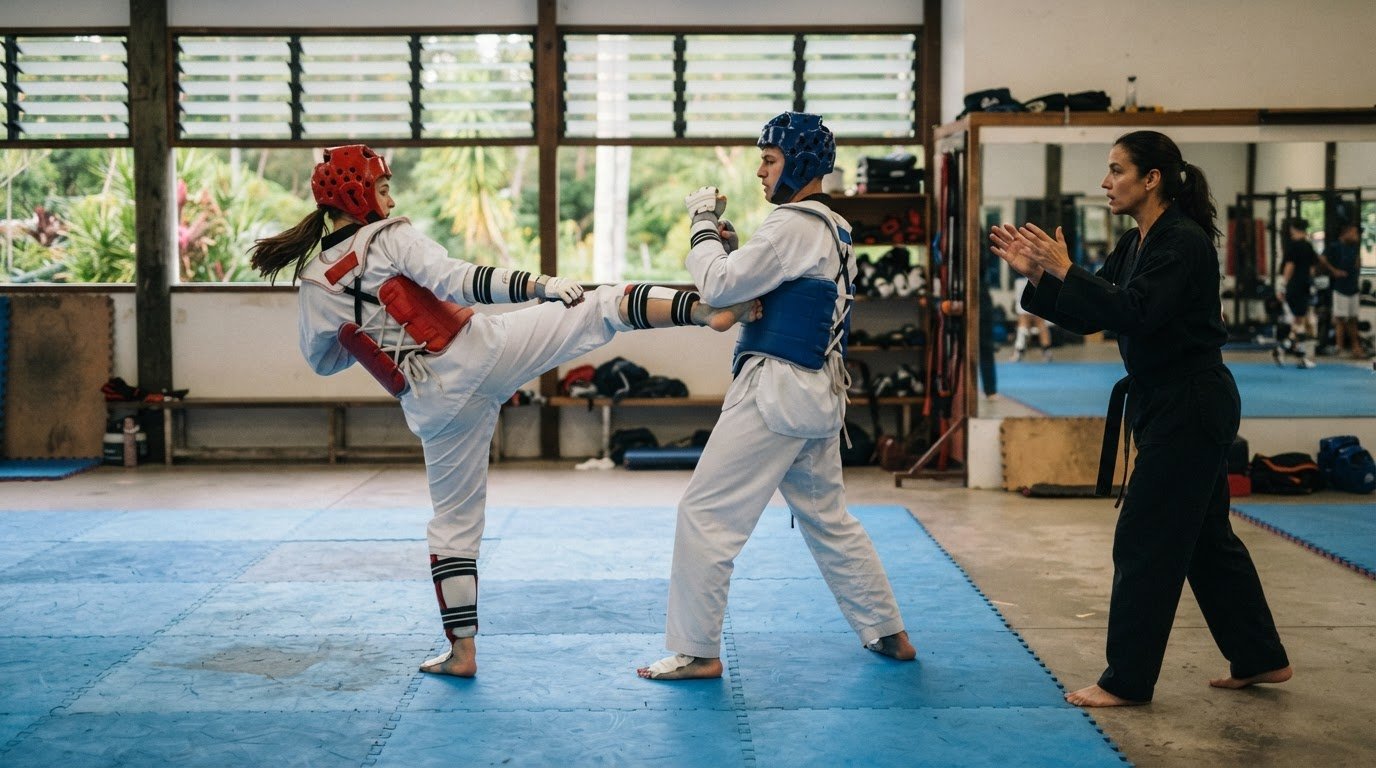
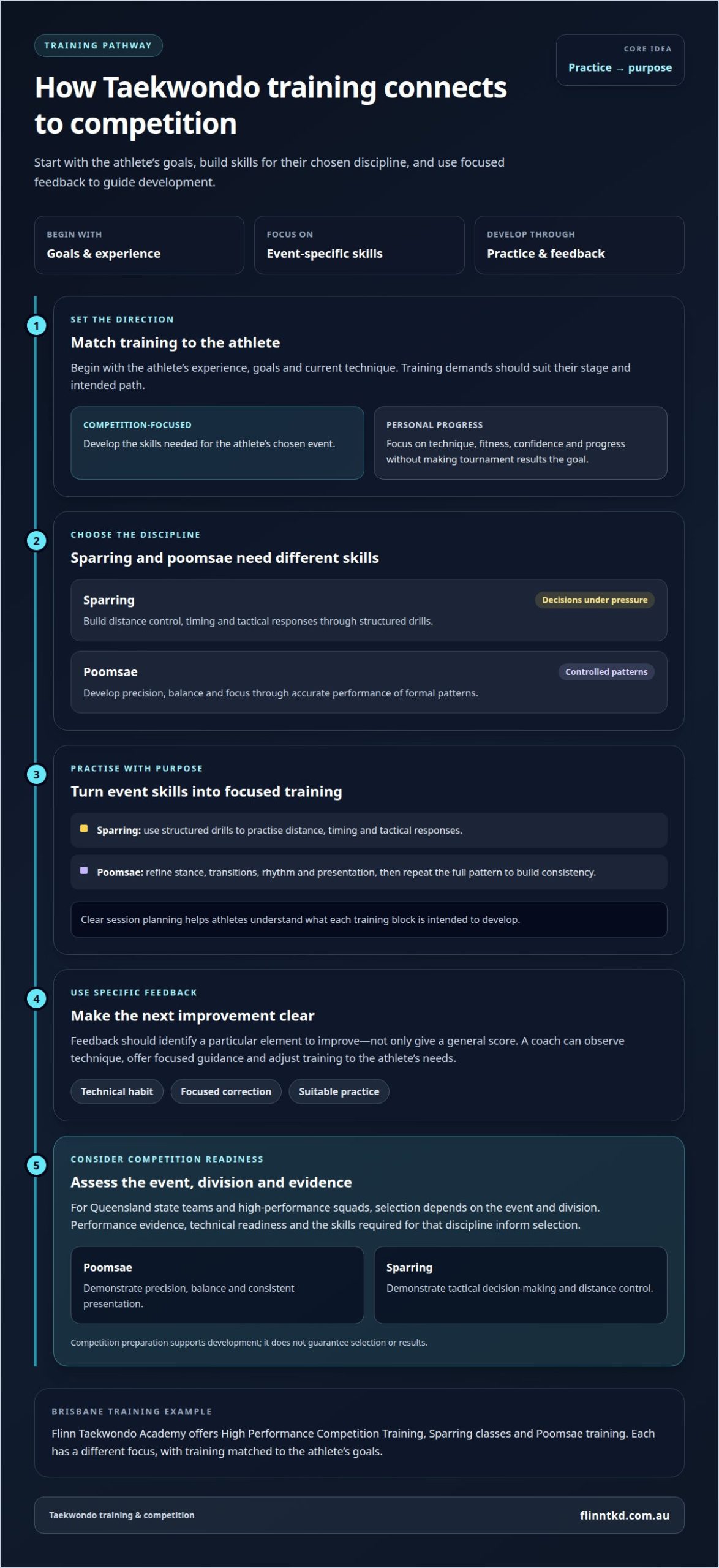
Competition training connects technical practice with the decisions athletes make under pressure. In sparring, a coach can develop distance control, timing and tactical responses through structured drills. Poomsae develops precise patterns, balance and focus. Each discipline needs targeted practice, so a useful training plan makes clear which skills support the athlete’s chosen event.
Training doesn’t have to lead to competition. A non-competitive approach can focus on technique, fitness, confidence and personal progress without making tournament results the goal. For example, an athlete can practise fundamental movements and poomsae to develop skills, while sparring remains a coached learning activity. The coach should match training demands to the athlete’s goals and experience.
Poomsae competition rewards accurate, controlled performance of formal patterns. Bridie Reid began competing in poomsae in 2024, offering a concrete example of a competitor’s progression into that discipline. Coaches can prepare athletes by refining stance, transitions, rhythm and presentation, then using repeated full-pattern practice to build consistency. Feedback should identify a specific element to improve, not just give a general score.
For Queensland state teams and high-performance squads, selection depends on the event and division. Performance evidence, technical readiness and the skills required for that discipline inform selection; poomsae and sparring call for different demonstrations.
In Brisbane, Flinn Taekwondo Academy offers High Performance Competition Training, Sparring classes and Poomsae training. Each session has a different focus: sparring and poomsae require distinct practice structures, while athletes also benefit from a schedule that supports regular attendance and recovery. Clear session planning helps athletes understand what each training block is intended to develop.
For a competition-focused pathway, High Performance Competition Training connects targeted practice with an athlete’s development goals. It suits athletes ready to work on competition skills, while non-competitors can keep their focus on technique and personal progress.
Which Queensland taekwondo coaches specialise in high-performance or elite athlete development?
Specialisation is best judged by role and evidence, not titles alone. Seokhun Lee has a PhD in Exercise Physiology and was appointed to Australia’s National Performance Coach role. That role focuses on technical coaching for elite Taekwondo athletes. It represents national high-performance leadership, rather than proof of a Queensland-based coaching position.
Look for a coach whose experience matches the athlete’s event. Sparring requires tactical decision-making and distance control; poomsae demands precision, balance and consistent presentation. A coach who explains how their sessions build those specific skills offers clearer evidence of relevant expertise than a general claim of elite coaching.
Competition backgrounds can add useful context. Ian Townley was a member of the Australian Taekwondo team at the 2nd World Championships. That demonstrates personal experience at international level, but an athlete’s results and a coach’s results are different measures. Ask how a coach translates competition knowledge into technical feedback, structured preparation and individual development.
Other credentials also need context. Matt Landsberg holds a Second Dan Kukkiwon Taekwondo rank, which indicates a rank achievement. Rank alone doesn’t establish high-performance coaching specialisation. Consider how the instructor applies technical knowledge, leads training and adapts feedback to an athlete’s competitive discipline.
Use a focused assessment when comparing coaching fit:
- Match the discipline: identify whether the athlete is preparing for sparring, poomsae or both.
- Clarify the coaching role: distinguish technical instruction, athlete development and national-team leadership.
- Look for applied experience: ask for examples of how competition knowledge informs training decisions.
- Assess the feedback: note whether guidance names a specific skill and a practical next step.
These distinctions help Queensland athletes find coaching suited to their goals without treating a title, rank or competition history as a complete measure. The strongest fit connects relevant experience to the athlete’s event, current skills and development priorities.
What credentials and coaching certifications should a high-performance taekwondo coach in Queensland hold?
Assess credentials by what they demonstrate, not by impressive titles alone. A Taekwondo Dan rank reflects technical progression, while a coaching qualification addresses instruction and athlete development. Those credentials serve different purposes. For example, a high rank doesn’t automatically show experience planning competition training or giving athletes useful performance feedback.
Look for evidence across three areas: Taekwondo knowledge, coaching skill and athlete care. A relevant rank helps establish martial arts experience. Coaching education can show preparation to plan sessions, communicate clearly and develop skills. Safeguarding and safety practices matter when instructors lead children or contact training. Together, these areas offer a more complete picture than one credential alone.
- Technical background: note the instructor’s Taekwondo rank and experience in the athlete’s discipline.
- Coaching preparation: look for qualifications or learning relevant to teaching and athlete development.
- Competition expertise: consider how the coach applies knowledge of sparring or poomsae.
- Safe leadership: expect clear conduct boundaries and training suited to an athlete’s ability.
Matt Landsberg holds a Second Dan Kukkiwon Taekwondo rank. That is a specific rank credential, but it should not be confused with a coaching certification. Seokhun Lee’s PhD in Exercise Physiology represents academic expertise relevant to physical performance, rather than a Taekwondo rank. These examples show why credentials need context: each supports a different part of an athlete’s development.
For a practical assessment, match each credential to the work it supports. A technical rank can indicate Taekwondo experience; coaching education can inform instruction; and clear safeguarding practices can shape a responsible training environment. Consider how those elements connect to your event and goals, then whether the coach explains a useful next step.
Ready to build competition skills with structured coaching? Explore high-performance Taekwondo training and take the next step in your athlete’s development.
Flinn Taekwondo Academy: High Performance Competition Training
Flinn Taekwondo Academy offers High Performance Competition Training for athletes ready to focus on competitive Taekwondo. It’s a relevant next step when you want training centred on competition development rather than general participation alone.
The right pathway depends on age and goals. The Junior Taekwondo Program is for ages 7-12, while the Senior & Adult Taekwondo Program is for ages 13 and over. These options let students build their Taekwondo journey at an appropriate stage, with high-performance training available for competition-focused athletes.
Choose the program that fits your current goals, whether you’re developing foundational skills or working towards competition. For a conversation about training, contact Flinn Taekwondo Academy.
Take your next step in Taekwondo
Your next training choice can turn an ambition into a focused routine. A high-performance Taekwondo coach in Queensland should help connect your goals with the skills you practise and the competition pathway you’re working towards. Keep that goal in view as you decide what support suits you or your child.
Taekwondo can also be a long-term journey, with training matched to different ages and stages. Flinn Taekwondo Academy offers the Little Tigers Program for ages 4-6, the Junior Taekwondo Program for ages 7-12, and the Senior & Adult Taekwondo Program for ages 13 and over. Each provides a way to build confidence and discipline through practice.
Ready to take the next step? Contact Flinn Taekwondo Academy to discuss training that fits your goals. Start with purpose, keep showing up, and let each session build your progress.
常見問題
Which Queensland taekwondo clubs offer state, national, or international competition pathways?
In Brisbane, Flinn Taekwondo Academy offers High Performance Competition Training for athletes pursuing competitive Taekwondo. The training supports athletes aiming to compete at state, national or international levels. Competition pathways involve more than club sessions: athletes also develop discipline-specific skills and gain competition experience. This is a focused starting point for competitors building their Taekwondo goals.
How do Queensland taekwondo clubs compare for sparring, poomsae, strength training, and athlete support?
Compare the training focus: Flinn Taekwondo Academy offers Sparring classes and Poomsae training, which develop different competition skills. Sparring centres on applying techniques against an opponent; poomsae focuses on performing formal patterns with control and precision. Strength training is separate from these Taekwondo disciplines. Athlete support also matters, including clear instruction and feedback suited to the chosen event.
What age groups and experience levels can join high-performance taekwondo programs in Queensland?
Flinn Taekwondo Academy offers age-based programs for children and adults: Little Tigers for ages 4-6, Junior Taekwondo for ages 7-12, and Senior & Adult Taekwondo for ages 13 and over. High Performance Competition Training is a separate option for competition-focused athletes. These program names distinguish age pathways from competitive training, helping families identify a relevant place to begin their Taekwondo journey.
How can an athlete arrange a trial or assessment with a high-performance taekwondo coach in Queensland?
Arrange a trial or assessment so the coach can observe the athlete’s experience, goals and current technique. Expect focused feedback and a discussion of suitable training, rather than a promise of results.