A mistake doesn’t have to become a verdict on your child’s ability. To help your child overcome a fear of failure in Brisbane, respond calmly, recognise their effort and support them to face challenges gradually, one manageable step at a time.
It’s understandable to want to protect your child from disappointment, especially when a setback leads to tears, worry or avoidance. But patient support can help them learn that mistakes are part of trying, not a reason to give up.
You’ll learn how to support your child through feared situations without forcing them, model healthy responses to mistakes and build confidence, grit and resilience. You’ll also find out when persistent fears may call for extra support, and how structured martial arts training can give children opportunities to practise perseverance in a supportive setting.
主要心得
- Break challenging situations into manageable steps and let your child build readiness without pressure.
- Acknowledge disappointment, then show how mistakes can guide a fresh attempt.
- Praise persistence and thoughtful effort to help your child focus on learning, not just outcomes.
- Notice when fear starts affecting school, friendships or daily routines, and consider what support could help.
Gradual, child-led exposure to feared situations
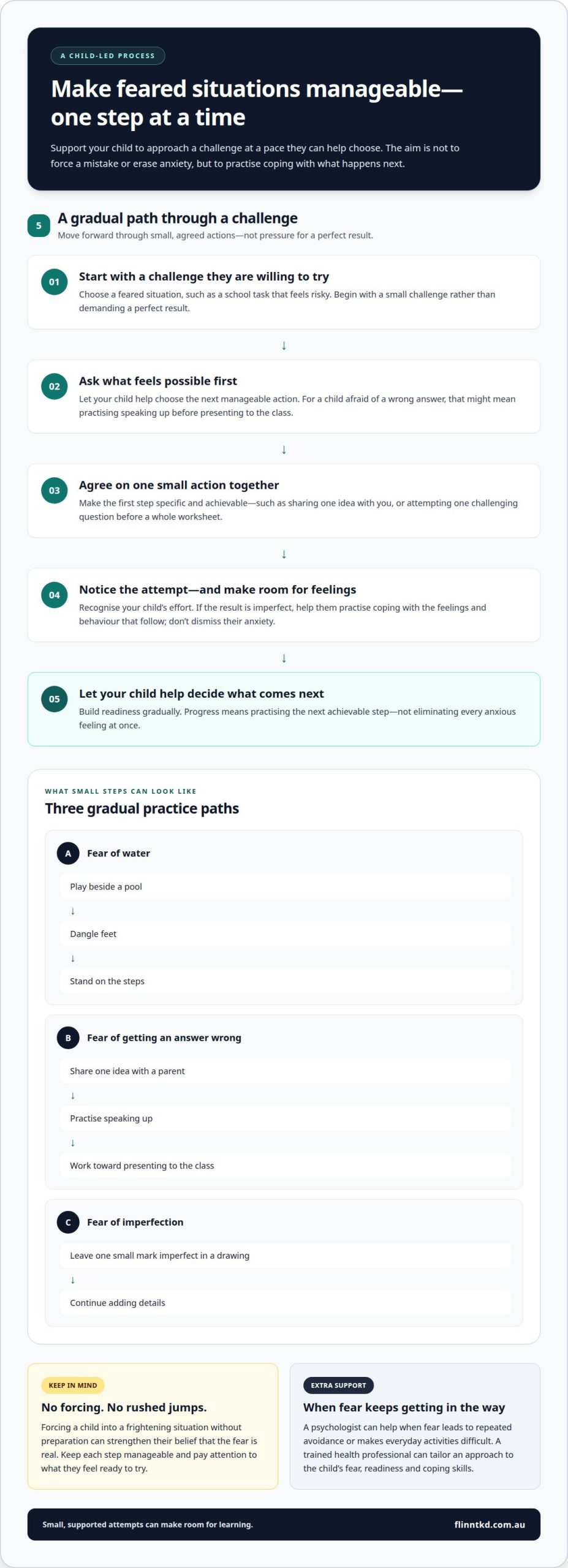
Start with a small challenge your child is willing to try, then recognise their effort. If a school task feels risky, for example, agree on a first step together instead of demanding a perfect result.
Child-Led Steps Toward Feared Situations
Gradual exposure means approaching a feared situation in manageable steps, at a pace your child can take part in choosing. This matters because a child who fears getting an answer wrong may need to practise speaking up before presenting to the class. Ask what feels possible first, then agree on a small action, such as sharing one idea with you. Recognise the attempt, and let your child help decide what comes next.
Gradual Exposure to Imperfection
Gradual practice for fear of imperfection involves safely facing situations where mistakes are possible, one step at a time. A child worried about a messy drawing might first leave one small mark imperfect, then continue adding details. The aim isn’t to force a mistake or dismiss anxiety. It’s to help your child experience an imperfect result and practise coping with the feelings and behaviour that follow.
With a fear of water, gradual steps might begin with playing beside a pool, dangling feet, then standing on the steps. The same principle applies to failure: a child might attempt one challenging question before completing a whole worksheet. Forcing a child into a frightening situation without preparation can strengthen their belief that the fear is real. Keep each step manageable and notice what your child feels ready to try.
Some children need more guidance than a parent can provide alone. A psychologist can help explain how physical sensations, thoughts and behaviour interact, then guide a safe approach to feared situations. This may be useful when fear of failure leads to repeated avoidance or makes everyday activities difficult. A trained health professional can tailor exposure treatment to the child’s fear, readiness and coping skills. Progress means practising the next achievable step, not eliminating every anxious feeling at once.
Parents modelling positive responses to mistakes
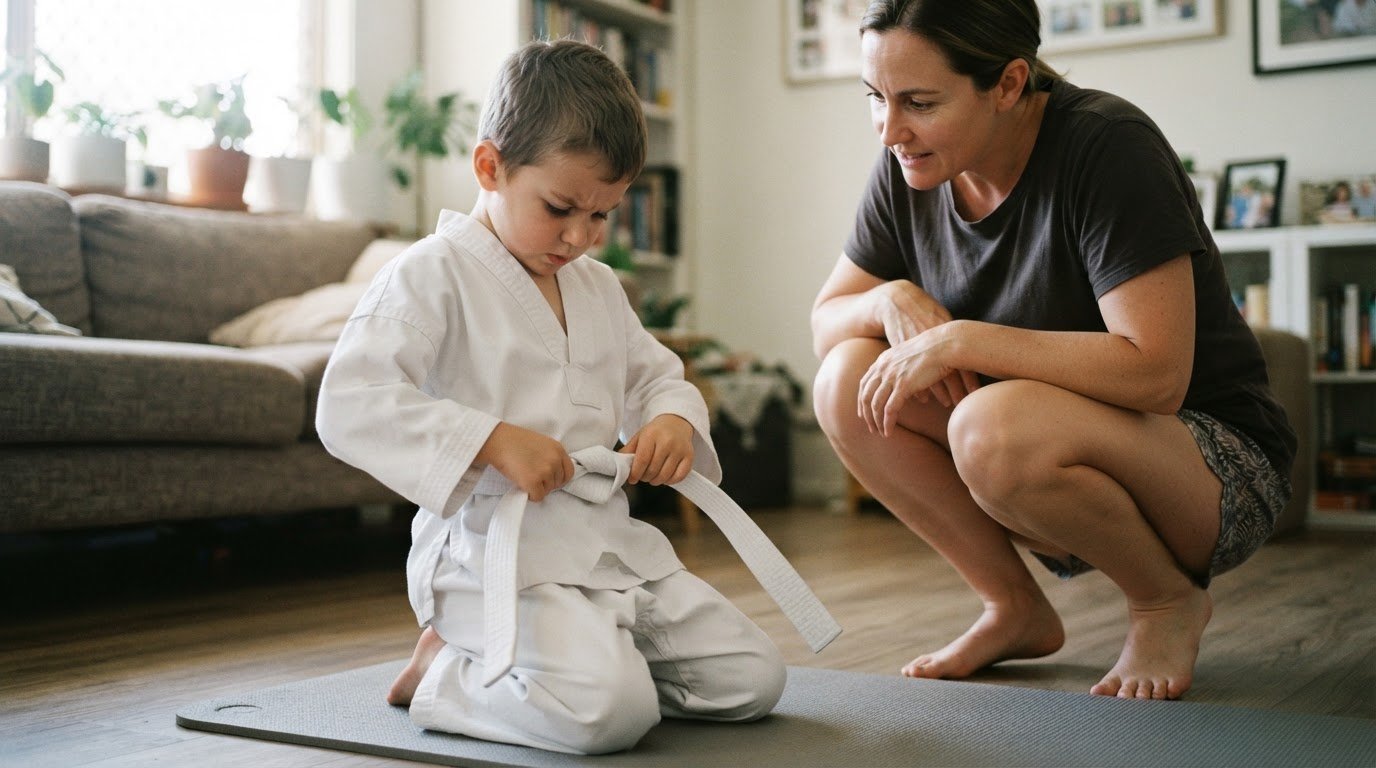
When your child fears getting something wrong, acknowledge the feeling before discussing solutions. Try: “You’re disappointed that the answer wasn’t right. Let’s see what we can learn.” This recognises the emotion without treating one mistake as proof of failure. Then share a specific example of your own, such as misreading instructions and correcting your work.
Your response can teach strategies more effectively than a lecture. If you make a mistake, name it calmly, explain your next step and follow through. For example: “I forgot the meeting time, so I’ll write it in my calendar.” Avoid negative labels like “I’m hopeless” or “You always give up.” Keep the focus on what happened and what you can try next.
In Brisbane, parents can speak with their child’s teacher about classroom approaches to perfectionism or fear of failure. Ask how feedback can recognise effort, and whether your child can review an incorrect answer and try again. A shared approach between home and school helps adults respond consistently when a task feels difficult.
Parent education and family support can also help caregivers understand anxiety and practise supportive responses together. At an initial parent or caregiver session with a psychologist, describe what happens before, during and after a feared task. Ask about parent support or coaching, and which strategies suit your child and family. This gives the conversation a clear starting point.
Consider professional help when fear repeatedly disrupts school attendance, friendships, sleep or ordinary family routines. Therapy may help when fear of failure prevents a child from functioning; a psychologist can explore the child’s thoughts, physical feelings and behaviour. For a structured setting to practise meeting challenges, explore children’s martial arts as one possible activity alongside family support.
Sharing your own mistakes and disappointments can model how to cope with failure. When your child is frustrated or disappointed, acknowledge their feelings before discussing what they could do differently. Give them room to make mistakes and try again, so they can practise handling disappointment. This keeps the focus on learning without expecting every attempt to go right.
Building confidence, grit and resilience
Confidence grows when children connect progress with practice, not a label like “talented”. Praising effort rather than ability can help children connect progress with practice. Children praised for effort showed a 30% increase in intelligence testing; those praised for intelligence showed a 20% decrease. The children were also challenged with a test designed for eighth-grade students.
Give specific feedback after a struggle. Instead of “You’re so clever”, try “You tried a different method when the first one didn’t work.” This highlights an action your child can repeat. If they’re anxious about a spelling test, recognise the practice they’ve done and help them choose a next step, such as reviewing difficult words.
Grit isn’t pushing through every task without a break. It means returning to a meaningful challenge, adjusting a strategy and seeking support when needed. After a disappointing result, let your child settle emotionally before reviewing what happened. Then ask what helped, what felt hard and what they might change next time. Their answers can turn a setback into a plan.
Build confidence through achievable responsibilities beyond schoolwork. A child learning to pack their own sports bag, for example, can use a short checklist, notice what they remembered and correct anything missed. Focus on the process, not perfection. If they forget an item, help them find a practical reminder rather than calling the mistake careless.
Progress may look different at home, school and with friends. Notice whether your child can attempt a difficult activity, recover after disappointment or ask for help more readily. If fear continues to interfere with daily life, a psychologist or clinic can assess your child’s needs and discuss suitable support. Resilience develops through repeated chances to practise, reflect and try again, with adults recognising effort along the way.
That kind of stretch can be discussed without treating difficulty as proof of a limit. The test designed for 8th-grade students offers a prompt to ask which part felt manageable, where the child got stuck and what support might help next. Keep the conversation focused on a chosen strategy, so a demanding task becomes a chance to plan another attempt.
Supporting primary-school children with fears
Primary-school children may fear storms, dogs, spiders, water, the dark, failure or criticism. These worries can be part of childhood, and some pass after a brief period. If you’re wondering how to help your child overcome a fear of failure in Brisbane, first notice whether the worry is narrowing their daily life rather than judging them for feeling afraid.
Fear may affect wellbeing when you notice changes in everyday routines. Look for difficulties with school attendance, sleep, friendships, eating or toileting, or meltdowns when something goes wrong. For schoolwork, watch for repeated task avoidance, distress around tests or reluctance to try unfamiliar activities. These patterns matter more than one difficult day.
Start with a calm conversation about one specific moment, such as refusing to answer in class. Help your child name their feelings and notice what happens in their body. Practise slow breathing together, then ask what they think might happen and whether it has happened before. This helps them examine the worry without dismissing it.
For social worries, give your child a practical response to rehearse. If friends exclude them, for example, they could practise calmly saying, “I felt left out. Can I join the game?” Recognise the brave attempt, even if the conversation feels awkward. Small acts of self-advocacy help children develop ways to handle uncomfortable moments.
A fear may be a phobia when it is out of proportion to the real threat and your child worries about what could happen. A psychologist can explain how thoughts, physical sensations and behaviour interact. Cognitive behavioural therapy works on thinking patterns that can lead to anxious feelings and avoidance. If you’re considering how to help your child overcome a fear of failure in Brisbane, professional support may help when fear interferes with your child’s or family’s life.
For practice with structured challenges and learning to respond to setbacks, explore children’s martial arts as one option. Keep the focus on participation and learning, not on demanding that your child feel fearless.
Flinn 跆拳道學院
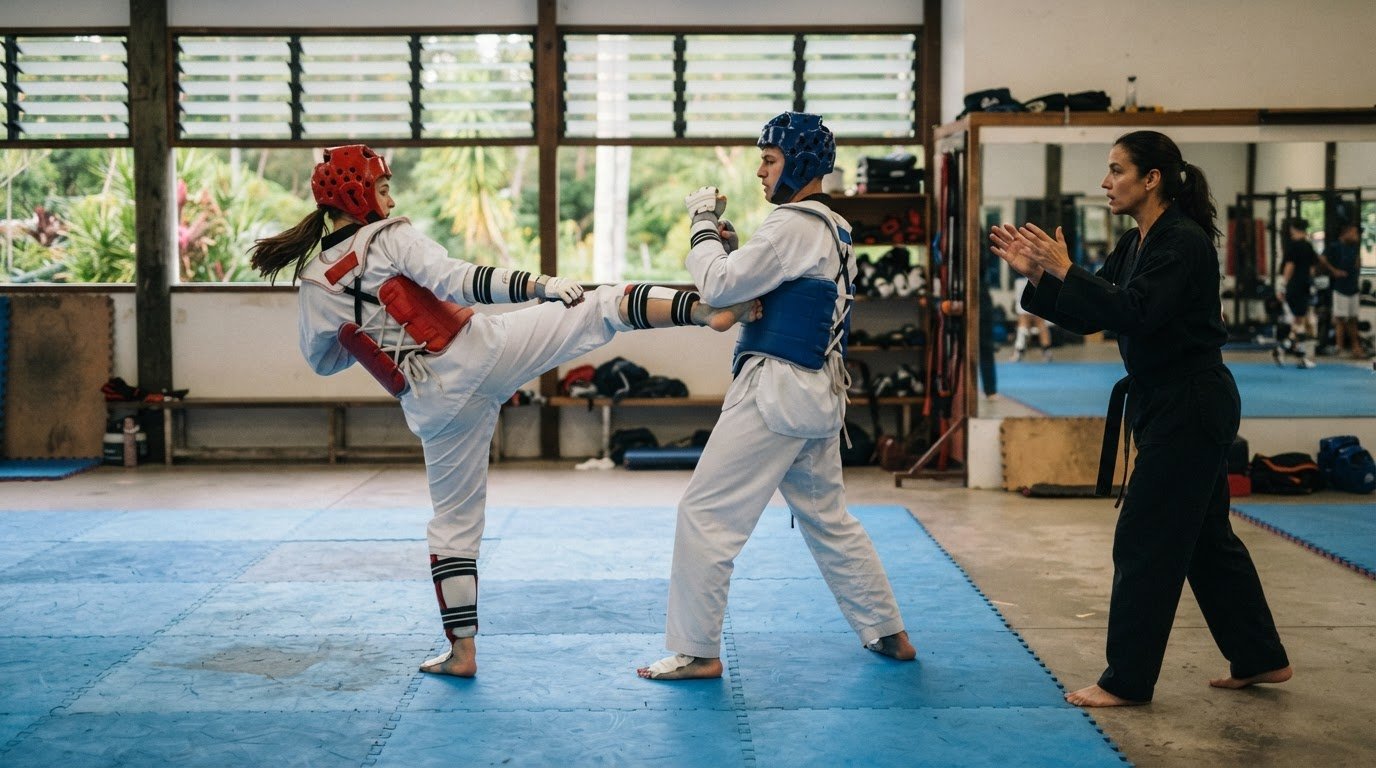
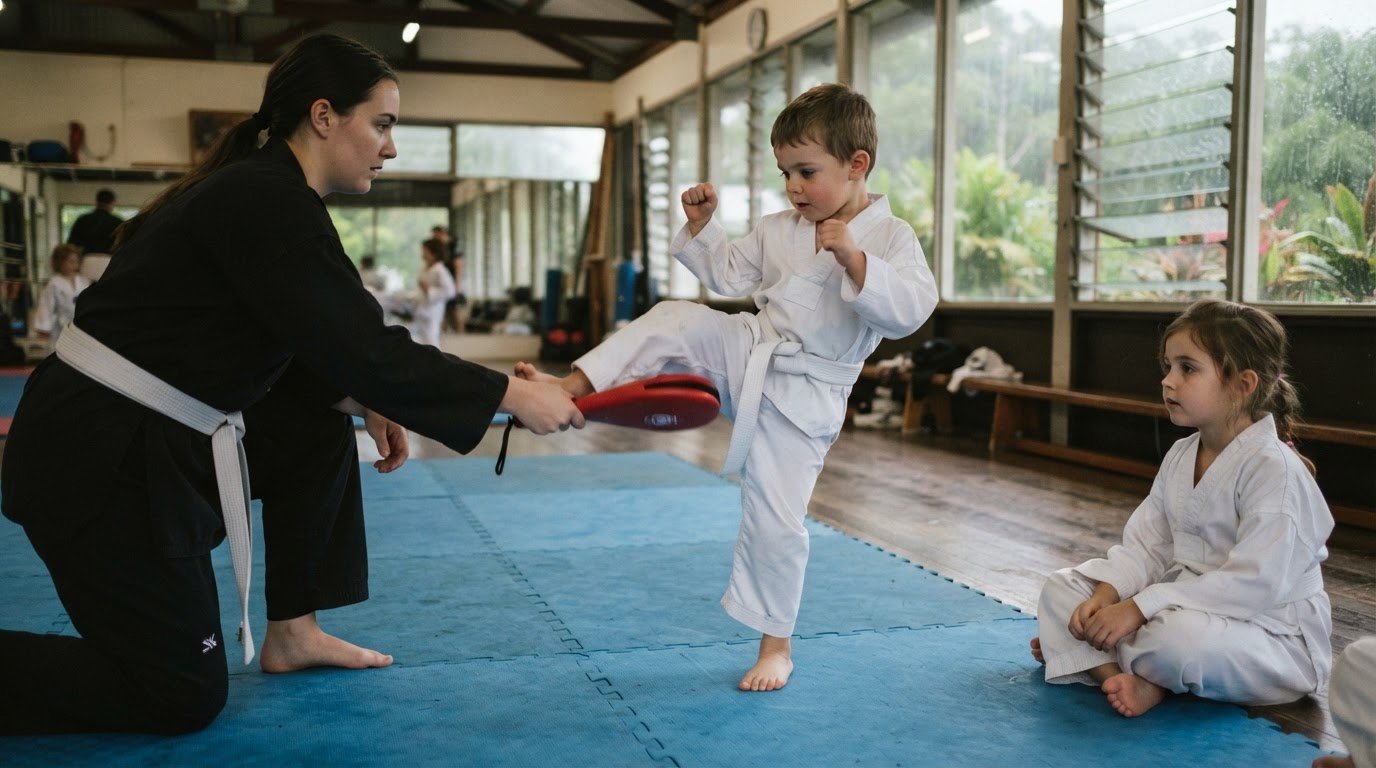
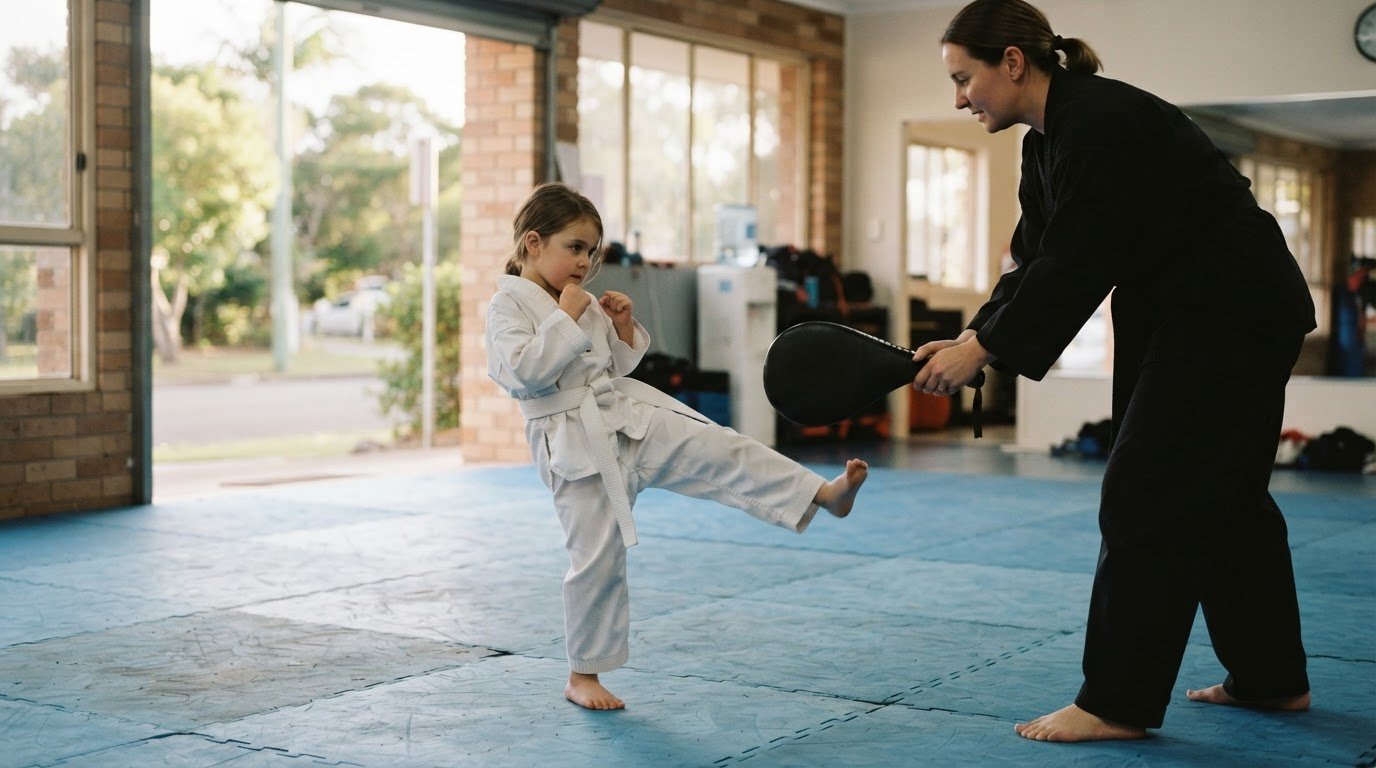
Flinn Taekwondo Academy gives children in North Brisbane a structured setting to practise effort, discipline and perseverance through Taekwondo. Training can complement the support you provide at home, giving children opportunities to learn skills, respond to coaching and keep working through challenges. It isn’t a replacement for professional help when fear significantly affects a child’s wellbeing.
Choose a program suited to your child’s age and interests. The Little Tigers Program is for children aged 4-6 years, while the Junior Taekwondo Program is for ages 7-12 years. Older teens and adults can consider the Senior & Adult Taekwondo Program for ages 13+ years. Each child’s starting point is different, so focus on participation and steady learning rather than immediate results.
If structured martial arts training feels like a suitable next step for your family, book a free trial with Flinn Taekwondo Academy in North Brisbane.
Take the next step at your child’s pace
Progress doesn’t require a dramatic breakthrough. Choose one upcoming challenge with your child, agree on what “having a go” looks like, then notice what they learn from the experience. That shared goal gives your child a clear way to measure progress without making success depend on getting everything right.
If you’re considering how to help your child overcome a fear of failure in Brisbane, think about the kind of practice that would suit their needs now. Taekwondo training can offer a structured activity where children work towards skills and personal goals over time. If your child’s fear is disrupting daily life, seek guidance from a qualified health professional as well.
A calm first conversation can help you decide whether training feels like a good fit for your family. Contact Flinn Taekwondo Academy to discuss the next step, and keep encouraging your child to meet each challenge with patience and courage.
常見問題
How can parents build resilience and a healthy attitude to mistakes at home?
Give your child age-appropriate responsibility and time to work through ordinary problems before stepping in. If a recipe is missing an ingredient, for example, invite them to think of a substitute with you. Stay calm, and make it clear that asking for help is also a useful choice. These everyday moments help children practise flexible thinking in a familiar setting.