Parents want to know whether they can watch their son’s class, and that’s a fair question. Age-appropriate classes can make the first step clearer for boys starting martial arts in Brisbane. Parent viewing arrangements are another practical detail to understand when choosing a class.
It’s natural to look beyond kicks and fitness. You want a welcoming place where your son can learn safely, feel included and build skills at his own pace. Training can also give him opportunities to practise focus, discipline and respectful behaviour.
This guide explains what to expect from martial arts for boys in Brisbane, including age-based classes and how Taekwondo differs from other styles. You’ll also learn what children’s self-defence training involves, how parents can support a first class and how regular practice can build concentration and confidence. Use these points to consider what training may suit your son.
主要心得
- Use age groups as a starting point when choosing a class, then consider your son’s confidence, interests and readiness to learn.
- Compare what different martial arts styles emphasise, and see why Taekwondo may suit boys drawn to structured skill-building.
- Look beyond physical techniques: self-defence can also involve awareness, confidence and choosing calm responses to conflict.
- Learn what to observe in a class, from parent viewing arrangements to the routines that help children practise focus and discipline.
Martial arts classes for preschoolers, kids and teens
Age-based classes make it easier to find training suited to a child’s stage. When comparing martial arts for boys in Brisbane, consider the age group, teaching style and location together.
Brisbane families can explore options across the city, including Holland Park on the southside. A suburb alone doesn’t show whether a class suits your child, so weigh travel convenience alongside age grouping and class format.
Classes by Age Group
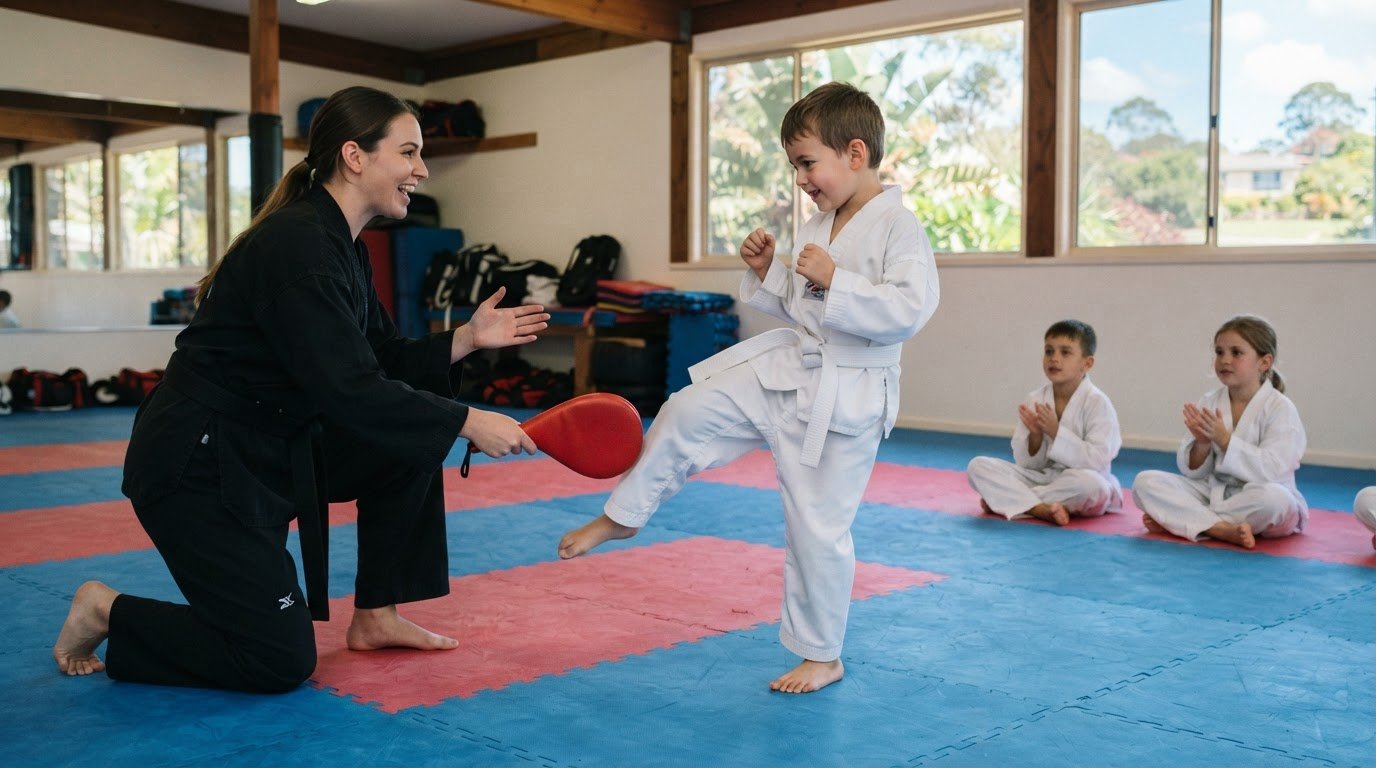
Preschool classes can introduce movement and coordination through simple instructions and playful activities. Children aged 4-6, 7-12 and 13+ may benefit from age-appropriate groups, though readiness and experience also shape learning. Compare the class structure, not just the age label, to understand how students practise skills and follow instructions.
Brazilian jiu-jitsu schools set their own age brackets, so there isn’t one range that applies across Brisbane. Ask how younger children, school-age students and teens are grouped, and whether beginners train alongside experienced students. This helps you picture the class and decide whether its format feels right for your son.
Brisbane Kids Class Options
For martial arts for boys in Brisbane, compare suburbs based on your family’s regular travel and routine. Holland Park is one location to include when exploring Brisbane Southside; other suburbs may suit families elsewhere. A convenient route can make consistent attendance easier and help children become familiar with classmates and instructors.
Parent participation varies between schools. Some classes allow parents to watch, while others may have adults and children train together. Find out how the class works before choosing. A shared activity offers time to practise together, while a children’s class gives students space to learn with peers in an age-focused group.
Compare options by your son’s age, the style taught, the location and parent involvement. For example, a family in North Brisbane could weigh travel convenience against class structure and the child’s confidence. Choose a setting that makes regular participation practical and gives your son a comfortable way to begin.
Karate, Taekwondo and mixed martial arts training
Karate, Taekwondo and mixed martial arts organise training differently. Karate often includes punches, kicks and forms; Taekwondo emphasises kicking techniques and poomsae, or set movement patterns. Mixed martial arts combines techniques from several disciplines, which may include striking and grappling. Compare the skills taught, contact level and class structure before choosing.
Training can develop fitness, coordination and focus through repeated movement and clear instruction. It also involves physical effort and contact, so boys may experience bumps or strains. Consider your son’s readiness for the training and look for instructors who explain activities and guide students through practice.
Family training can turn martial arts into a shared routine. Parents and children might practise the same basic movements, then talk about new skills on the way home. Regular classes can also help children meet friends. Ask how family participation works, as some schools offer shared sessions while others keep children’s and adults’ training separate.
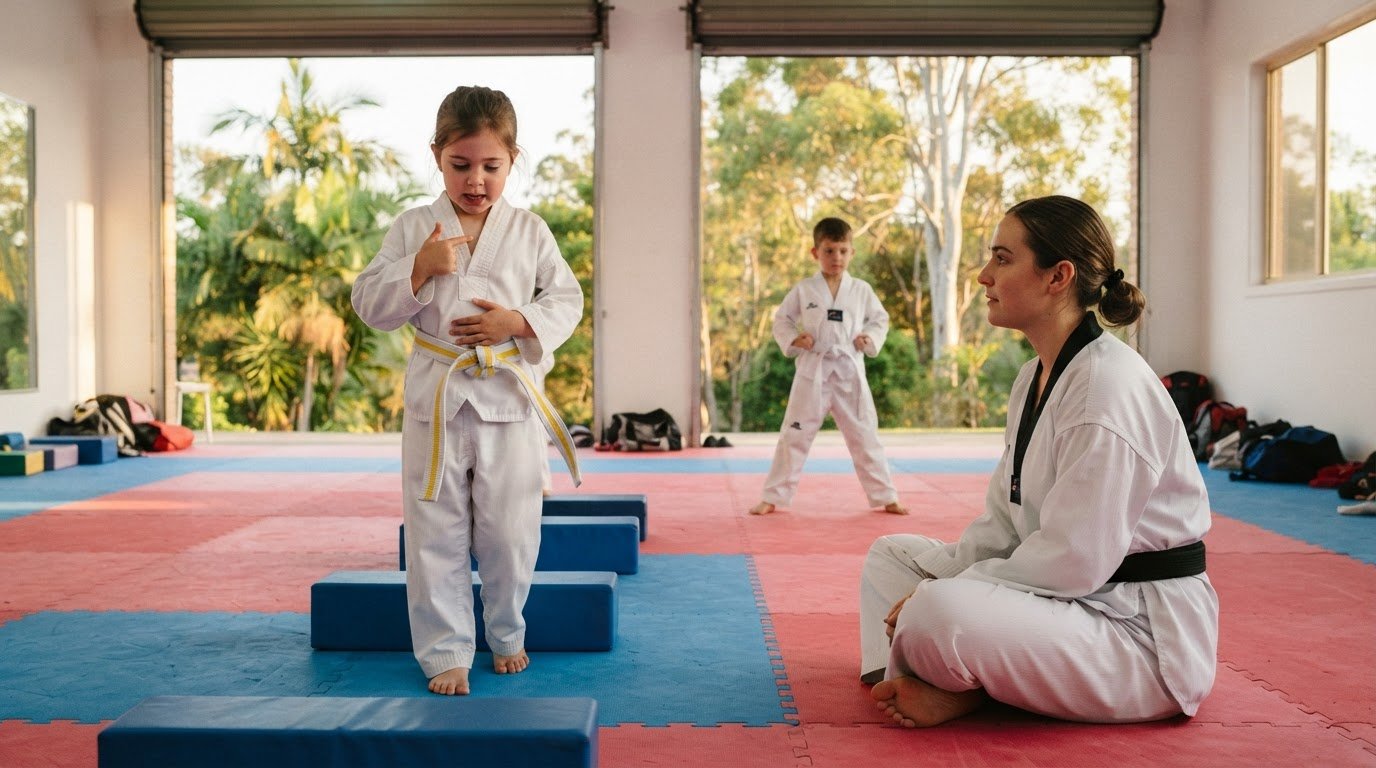
Assess the training space by watching how students move between activities. Look for clearly defined practice areas, suitable floor surfaces and enough room for the class format. For example, partner drills need an orderly layout that allows students to practise without crowding. The instructor’s organisation of the space is another useful thing to observe.
Clothing depends on the martial art and school. Karate students commonly wear a gi, while Taekwondo uniforms are often called doboks; introductory activities may use comfortable exercise clothes. Ask what to wear for the class you’re considering. Kickboxing and mixed martial arts may have different clothing requirements, so don’t assume one uniform suits every style.
To understand how structured Taekwondo training develops technique and fitness, explore the Taekwondo training environment and consider which class format fits your family’s goals.
Self-defence and non-violent conflict resolution
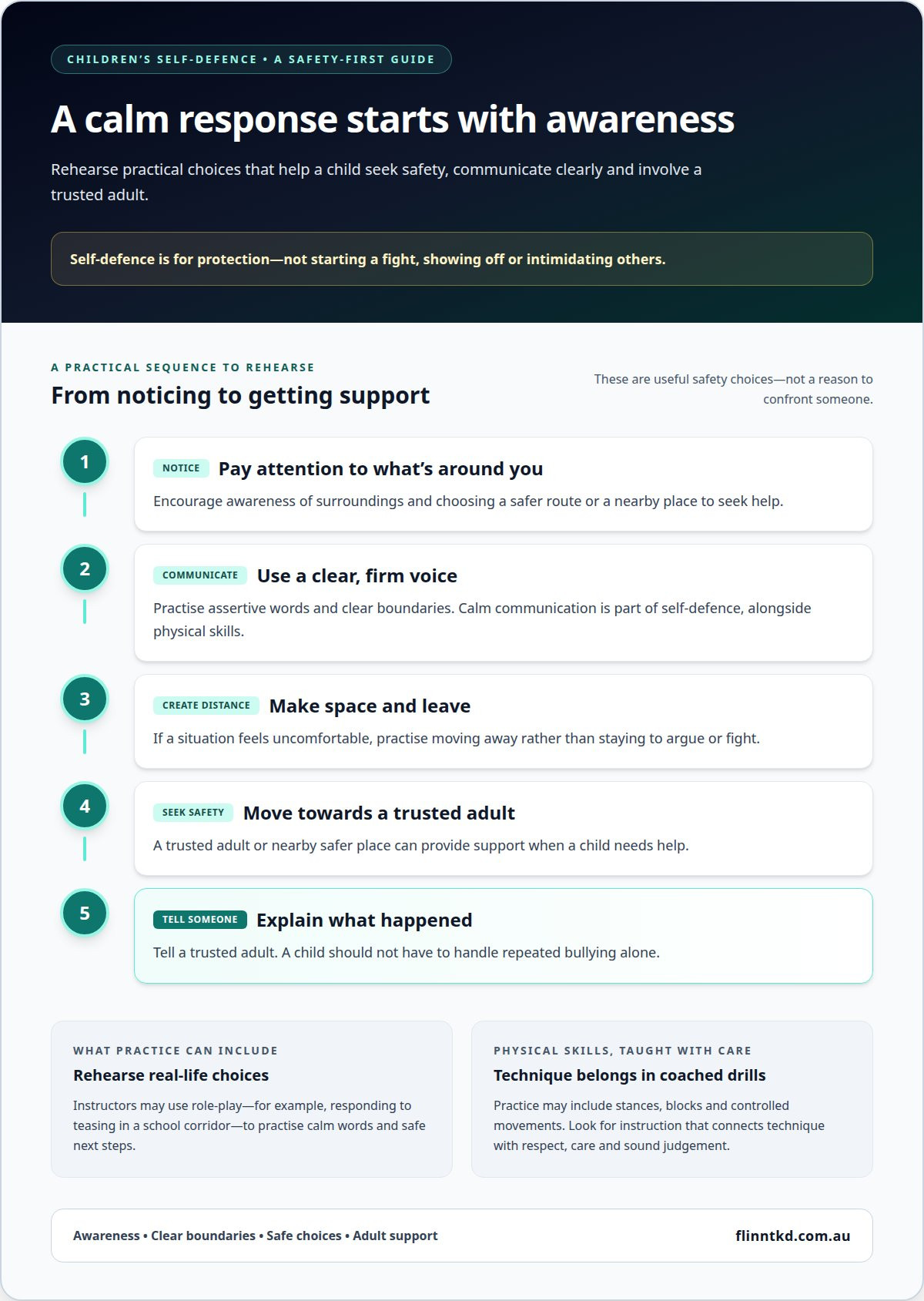
Children’s self-defence training should combine physical skills with respect and sound judgement. The aim is to help a boy recognise options, communicate clearly and seek safety, not encourage him to start a fight.
Practical Self-Defence and Personal Safety
Practical training can rehearse simple responses, such as creating space, using a firm voice and moving towards a trusted adult. Look for classes that teach awareness and clear boundaries alongside physical techniques. Children should understand that self-defence is for protection, not showing off or intimidating others.
Karate-based practice may introduce stances, blocks and controlled movements through coached drills. The instructor can explain when a technique belongs in training and why students practise with care. Children’s self-defence classes can make respect part of each activity, from listening to instructions to treating training partners responsibly.
Bully Defence and Street Smarts
Defending against bullying starts with choices beyond fighting. A child can practise speaking assertively, leaving an uncomfortable situation and telling a trusted adult what happened. Instructors can use role-play, such as responding to teasing in a school corridor, to help students rehearse calm words and safe next steps.
Street smarts also means noticing surroundings and choosing a safer route or nearby place to seek help. Social confidence matters: children should know they can involve adults rather than handle repeated bullying alone. Brazilian jiu-jitsu and karate teach different physical skills, but neither replaces communication, support or responsible decision-making.
Ask how a class connects technique with everyday judgement. A useful lesson might distinguish a supervised drill from a real disagreement, then practise stepping away and reporting a concern. This balance helps children understand that everyone deserves respect, and that self-defence should protect personal safety rather than escalate conflict.
Discipline, focus and concentration
Martial arts gives boys structured tasks to follow, repeat and refine. Clear class routines can make discipline and concentration part of the learning process.
Building Discipline
Discipline shows in small actions: arriving prepared, listening to instructions and waiting for a turn. During a Taekwondo drill, a student might repeat a stance until the movement feels more controlled. Look for instructors who explain expectations clearly and recognise effort, not just polished technique. This gives students practical ways to practise responsibility in class.
Developing Focus and Concentration
Focus develops as students listen for a cue, remember a sequence and perform each movement with care. For example, a karate pattern asks a child to follow steps in order rather than rush ahead. Ask how instructors respond when a boy loses track or needs another demonstration. Clear cues help him bring his attention back to the task.
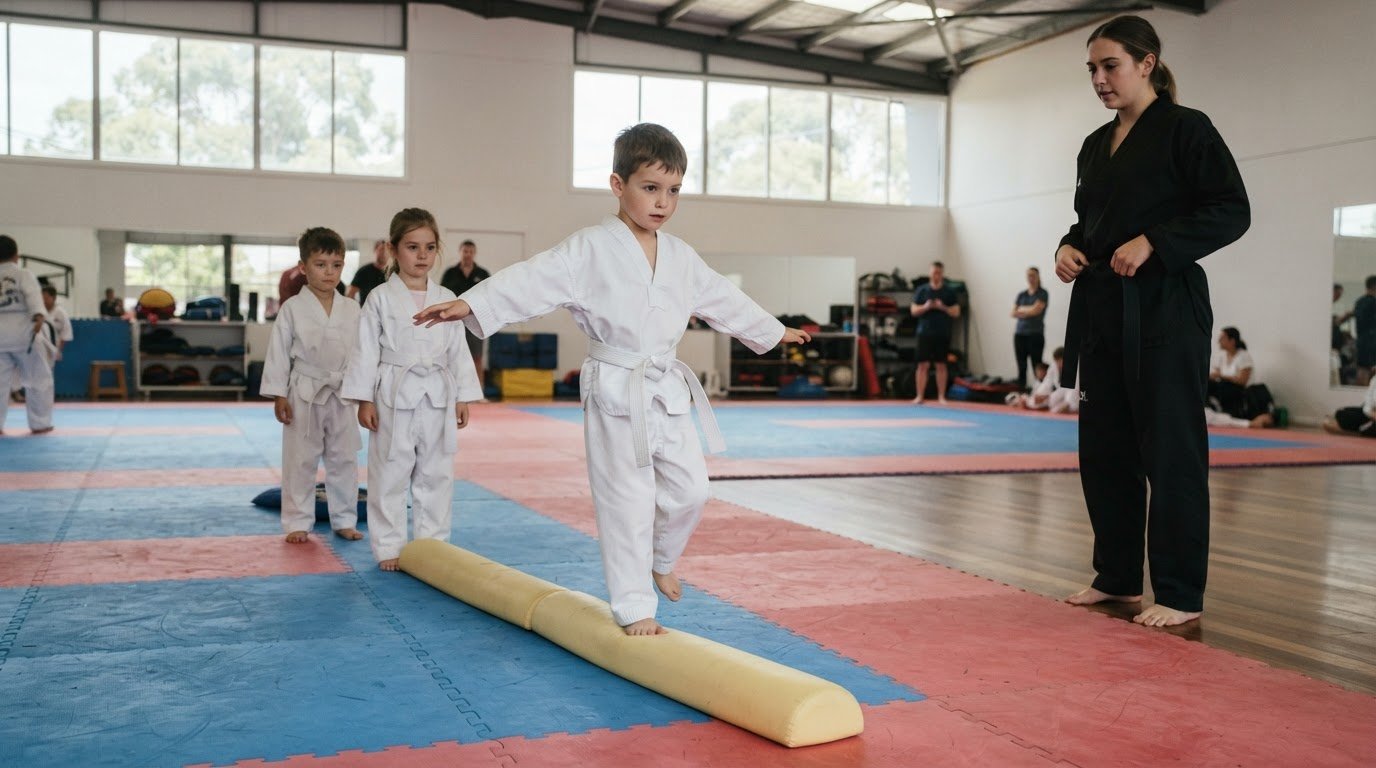
Confidence can grow as a child notices progress in a skill he once found difficult. In Taekwondo, improving balance or flexibility gives him a specific achievement to recognise. The same principle applies to boxing drills, where a student concentrates on timing and controlled movement. Progress is personal, so compare his effort with his earlier practice, not another student’s performance.
At home or school, reinforce these habits with a simple prompt: ask your son to describe a technique or class goal he practised. This connects training with learning without turning practice into a test. Consistent routines, respectful behaviour and attention to instructions give boys practical ways to apply discipline beyond the training floor.
Choose a class where instructors explain tasks, guide practice and make progress understandable. Explore Taekwondo training for focus and discipline as a next step for your son.
Flinn 跆拳道學院
Flinn Taekwondo Academy gives Brisbane families a Taekwondo pathway focused on age-appropriate training, skill development and personal growth. Its programs help you match your son’s stage and goals with a suitable class.
The Little Tigers Program is for children aged 4-6, while the Junior Taekwondo Program serves ages 7-12. For students aged 13 and over, the Senior & Adult Taekwondo Program offers a next step. Students pursuing competition can also access High Performance Competition Training.
Consider Taekwondo if you want your son to learn physical skills in a structured setting while practising focus and discipline. Children’s Classes include a self-defence focus, while Junior Performance and High Performance offer pathways for students with performance goals.
Contact Flinn Taekwondo Academy to discuss which program may suit your son.
Take the Next Step With Confidence
The right training is something your son can approach with curiosity and return to with purpose. Think about what he wants to develop, whether that’s learning a new skill, building confidence or having a focused activity beyond school. Then consider which class environment suits his goals and personality.
For families exploring martial arts for boys in Brisbane, the next step can be a conversation about the kind of Taekwondo training that suits your son. Flinn Taekwondo Academy can help you understand its programs and find a relevant starting point for your family’s needs.
Bring your questions and share what you hope your son will gain from training. Contact Flinn Taekwondo Academy to take that first step. Every strong journey begins with a decision to start, and your son can build confidence one class at a time.
常見問題
Are Parents Allowed To Watch?
Parents can support their child’s first visit while the instructor leads the class. Follow the instructor’s direction about where to stand or sit. Give your son room to listen, respond to demonstrations and join activities independently. A calm presence can help him settle without drawing attention away from the group or interrupting instruction.
Can I watch the class?
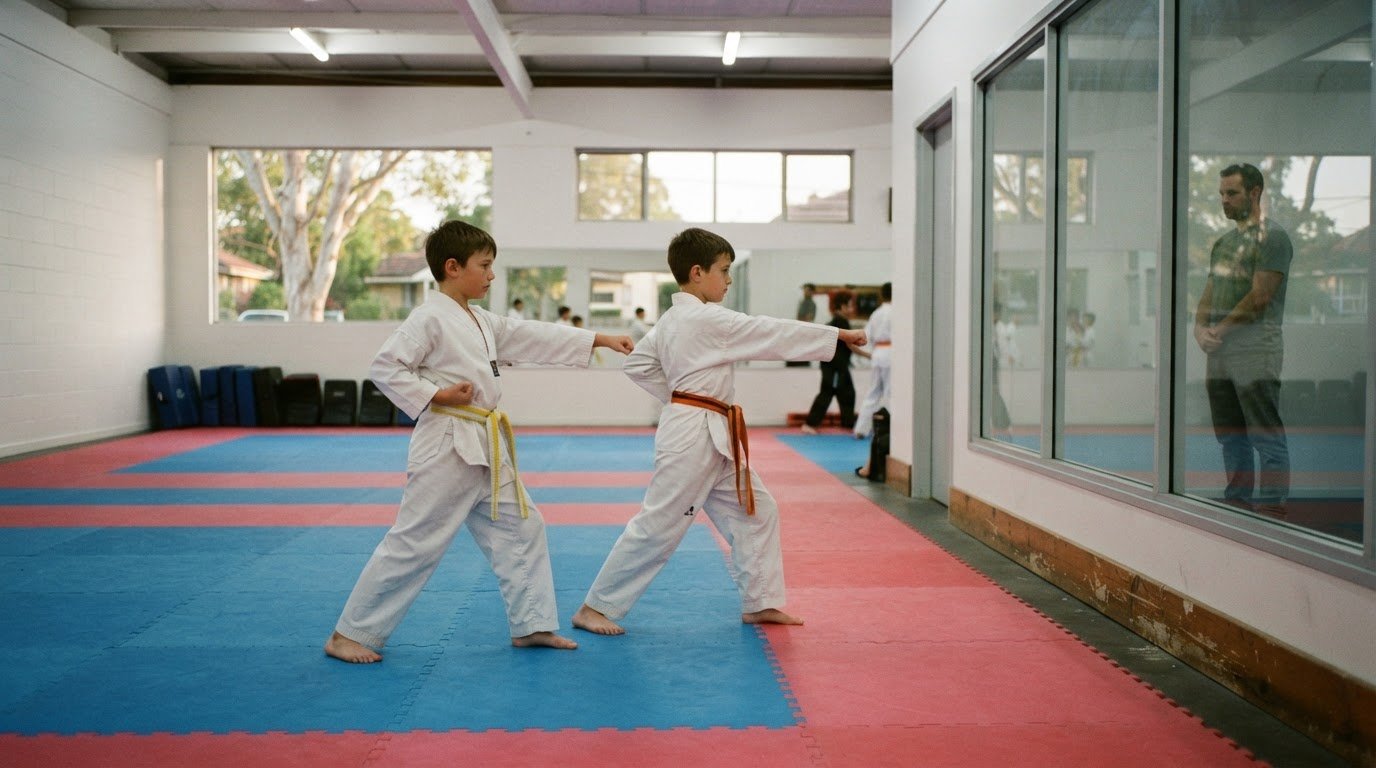
Watching a class can help you understand its pace and teaching style. Stay in the area designated for visitors and let the instructor manage the session. Notice whether instructions are clear, students have turns to practise and the class moves smoothly between activities. If your child looks towards you, a quiet smile can encourage him while keeping his attention with the instructor.
Is this suitable for a complete beginner?
Yes, Taekwondo can suit beginners, who build skills through guided practice. Your son doesn’t need previous martial arts experience to start learning basic movements and class routines. He can watch a demonstration, try a movement at his own pace and follow the instructor’s cues. Regular participation gives him time to become familiar with the training environment.
What can I expect at my first class?
Expect an introduction to the training space, the instructor and the class routine. Your child can listen to directions, observe demonstrations and practise movements suited to the session. Choose comfortable clothing that allows movement, unless the class has another requirement. Encourage him to focus on taking part rather than getting every technique right straight away. Familiarity grows as he learns the class rhythm.
Where are you located?
Flinn Taekwondo Academy is in North Brisbane, Queensland. If you’re travelling from another Brisbane suburb, plan the trip around the class time and allow room to arrive before training begins. Knowing the route and where to meet your child afterwards can make the visit easier. The academy serves Brisbane families looking for Taekwondo training.
Which program should my child start in?
Choose the program that matches your child’s age: the Little Tigers Program is for ages 4-6, the Junior Taekwondo Program is for ages 7-12, and the Senior & Adult Taekwondo Program is for ages 13 and over. For example, a seven-year-old would start in the junior age group. These divisions give families a clear starting point for Taekwondo training.