The best sport for a child who lacks confidence in Brisbane is one with supportive coaching, low-pressure participation and skills they can practise and improve. There’s no single sport that suits every child. The right fit is an activity they enjoy and feel comfortable trying, where effort and progress matter more than comparison or winning.
It can be hard to watch your child hold back or worry about making mistakes. Confidence grows through positive experiences, not pressure to perform. This article explains what to look for in a Brisbane sport and how coaches and parents can support participation without turning every session into a test.
Learn how skill practice and achievable goals can help, how to recognise a supportive training environment, and why age-appropriate instruction matters. You’ll also find practical ways to make sport more welcoming, so your child can build skills, enjoy taking part and grow in confidence at their own pace.
主要心得
- Choose an activity your child enjoys, where participation and personal progress matter more than comparison or winning.
- Notice and encourage effort, including trying a new skill or joining in when your child feels unsure.
- Look for a coach who creates a welcoming environment and gives children room to learn at their own pace.
- Help your child practise one manageable skill and set a small goal they can work towards.
- Choose age-appropriate instruction that supports your child’s confidence as well as their physical skills.
Confidence-building through sport and movement
Movement gives children practical ways to notice progress, from catching a ball to learning a new sequence. Sports can involve falls, collisions or overuse, and suitable equipment varies by activity. Modified formats can reduce injury risk, while a supportive environment helps children focus on learning.
Confidence and Self-Esteem Through Sport
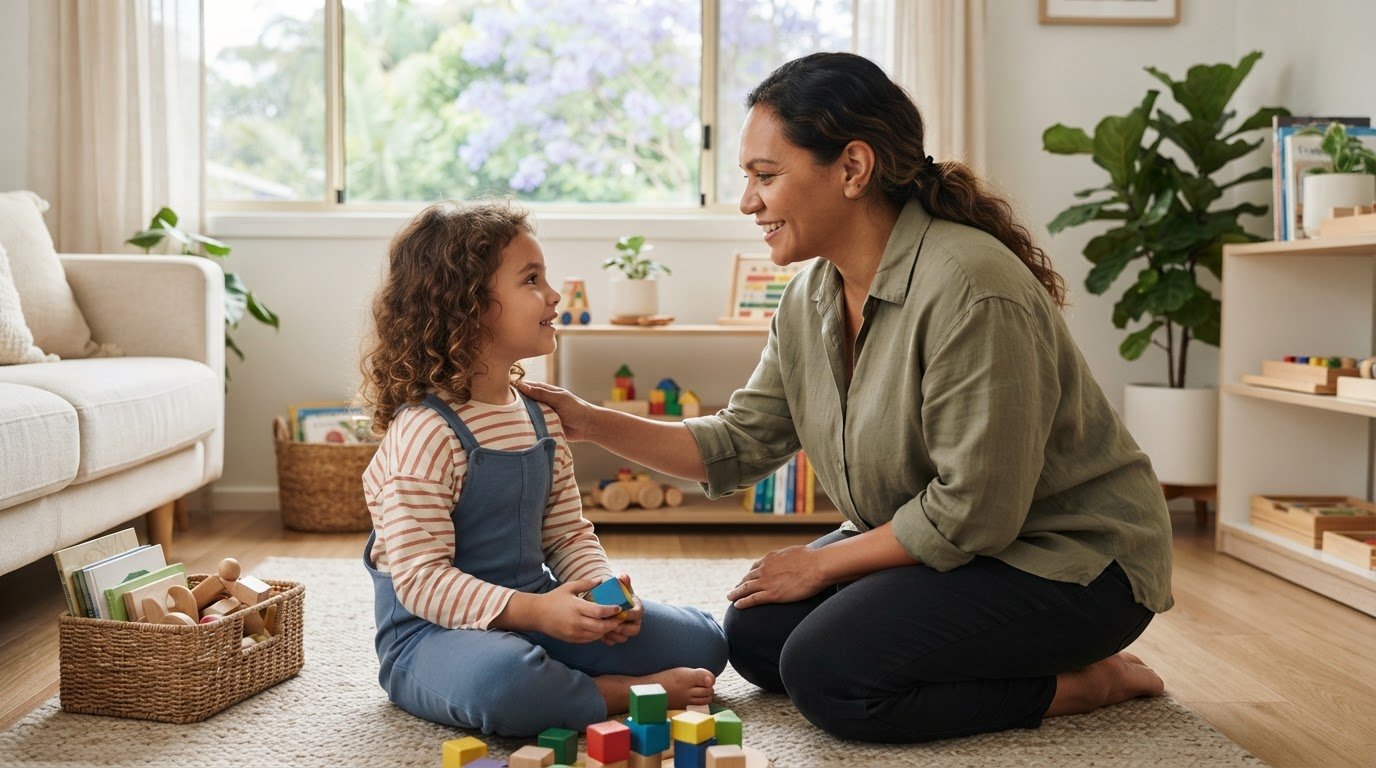
Sport can build confidence when children see their progress. A child might first watch a passing drill, then join in and eventually complete a pass with a teammate. Each step shows what they can do, without asking them to compare themselves with the most experienced player.
Look for activities where children with different builds and abilities can take part. Notice signs of growing confidence, such as volunteering, trying again or asking for help. Praise a specific action, like sticking with a drill after a mistake, so your child can recognise what they did well.
Confidence-Building Through Youth Fitness
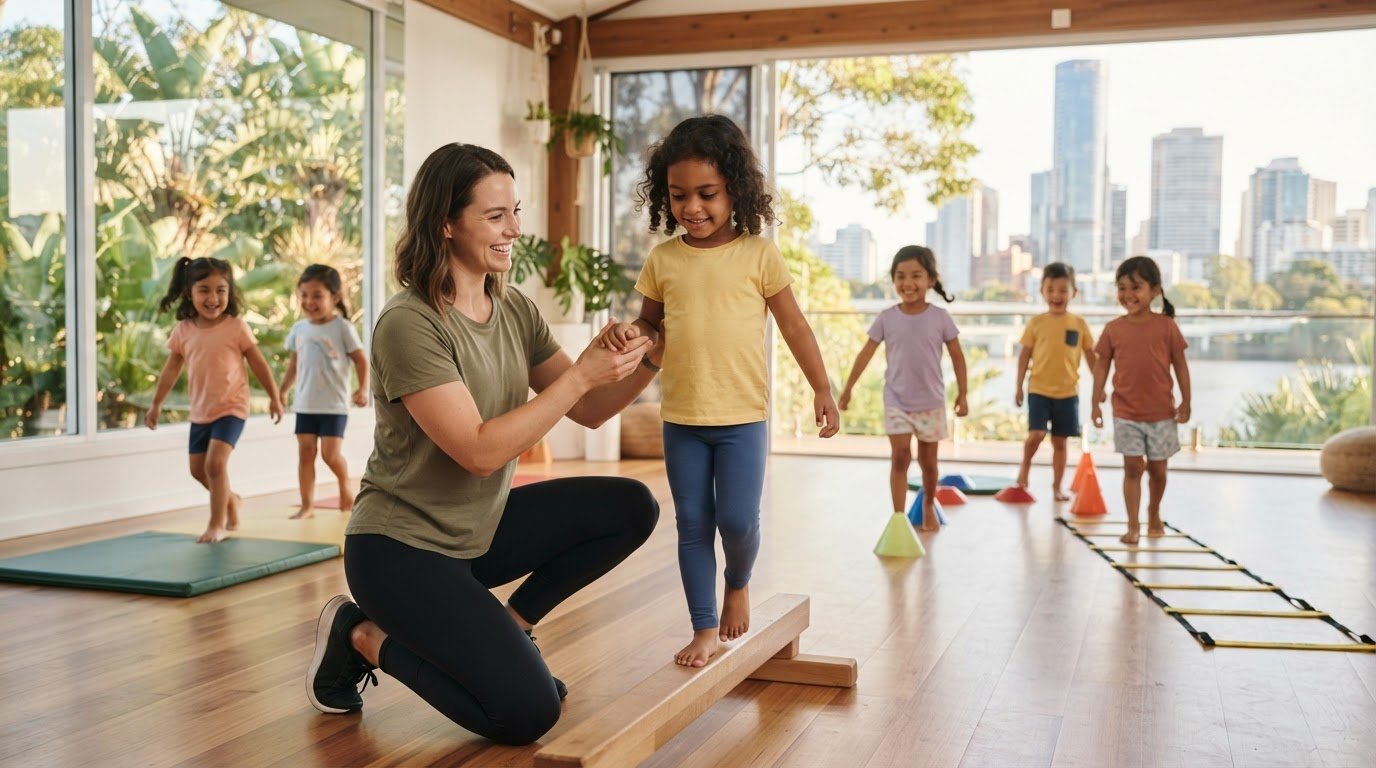
Youth sport can build confidence through movement skills, coordination and steady effort, not just competition. A child might practise balance, change direction around markers or repeat a simple movement sequence. Coaches can make each task manageable by demonstrating it, allowing practice and recognising improvement.
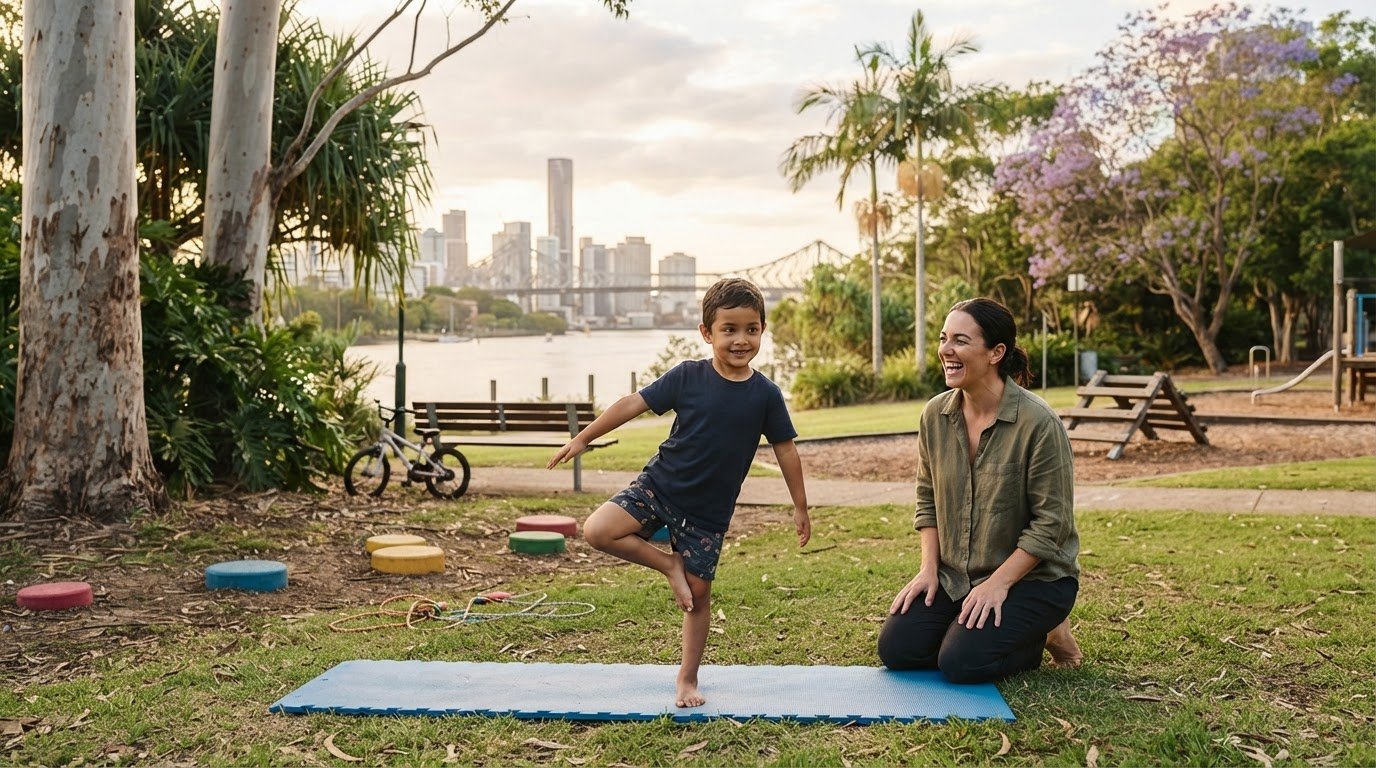
Pay attention to how beginners are treated. Clear instructions and achievable activities help children focus on learning instead of worrying about getting every movement right. For example, a child can practise a balance position before combining it with another movement. Gradual challenges support physical learning and a sense of independence.
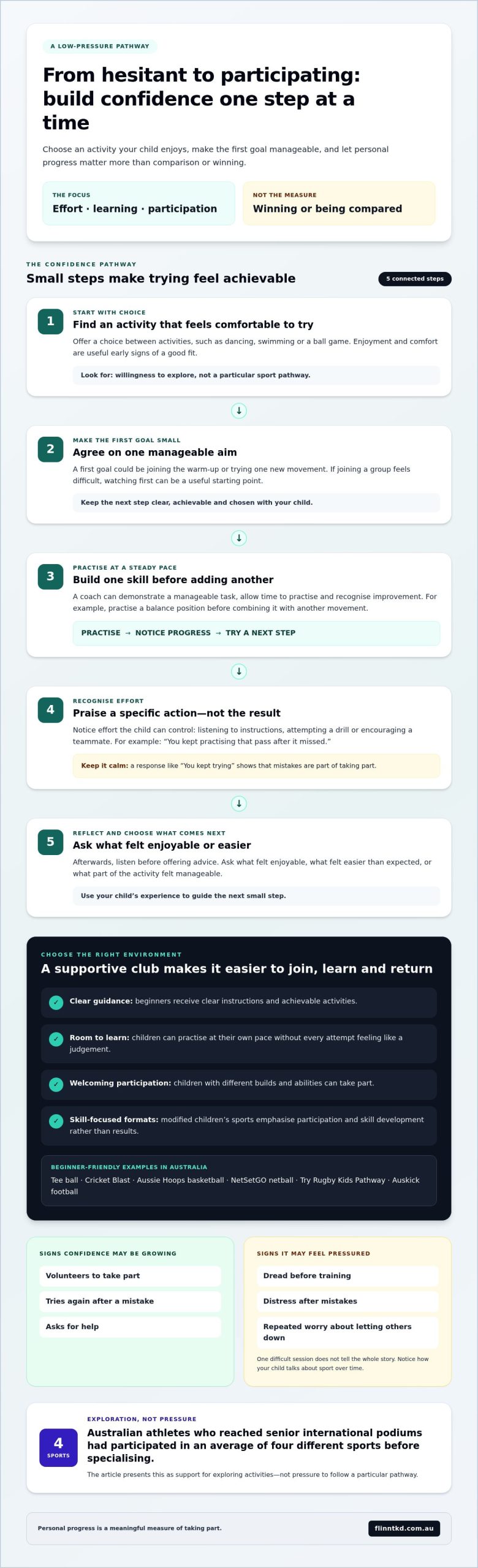
Trying different activities can help your child discover what they enjoy. Australian athletes who reached senior international podiums had participated in an average of four different sports before specialising. This supports exploration, not pressure to follow a particular pathway. For families seeking the best sport for a child who lacks confidence in Brisbane, enjoyment and comfort are useful early signs of a good fit.
Use these steps to make movement feel achievable:
- Offer a choice between activities, such as dancing, swimming or a ball game.
- Agree on one small aim, such as joining the warm-up or trying a new movement.
- Afterwards, ask what felt enjoyable or easier than expected.
Keep the focus on participation and personal progress. If your child prefers to practise a movement at home before joining a group, that can be a useful starting point. A relaxed pace gives them room to get familiar with the activity, build skills and decide what they want to try next.
Effort, encouragement and participation without pressure
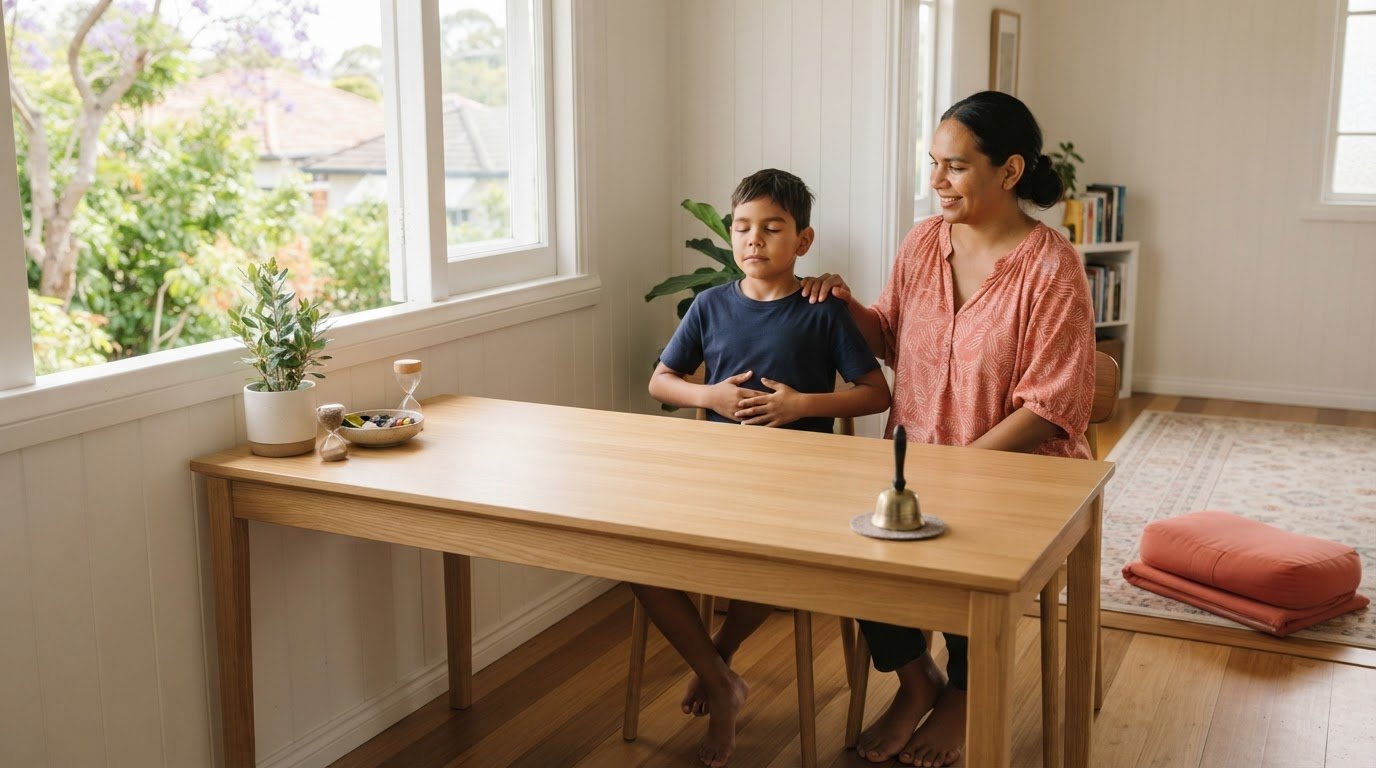
Look for growing confidence in a child’s willingness to join in, try again or speak up. Pressure may show as dread before training, distress after mistakes or repeated worry about letting others down. One difficult session doesn’t tell the whole story, so notice how your child talks about sport over time.
Children can control their effort, but not the result. Help your child focus on actions they can choose, such as listening to instructions, encouraging a teammate or attempting a drill. After a game, ask what they enjoyed and what effort they felt proud of, rather than starting with the score.
Parents set the tone through their own behaviour. If a child misses a goal, a calm response like “You kept trying” shows that mistakes are part of taking part. Avoid criticising referees, comparing siblings or replaying every error on the way home. These reactions can make children feel responsible for adult expectations.
Some children feel nervous before a game or disappointed after losing. Shift the focus to playing with teammates and meeting people, not only winning. Ask your child to name a teammate they enjoyed playing alongside. This recognises connection and participation, even after a tough result.
Use these practical ways to encourage effort without adding pressure:
- Let your child choose a personal focus, such as joining the warm-up or passing to a teammate.
- Notice specific effort: “You kept practising that pass after it missed.”
- Keep post-training conversations open, and listen before offering advice.
- Model good sportsmanship by respecting teammates, opponents and officials.
Modified children’s sports emphasise participation and skill development rather than results. That can help a child practise without feeling that every attempt is a judgement. Ask what part of the activity feels manageable, then support that step. If your child wants to watch first, agree on when they might try one drill.
Family support also means respecting your child’s changing feelings. Celebrate attendance or persistence without insisting they enjoy every session. If they say they feel overwhelmed, ask what feels difficult: the group, pace, mistakes or being watched. Understanding the concern helps you respond to it.
For families seeking the best sport for a child who lacks confidence in Brisbane, keep the decision centred on the child’s experience. A supportive coaching environment can make encouragement practical, with clear guidance and room to learn. Let your child’s effort and willingness to participate guide the next step.
Finding relaxed, supportive clubs and coaches
A supportive club makes it easier for beginners to join, learn and return. In Brisbane, compare how coaches teach, how classes are structured and how children are included.
Beginner-Friendly, Low-Pressure Sports
For shy beginners, modified formats can make familiar sports more approachable. Australian examples include tee ball, Cricket Blast, Aussie Hoops basketball, NetSetGO netball, Try Rugby Kids Pathway and Auskick football. These activities offer a skill-focused introduction rather than expecting a child to master the adult game straight away.
Some local clubs offer come-and-try sessions or short skills programs, giving children a chance to experience an activity before committing. Notice whether the coach explains drills clearly, welcomes questions and lets beginners take part without being pushed into the spotlight. A child who prefers individual practice may like squash, while a team activity may suit someone keen to play with peers.
Matching Sports to Interests and Temperament
Start with what your child already enjoys. If they like dancing to music, dance may feel familiar; if they enjoy aiming and taking turns, a ball game could appeal. Temperament matters too. A child who needs time to observe may prefer clear routines, while a sociable child may enjoy team drills.
Offer two or three realistic choices, then let your child describe what feels inviting or uncomfortable. A school friend’s interest can spark curiosity, but shouldn’t decide for them. After a first session, ask what they liked, what felt difficult and whether they’d try again. Their answers can guide the next step and help resilience grow through manageable challenges.
When assessing a coach and club, look beyond the activity. Watch how the coach responds when a child makes a mistake, needs instructions repeated or hangs back. Respectful corrections and clear demonstrations can make practice less intimidating; teasing, public comparisons or praise based only on winning can add pressure. You can also ask parents, coaches or club members about the team environment.
Consider how sport fits around school and family routines. A demanding school week may leave a child with less energy for a long, competitive session, while a regular skills class may feel manageable. Consider travel and training times, and whether your child has room for homework, rest and other interests. The best fit is one they can attend consistently without sport becoming another source of stress.
Children’s sports lessons and club memberships in Brisbane don’t have one standard cost. Prices vary by sport, session frequency, equipment and what membership includes. Consider these factors alongside the coach’s approach, so cost isn’t the only measure of suitability.
Skill practice and small, reachable goals
Confidence can grow as practice turns a difficult movement into a repeatable skill. Choose an activity, set a manageable goal and notice progress. For example, a child learning to catch can start with a gentle underarm toss before trying a moving pass.
Keep goals specific and within your child’s control. “Run to catch up with another player” gives a clearer target than “be faster.” A child who enjoys dancing might aim to keep moving for one song longer. Small challenges make effort visible and help children recognise their improvement.
Build a simple practice routine around one skill at a time. Demonstrate the movement, let your child try it at a comfortable pace, then ask what felt easier or what they want to practise next. You could practise passing together in the backyard, or take turns with a friend calling a direction and moving to meet the ball.
Sport also gives children chances to practise social skills and teamwork. In a passing activity, they can call a teammate’s name, make eye contact and share the ball. In a paired drill, they can take turns, listen to instructions and encourage a partner. These practical behaviours help children communicate and contribute to a group.
Fundamental movement skills support participation across sports. Running, jumping, balancing, throwing and catching appear in familiar activities, from playground games to team drills. A child who finds a full game difficult can practise one action first, such as jumping over a line or throwing towards a large target. That builds a base for more complex movements.
Keep practice positive and match the challenge to your child’s interest and energy. Self-regulation involves six complementary skills: effort, self-efficacy, planning, self-monitoring, evaluation and reflection. For a child learning to throw, that could mean choosing to practise, deciding where to aim, noticing each attempt and considering what to change next time.
- Set one goal: choose a single movement or teamwork behaviour.
- Practise together: use a parent or friend for a simple passing or catching activity.
- Reflect briefly: ask what improved and what the child wants to try next.
Small goals don’t need to become a scorecard. If repeated attempts frustrate your child, simplify the task, move closer to the target or pause. Returning to a manageable version helps them practise with purpose and build confidence as they see their skills improve.
Age-appropriate supervised training
Age-appropriate sessions match activities to a child’s development, experience and comfort. A five-year-old learning to throw needs different instruction from an older child practising a complex sequence. Notice whether the coach demonstrates movements, explains expectations clearly and simplifies a task when a child needs an easier starting point.
Brisbane sports often offer early entry through modified formats. Baseball commonly begins with T-ball for children from age five, while junior rugby league competitions start at under-six level. These age-based pathways introduce basic movement and game routines before children take on more complex demands.
Good supervision helps children understand how to practise instead of simply asking them to copy older players. In a ball activity, a coach might show how to hold and throw, then give children space to try. In a movement session, they might teach balance before adding a direction change. Clear demonstrations help children understand and attempt each movement.
Youth training can develop physical skills through activities such as bodyweight exercises, balance work, mobility drills and core stability. Youth training programs can also include light resistance and supervised strength development. The useful question is whether each task suits the child’s current ability and has clear instruction, rather than whether it looks advanced.
Look at how sessions are structured. A child new to sport may benefit from practising one movement before joining a faster group activity. For example, they could rehearse a footwork pattern at a steady pace before adding a partner. Gradually increasing complexity helps children understand the task and participate more independently.
Before choosing a program, observe whether the coach gives children time to learn and corrects technique respectfully. Notice whether beginners can ask for help, pause when needed and rejoin without embarrassment. A child’s comfort, willingness to participate and ability to follow instructions are useful signs that the session suits them.
- Check the starting point: ask whether beginners learn foundational movements before advanced drills.
- Watch the instruction: look for demonstrations and clear feedback during practice.
- Notice the progression: activities should become more challenging as skills develop.
For a child ready to develop structured movement skills, supervised Taekwondo training options at Flinn Taekwondo Academy provide a pathway to explore. Review the program details together and discuss which training stage feels suitable for your child’s age and experience.
Confidence can also be introduced through age-appropriate, closely guided practice, with skills built in manageable steps. Modified versions of popular Australian sports can offer children a simpler, easier and safer pathway into adult sport. In Brisbane, baseball often starts with T-ball for children from age 5 years, making the first experience more accessible.
Flinn Taekwondo Academy: Little Tigers Program (4-6 years)
Flinn Taekwondo Academy offers the Little Tigers Program for children aged 4-6 years. Taekwondo gives young children a structured way to learn movement and practise skills, with confidence developing through participation and progress. It may suit your child if they’re ready to try a coached activity and learn alongside other children.
For older children, the Junior Taekwondo Program is for ages 7-12 years. Choose the program that matches your child’s age and interest, then talk together about what they’d like to learn. A positive first step can be focusing on participation rather than performance.
Explore the Little Tigers Program and contact Flinn Taekwondo Academy to discuss whether it’s a suitable next step for your child.
Take the Next Step Towards Confident Participation
Choosing the best sport for a child who lacks confidence in Brisbane starts with a practical step: talk with your child about what they’d like to try, then explore an age-appropriate class together. Including them in the decision can help sport feel like an opportunity, not another expectation.
Flinn Taekwondo Academy offers the Little Tigers Program for children aged 4-6 years, the Junior Taekwondo Program for ages 7-12 years, and the Senior & Adult Taekwondo Program for ages 13 years and over. These options let families consider a Taekwondo pathway suited to the participant’s age.
Keep the focus on your child’s willingness to take that first step. Confidence is built through participation and personal progress, not a perfect performance. If you’re ready to explore a suitable program, contact Flinn Taekwondo Academy and take the next step together.
常見問題
Which sports help children build confidence and self-esteem?
Sports that let children practise skills and experience progress can support confidence, including martial arts, dance, swimming and modified team sports. The best fit depends on what your child enjoys and feels ready to try. In Brisbane, a child who likes structured movement might explore Taekwondo, while a child who prefers music may enjoy dance. Look for a positive experience where participation feels manageable.
Which Brisbane sports clubs offer beginner programs for children?
Flinn Taekwondo Academy offers children’s Taekwondo programs in Brisbane, including Little Tigers for ages 4-6 and Junior Taekwondo for ages 7-12. The academy also offers a free trial, giving families a way to experience the training environment before deciding whether it suits their child. Consider your child’s age, interest and readiness when choosing which program to explore.
What Brisbane activities provide supportive coaches and small group classes for kids?
Children’s martial arts and Taekwondo are options for Brisbane families seeking structured instruction and personal skill development. Flinn Taekwondo Academy provides a secure, supportive training environment and offers a free trial for new starters. Class size isn’t the only sign of a good fit: notice whether your child can follow instructions, participate comfortably and receive clear guidance.
What questions should parents ask about coaching style, class size, and trial sessions?
Ask how coaches help beginners learn, respond to mistakes and include children who feel shy. Find out how instructors help each child follow demonstrations and receive guidance, and what a trial session involves. Flinn Taekwondo Academy offers a free trial, giving your family a chance to experience the environment firsthand.