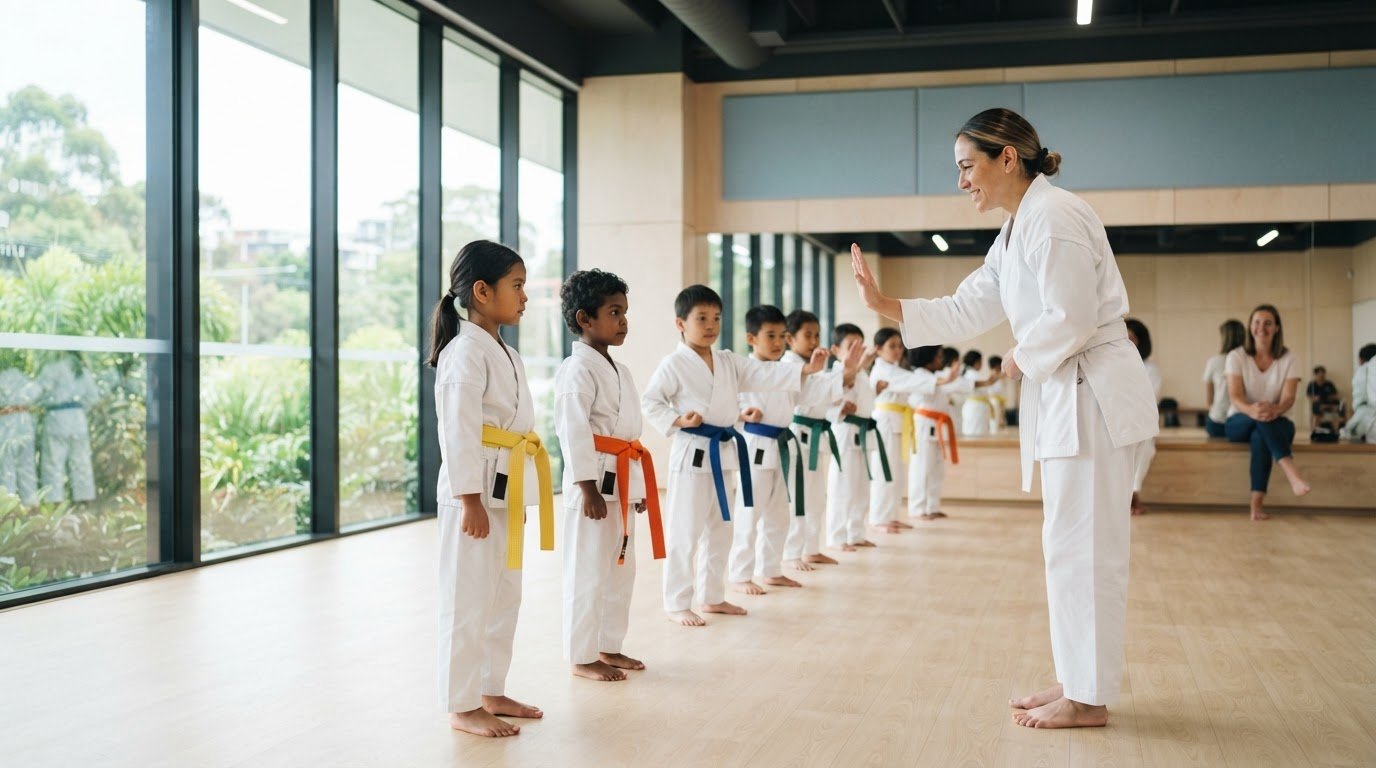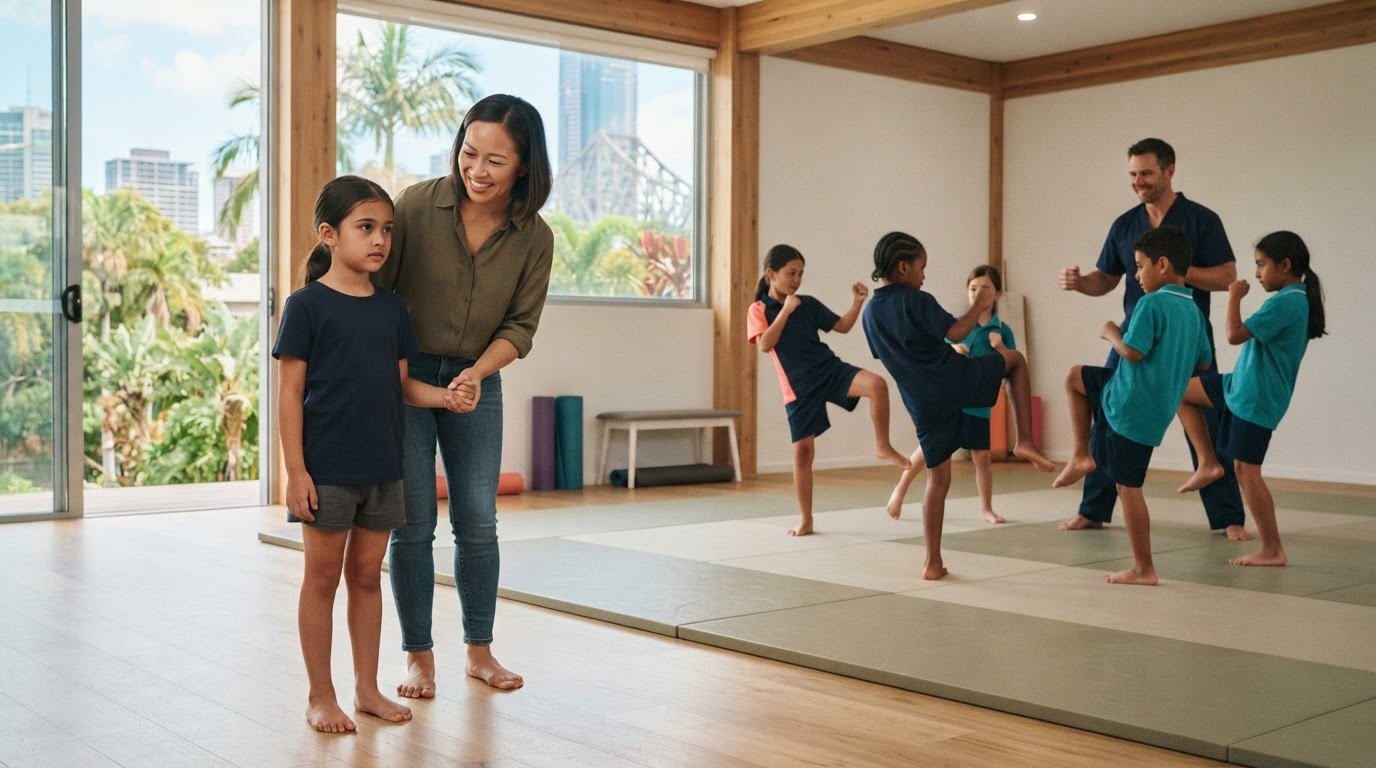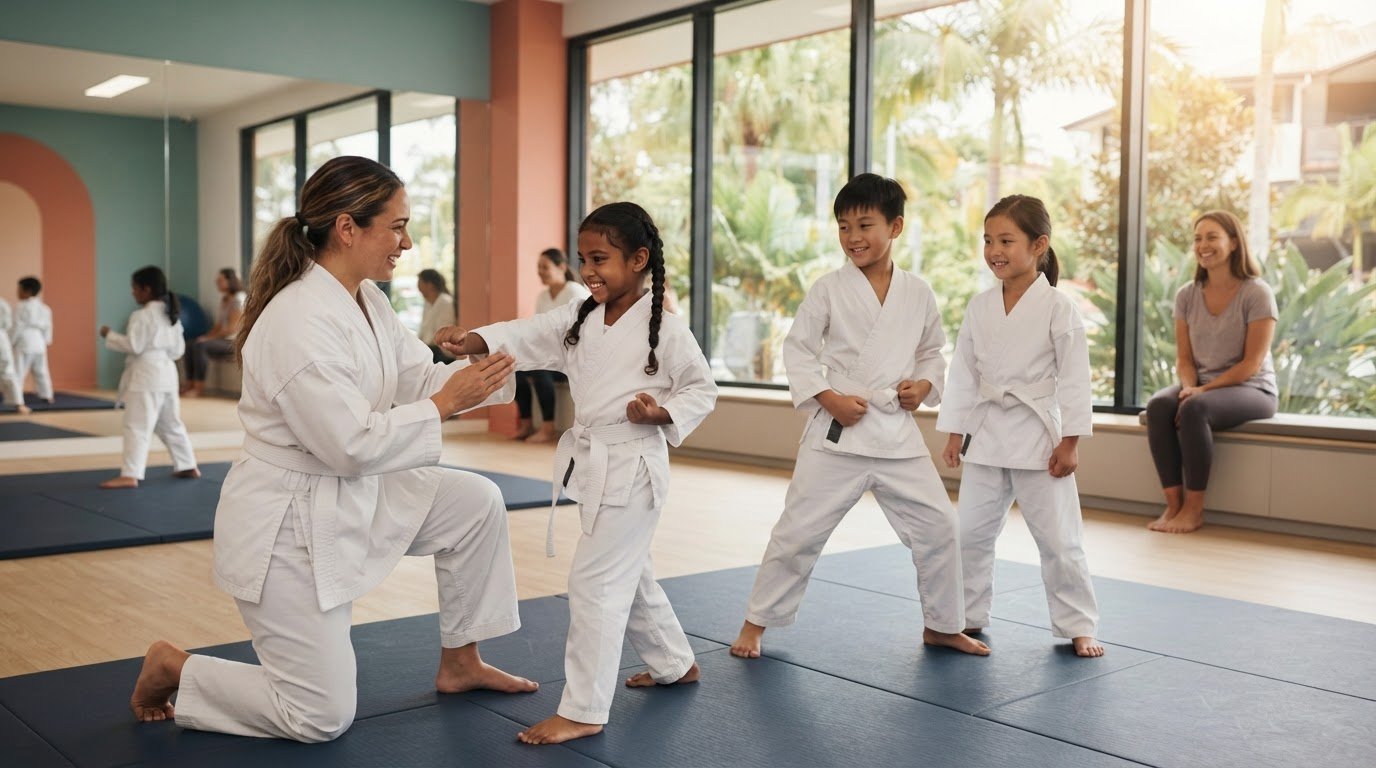
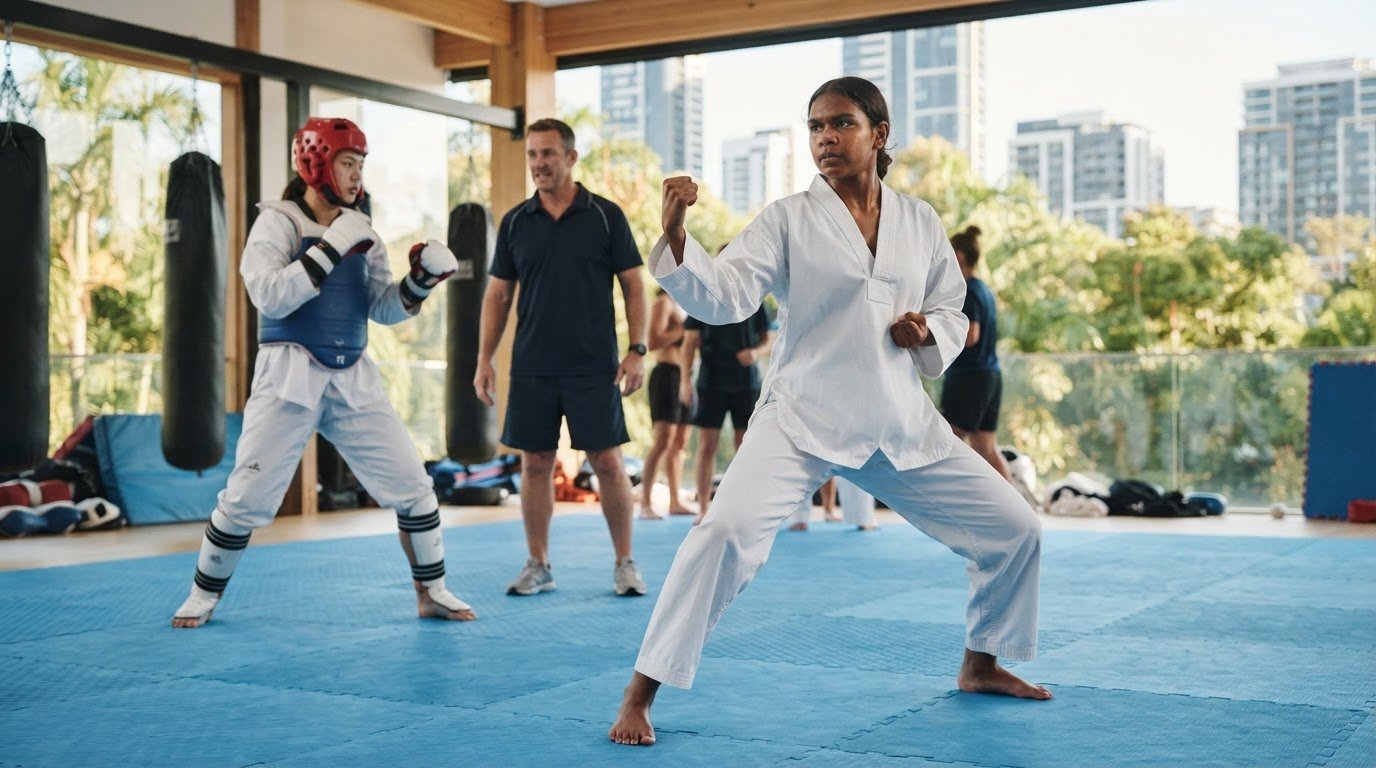
What does it take to prepare for competition beyond simply training harder? Competitive taekwondo training brisbane should build readiness through purposeful practice, steady progression and coaching that develops the athlete as a whole. If you’re wondering how competition preparation differs from regular classes, or whether you or your child can build confidence under pressure, start by looking at the skills each discipline requires and the support available during training.
Competition training adds focused goals to Taekwondo foundations. Poomsae develops precise patterns, balance and control, while sparring builds timing, tactics and composure against an opponent. Both take practice. A supportive coaching environment can help athletes develop at an appropriate pace while keeping safety and personal growth in view.
This guide explains how preparation can develop over time, how poomsae and sparring fit into competition, and what to look for in a Brisbane training environment. At Flinn Taekwondo Academy, athletes can pursue high-performance competition coaching within a family-owned community led by Master Jeff Flinn, a 7th Dan Black Belt with international accreditation. You’ll also find practical ways to decide whether a competition-focused pathway suits your goals.
主要心得
- Competition preparation develops technical skill, discipline, fitness and confidence through purposeful practice, not simply harder exercise.
- Poomsae and sparring call for different skills. Understanding the difference can help you choose what to focus on.
- You don’t need to feel competition-ready before you begin. Coach feedback, motivation and a willingness to learn can help guide your next steps.
- Make a practical plan: set a goal, choose focus areas, practise consistently, review feedback and prepare with guidance.
- Explore competitive taekwondo training brisbane at Flinn Taekwondo Academy, where Master Jeff Flinn brings a 7th Dan Black Belt and international accreditation to competition coaching.
What competitive Taekwondo training in Brisbane is designed to develop
Competition-focused Taekwondo gives practice a clear purpose: developing the skills and composure an athlete may need to perform in a competition setting. It isn’t simply a general class made faster or harder. Training can focus on technical detail, discipline, fitness and confidence, with progress shaped around the athlete’s goals and chosen discipline. Some students enjoy preparing to compete; others train for fitness, self-development or the enjoyment of Taekwondo. Competition isn’t a requirement for every student.
Competition readiness combines skill, composure and preparation. It develops over time through learning, practice and coaching feedback, rather than appearing all at once.
How competition training differs from a general Taekwondo class
A general class helps students build broad Taekwondo foundations. Focused preparation gives more attention to the demands of a chosen discipline, whether poomsae or sparring. In poomsae, that might mean refining a stance, transition or sequence so the movement is controlled and consistent. Taegeuk patterns are a foundation of Taekwondo forms; Taegeuk forms in Taekwondo offer context for the patterns an athlete may study.
In sparring, practice may concentrate on applying techniques with timing, control and awareness. In either discipline, repetition helps turn feedback into more reliable movement. A coach can identify one or two areas to work on, demonstrate adjustments and help the athlete review progress. The priorities differ: a poomsae competitor works on precision and consistency, while a sparring athlete practises skills for live exchanges.
Who may be interested in competitive Taekwondo?
Competition may appeal to students who enjoy structured goals, technical challenges and testing their skills in a new setting. It can also suit athletes who want a clear focus for training, even if they’re still deciding whether to enter an event. Interest can grow gradually. A student might first want to improve a pattern or sparring technique, then build confidence through guided practice.
Parents don’t need to assume their child must already be experienced or certain about competing before exploring focused coaching. Motivation, willingness to learn and steady development can help shape a conversation with a coach. Competitive taekwondo training brisbane should support progress while respecting each athlete’s starting point and goals.
At Flinn Taekwondo Academy, competition preparation sits within a wider Taekwondo community. Explore the North Brisbane Taekwondo classes guide to understand the broader class context, then consider whether focused poomsae or sparring practice suits your interests. The aim is purposeful development, not pressure to compete before you’re ready.
Poomsae and sparring: the skills behind competitive Taekwondo
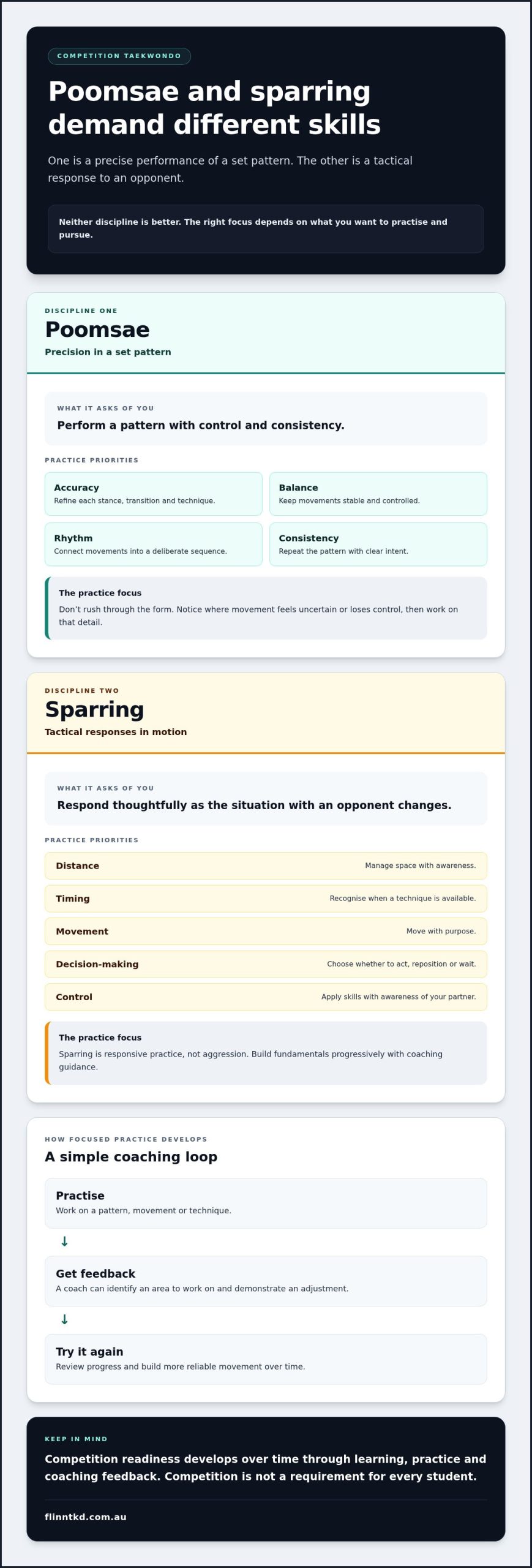
Poomsae and sparring are two distinct ways to practise and demonstrate Taekwondo skill. One centres on performing a sequence with precision; the other asks an athlete to respond thoughtfully to an opponent. Neither is better. Each develops different strengths, and the right focus depends on what you want to practise and pursue.
Poomsae is the art of performing technique with precision; sparring is the practice of applying skill through movement, timing and decisions. This difference shapes what athletes work on in focused coaching.
| 紀律 | What it asks of you | Practice priorities |
|---|---|---|
| 柔術 | Perform a set pattern with control and consistency. | Accuracy, rhythm, balance and purposeful technique. |
| 對打 | Respond to an opponent as the situation changes. | Distance, timing, movement, decision-making and control. |
What competitive poomsae practice develops
Poomsae training builds accuracy by asking you to pay attention to each stance, transition and technique in a pattern. Balance helps keep movements stable, while rhythm connects them into a deliberate sequence. The aim isn’t to rush through the forms, but to perform them with consistent technique and clear intent.
Repetition helps athletes notice where a movement feels uncertain or loses control. An instructor’s feedback can make those details easier to recognise and correct. Practise a sequence, apply an adjustment, then try it again. This turns broad advice into a specific task and supports more confident, composed performance over time.
What athletes practise in competitive sparring
Sparring is tactical, responsive practice. Athletes learn to manage distance, move with purpose and notice openings while staying aware of their partner. Timing matters: a technique may be available one moment and gone the next. Decision-making develops as students practise when to act, reposition or wait, with coaching guidance.
Effective sparring isn’t about aggression. Control and awareness matter, especially as an athlete learns to apply skills against a moving partner. Coaches can build fundamentals progressively, helping students develop confidence alongside technique. Competition rules and requirements can vary and change, so athletes preparing for an event should learn the current rules that apply to it rather than rely on a general description of sparring.
For a general look at how a national organisation introduces competitive pathways, USA Taekwondo competitive pathways provides a useful reference. It relates to the United States, so Australian athletes should use the relevant Australian competition information when preparing for local events.
Flinn Taekwondo Academy offers poomsae and sparring coaching in North Brisbane. If you’re weighing up which discipline fits your goals, explore poomsae and sparring training as a practical next step.
How to assess competition readiness and address common concerns
A common worry for athletes and parents is that you need to be competition-ready before joining focused coaching. In practice, coaching can help an athlete work towards a goal, identify skills to strengthen and understand what preparation involves. Readiness isn’t a pass-or-fail label, and it doesn’t mean a student must already feel confident in every part of training.
Assess competition readiness by considering an athlete’s skills, goals and preparation together. A coach can help weigh factors such as:
- Foundations: Can the athlete follow instruction and apply the fundamentals relevant to their chosen discipline?
- Motivation: Are they curious about competing, improving a skill or working towards a clear goal?
- Coach feedback: What strengths are emerging, and which areas need more practice?
- Willingness to learn: Can they accept guidance, practise adjustments and keep developing?
These are useful conversation starters, not a rigid scorecard. An athlete may have strong technique but feel nervous about performing in front of others. Another may be enthusiastic while still developing foundational skills. Both situations call for thoughtful coaching and realistic next steps, not assumptions about who can compete.
Can beginners or nervous athletes work towards competing?
Yes, athletes can explore a competition goal while building confidence and experience. Consistent practice, specific feedback and manageable goals can make a new challenge feel more approachable. For example, an athlete might first focus on improving one part of a poomsae sequence or practising a sparring movement with control. There’s no fixed timeline for readiness, and progress differs from person to person.
For families, it helps to talk about what the athlete wants to learn and what feels daunting. Share those interests and concerns with the coaching team so practice can be guided with care. The first goal doesn’t need to be entering an event; it could simply be becoming more comfortable with a particular training task.
What parents should consider before supporting a competition goal
Start with the young athlete’s own motivation. Are they enjoying the technical challenge, asking questions about competing or showing interest in focused practice? Enthusiasm may grow over time, but make room for honest conversations if their feelings change. Competition should be a goal they can work towards with support, not a source of pressure to meet someone else’s expectations.
Focused training brings challenge and discipline, so look for coaching that gives clear feedback and takes safety and personal development seriously. Ask your child what they enjoy, what they find difficult and what skill they’d like to improve. Notice progress in effort and understanding, not only results. A supportive team can help an athlete develop composure and responsibility alongside technique, whether or not competition ultimately becomes their path.
For a broader view of how focused training can fit into an athlete’s development, explore the Brisbane high-performance Taekwondo pathway. Keep goals personal, preparation purposeful and communication open as the athlete develops.
A practical Brisbane competition preparation plan
A clear plan turns a competition goal into useful work at each training session. Keep the steps simple, discuss them with your coach and adjust as your skills develop. Whether you’re working towards poomsae or sparring, preparation should match your goal rather than follow a fixed schedule or timeline.
- Set a goal. Decide what interests you: performing poomsae, testing your sparring skills or improving a particular technique. Your goal can be about learning and development, not only entering an event.
- Choose a focus. With coach input, turn that goal into one or two observable priorities. For poomsae, you might work on maintaining balance through a transition. For sparring, you could focus on managing distance or moving with control.
- Practise consistently. Regular attendance gives you opportunities to revisit skills and apply coaching feedback. Arrive ready to listen, practise and work respectfully with others.
- Review feedback. After practice, reflect: What improved? What still needs attention? What’s the next adjustment to try? A brief note can help you remember your focus between sessions.
- Prepare calmly. As a competition approaches, use your coach’s guidance to understand what preparation involves for your chosen discipline and event. Focus on familiar skills, follow current event information and avoid trying to change everything at once.
Set a goal and choose a focused priority
Make the goal specific enough to guide practice, but flexible enough to grow with you. “I want to improve my poomsae” can become “I’ll focus on steady balance through this transition.” A sparring goal might be to practise moving into and out of distance while staying controlled. Your coach can help identify priorities that suit your experience and give you a clear way to notice progress.
Build consistency and learn from feedback
Progress comes from returning to the work, not expecting every session to feel perfect. Listen closely to feedback, try the adjustment and notice how it changes your technique. If nerves surface, break preparation into manageable tasks and focus on what you can practise today. Brisbane athletes and families can use the Taekwondo classes in North Brisbane guide to understand the wider training context.
Purposeful competitive taekwondo training brisbane gives athletes a structured way to prepare while developing discipline and self-belief. If you’re ready to explore the next step, discover Taekwondo training at Flinn Taekwondo Academy and find a training direction that fits your goals.
Train for competition with Flinn Taekwondo Academy in North Brisbane
Choosing a competition pathway means finding coaching that takes both the technical work and the person doing it seriously. At Flinn Taekwondo Academy, athletes can pursue high-performance competition training, sparring and poomsae coaching at a family-owned North Brisbane Taekwondo school. Preparation is purposeful, within a community where discipline, confidence and personal growth matter alongside competitive goals.
Coaching grounded in experience and community
Master Jeff Flinn leads the academy as a 7th Dan Black Belt with international accreditation. His experience provides a foundation for coaching athletes as they work on technique, develop consistency and respond to feedback. The academy was established in 2013 and is part of the North Brisbane community.
Good preparation involves more than repeating movements. Athletes benefit from understanding what they’re practising and how it connects to their chosen discipline. In poomsae, that may mean working on a technical detail and aiming for more consistent execution. In sparring, it may involve practising movement, control and decisions with coaching guidance. The goal is to develop focus and discipline while building confidence through the training process.
For families who are new to the sport, learning the wider context can make competition-focused practice easier to understand. The complete Taekwondo guide for Brisbane families offers a broader introduction to Taekwondo. From there, consider which aspects appeal to your family and whether a competitive goal feels like a positive next step.
Explore competition training in Brisbane
Start with three questions: What does the athlete want to work towards? Are they more interested in poomsae, sparring or developing a specific skill? Are they willing to practise consistently and learn from feedback? You don’t need every answer before exploring training. Clear goals can develop through experience, and a coach can shape practice around the athlete’s interests and current skills.
Competitive taekwondo training brisbane can suit athletes seeking structured technical challenges while leaving room for growth at an individual pace. Focused coaching connects day-to-day practice with competition preparation without promising a particular result. For parents, it’s also an opportunity to see how training supports effort, learning and respect as athletes work towards their goals.
If you’re ready to explore what a competition-focused direction could look like for you or your child, take a look at the academy’s training options. Explore competitive Taekwondo training with Flinn and choose a purposeful next step.
Take your next step with purpose
A competition goal doesn’t need to begin with a tournament date. It can start with a decision to practise with greater focus, explore a discipline that interests you or experience a more structured training environment. Begin with questions. The right next step is one you can approach with curiosity, commitment and a willingness to learn.
If you’re considering competitive taekwondo training brisbane, think about what you or your child would like to develop, then explore coaching that supports those aims. A first step can be as simple as learning about the academy’s training options and deciding which direction fits your goals.
Explore competitive Taekwondo training with Flinn and take the next step at your own pace. Every focused practice is an opportunity to build skill, confidence and character. Start with purpose and keep moving forward.
常見問題
Can a beginner train for competitive Taekwondo?
Yes, a beginner can start working towards a competition goal with suitable coaching. Competitive taekwondo training brisbane can begin by strengthening basics such as balance, technique and following instruction, before competition-specific demands become the focus. For example, a newer student interested in poomsae could work on performing a short sequence accurately. Talk with a coach about your experience and aims so practice can match your starting point.
Is competitive Taekwondo training suitable for children?
It can suit a child who is interested in the challenge, provided the training fits their development and wellbeing. Flinn Taekwondo Academy has children’s programs, and focused competition coaching can be considered alongside a child’s enjoyment, confidence and ability to follow instruction. A child doesn’t need to decide on competing straight away. Families can observe how their child responds to training goals and discuss concerns with the coaching team.
Do I need to choose between poomsae and sparring?
No, you don’t have to make a permanent choice at the outset. Poomsae and sparring develop different skills, and your interests may become clearer as you gain experience. You might enjoy the detail of learning a form while also wanting to understand sparring fundamentals. If you’re unsure, discuss both with your coach and learn what each type of practice involves before deciding where to place your main focus.
Is competitive Taekwondo sparring safe?
Sparring carries some risk, as does any activity involving physical contact, so safety should be treated seriously rather than guaranteed. Coached practice should emphasise control, awareness and respect for training partners. Before an event, families and athletes should read its current rules and safety requirements, including guidance on protective equipment and age categories. Tell the coach about concerns or relevant health needs so they can guide the discussion around participation.
How often should I train for a Taekwondo competition?
There isn’t one training frequency that suits every athlete or event. The right amount depends on your experience, goals, current commitments and your coach’s guidance. Rather than adding sessions abruptly, discuss a sustainable plan that allows you to practise consistently and recover between training. If school, work or family demands change, review the plan together. Regular, attentive practice is more useful than setting a demanding schedule you can’t maintain.
What should I focus on before my first Taekwondo competition?
Focus first on understanding what to expect and knowing your role. Confirm event details through its official information, including registration steps, arrival arrangements and applicable rules. Ask your coach which skills to prioritise, then practise familiar techniques rather than trying to overhaul your performance at the last minute. Pack what the event specifies, plan your travel to the venue and discuss nerves with someone you trust. Preparation can help the day feel more manageable.
Are World Taekwondo rules used at every competition in Brisbane?
No, don’t assume every event uses identical rules. Requirements depend on the competition, and the event information should state which rules apply. Some major Australian competitions follow World Taekwondo rules as adopted by Australian Taekwondo, but that doesn’t mean every local event does. Before entering, read the current event handbook and ask your coach to help interpret relevant details for your discipline, including rules that could affect your preparation.