Focus often grows through short, repeated moments of listening, rather than one perfect stretch of concentration. If you’ve searched for focus and concentration training for kids Aspley, you may be looking for practical support that fits family life. When a child drifts off during instructions, it can be hard to know what’s typical for their age and what might help.
Attention develops over time. Simple routines give children chances to listen, follow cues and take turns. This guide shares age-appropriate activities to try at home, ways to compare home practice with coached classes, and guidance on when ongoing difficulties may be worth discussing with a health professional.
Structured Taekwondo can give children purposeful movement and instructor-led opportunities to listen and respond. Flinn Taekwondo Academy, a family-owned school in North Brisbane, offers the Little Tigers Program for ages 4-6 and the Junior Taekwondo Program for ages 7-12. Training isn’t a guaranteed fix for concentration concerns, but its clear structure may suit families looking for a consistent way to practise attention and self-discipline.
主要心得
- Notice when your child finds it hardest to listen or stay with a task, then choose one small focus-building activity to practise.
- Use clear cues and predictable routines to make everyday attention practice easier to repeat.
- Compare flexible home activities with coached classes, and combine both approaches if that suits your family’s routine.
- Explore focus and concentration training for kids aspley families can access through structured Taekwondo in Brisbane.
- Flinn Taekwondo Academy’s Little Tigers Program serves ages 4-6, while its Junior Taekwondo Program is for ages 7-12.
What does focus and concentration training for kids in Aspley really mean?
Your child may miss part of an instruction, move on before finishing an activity, or notice everything except the task in front of them. That can be frustrating, especially when you’re unsure whether it’s typical for their age or a sign they need extra support. Attention develops gradually and can vary from one day or activity to the next. A distracted moment on its own doesn’t tell the whole story.
Focus is the skill of directing attention towards a chosen task, person or cue. It doesn’t mean noticing only one thing. Children take in sounds, movement and other details around them; with practice, they can learn to bring their attention back to what matters. For families exploring focus and concentration training for kids aspley, this is a useful starting point: treat focus as a developing skill, not a fixed trait.
Practice can be simple. A child might listen to one clear instruction, respond to a cue in a game, then finish a short activity before moving on. The broader process of cognitive development in children includes skills such as attention and memory, which develop as children learn and interact with their surroundings.
What concentration can look like at different ages
Look for behaviours, not a stopwatch. A younger child may engage more readily when an adult gives one instruction, demonstrates it and stays nearby. An older child may be ready to manage several steps, stay with a more involved activity, or return to a task after an interruption. These are broad patterns, not rules for every child.
Interest, sleep, the environment and task difficulty all affect engagement. A child may concentrate closely on a favourite building activity but lose track during a noisy, unfamiliar task. Notice what helps: a quieter space, a clear starting point, or a short pause between instructions may make it easier to take part.
When distraction is part of ordinary development
Occasional restlessness or a missed instruction can happen to any child. Rather than drawing conclusions from one moment, observe patterns across settings and activities. Does your child find it hard to follow directions at home and school, or mainly during a particular task? Are they more engaged when instructions are brief or the surroundings are calmer?
If attention concerns persist or regularly disrupt learning, relationships or daily routines, consider discussing them with an appropriate health professional. That conversation can help you understand what may be affecting your child and what support could be useful. A class or home activity can offer practice, but it shouldn’t be treated as a diagnosis or a substitute for professional guidance.
How do children build focus through routines, movement, and practice?
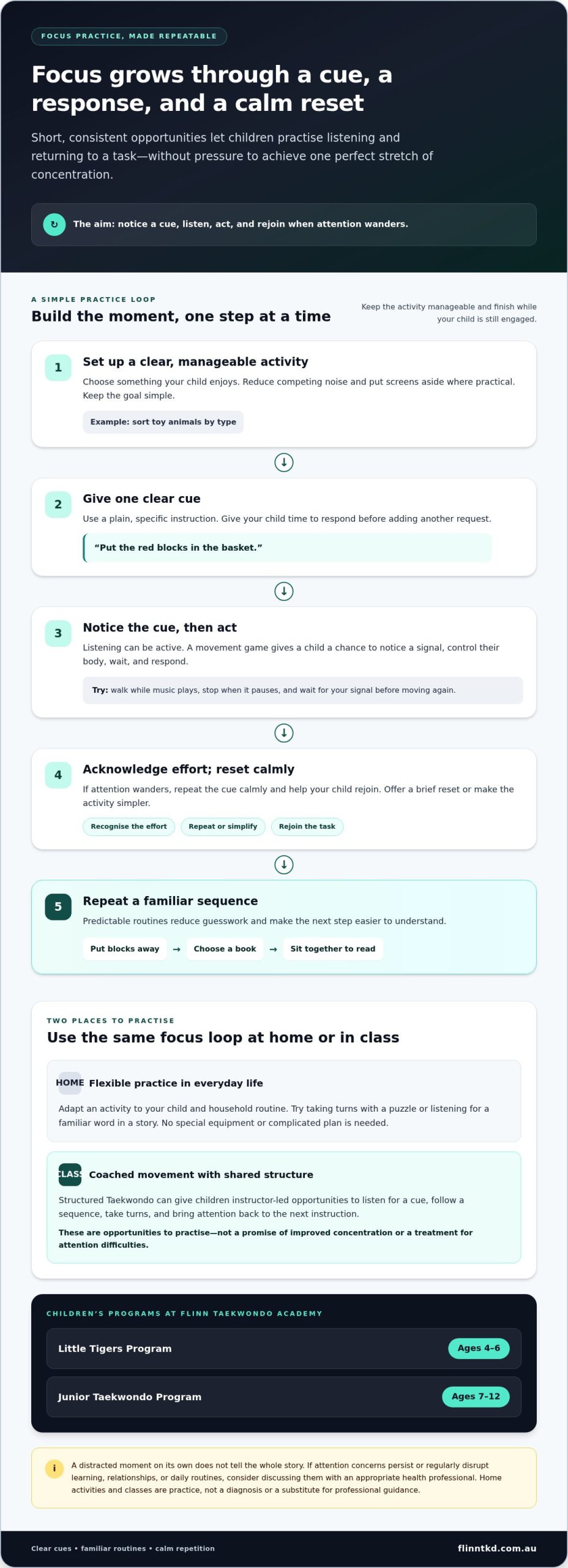
Focus grows through repetition, not pressure. Children get chances to notice a cue, listen, act and reset. A familiar sequence makes the next step easier to understand: put the blocks away, choose a book, then sit together to read. When a child loses track, calmly repeat the cue and help them rejoin instead of treating the moment as failure.
Short, consistent practice gives children more useful opportunities to focus than occasional, forced long sessions. Keep an activity manageable and finish while your child is still engaged. Predictable routines and plain instructions reduce guesswork. Try saying, “Put the red blocks in the basket,” before adding another request. This gives your child one cue to attend to at a time.
Simple focus practice families can try at home
Choose an activity your child enjoys, then keep the goal clear. Ask them to sort toy animals by type, take turns adding pieces to a puzzle, or listen for a familiar word in a story. Give one instruction, wait for a response and acknowledge the effort. If attention wanders, offer a brief reset or simplify the task.
For the activity, reduce competing noise and put screens aside where practical. You don’t need special equipment or a complicated plan. PBS shares more strategies to improve child focus and concentration, including ideas around single-tasking and planned breaks. Adapt any suggestion to your child’s interests and your household routine.
Why purposeful movement can support attention practice
Movement can make listening active. In a simple game, your child might walk while music plays, stop when it pauses, and wait for your signal before moving again. They practise noticing a cue, controlling their body, waiting their turn and restarting. Keep the space safe, the instructions clear and the activity playful.
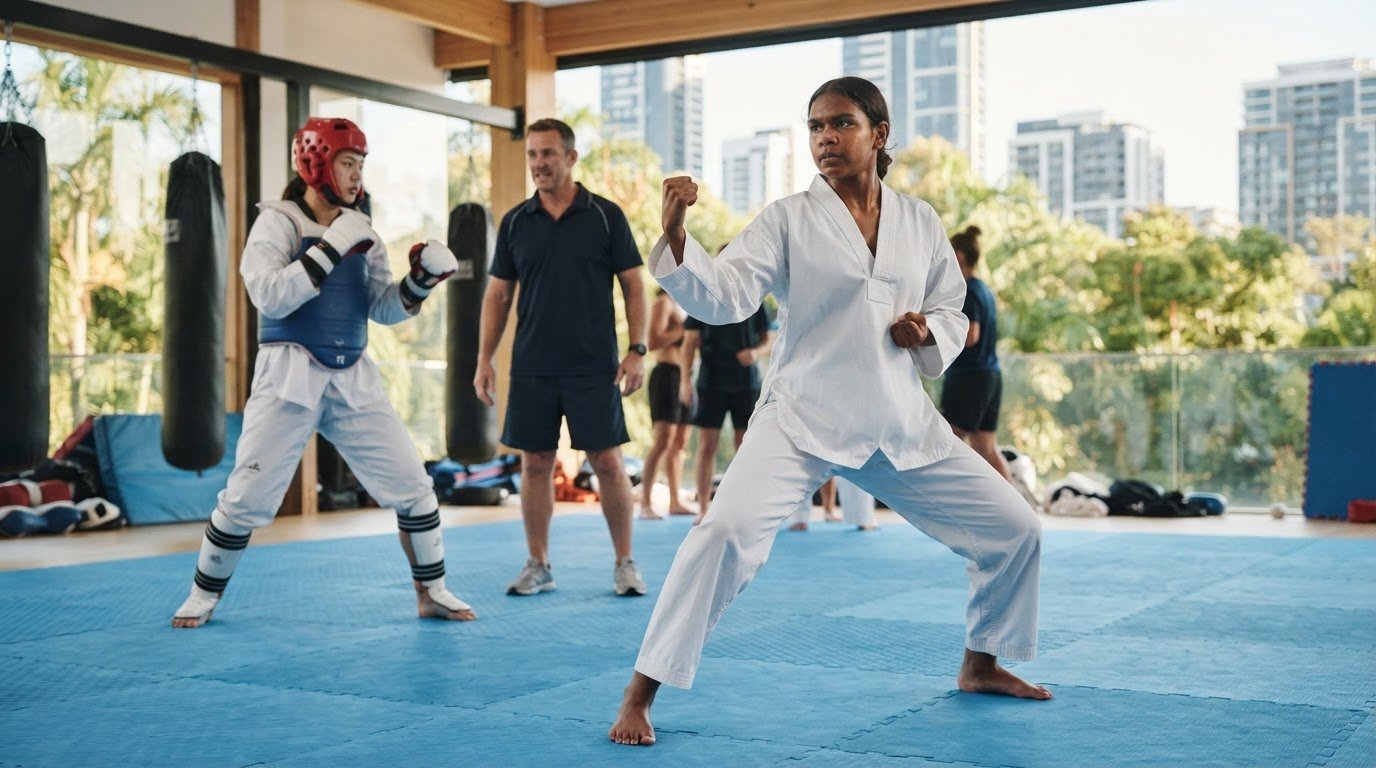
Structured Taekwondo offers another setting for coached movement. A child may listen for an instructor’s cue, follow a sequence, take turns and bring their attention back to the next instruction. These are opportunities to practise attention in class, not a promise of improved concentration or a treatment for attention difficulties. The useful practice comes from combining movement with clear guidance and repetition.
Families exploring focus and concentration training for kids aspley can use home activities and coached classes together. Home practice fits around your routine, while a class provides shared structure and instructor-led cues. If your family is curious about learning through Taekwondo, explore Flinn Taekwondo Academy for children’s training in Brisbane.
Home activities or Taekwondo classes: which focus practice suits an Aspley child?
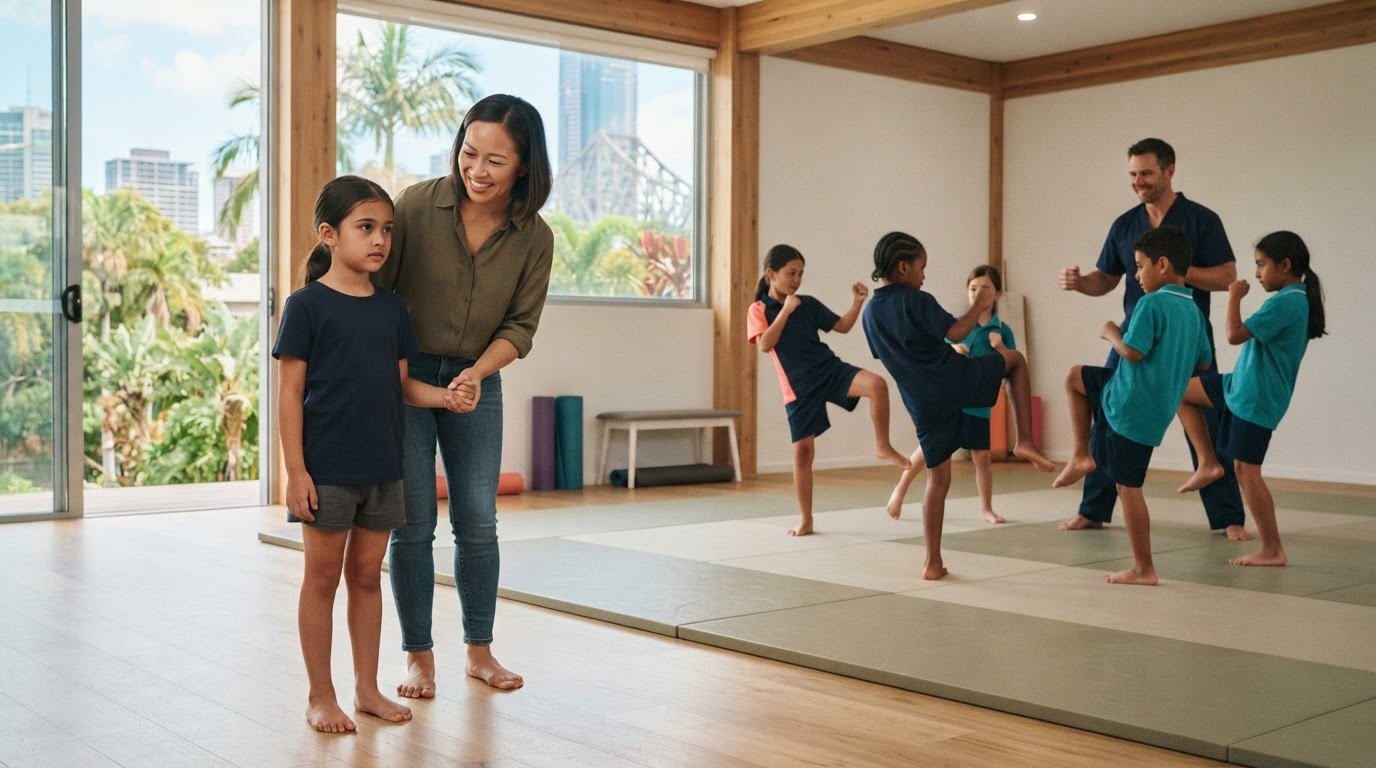
There’s no single right setting for every child. At home, you can adapt an activity to your family’s pace and your child’s mood. In a coached class, children practise within a shared routine, with an instructor giving cues and students taking turns. Both settings create opportunities to listen, respond and try again. They can complement each other rather than compete.
Focus and self-control involve several skills, including managing attention and pausing before acting. Michigan State University Extension explains the importance of focus and self-control in child development. Your child’s age, interests and comfort in a group can help you decide which setting feels like a good fit right now.
What home practice makes easier
Home gives you control over timing, pace, activity and distractions. You might invite your child to help prepare a snack by following one simple step, or take turns adding pieces to a familiar game. Keep the activity predictable at first. Repeating a game lets your child practise its routine without having to learn new rules every time.
There’s no need to turn practice into a performance test. If your child is tired or keen to move on, pause and try again another time. A small, enjoyable habit is more realistic than expecting flawless attention on demand. Home practice can also help you notice what makes participation easier, such as a clear starting point or fewer interruptions.
What a structured Taekwondo class can add
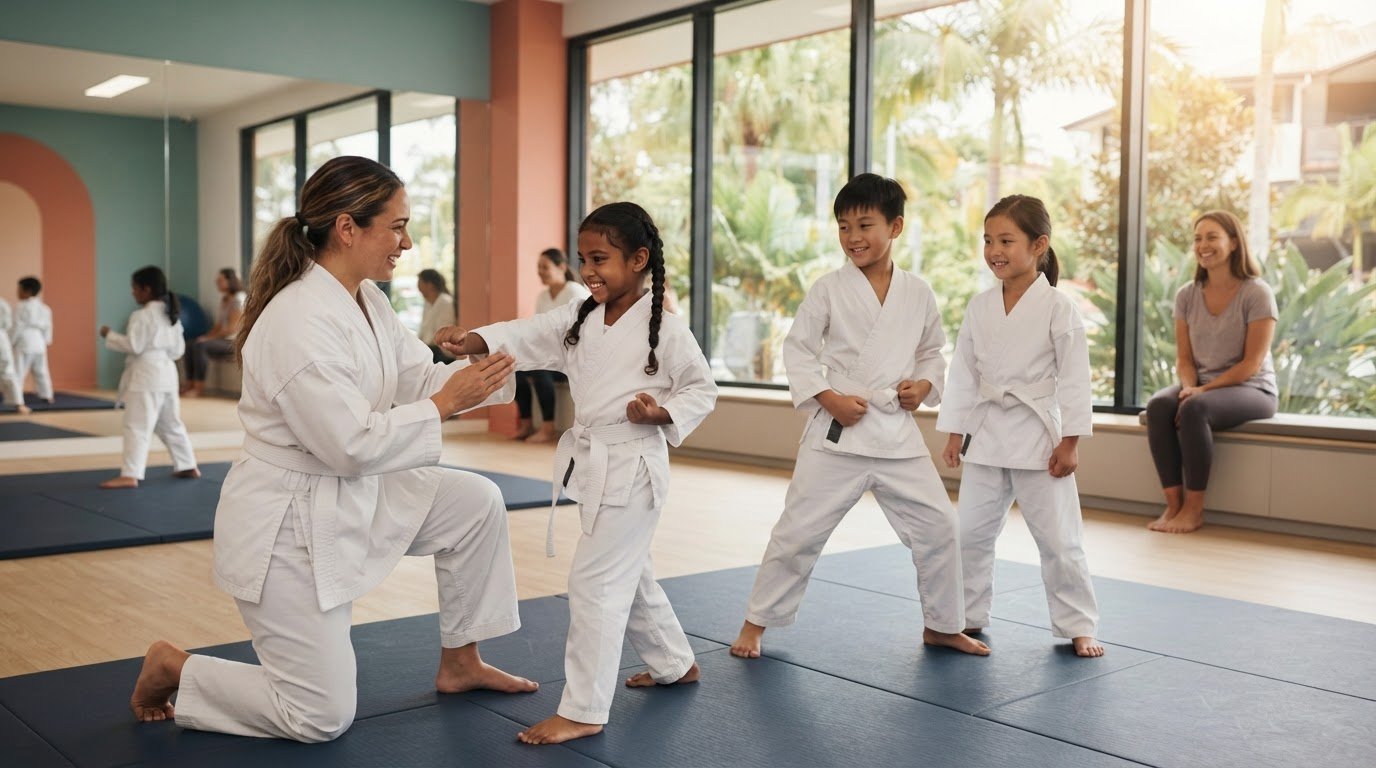
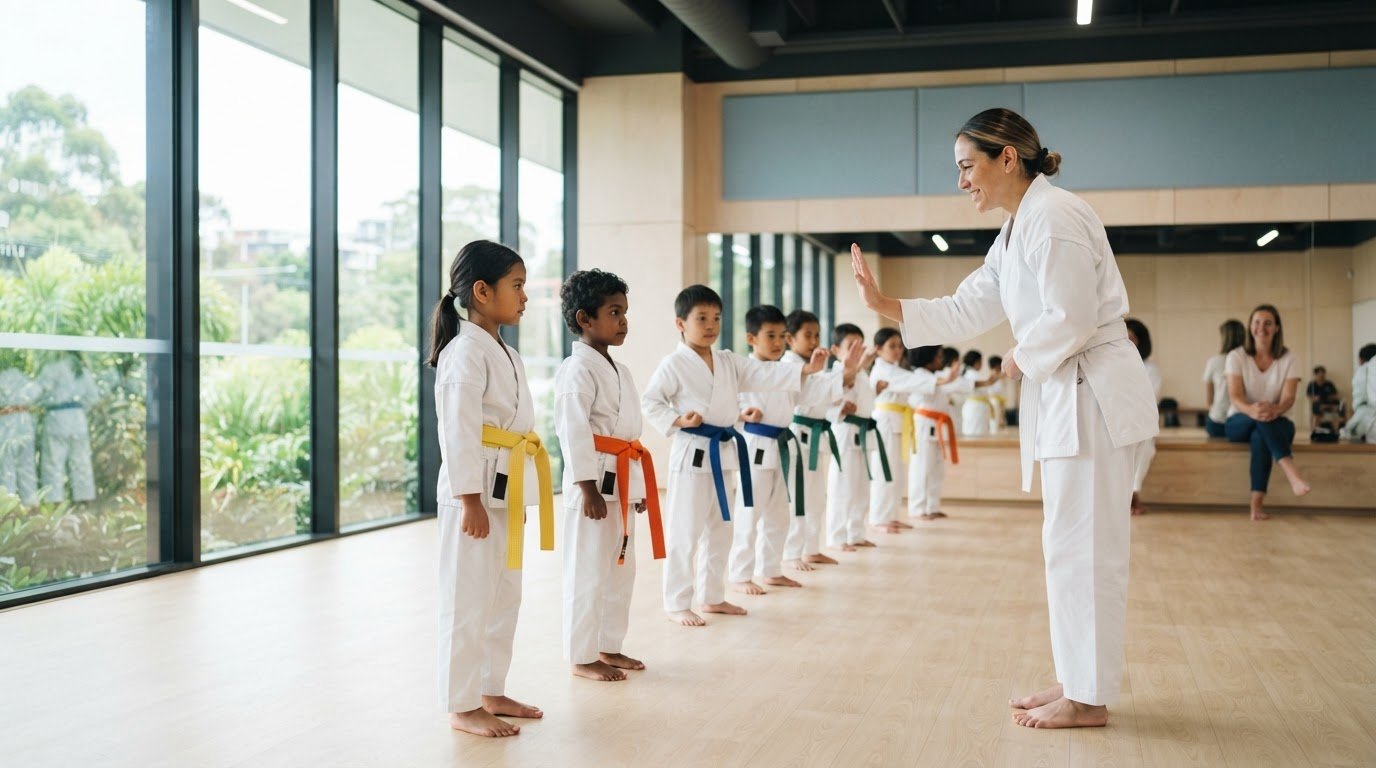
A coached class brings a different kind of structure. Children hear instructor cues, move in an organised setting and wait while others take a turn. Activities may ask them to start, pause or change what they’re doing in response to guidance. These routines offer repeated chances to listen and respond alongside peers.
Flinn Taekwondo Academy is a family-owned North Brisbane school serving families in and around Aspley. Its Little Tigers Program is for children aged 4-6, while the Junior Taekwondo Program serves ages 7-12. Taekwondo won’t guarantee better concentration, but a child who enjoys coached movement and group learning may appreciate its clear framework. For an introduction to the activity, read the Taekwondo guide for Brisbane families.
To weigh up focus and concentration training for kids aspley options, consider what your child responds to. Do they prefer practising privately, or enjoy learning alongside others? Would a flexible home routine be easiest to sustain, or could a regular class add helpful structure? Start with one approach and adjust as your child’s interests and confidence develop. The goal is steady practice that feels supportive, not pressure to focus perfectly.
How can parents create a realistic focus-building plan for kids in Aspley?
A useful plan starts with observation, not a demand for instant change. Notice when attention tends to drift: during multi-step instructions, in a busy room, or when a task feels unfamiliar? This helps you choose practice that addresses a real challenge instead of adding another activity to an already full family schedule.
Notice the challenge, choose one activity, practise it consistently, then reflect and adjust. Use this four-step cycle as a guide, not a deadline or a promise of results:
- Notice: Identify a specific moment that’s tricky, such as starting homework or following a direction.
- Choose: Pick one simple activity that gives your child a chance to practise that skill.
- Practise: Repeat it in a familiar, low-pressure way, using clear instructions.
- Reflect: Consider what helped, what got in the way and whether to keep the activity or adapt it.
Build a small weekly routine that can last
Choose a predictable time that fits your household and one brief activity your child can manage. You could sort the day’s school items by category or complete a familiar puzzle together. Keep instructions simple, then recognise effort, persistence and moments when your child brings their attention back. If they’re tired, frustrated or losing interest, shorten the task or try another time. A sustainable routine matters more than a perfect one.
Keep the plan flexible. A busy school week may call for a quieter activity, while a day when your child has energy might suit a movement-based game. If a setting seems difficult, adjust one element at a time, such as reducing background noise or giving one direction instead of several. That makes it easier to notice which changes help your child take part.
Notice progress without putting pressure on your child
Look for practical signs, not perfect performance. Your child might respond to a cue with fewer reminders, return to an activity after a distraction, or complete a short task they previously abandoned. Compare these moments with your child’s earlier attempts, not with siblings or classmates. A brief note about what was happening can help you spot patterns without turning practice into a scorecard.
If attention difficulties continue to affect everyday activities, learning or family routines, pause the practice plan and seek guidance from an appropriate health professional. Home activities and structured classes can offer opportunities to practise, but they aren’t a substitute for professional advice when concerns persist.
For school-age children, the Junior Taekwondo parent’s guide explains the programme and what a coached class involves. If structured movement could suit your child, explore children’s Taekwondo with Flinn. Families considering focus and concentration training for kids aspley can use the same approach: choose a realistic next step, observe how your child responds and build from there.
Explore focus-building Taekwondo for kids near Aspley with Flinn
If you’re looking for a structured activity where your child can practise listening and responding, Taekwondo may be worth exploring. Flinn Taekwondo Academy is a family-owned North Brisbane martial arts school serving families in the Aspley area. Its children’s programmes provide coached movement and clear instruction, giving students opportunities to practise attention as part of learning Taekwondo.
That distinction matters. A class can create useful moments to listen, follow a cue and take a turn, but it isn’t a clinical focus programme and can’t guarantee changes in concentration. Children develop at different paces. Think of training as an opportunity to build skills through participation, discipline and repetition, not a quick fix or a replacement for professional support if you have ongoing concerns.
What children can practise in a Taekwondo class
During a class, a child might listen to an instructor demonstrate a movement, try the sequence, then pause while another student has a turn. They learn physical skills while practising how to respond to directions, wait and return their attention to the next activity. The coach-led structure gives children clear cues, and the group setting lets them learn alongside others.
Flinn Taekwondo Academy is family-owned and operated by Master Jeff Flinn, a 7th Dan Black Belt with international accreditation. In a supportive, professional environment, children can work on discipline, confidence and personal growth through training. Progress isn’t a race. Each child practises and develops at their own pace, with no promise that Taekwondo will resolve attention difficulties or produce a particular outcome.
Find an age-appropriate starting point
Flinn’s programmes are grouped by age. The Little Tigers Program is for children aged 4-6, while the Junior Taekwondo Program serves children aged 7-12. Consider your child’s age, interest in movement and comfort learning in a group as you explore which programme suits your family.
For younger children, age-specific instruction offers an introduction to coached movement. School-age children may be ready to engage with the Junior programme’s class structure and develop their Taekwondo skills over time. In either programme, children practise attention by taking part in instruction, responding to cues and returning to the task when it’s their turn.
Families researching focus and concentration training for kids aspley can explore Taekwondo alongside everyday routines at home. Flinn Taekwondo Academy was established in 2013 and brings experienced leadership to children’s martial arts in North Brisbane. Explore the children’s programmes to find an age-appropriate next step for your child.
Choose a next step that feels right for your child
You don’t need a perfect plan to help your child practise attention. Start with one manageable opportunity, then notice whether they feel engaged, supported and ready to try again. If you’re considering focus and concentration training for kids aspley, let your child’s interests and comfort guide the next step. A structured class may be a good way to explore learning through movement, while home activities can remain part of your family’s routine.
Flinn Taekwondo Academy is family-owned and operated by Master Jeff Flinn, a 7th Dan Black Belt with international accreditation. The academy was established in 2013 and offers the Little Tigers Program for ages 4-6 and Junior Taekwondo for ages 7-12. Training creates opportunities to listen, follow cues and take turns, but it doesn’t guarantee changes in concentration or replace professional guidance when concerns persist.
Explore the age-based children’s programmes at Flinn 跆拳道學院 to see how structured Taekwondo could fit your family’s routine.
常見問題
At what age can children start focus and concentration training?
Children can practise attention through everyday play from an early age; there’s no single age when every child is ready for a formal activity. Readiness depends on interest, communication and comfort following simple directions. For families exploring focus and concentration training for kids aspley, Flinn Taekwondo Academy’s children’s classes offer age-based starting points in Brisbane, while playful activities at home can be adapted to a child’s stage.
Can Taekwondo help a child improve focus and listening skills?
Taekwondo gives children opportunities to practise listening and responding, but it can’t guarantee improved focus or listening outside class. A child may be asked to notice an instructor’s direction and apply it to a movement. Consider whether your child is curious about learning skills in a coached group. Training can support practice, but it isn’t a treatment for attention difficulties.
How can I help my child concentrate at home?
Make the task easy to begin. Before homework, help your child clear a small workspace, gather the materials they need and agree on one task to start with. Ask them to explain the first step back to you. If they’re stuck, offer a calm prompt rather than repeating several instructions at once. Keep praise specific, such as noticing that they returned to the task.
How long should a child practise a focus activity?
There’s no universal practice length that suits every child or activity. Choose a manageable stopping point, such as finishing one drawing, matching a small group of cards or completing one part of a puzzle. Watch for signs your child needs a break, including frustration, fatigue or repeated disengagement. End on an encouraging note and adjust the next attempt to match their energy and interest.
Is it normal for young children to get distracted easily?
Yes, young children can be easily drawn to new sounds, people or activities, and their engagement may change with the situation. A child who struggles to follow directions after a tiring day may respond differently in a quiet, familiar setting. Look at the broader pattern rather than judging from one difficult moment. Consider whether the challenge appears regularly and affects everyday activities.
What should I do if my child’s concentration difficulties persist?
If concentration difficulties persist or interfere with learning, relationships or daily routines, speak with an appropriate health professional, such as your GP. It may help to note when the difficulty occurs, what instructions were given and whether anything made the task easier. These observations can provide useful context for a conversation. Activities and classes may offer practice, but they don’t replace professional advice.
Are Taekwondo classes suitable for children who find it hard to sit still?
They may suit some children who enjoy active learning, since Taekwondo involves movement as well as listening to instructions. A class still asks students to pause, follow guidance and take turns, so consider how your child responds to group settings and coached activities. Restlessness alone doesn’t determine whether a class will suit them; interest, comfort and readiness to participate matter too.