A belt test has no single Brisbane-wide fee. For families wondering how much taekwondo belt tests cost, the amount depends on the grading format and what the assessment includes; the fee is provided after a quote request. The main cost factors are the assessment structure and included items, not a universal rate.
Understanding the grading cost is one part of planning for promotion. It is just as useful to know what skills the assessment covers, so students can prepare with clear goals rather than guess at the standard.
This guide explains how promotion requirements can vary, what assessors may look for in poomsae, techniques and sparring, and how steady training helps students build confidence for grading day. You’ll get a clearer picture of the steps involved, whether you’re supporting a child’s first belt test or planning your own progress. With a better understanding of the process, you can focus on the skills, discipline and effort that make each new belt meaningful.
主要心得
- Grading fees can depend on the assessment format and what the fee covers, so understand those factors when planning for a test.
- Promotion readiness is about demonstrating the required standard, not simply reaching the next belt in sequence.
- Find out how poomsae, techniques and sparring may feature in an assessment so you can prepare with focus.
- Compare the grading process for coloured belts and black belts, and consider which training pathway best supports your goals.
Belt promotion testing requirements
A taekwondo promotion assessment checks whether a student can demonstrate the skills expected at their next rank. Requirements vary by academy, syllabus and belt level, so a coloured-belt grading may assess different material from a black-belt test. Use the current syllabus and instructor guidance to understand the relevant standard.
- Confirm the next-rank syllabus. It identifies the techniques and knowledge the student is expected to demonstrate, such as a named poomsae.
- Review readiness with the instructor. Feedback can pinpoint a specific skill to practise before the assessment, rather than relying on belt sequence alone.
- Practise each required component. Rehearsing a technique or pattern helps the student perform it clearly under assessment conditions.
- Understand the grading format. Knowing whether the assessment is individual or group-based helps the student follow instructions and maintain focus.
- Prepare for the assessment environment. A student who listens, responds promptly and shows control demonstrates more than memorised movements.
Promotion is not simply a reward for attending classes. The assessor considers whether the student can perform the required material with control, focus and understanding. For example, a student may know a movement sequence but need more practice to perform the techniques accurately and consistently. Instructor feedback can turn that gap into a clear training goal.
Refund and rebooking arrangements depend on the academy’s terms. Before a student’s grading, make sure you understand how the terms address missed tests or unsuccessful assessments, including whether they allow a refund, credit or rebooking.
For a personal cost estimate, consider the belt level, assessment format and what the grading includes. The exact figure for your case is given in a quote.
Forms and techniques assessed
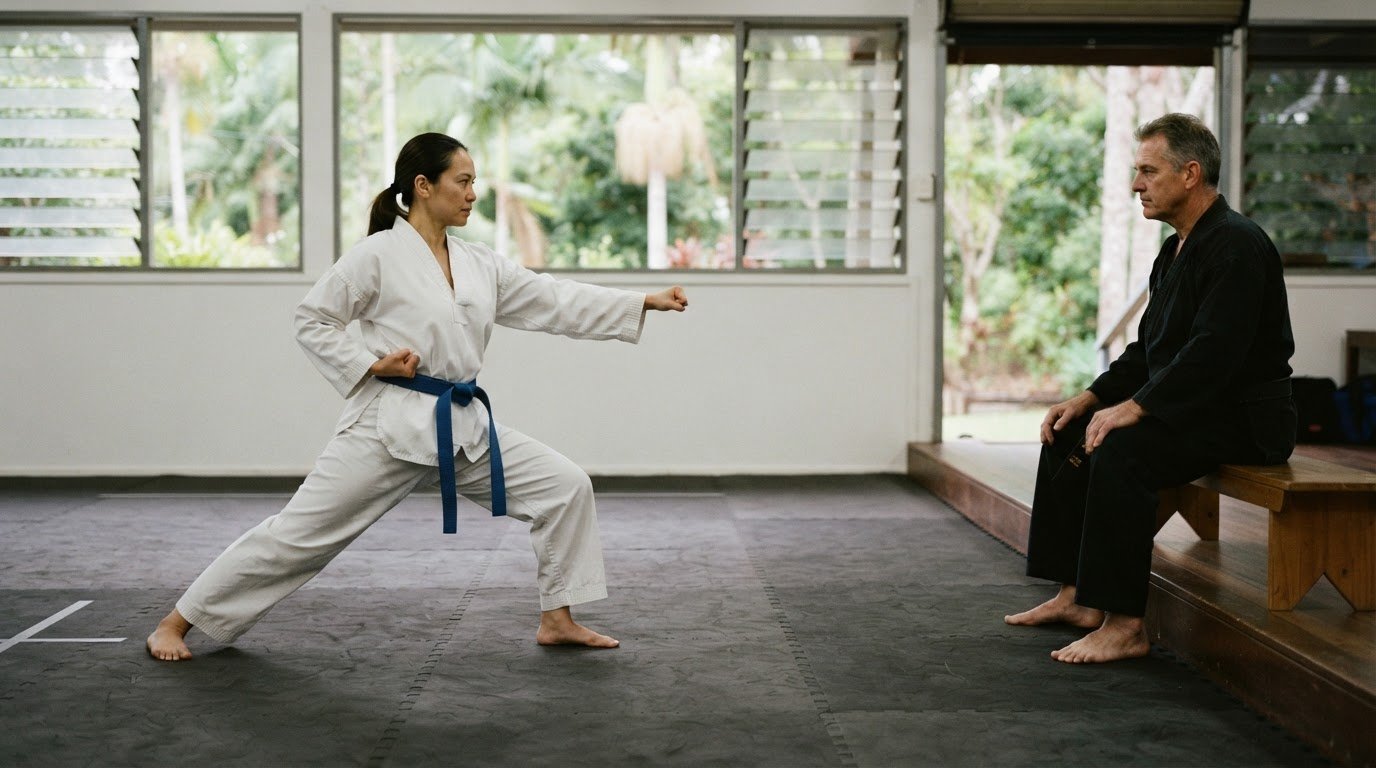
A grading can assess poomsae, basic techniques and practical application. The precise syllabus depends on the student’s rank and academy. A beginner may perform a foundational pattern, while a higher-grade assessment can expect more complex sequences. Assessors look for controlled movements, correct direction and the ability to follow each step in order.
Use the assessment requirements to organise practice around specific skills:
- Poomsae: Perform the required pattern in sequence, showing clear stances, turns and blocks.
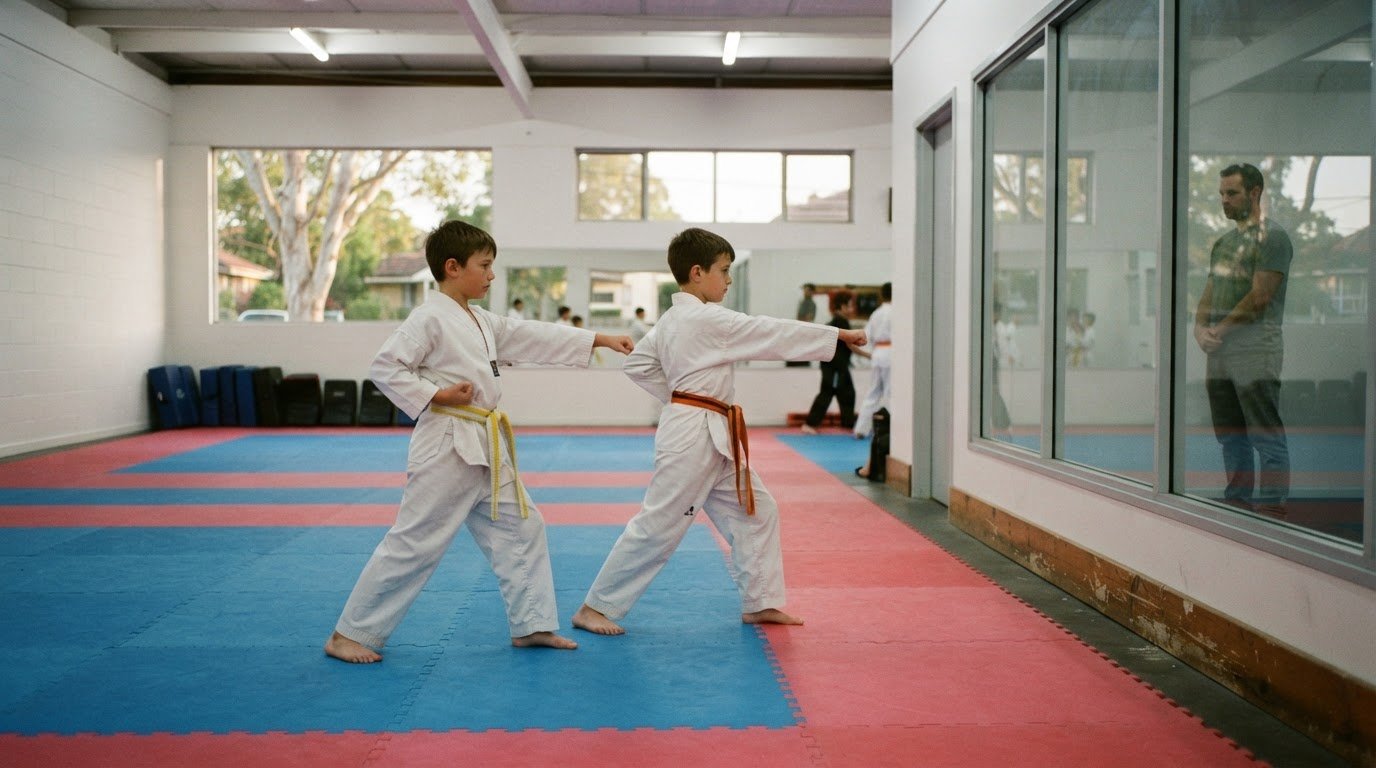
- Hand techniques: Demonstrate actions such as a punch with a stable stance and controlled finish.
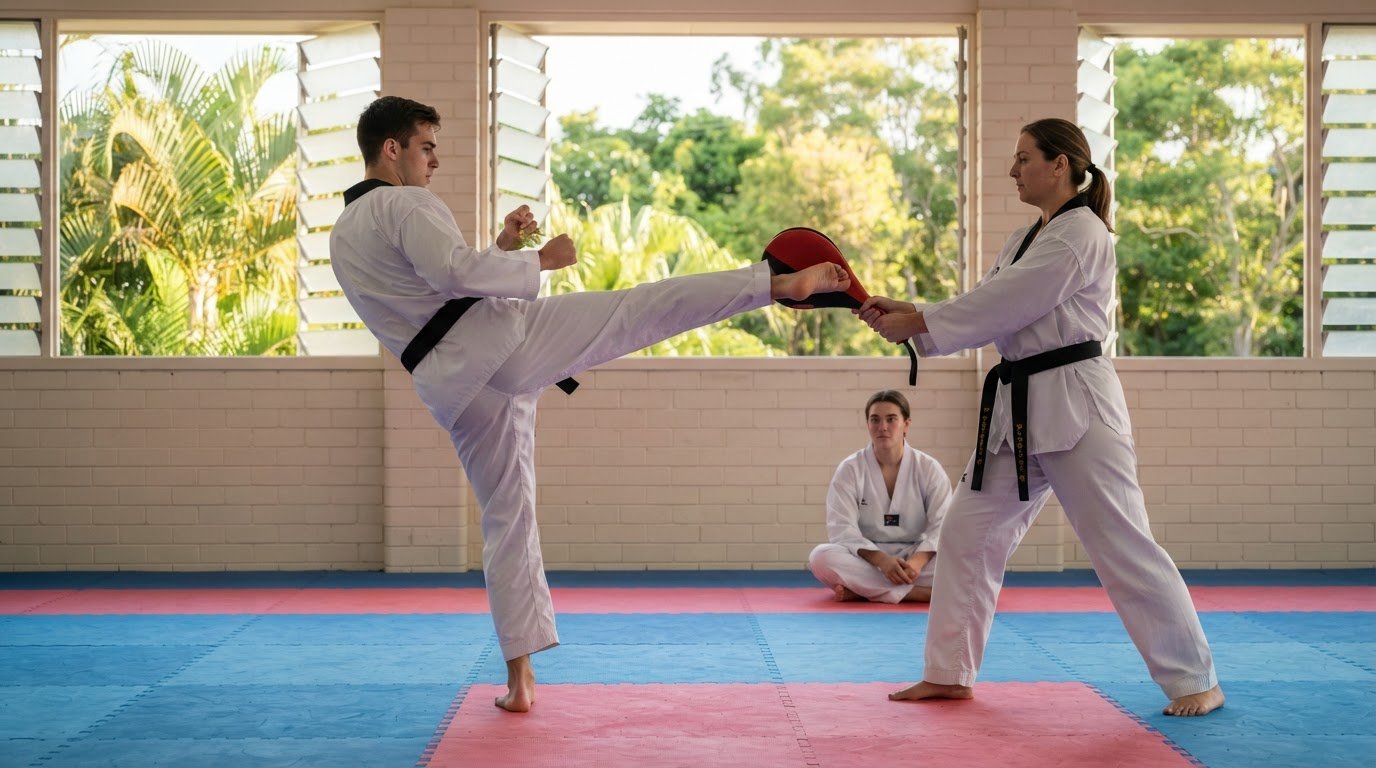
- Kicks: Show balance and accurate technique, for example, chambering the knee before extending the foot.
- Movement and footwork: Respond to directions while keeping posture and control between techniques.
- Partner work: Apply a technique at an appropriate distance and respond carefully to a training partner.
Some assessments also include sparring or self-defence applications, which show how a student uses techniques beyond a memorised pattern. An assessor may look for controlled movement, attention to instructions and an appropriate response during a partner exercise. The specific activities depend on the grading syllabus.
Practise with precision, not just speed. In poomsae, rushing can blur the transition between a block and the next stance. Repeating a sequence slowly helps build accuracy; gradually increase the pace while keeping each movement distinct. For kicking drills, focus on balance before power.
Ask the instructor which pattern and techniques apply to the next rank, then use feedback to target practice. If you want guided work on forms and sparring, explore Taekwondo training as part of your preparation.
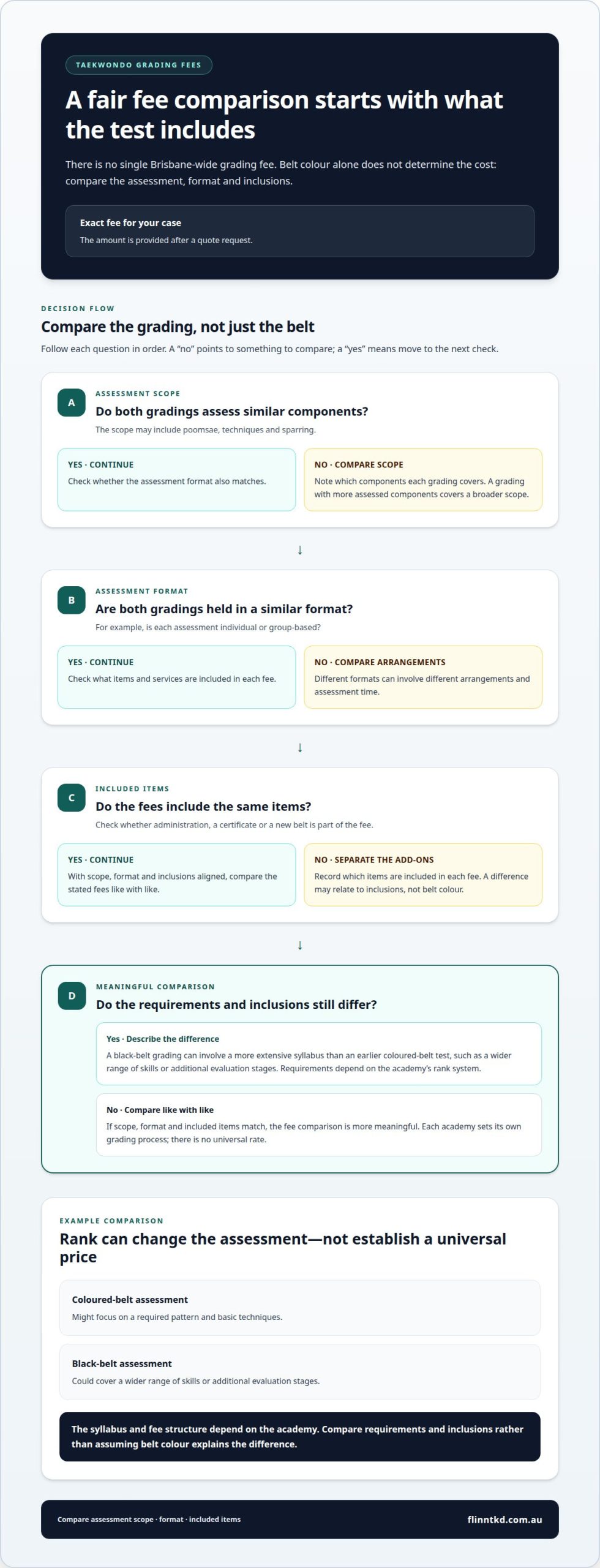
Are taekwondo grading fees different for coloured belts and black belts?
Grading fees can differ, but belt colour alone does not determine the cost. Coloured-belt and black-belt assessments may involve different requirements, formats and included items. Compare what each assessment covers rather than assuming every academy uses the same fee structure.
Use these checks to understand what drives the difference:
- Compare the assessment scope. A grading that assesses poomsae, techniques and sparring covers more components than one assessing fewer requirements.
- Check the format. An individual assessment and a group grading can involve different arrangements and assessment time.
- Identify included items. Ask whether administration, a certificate or a new belt forms part of the fee.
- Separate rank from add-ons. A fee difference may relate to included items or assessment arrangements, not the belt colour itself.
- Compare like with like. Review the same components for each rank before deciding whether two grading fees are meaningfully different.
A black-belt grading can involve a more extensive syllabus than an earlier coloured-belt test. That may affect the assessment structure, but it does not establish a universal price difference. Each academy sets its own grading process, so compare the stated requirements and inclusions.
For example, a coloured-belt assessment might focus on a required pattern and basic techniques. A black-belt assessment could cover a wider range of skills or additional evaluation stages. The syllabus depends on the academy’s rank system, so compare the requirements for each grading rather than relying on belt colour alone.
For a useful comparison, list the assessment components, format and included items side by side. Then note any differences in administration or certification. This can show whether a higher fee reflects a broader assessment or a different fee structure. Belt rank is one consideration, not a complete explanation of grading costs.
What does a taekwondo belt test fee usually include in Australia?
There is no single Australian package for a taekwondo grading. Fees and inclusions vary between academies. A fee might cover the assessment itself, while a certificate, belt or other item may be charged separately. Treat each component as part of the total cost, and check what the stated fee includes.
Check how the fee is described and what each item covers:
- Assessment: The fee may cover the grading session and the examiner’s assessment of the student’s required techniques and poomsae.
- Administration: Some grading arrangements include organising registrations, processing results or recording a student’s promotion.
- Certificate: A certificate may be included as evidence of the new rank, or treated as a separate item.
- New belt: The next belt may be supplied with the grading or purchased separately, depending on the academy’s process.
- Additional assessment elements: If the grading includes sparring or partner exercises, these may form part of the assessment arrangements.
Possible inclusions vary, so do not assume there is a standard Australian checklist. One academy’s grading fee may cover assessment and certification, while another may list a belt separately. The word “grading” alone does not explain what the student receives, so review each stated component.
To compare grading costs accurately, sort the information into three groups: assessment, included items and separate purchases. A separately listed certificate changes the total cost; a belt supplied as part of the process should not be counted twice. Note whether the fee covers only the assessment or includes other named components. This breakdown helps families plan without assuming different fees cover the same things.
For students building the skills assessed at grading, explore Taekwondo training and keep progress focused on technique, discipline and steady preparation.
Flinn 跆拳道學院
Flinn Taekwondo Academy offers Brisbane students structured Taekwondo training to build skills and progress. For students preparing for a grading, steady practice, instructor feedback and attention to the requirements for their rank all help them work towards assessment.
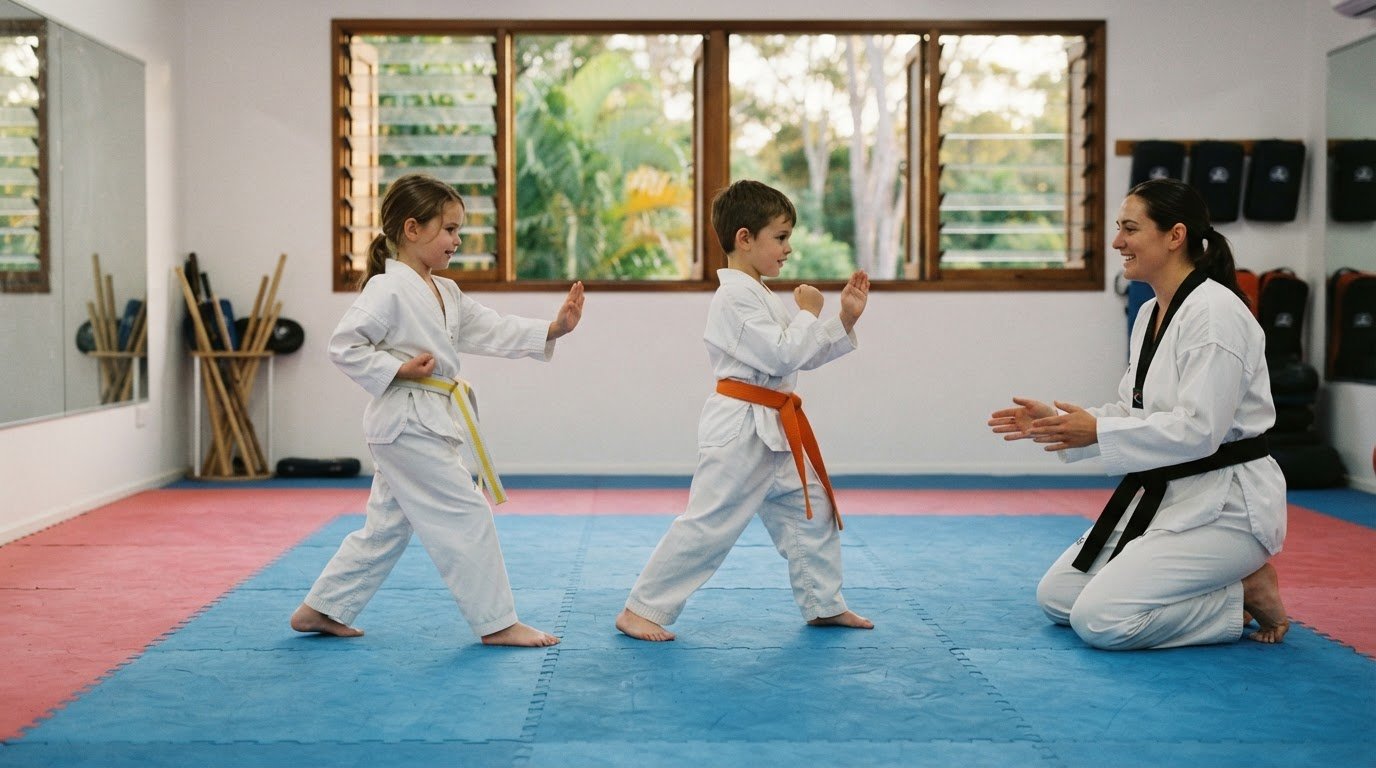
Children can train through the Little Tigers Program for ages 4-6 or the Junior Taekwondo Program for ages 7-12. Students aged 13 and over can join the Senior & Adult Taekwondo Program. These pathways support ongoing development in technique, confidence and discipline, helping students work towards their next milestone with purpose.
For families comparing grading arrangements, understanding the training pathway can clarify what skills a student is developing before assessment. Contact Flinn Taekwondo Academy to discuss your Taekwondo training goals.
Make your next step a confident one
Knowing how much taekwondo belt tests cost can help you plan, but a grading journey is about more than assessment day. Use each stage of training to set a clear goal, strengthen technique and develop the focus needed to perform with purpose. A belt represents progress earned through consistent effort.
Choose one area to improve before your next class. It might be a sharper stance, a more controlled kick or a poomsae sequence performed with confidence. Small, focused steps give practice direction and help students recognise their progress.
Flinn Taekwondo Academy can help you take that next step in your Taekwondo journey. Contact Flinn Taekwondo Academy to discuss your training goals and find a positive path forward. Keep showing up, keep learning and take pride in every step you earn.
常見問題
How much do taekwondo belt grading tests cost in Australia?
There is no single amount that applies to every taekwondo grading in Australia. When considering how much taekwondo belt tests cost, the relevant figure is the one for the student’s specific grading. At Flinn Taekwondo Academy, grading and certification are covered by a one-off fee that includes the physical belt, official certification and administrative processing with governing bodies.
Do taekwondo schools charge separate grading fees or include them in membership?
At Flinn Taekwondo Academy, monthly membership subscription fees and belt grading and certification fees are separate. Membership covers regular class instruction, facility use and curriculum progression, while grading is a one-off charge for the formal examination. This distinction helps families budget for ongoing training separately from assessment and promotion.