You don’t need to be fit before you start. Taekwondo classes for young adults in Brisbane help you build fitness while learning practical skills, with training that develops as your confidence and ability grow. Expect to practise techniques at a steady pace and improve through consistent effort.
It’s normal to wonder whether you’ll keep up, especially if you’re new to martial arts or returning to exercise. A supportive class gives you room to learn the basics, follow your instructor’s guidance and focus on progress rather than perfection.
This guide explains the fitness and flexibility involved, the skills you’ll practise, how instructor support helps and what progression through class levels can look like. You’ll also learn what to consider when choosing a class, so you can find a starting point that feels challenging, structured and welcoming.
主要心得
- You can start Taekwondo without being highly fit; training builds conditioning alongside technique.
- Instructor guidance helps you practise skills at a suitable pace and work towards steady progression.
- Class levels and training focus can shape your next step, from learning fundamentals to developing advanced skills.
- Consider what you want from adult martial arts training, such as fitness, technical learning or a structured long-term challenge.
Fitness, strength and flexibility
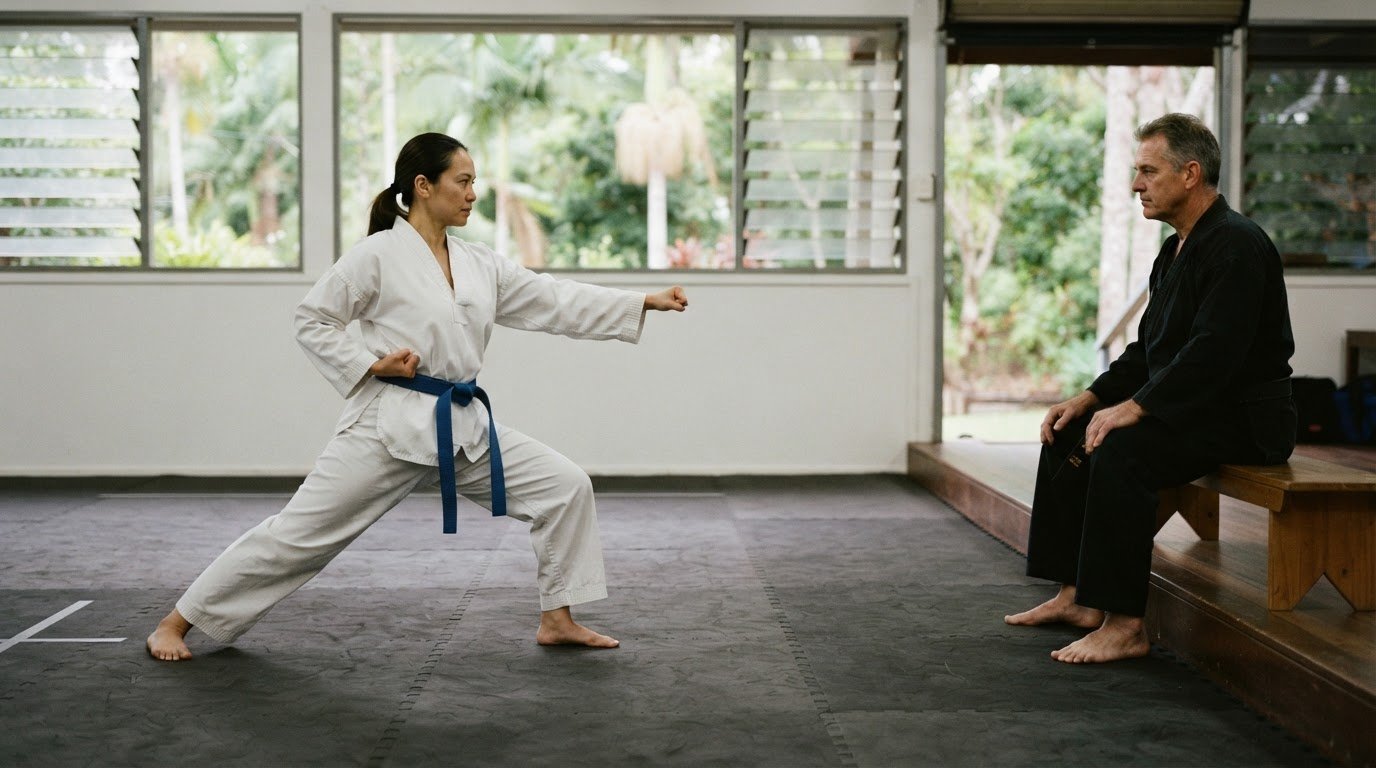
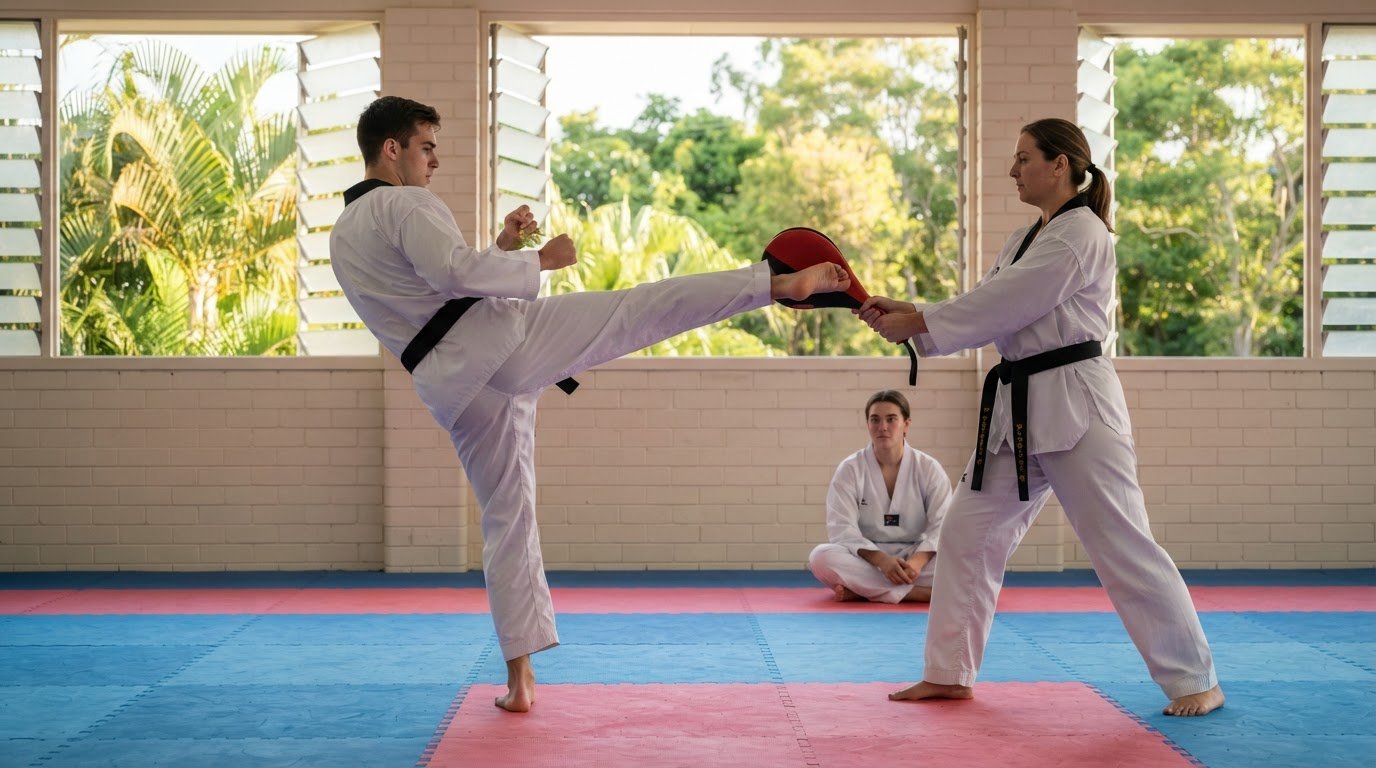
Taekwondo builds fitness through movement, balance and repeated technique practice. A class may combine stances, footwork, punches and controlled kicks, engaging your legs and core while challenging your coordination. Kicking moves your body through a range of motion, so flexibility develops alongside strength. You don’t need to arrive ready to master every movement. Beginners can focus on stable posture and controlled technique before working towards greater speed or height.
Fitness and self-defence connect through practical movement, not strength alone. Training helps you practise distance, balance and focused responses, while self-defence skills develop through repetition. For example, a beginner might first learn to hold a stable stance, then practise a simple movement with control. Confidence grows as you understand and rehearse the technique. Taekwondo can help you develop awareness and purposeful movement, but it cannot guarantee safety in every situation.
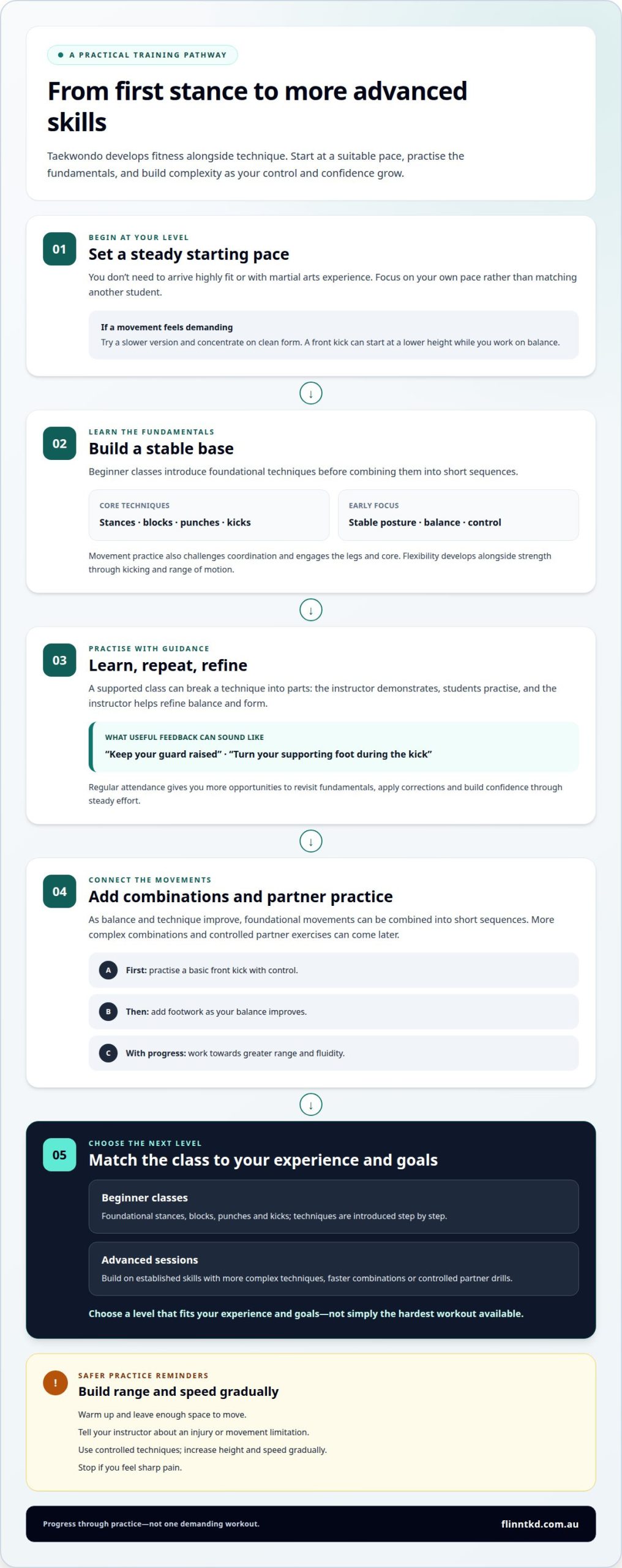
Starting fitness levels vary, so focus on your own pace rather than matching another student. If a sequence feels demanding, concentrate on clean form and try a slower version of the movement. A basic front kick, for instance, can start at a lower height, with attention to balance. As your control improves, work on range and fluidity. This approach helps beginners build conditioning without treating every class as a test of maximum effort.
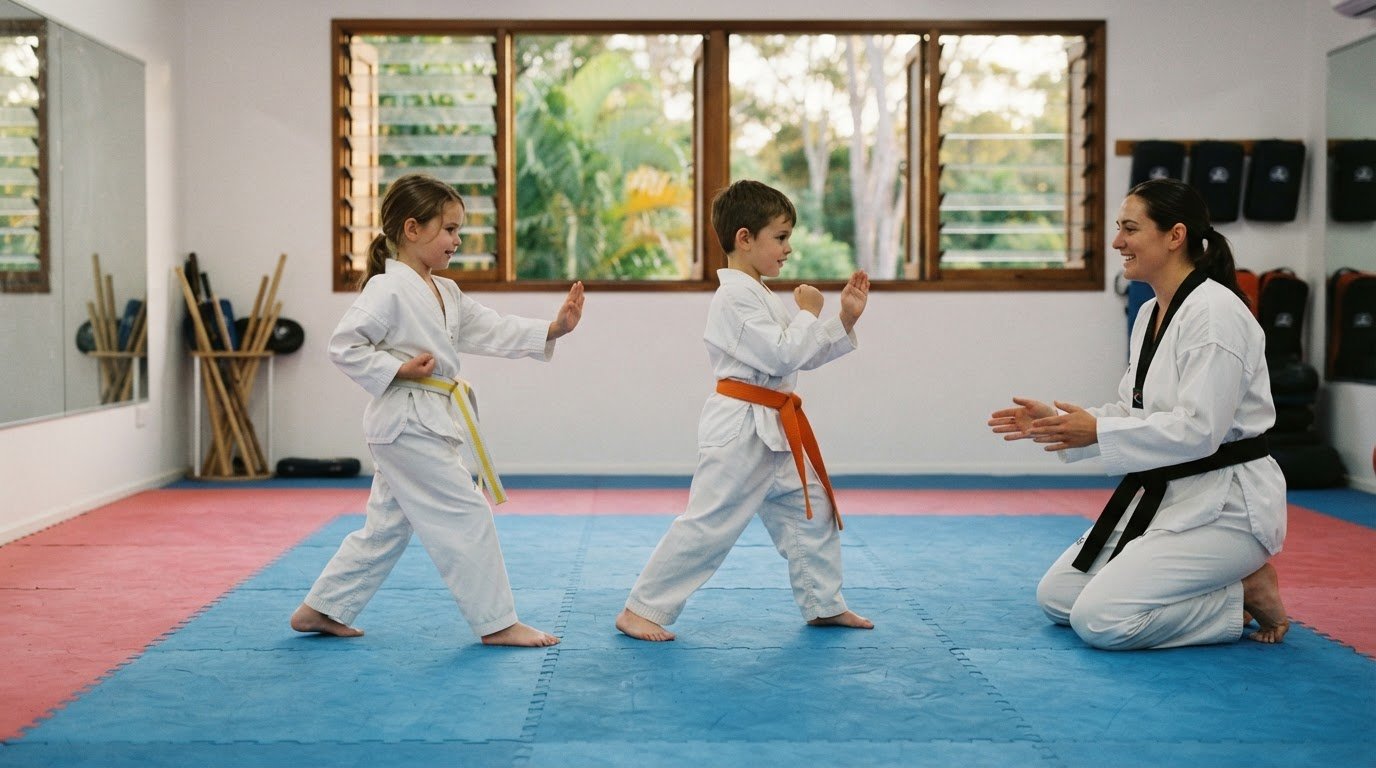
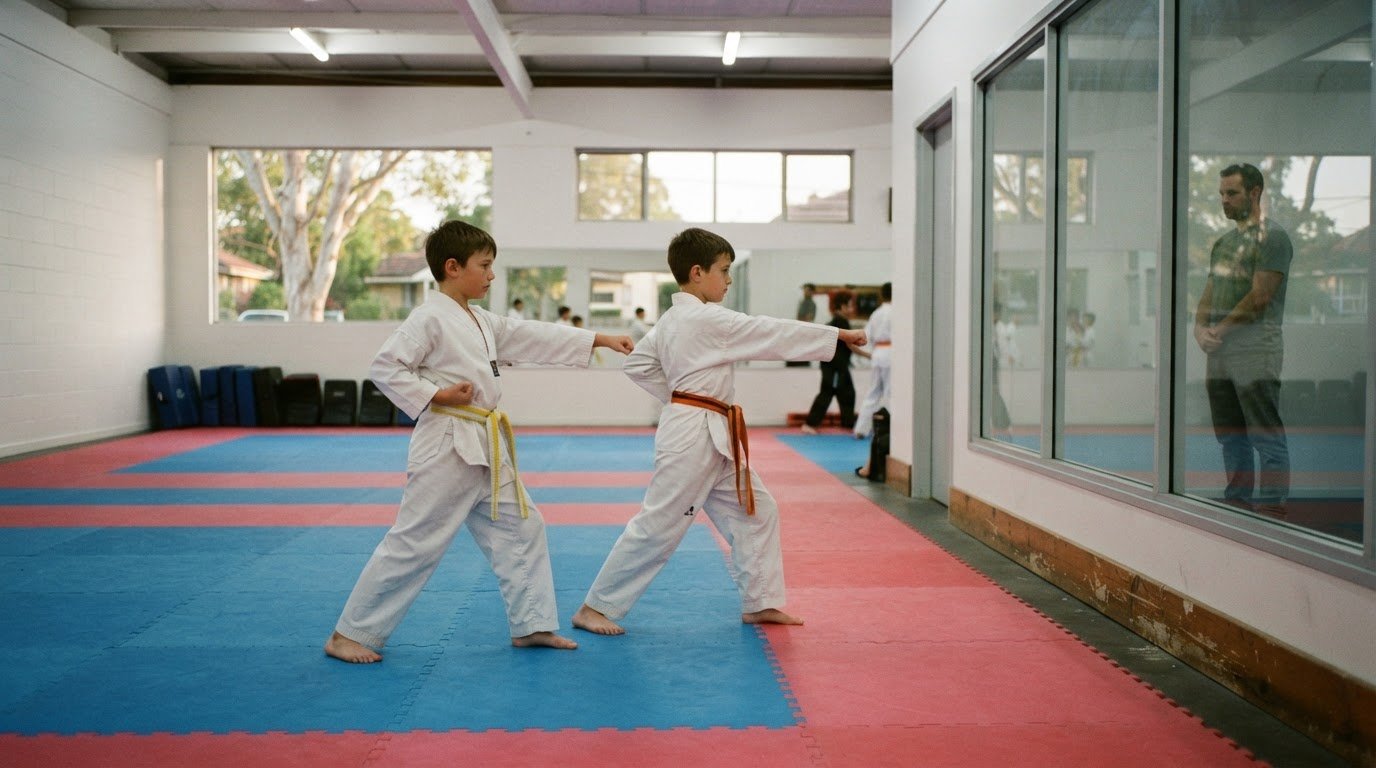
Age also shapes the starting point. In Brisbane, Taekwondo programs include classes for children aged 4-6 years and students aged 7 years and older. Young adults can focus on adult fitness goals while learning alongside peers at a suitable level. In any school, respect for different abilities supports a constructive atmosphere. Clear instruction and patient practice help each student work on coordination, strength and flexibility without comparing progress by age alone.
Before training, warm up, practise controlled techniques and let your instructor know about an injury or movement limitation. Kicking and quick changes of direction can cause strains or bruises, particularly if you push beyond your current range. Increase height and speed gradually, leave enough space to move, and stop if you feel sharp pain. These steps support safer training as you build fitness, self-defence skills and flexibility through regular practice.
Instructor support and student progression
In Brisbane, Taekwondo clubs can differ in teaching style, instructor experience and class size. Some sessions may emphasise poomsae, the formal practice of movement patterns; others may include more sparring or self-defence drills. Class size can affect how much individual feedback instructors provide. Look for clear demonstrations, helpful corrections and respect for each student’s learning journey.
Progress comes through practice, not one demanding workout. An instructor might demonstrate a stance, guide students through the movement, then help them refine their balance and technique. As discipline and commitment grow, students can work towards more complex combinations and controlled partner exercises. Useful feedback is specific, such as reminding you to keep your guard raised or turn your supporting foot during a kick.
An instructor’s experience and qualifications can shape the guidance you receive. A Dan rank indicates a level of black-belt attainment, but rank alone doesn’t show how well someone teaches beginners. Good instruction also involves explaining techniques clearly, adapting demonstrations and supervising practice. For example, a new student learning a turning kick benefits from a technical breakdown and time to practise before adding speed.
Self-defence instruction should connect technique with control and awareness. Instructors can explain a movement’s purpose, demonstrate it at a manageable pace and supervise partner practice. This helps students understand each step instead of copying movements without context. Regular attendance gives you more opportunities to revisit fundamentals, apply corrections and build confidence through steady effort.
If you’re comparing training styles, consider whether the teaching approach matches your goals and preferred balance of technique, fitness and partner work. A structured class can support your next step, whether you’re learning fundamentals or sharpening established skills. Explore structured Taekwondo training as you consider the kind of instruction and progression that will keep you engaged.
Beginner and advanced Taekwondo classes
Class levels shape what you practise, from foundational techniques to more demanding combinations. In Brisbane, compare the teaching focus, progression and practical self-defence content.
Beginner and advanced class options
Beginner classes introduce foundational stances, blocks, punches and kicks before combining them into short sequences. For example, you might practise a basic front kick, then add footwork as your balance improves. Advanced sessions build on those skills with more complex techniques, faster combinations or controlled partner drills. Choose a level that fits your experience and goals, not simply the hardest workout available.
Introductory beginner support
An introductory program can help adults learn class routines and core movements step by step. Beginner-friendly instruction breaks techniques into parts, demonstrates each movement and gives students time to practise. You can develop strength, coordination and focus without previous martial arts experience. Parents considering classes for a young adult can look for clear guidance, respectful instruction and a pace suited to new students.
Young adult class schedules
Weekly schedules differ between Brisbane clubs, so class times depend on each school’s timetable. Look for sessions that fit around study, work and travel, then build a regular routine. Consistent attendance gives you more chances to revisit techniques and progress through class levels. Suitable beginner and advanced options can also support your next step as your skills develop.
Flinn Taekwondo Academy offers classes for young adults in North Brisbane. Check the academy’s venue details when planning your trip, especially if you’re travelling from elsewhere in Brisbane.
For a first class, wear comfortable clothing that allows free movement, and follow the instructor’s directions about uniform and equipment. To join, use the club’s stated enrolment process; trial bookings follow the club’s own arrangements. Clear instructions help you arrive ready to focus on learning, respect and practical self-defence.
Adult martial arts classes in Brisbane
Adult martial arts training can combine physical practice with focus, discipline and traditional technique. Taekwondo classes may include forms, kicking drills, partner practice and self-defence skills. For example, a session might move from practising a stance to linking it with a block and counter. This structure gives young adults a clear way to develop skills over time.
Taekwondo classes for young adults in Brisbane offer a structured path into martial arts training. Class format, instruction and training emphasis vary, so consider whether you want technique-focused learning, partner drills or a broad martial arts workout. Match your goal to the class format, such as choosing poomsae practice to focus on precise movement patterns.
Martial arts schools can bring students of different ages together. A young adult may train alongside older students, while children attend age-appropriate sessions at the same school. Class structure matters: age-grouped programs can tailor instruction, while mixed-age classes may group students by experience. Ask about the class pathway before deciding where to begin.
To compare adult training options, consider what techniques the class teaches, how instructors support skill development, and whether the session suits your schedule. Someone seeking traditional forms may prefer dedicated poomsae practice; someone wanting more partner work may value supervised sparring. Taekwondo classes for young adults in Brisbane can suit different goals, so choose a program with a clear training focus. If you’re ready to explore, find adult Taekwondo training that aligns with your goals and preferred learning environment.
Flinn Taekwondo Academy: Senior & Adult Taekwondo Program (13+ years)
Flinn Taekwondo Academy offers the Senior & Adult Taekwondo Program for students aged 13 and over. It’s a relevant next step if you’re a young adult looking to develop Taekwondo skills, fitness and confidence through structured martial arts training. The academy’s Taekwondo training includes opportunities to learn self-defence techniques, poomsae and sparring, supporting different interests as you progress. If you’re choosing a class, consider the skills you want to focus on and the commitment you can bring to regular practice. The academy also offers programs for younger age groups and High Performance Competition Training. For a welcoming conversation about the Senior & Adult Taekwondo Program, contact Flinn Taekwondo Academy.
Take your next step on the mat
Starting Taekwondo means choosing a skill you can keep developing. You don’t need to map out the whole journey today. Set one practical goal, such as learning foundational techniques, building a regular training habit or gaining confidence in a structured class. Then take the next step: book a free trial at Flinn Taekwondo Academy in North Brisbane and see how training fits your life.
Flinn Taekwondo Academy offers a pathway for different ages: Little Tigers for ages 4-6, Junior Taekwondo for ages 7-12, and Senior & Adult Taekwondo for ages 13 and over. If you’re exploring taekwondo classes for young adults in Brisbane, consider which goals matter most to you and what kind of progress you want to work towards.
Contact Flinn Taekwondo Academy today to discuss your next step. Bring your curiosity and willingness to learn; each class is an opportunity to build skill, discipline and confidence.
常見問題
Do I Need To Be Fit For This?
No, you don’t need to arrive with a high fitness level. Start by focusing on comfortable movement and learning each technique clearly. For example, practise a kick at a manageable height before working on speed or range. As training becomes familiar, you can gradually increase your effort and notice which movements challenge you most.
How Long Until I Get My Black Belt?
There isn’t one timeframe that applies to every student. Progress depends on consistent practice, developing the required skills and meeting grading expectations as you advance. Focus on your current techniques rather than counting the time to a black belt. Ask your instructor which skills to strengthen before your next grading opportunity.
I’m Not Very Sporty or Coordinated, Will That Be A Problem?
No. Coordination is a skill you can develop through practice, not a requirement for your first class. Learn a movement in parts: establish your stance, practise the arm position, then combine them at a controlled pace. Repeating the sequence helps your body learn the pattern. Focus on one correction at a time instead of comparing yourself with experienced students.
What ages qualify for young adult or adult taekwondo classes in Brisbane?
Flinn Taekwondo Academy’s Senior & Adult Taekwondo Program is for students aged 13 and over. That means young adults can train in this program, while younger children have separate age-based programs. If you’re choosing for yourself or a family member, use age as the first guide, then consider the student’s experience and personal training goals.
Do Brisbane taekwondo clubs offer beginner-friendly classes for adults with no experience?
Yes, adult classes can suit newcomers with no previous Taekwondo experience. Flinn Taekwondo Academy provides a supportive training environment for students at different levels. Start by learning the class routine and basic movements, then build familiarity through practice. You don’t need martial arts experience to begin learning Taekwondo or take part in a structured class.
What fitness level is needed to start taekwondo as a young adult?
You can start without meeting a particular fitness benchmark. The useful starting point is being ready to learn basic movements and adjust your effort as you go. For instance, practise a technique slowly, pause between combinations and focus on control before adding intensity. Regular participation helps you build fitness as you develop Taekwondo skills.