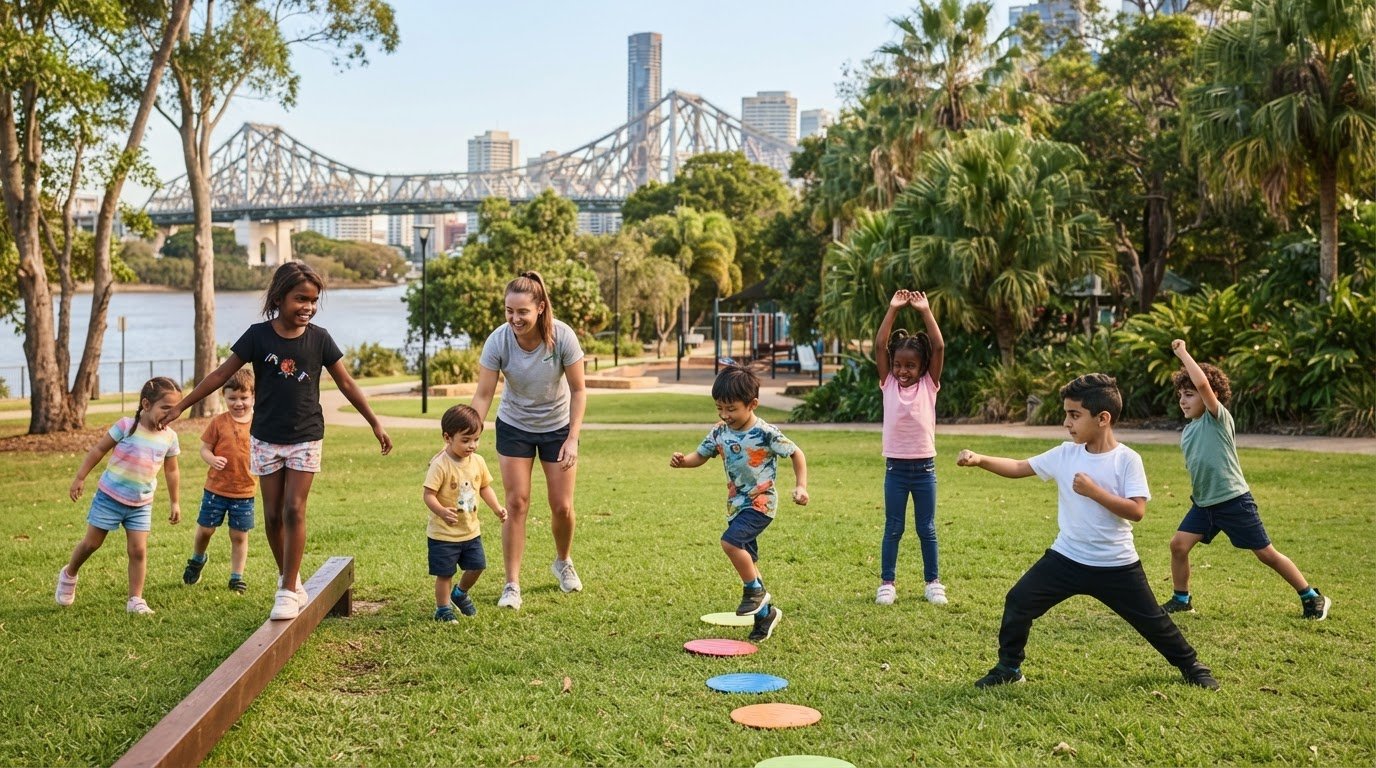

What if your child’s frustration isn’t a sign they need more pressure, but a cue to slow down and reconnect? If you’re searching for how to help a child with low frustration tolerance brisbane, you may be dealing with meltdowns, quitting or tense family routines when an everyday task feels too hard. It’s understandable to want to step in quickly, while also wondering how to respond without making the moment bigger.
Frustration tolerance grows through calm connection, manageable challenges and repeated practice, not pressure. This guide offers practical ways to respond when your child feels overwhelmed, practise coping skills when they’re calm and notice whether frustration is affecting learning, friendships or home life. It also explains when to seek extra support in Brisbane.
Start by looking for patterns: what tends to happen before a difficult moment, what your child does next and what helps them recover. Age-appropriate activities, including Taekwondo, may offer opportunities to practise persistence, but they aren’t a substitute for professional care when it’s needed.
主要心得
- Look at what’s happening around the difficult moment, including tiredness, transitions, task demands and the support your child has.
- Try a simple response sequence: notice the trigger, connect, name the challenge and offer one manageable next step.
- Validate your child’s feelings while keeping appropriate limits. Shaming, threats and escalating arguments can make the moment harder.
- Use this guide to explore how to help a child with low frustration tolerance brisbane, and recognise when ongoing concerns may call for advice from your child’s GP.
- Consider age-appropriate activities as a chance to practise guided challenges, while remembering they’re not a substitute for professional support.
What low frustration tolerance can look like in children
Low frustration tolerance describes a pattern of finding setbacks or uncomfortable feelings especially hard to manage. It’s a descriptive concern, not a diagnosis, and it doesn’t define who your child is. The phrase is used in different ways; the overview of Low Frustration Tolerance (LFT) discusses one conceptual background. For parents, a useful starting point is what you can observe: what tends to trigger frustration, how your child responds and what helps them recover.
A child might find it hard to wait for a turn, make the same mistake while learning something new, lose a game or continue with a challenging task. Reactions can include tears, raised voices, walking away, avoiding the activity or asking an adult to take over. These behaviours signal difficulty in that moment, not proof that a child is naughty or deliberately being difficult.
Triggers and reactions vary from child to child. One may become upset by an unexpected change, while another can manage transitions but struggle when a task feels confusing. Coping skills also develop at different rates. If you’re considering how to help a child with low frustration tolerance brisbane, note your child’s particular patterns rather than comparing them with siblings or classmates.
How frustration may show up at home, childcare, or school
Look at what happens before and after a difficult moment. Your child might become tearful when a game doesn’t go their way at home, but avoid starting written work at school. Or they may cope in a structured setting and release their frustration later with family. If useful, ask educators what they observe and record the situation, your child’s response and how long it takes them to settle. Different behaviour across settings can offer context, not a reason to dismiss your concern.
When frustration is ordinary, and when to look closer
Frustration can be part of everyday learning, transitions, tiredness or unmet expectations. An occasional difficult moment doesn’t, on its own, mean something is wrong. Look closer if episodes persist, intensify, take a long time to recover from or regularly interfere with family routines, learning or friendships. Brief notes on frequency, triggers, recovery time and impact can help you describe the pattern. If it concerns you, discuss it with your GP or a child health professional.
Why a child may struggle to manage frustration
A strong reaction rarely tells the whole story. Coping depends on the child, the task, the environment and the adult support available at the time. Tiredness, a change in routine, unclear instructions, communication challenges or a task that feels too demanding may all make it harder for a child to stay engaged. These are possibilities to explore, not conclusions to jump to.
A behaviour is a clue about what may be difficult, not a diagnosis or proof of a particular cause. The same response can have different explanations for different children, so notice patterns before deciding what support might help. Consider what happened just before the reaction, what the child was being asked to do and what helped them recover.
Triggers, expectations, and a child’s current skills
A task can feel overwhelming if your child isn’t sure what to do first, has made several attempts without success or is expected to manage more than they’re ready for. Long waits, sudden changes of plan and several instructions at once can add pressure. Check whether the task is clear, give one instruction at a time and break it into a manageable first step. Match expectations to your child’s age, experience and current capacity, while leaving room to build skills gradually.
Why co-regulation can come before problem-solving
Co-regulation means helping your child settle with your steady presence before expecting them to solve the problem. In a tense moment, try a calm voice, simple words and a little time. You might say, “This feels hard. I’m here.” Keep safety in mind, and adapt your response to your child and the situation. One approach won’t work for every child, and problem-solving is often easier once the intensity has eased.
When your child is ready, offer one clear next step rather than several demands. You can explore what made the moment difficult later, when you’re both calmer. If you’re looking into how to help a child with low frustration tolerance brisbane, your GP or a child health professional can help you consider persistent concerns. For support with your own parenting questions, Parentline is a Queensland Government-funded service offering free, confidential counselling for parents.
Age-appropriate Taekwondo can be one optional setting for practising instruction-following and persistence with guided activities. Flinn Taekwondo Academy’s Little Tigers Program is for children aged 4-6. A class isn’t treatment for emotional or developmental difficulties, so consider whether the environment feels supportive and suitable for your child. Explore children’s Taekwondo as one possible activity.
What helps and what can make a difficult moment harder
A child’s frustration can put everyone under pressure. You don’t have to respond perfectly. A calm boundary, a few reassuring words and time to settle can help keep the moment from turning into a bigger struggle. Acknowledging a feeling doesn’t mean giving in to every request or removing every challenge. You can show understanding and still hold a limit.
Supportive responses during a frustration spike
Keep your first response brief. Name what you notice, let your child know you’re available and focus on safety. If they’re too upset to listen, pause explanations and teaching. When it’s appropriate, offer a small choice, such as “Would you like help with the first step, or a short break?” Once they’re more settled, you can return to the situation together.
Use the comparison below as a guide, not a test of your parenting. Every family has difficult moments, and what helps can vary between children and situations.
- Try: “You’re disappointed. I’m here to help.” Reconsider: “Stop being silly,” or comparing your child with a sibling.
- Try: Keep a necessary limit clear and explain it in a few words. Reconsider: Threats or long lectures while your child is highly upset.
- Try: Offer a brief pause or one manageable next step. Reconsider: insisting on continuing when distress is escalating or someone’s safety may be at risk.
Responses to reconsider and how to repair
Ridicule, comparisons and sharp words can add shame or pressure when a child is already struggling. That doesn’t mean you’ve failed if you lose patience. If you react sharply, reconnect once things are calmer: “I’m sorry I shouted. I was frustrated, and I’ll try to speak calmly.” A short, sincere repair shows that people can take responsibility and return to connection.
Resilience doesn’t grow simply by pushing a child through distress. A manageable challenge gives them room to practise; forcing them to continue when they’re overwhelmed may make it harder to re-engage. Adjust the task, offer support or pause when needed, then revisit the challenge when your child is ready. As you consider how to help a child with low frustration tolerance brisbane, aim for steady encouragement, clear limits and practice that respects your child’s capacity.
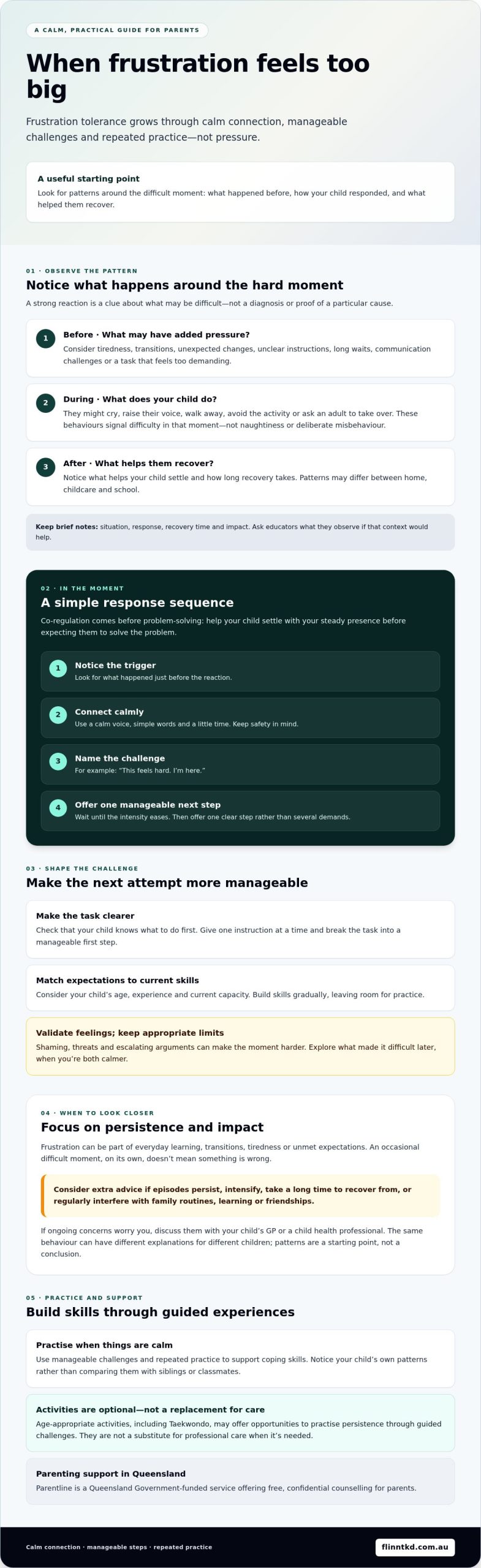
How to help a child practise frustration skills at home
Frustration skills are built through small, supported chances to keep going, pause or ask for help. Pick an everyday activity that’s challenging but still within reach, such as a puzzle, getting dressed, taking turns or learning a new game. Keep practice brief and adjust the difficulty to your child’s readiness. The aim isn’t to avoid every setback, but to make the next step manageable.
Turn everyday setbacks into manageable practice
If your child gets stuck, resist taking over straight away. Help them focus on one part of the task, then give them room to attempt it. If distress rises, simplify the activity or pause and return to it later. Notice effort specifically: “You tried a different piece,” “You asked for help,” or “You took a break and came back.” This recognises useful coping actions, not just finishing.
In a difficult moment, notice the trigger, connect, name the challenge, offer one next step, then reflect later. This five-step guide gives you a steady sequence to adapt, not a guaranteed formula. For example:
- Notice: Identify what changed or became difficult.
- Connect: Get close if welcome, and let your child know you’re there.
- Name: Use a few words, such as “That’s a tricky part.”
- Offer: Suggest one small step, a choice or a pause.
- Reflect: Later, talk briefly about what helped and what to try next time.
Build a predictable response plan with the child
Talk about the plan during a calm moment. Choose a simple phrase, such as “one step at a time,” or agree on a calming option your child finds comfortable. Help them identify trusted adults they can approach at home, childcare or school. A familiar plan can make it easier to ask for support, though it may need to change as your child’s needs shift.
Keep short notes on situations that tend to be difficult and what seems to help. If you speak with educators or a health professional, these observations can help explain what you’re seeing across settings. If you’re researching how to help a child with low frustration tolerance brisbane, age-appropriate guided activities such as Taekwondo may also offer a setting to practise following instructions and persistence. They aren’t treatment for emotional or developmental difficulties, so consider whether the environment feels right for your child.
Flinn Taekwondo Academy offers a Little Tigers Program for children aged 4-6. Explore children’s Taekwondo as one possible activity for guided practice.
When to seek extra support in Brisbane, and where activities fit
Consider seeking advice if your concerns persist, intensify, interfere with your child’s everyday life or raise safety concerns. You don’t need to wait until you have a clear explanation. Start with your child’s GP and describe what you’ve noticed, including when frustration happens and how it affects home, learning or friendships. The GP can discuss whether further assessment or local child-development support may be appropriate.
Families searching for how to help a child with low frustration tolerance brisbane may also consider activities that give children a chance to practise following instructions and taking part in guided challenges. These are optional practice environments, not substitutes for professional assessment or care. Choose an activity because it suits your child’s interests and needs, not because you expect it to resolve an emotional or developmental concern.
Choosing a supportive activity for your child
Look beyond the activity itself. Consider whether the instructions seem understandable, expectations feel suitable and the group environment appears comfortable for your child. You might ask an instructor how they support beginners who need reassurance or a pause. If you’re exploring Taekwondo, read about Taekwondo Classes North Brisbane and what Taekwondo involves to help decide whether it could be a good fit.
How Flinn Taekwondo Academy may fit into the picture
Flinn Taekwondo Academy is a family-owned North Brisbane martial arts school with a supportive, professionally led environment. Its Little Tigers Program is for children aged 4-6. Taekwondo may offer a structured activity in which a child can practise engaging with guided tasks, but it isn’t treatment and can’t guarantee emotional change. Consider whether the setting feels suitable for your child and check current program details directly.
If you’d like to explore the option, explore Flinn Taekwondo Academy and ask whether the Little Tigers Program may suit your child. An activity doesn’t have to be the answer to every challenge. Keep professional guidance at the centre when concerns need further support, and let your child’s comfort and readiness guide any activity choice.
Take the next step at your child’s pace
Helping your child build frustration skills starts with calm connection, clear limits and manageable chances to practise. Notice what makes a moment harder, offer one steady next step, and recognise effort, asking for help or trying again. If concerns persist, intensify or affect everyday life, speak with your child’s GP about appropriate support.
Structured activities can offer another place to practise following instructions and staying with guided tasks, but they aren’t a substitute for professional care or a guaranteed solution. Flinn Taekwondo Academy is a family-owned North Brisbane academy established in 2013 and led by Master Jeff Flinn, a 7th Dan Black Belt with international accreditation. Its Little Tigers Program is for children aged 4-6.
If you’re exploring how to help a child with low frustration tolerance brisbane, consider whether Taekwondo feels right for your child’s interests and needs. Explore Flinn Taekwondo Academy and ask whether the program may suit your child. Let your child’s comfort and readiness guide the next step.
常見問題
What does low frustration tolerance look like in a child?
It can look like a child finding setbacks or difficult feelings hard to manage, but the pattern varies. They might cry when a game doesn’t go their way, struggle to wait, raise their voice after a mistake, avoid a task or ask an adult to take over. Occasional frustration is common. Notice how often it happens, what tends to trigger it, how your child recovers and whether it affects everyday activities.
How can I help my child calm down when they get frustrated?
Start by keeping your response calm and simple. Acknowledge the feeling, stay nearby if your child welcomes that, and prioritise safety. You could say, “That feels hard. I’m here.” Avoid long explanations while they’re overwhelmed. When they’re calmer, offer one next step or an appropriate short break. If you’re learning how to help a child with low frustration tolerance brisbane, adjust your approach to your child and the situation.
Is low frustration tolerance a sign of a developmental or mental health condition?
Not by itself. “Low frustration tolerance” describes a difficulty with managing frustration; it isn’t a diagnosis, and one behaviour can’t establish its cause. Tiredness, a challenging task, transitions or communication difficulties may all contribute, among other possibilities. If the pattern persists, intensifies or affects your child’s daily life, discuss your observations with your child’s GP or another child health professional. They can help determine whether further assessment or support is appropriate.
Can you teach a child to cope better with frustration?
You can support practice through small, manageable challenges and a steady response. Notice what made the task difficult, connect with your child, name the challenge and offer one achievable next step. Praise specific efforts, such as asking for help, pausing or trying another strategy. Keep practice brief and adjust the challenge to your child’s readiness. Skills develop differently for each child, so avoid expecting a fixed timeline or guaranteed result.
When should I seek professional help for my child’s frustration in Brisbane?
Consider seeking advice if frustration persists, becomes more intense, interferes with learning, friendships or family routines, or raises safety concerns. You can start with your child’s GP in Brisbane. Share clear examples, including what happened beforehand, how your child responded and how long recovery took. Ask whether further assessment or local child-development support may be suitable. Seeking guidance doesn’t mean you’ve failed; it’s a practical way to understand what your child may need.
Can Taekwondo help a child practise patience and persistence?
Taekwondo can offer a structured activity where a child may practise following instructions and persisting with guided tasks. How suitable it feels depends on the child and the learning environment. A class isn’t treatment for emotional or developmental difficulties, and it can’t guarantee changes in patience or frustration. Flinn Taekwondo Academy’s Little Tigers Program is for children aged 4-6. Consider your child’s interest and comfort, and check current program details with the academy.
What should I ask before choosing an activity for a child who gets frustrated easily?
Ask whether instructions and expectations are suited to beginners, how an instructor responds when a child needs reassurance, and whether a child can pause if overwhelmed. Observe whether the group environment feels supportive and appropriate for your child. You could also ask how the activity is structured and what participation involves, then explain any relevant needs. Choose an activity your child is willing to try, and keep professional guidance separate from activity selection.